Keywords, Architecture, Content: in this Course, We Will Show You how to Set up and Implement an SEO Strategy. A System We Have Successfully Applied over 300 Times.
Enroll in the Course
Here you can sign up for the email course. You will then receive a weekly email introducing the learning content for each week. Please sign up with your email .
Getting Started: How to Choose Your SEO Tools
SEO requires a data foundation, which SEO tools provide. However, the selection process is very complex.
We often see experienced entrepreneurs or marketing managers spend entire days researching. Many get bogged down – or are even completely stuck.
You can solve this problem here and now. In about half an hour, which is approximately how long it takes to read this chapter and get a rough overview. We provide you with specific recommendations.
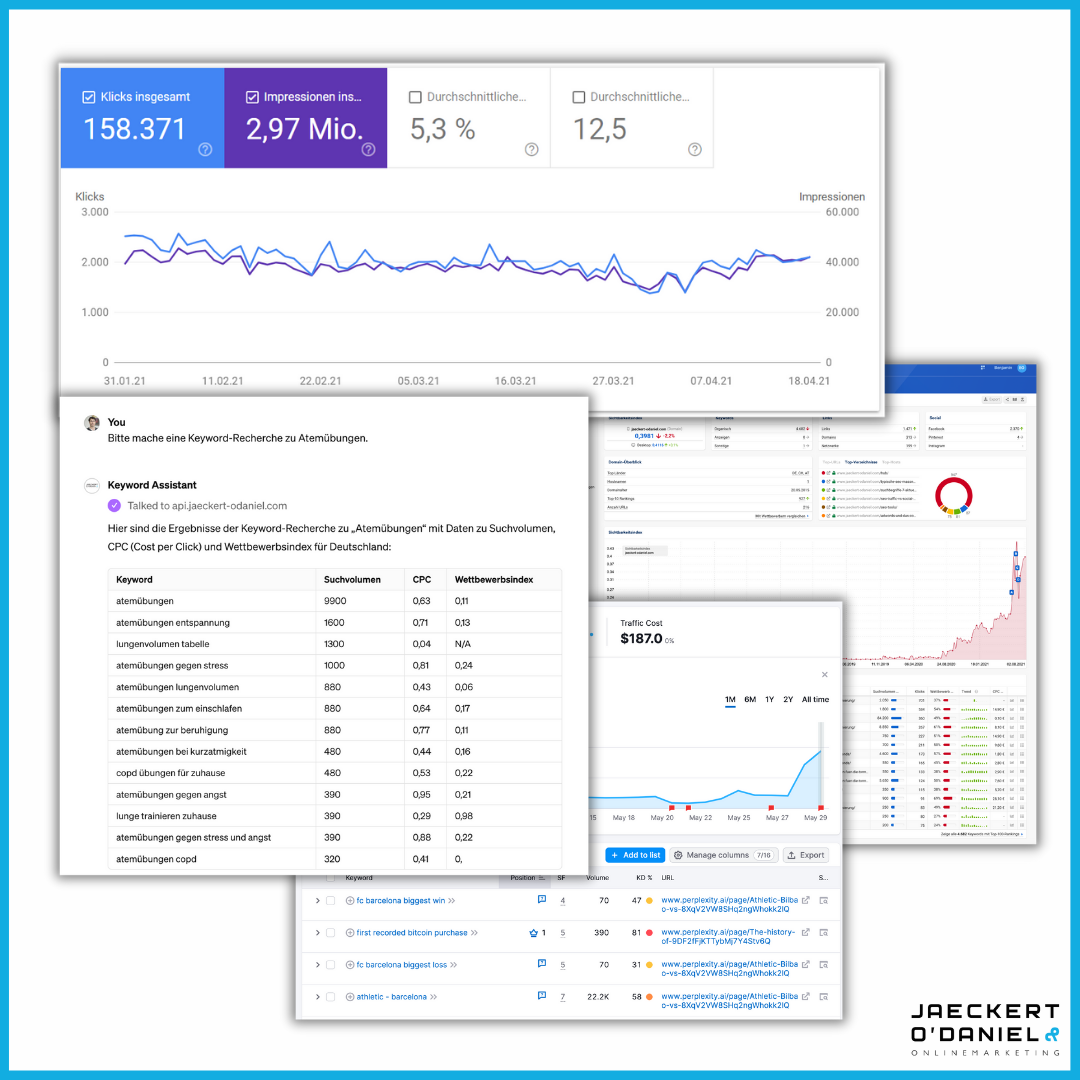
Chapter 1: how to Systematically Research your Keywords
In this chapter, we will show you how to conduct solid keyword research using professional SEO software. You will learn which functions to use.
Whether you are rebuilding your keyword list, e.g., to develop a content roadmap, or want to research new topics and supplement your SEO strategy: Keyword research always comes first.

Chapter 2: how to Create your Excel Keyword List
The next step is to process the keyword data from the SEO tool in Excel.
We will show you how to use Excel for this, step by step. You don’t have to be an Excel professional. The spreadsheet is important because it often involves many thousands of keywords, and you need to maintain an overview. It will be the starting point for the later development of the website and its content.

Chapter 3: how to Develop your Architecture
The first chapter of this course is about how to design a structure for your content hub.
It’s like building a house. You are the architect, planning how large and extensive your content hub will be. In the first step, this is primarily conceptual work, entirely without tools.

Chapter 4: What is High Performance Content
High Performance Content means: The best result for the search engine and the visitor. We will show you how to develop your High Performance Content.
It’s not about reinventing the wheel every time, but about developing a content template for yourself – an outline – so that you can efficiently deliver high quality.

Chapter 5: how to Develop Individual Content Modules (Examples)
Are you staring at a blank Word document, stuck on how to start? No problem. We will show you how we structure the individual content formats, based on examples we encounter.

Chapter 6: What to Consider when Integrating into the CMS
The best keyword research and content are all for naught if they are not properly integrated. First off: Simply creating blog articles is not the best solution.
We will show you what to consider when integrating your content into your CMS, using WordPress and Typo3 as examples.

Chapter 7: how to get Valuable Links
SEO is always about content – but also always about links, specifically external and internal links.
We will show you what to consider regarding internal linking. This is a huge SEO lever if you know how to link strategically – and not haphazardly.
Furthermore, we provide specific tips for external linking that you can implement immediately.
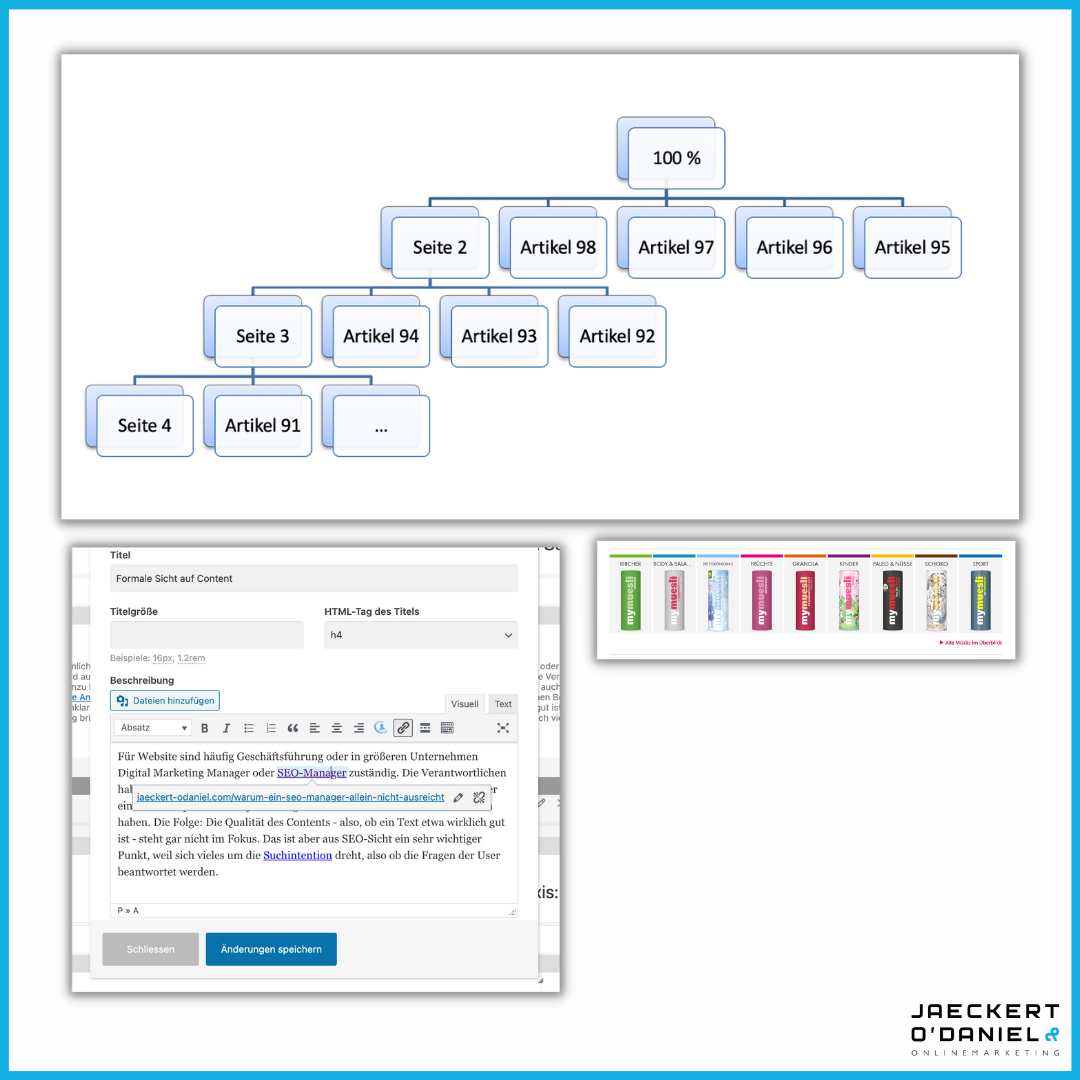
Chapter 8: Indexing and Crawling
Google regularly retrieves your website with its crawlers. They navigate from URL to URL, from link to link. The result is the so-called “index,” the database in which Google has prepared all websites on the internet for searchability. If your website or your URLs are included there, they are “indexed” and have a chance to appear in the rankings.
However, a lot can go wrong in this process. Fortunately, there is software and tools that help you check if everything is as it should be.

Chapter 9: Building EAT
In the past, everything was simple. People bought links, manipulated the algorithm – and ranked at the top. These are the times many old SEOs still talk about today.
That is a thing of the past. All Google updates over the past 15 years have always been about improving the quality of search results, preventing manipulations, and promoting reputable websites that truly deserve to be there. A good thing, after all, nobody wants garbage results.
The focus in this chapter is not on a detailed analysis of how the algorithm (likely) works regarding E-A-T. Instead, we focus on concrete strategies, measures, and examples, as this is where it most often falls short.
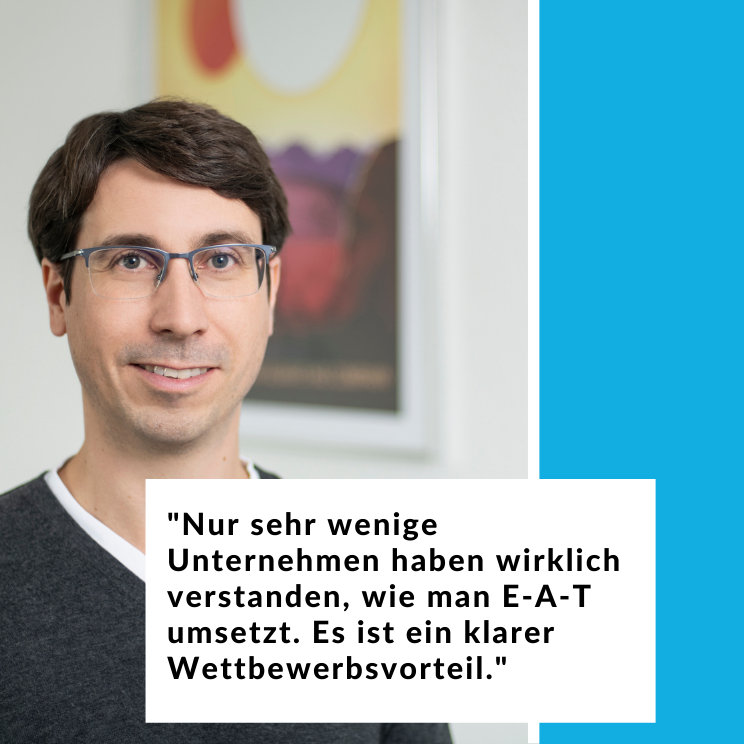
Feedback
Where are you encountering difficulties? Where do you need further elaboration? How can you continue to work on your rankings? Please feel free to send us your feedback on the SEO Roadmap.