
Many media houses are struggling with digital transformation. For website traffic, this means: it must convert – for example, into digital subscriptions. DIE ZEIT implements this very successfully. What is the success formula behind it?
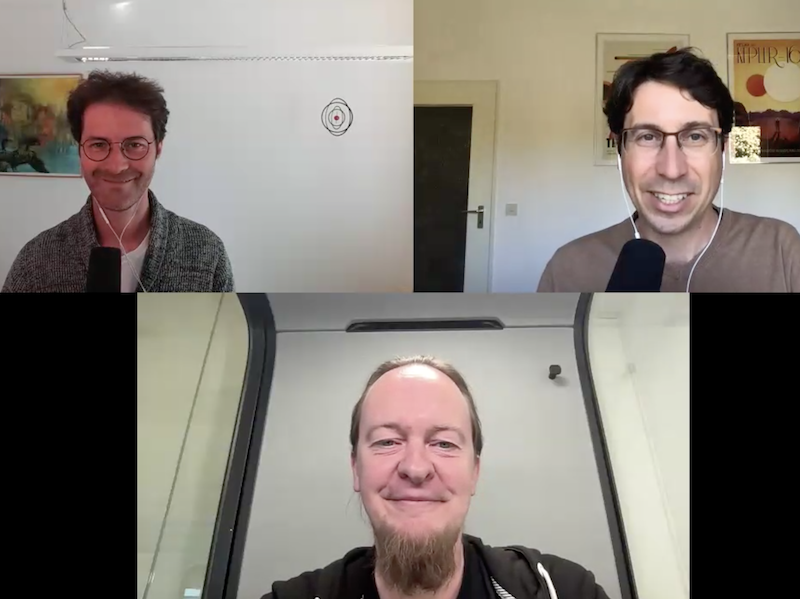
We speak with Olaf Seydel about this. He is Head of Engagement & Growth. His focus is precisely on connecting loyal users with concrete growth figures.
We speak with Olaf about his work. Which key figures do he and his team look at? What are typical tests they conduct? How does the SEO department collaborate with the editorial team? And of course, we also discuss the AI transformation.
The common thread running through the conversation: Good content retains users. And highly engaged users subscribe. Demonstrably.


Our Guest: Olaf Seydel
Olaf Seydel is Head of Engagement & Growth at ZEIT Online. Olaf has been working for ZEIT Verlag for twelve years. When he started, he was the first employee to explicitly have ‘SEO’ in his job title and researched keywords for the editors.
Today, his team consists of five specialists, including two SEO managers. The team is located in the “Audience” department, where six colleagues work. They report to the CTO.
“We work like an internal consulting agency within the publishing house,” Olaf tells us in the interview. The goal is to better understand and guide large user flows. “SEO is our largest measurable traffic source.”
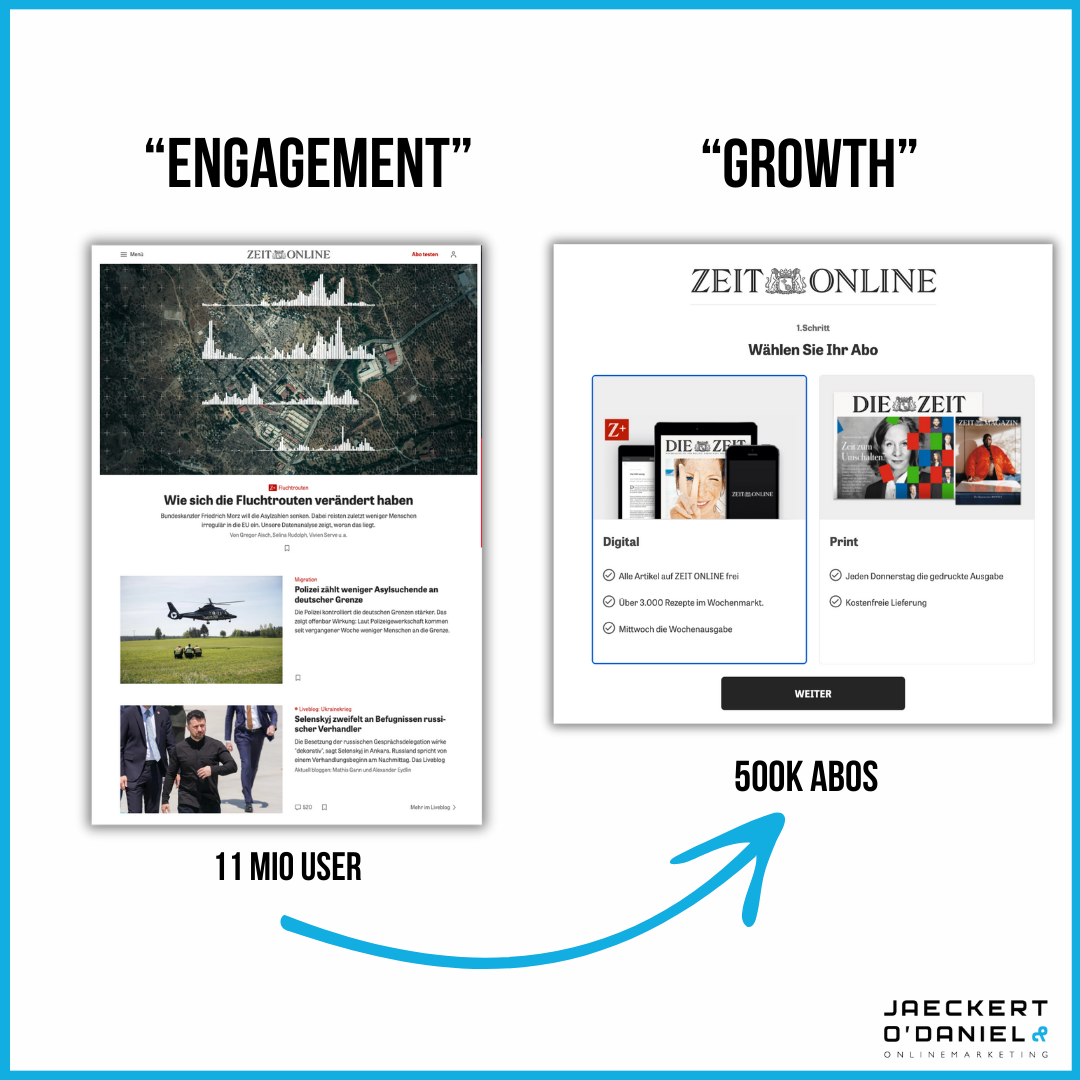
The figures from the graphic are from the following sources: 11.49 million readers per month on Zeit Online (AGMA DNA average Q1 2025), 500,000 subscriptions, according to the CEO’s LinkedIn post.
Audience, Engagement, Growth
What Do these Terms Mean?
Hollow Reach or Sustainable Retention?
A term we discuss in the conversation: ‘hollow reach’. Because many publishers, for example, publish sensational articles, known in technical jargon as clickbait. Such reach-oriented content is indeed widely read, thus triggering many page impressions and consequently ad impressions. But these articles do not lead to subscriptions. On the contrary: the brand is hollowed out by it. A similar discussion exists in the SEO world outside of publishers. For example, many companies optimize for keywords that bring SEO traffic but ultimately do not contribute to the core business, i.e., do not generate leads or sales.
Conversely: If you build strong engagement, users will return even if a traffic channel delivers less or fundamentally changes, as is currently the case with Google and its AI Overviews. From our perspective, topics like engagement have not yet arrived outside the publisher world. Many companies only look at SEO traffic itself. They have neither ideas nor formats to retain users. However, this is precisely what is necessary in a customer journey. You need a system that triggers many touchpoints. SEO is one channel among several here.
Paid Content and SEO – a Contradiction?
At first glance, hard news is the business of media houses. However, ZEIT does not place such news in the paid content area, but makes it freely available. “What we more often gate are author texts. Articles that go deeper. Thoughtful, well-researched journalism,” says Olaf. Topics that are close to people’s everyday lives also frequently lead to subscriptions, such as health, love, and finance. At the same time, gated articles are difficult to reconcile with SEO at first glance. Because the content is not accessible.
However, there is a technical solution here: articles are accessible to the Google crawler, even though they are behind a paywall. “Flexible Sampling” is the Google solution. Additionally, there is an editorial SEO team that collaborates daily with the editorial staff and provides advisory support. Furthermore, the SEO team looks for old subscription articles that have performed well and makes them freely available after some time. By bringing these articles forward in the link structure, they also climb faster in Google rankings.
New Input on SEO & Content: Every Monday via Email