
Every week, we publish two to three posts on LinkedIn. The platform is an integral part of our content strategy – and we regularly discuss how LinkedIn is changing.
Today, we summarize these discussions. How is the platform evolving? What is our personal impression?
From algo updates to cringe posts to thought leadership content – this episode covers it all. Here are our 7 impressions at a glance:
Topics on this Page
- 1. Algo Updates Are Overrated – Reach Is Stable
- 2. LinkedIn Is Not a Classic Network – And Never Will Be
- 3. There Are Exciting New Metrics and Charts
- 4. Cringe Posts Gain a Lot of Reach – And Cause Hesitation
- 5. There Are Best Practices in Every Industry
- 6. With a LinkedIn Strategy, Content Investment Pays Off Even More
- 7. You Do Not Need the Sales Navigator for Reach


Algorithm Updates on LinkedIn are Overrated. Our Reach is Stable
About a year ago, we already discussed our LinkedIn content strategy in depth – and also shared our own figures there. Since then, there have been several major updates where the LinkedIn algorithm was worked on.
Among other things, posts that trigger valuable discussions were supposed to gain more reach. Our subjective impression was initially that our reach had decreased.
However, the year-on-year comparison (08/22 to 08/23) with (08/23 to 08/24) shows: Our reach has remained stable. A deviation of 20,000 impressions is, in our view, a normal deviation that could have looked different with one or two outliers.
This shows: LinkedIn is a stable platform for organic, unpaid reach.

LinkedIn is not a Classic Social Network. And Never Will Be
Engagement on LinkedIn is often compared to other social media platforms like Instagram or TikTok – only to find that there is much less activity on LinkedIn.
Our impression: LinkedIn is used significantly less frequently by many than the “private” social media platforms. There is a hard, active core. But the vast majority are rather passive members who log in once or twice a week. Many also do not interact with posts.
But is the platform irrelevant because of this? The opposite is true. LinkedIn posts often have a long “burn time”. They are still displayed in the feed to such rather passive members days later or even over a week later. Precisely when users log in.
Furthermore, across many professions and subject areas, we observe: The “silent readers” are often very valuable contacts.
Example: A specialist lawyer for labor law regularly posts about labor law issues. Many colleagues from other law firms comment. HR managers also like the posts, but comment somewhat less frequently.
Our experience: Ultimately, these very HR managers (management, HR management, etc.) will contact them for a labor law mandate. The specialist lawyer is anchored in their minds. Marketing jargon – in the “Relevant Set” when it comes to the question of who can help them.
This mode of operation must be clear to anyone developing an organic content strategy for themselves.
Deepen your SEO Knowledge: Every Monday via Email
Unique Views:
there are Exciting New Metrics and Charts
On LinkedIn, you can evaluate the organic reach of each individual post. An interesting metric that has been newly added, among others, is: “Unique Views”.
The impressions indicate, how often the post was viewed on LinkedIn. The Unique Views provide the number of accounts that have viewed your posts on LinkedIn.
The distinction also makes it clear: Some LinkedIn members view a post more frequently. For example, if they interact with it or if their contacts, in turn, interact with the post.
How should the individual number be evaluated? We see it this way: To reach 3,955 people, as in this example, one would have to be on stage at a very large conference. Or buy reach on LinkedIn for a lot of money. However, the effect is then completely different again.
With organic reach, one has earned professional attention – keyword: Thought Leadership Content. With LinkedIn advertising, one pushes oneself into the feed. Most LinkedIn ads have zero engagement. Users actually do not want to see it.

Cringe Posts Often Receive many Likes – and Deter many Professionals and Executives from Starting
This also belongs to LinkedIn: posts that make one cringe. What exactly causes cringing – that varies for everyone. Some are bothered by the selfie culture. Others find it absurd when people pour out their private problems on LinkedIn. Still others are bothered by the alleged self-confidence of Generation Z or the alleged narrow-mindedness of boomers. Unfortunately, such very striking posts, which symbolize social, work-cultural, or even political developments, gain massive traction on LinkedIn – thus distorting perception.
But what does that mean for one’s own LinkedIn content strategy?
In conversations, we repeatedly notice: Many passive or silent professionals and executives have the impression that they “must” now also do “something like that”. However, no one “must” do anything. The core of the problem lies in the fact that they are not yet clear about which professional topics they want to write about, in what way, and for which target audience.
These are classic content strategy questions that are still unresolved. The cringe posts that gain traction usually bring significant reach. But otherwise, they rarely have a deeper benefit for the individuals.
There are Now Best Practices for Professional LinkedIn Strategies in Every Industry
Three to five years ago, it was still largely “blue ocean” to build one’s own organic reach through professional posts. That has changed. Our impression: The platform has professionalized – similar to Twitter, Instagram, or TikTok in previous years.
Many corporations and medium-sized businesses have set up corporate influencer programs in recent years. Many self-employed individuals use the platform as a marketing channel. And many employees use it to build an independent foothold alongside their permanent employment.
Sometimes the networking idea is in the foreground, sometimes the sales approach. What we consistently observe, however, is: There are now best practices in practically every industry. In some cases, individuals have a six- or seven-figure reach. As Public Professionals – i.e., as experts in their field who are in the public eye – they dominate the entire industry.
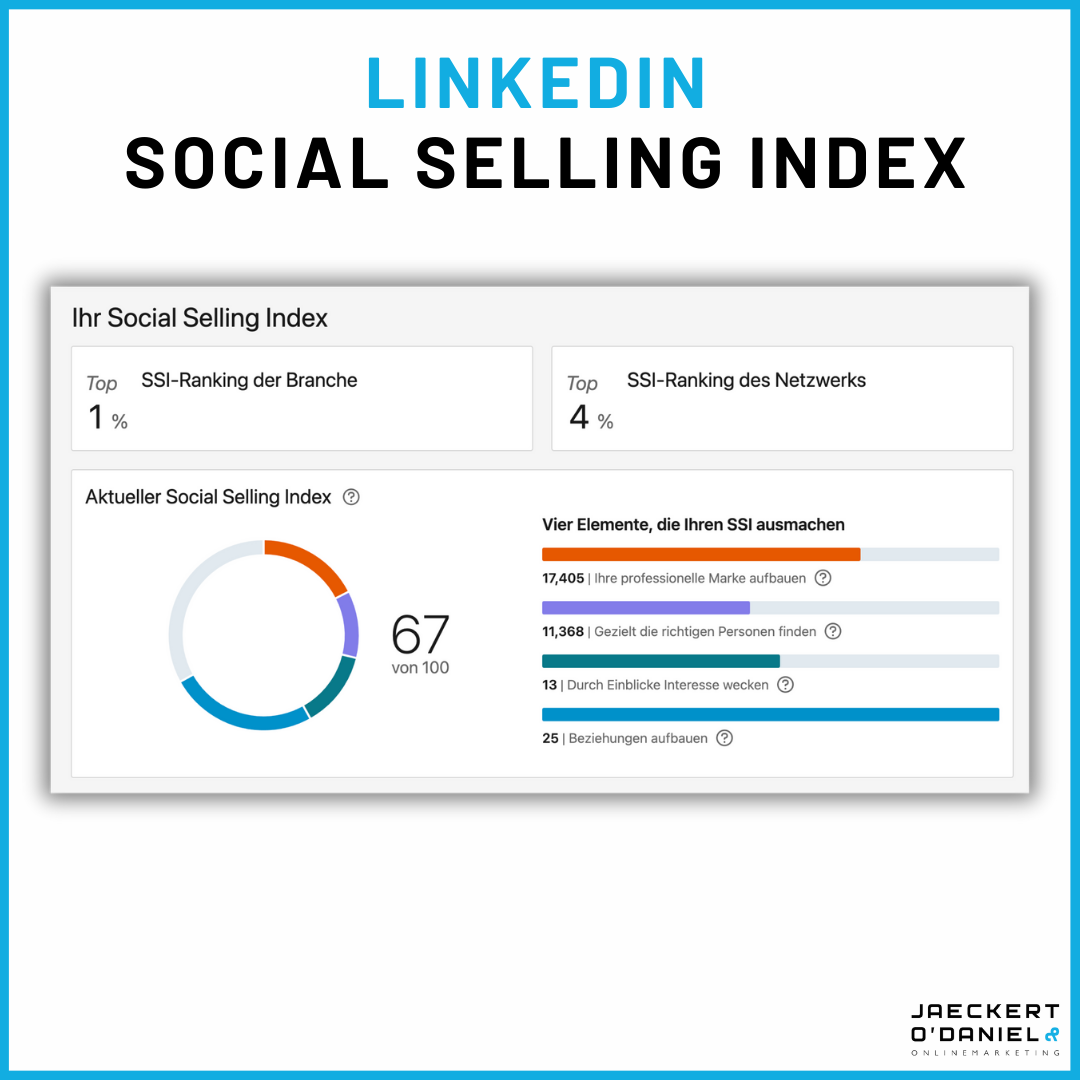
One can assess oneself using the Social Selling Index, which everyone can access here. Here, we discussed the LinkedIn SSI in more detail.
With a LinkedIn Strategy, the Investment in Content Pays off Even More
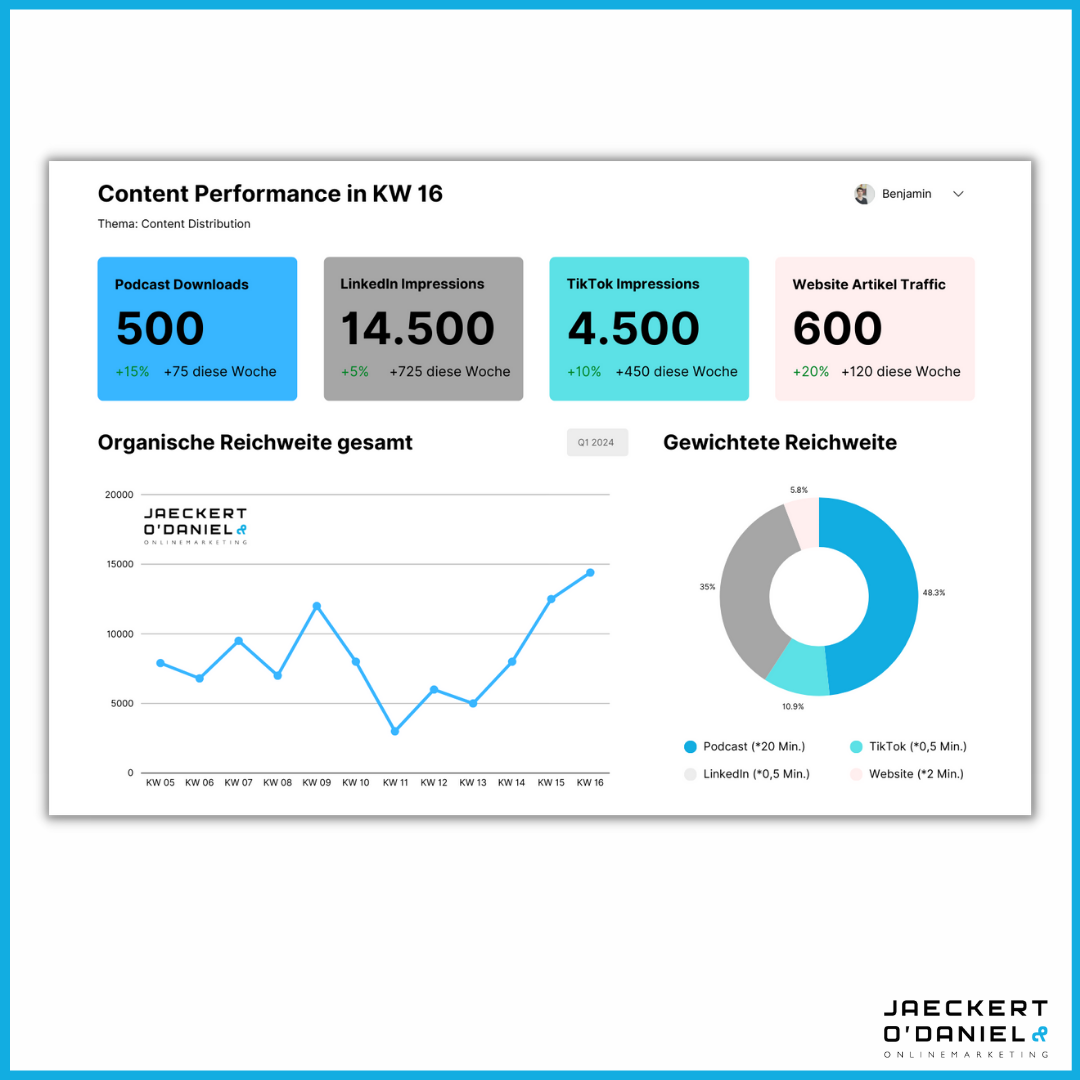
Many marketing departments think very much in terms of channels. SEO, Google Ads, Instagram, LinkedIn, YouTube. This often leads to content being produced in silos – and not coordinated.
Each channel must prove itself. Sometimes colleagues from SEO, social media, PR, and marketing work closely together. But often also side by side.
A common consequence: One makes far too little of the content that has been elaborately produced. However, a LinkedIn post can also be part of a blog article – and an SEO landing page can also be fodder for the next LinkedIn post.
We recommend a topic-centric planning. One plans a topic – and then distributes it specifically and precisely across all platforms. We delve deeper into this topic here in our article on Content Distribution. We also offered a workshop on this in our Academy (recording here).