January 11, 2021Fabian Jaeckert
WordPress SEO: Interview with Kai Spriestersbach
Do you use WordPress too? Then you are surely asking yourself how to do successful search engine optimization with your WordPress. This much up front: there are many misunderstandings and pitfalls.
That is why we brought in an expert for this topic: among SEOs, Kai Spriestersbach belongs to the old guard. He has been an SEO consultant for many years and has set a focus on WordPress SEO.
In the podcast we talk about why an SEO plugin for WordPress is not yet an SEO strategy, which traps there are when writing blog articles, how to improve your Core Web Vitals, and which themes and plugins Kai works with.

Our guest on WordPress SEO: Kai Spriestersbach
Kai Spriestersbach has worked in online marketing for more than 15 years and regularly stands on the stages of the big conferences as an SEO speaker. He has been working with this CMS since the first WordPress version in 2004. Since 2009 he has also specialized in technical search engine optimization. Kai is also a trained media designer.
Kai Spriestersbach therefore connects several worlds: the user perspective with the technical, analytical view of websites. In his online magazine Search One he has published numerous articles on these topics. That is exactly what our conversation is about as well: we talk about content, technology, and the internal processes in companies.
Kai’s link tips:
WordPress SEO plugins: why that is not enough
Numerous WordPress SEO plugins on the market
There are numerous SEO plugins for WordPress, such as Yoast, Rank Math, WP SEO, and many more. For Kai, these plugins iron out the shortcomings that WordPress has in a raw installation. For example, setting individual pages to no-index, such as tag pages. Structured data, tree structures, and internal automated linking are further topics. You can use plugins in a targeted way for that. But you should also always “keep house” and generally watch whether all plugins are actually used, or whether they only clog up the load time.
WordPress SEO plugins do not replace an SEO strategy
SEO is about keyword research in depth, about website architecture, about good content assets, and good links. Plugins do not deliver any of that at first. They support the people responsible on the operational level in certain aspects, but not on the strategic level. Kai sees a major shortcoming exactly there: many people start with content without a strategy. Kai: “With which assets do I want to reach someone, but can I even reach anyone, and with which search queries?”
Tips, strategies, current webinars on SEO, through our newsletter

SEO from practice: our podcast interviews


Twice as visible as AirBnB: interview with Dominik Schwarz

1 million users a month, with the right content strategy: interview with Jan Brakebusch

The art of crawling: interview with SEO Markus Hövener

SEO for a software company: interview with Beat Köck

SEOs look at the company like entrepreneurs: interview with Marcus Tober

Link building with Saša Ebach, part 2

Search intent: what makes your users tick? Interview with Johannes Beus of Sistrix
WordPress and SEO: “Blogging in itself is not an SEO strategy”
Bet on quality
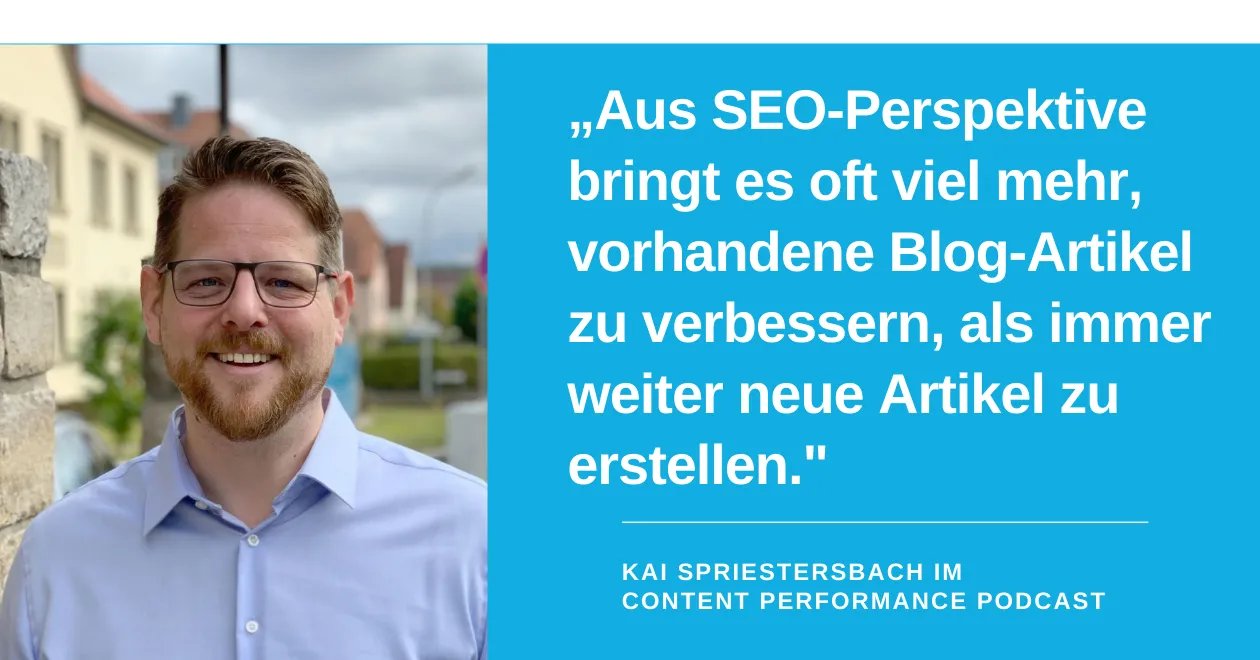
“Blogging in itself is not an SEO strategy,” says Kai Spriestersbach. Old articles slide back into the archive and are no longer visible, neither for the user nor for Google. Priority should be on quality, says Kai. “If I cannot manage to publish ten good articles a week, then I do only one article a week or a month. I have also recommended to clients that they publish one article per quarter. That is four really good assets a year. That does more than publishing nonsense.”
Update old articles
Old articles are often simply forgotten. They rot in the archive. Yet they may already rank and are basically already successful. So it makes sense to include a revision and update in the editorial plan as well, and to work on your existing assets. “I update evergreens regularly. I always keep them active,” says Kai. Other articles that may not be working should also be taken on, improved, or deleted.
Discussion with our listeners about WordPress SEO
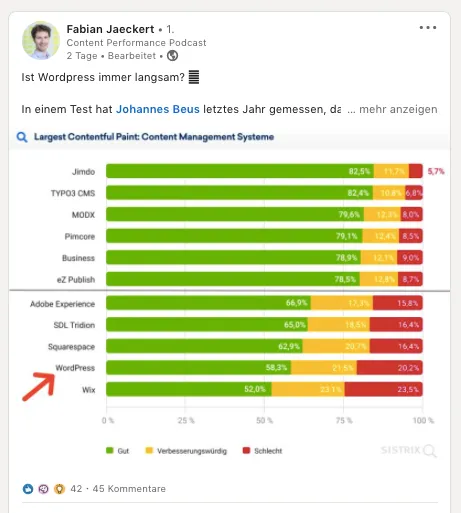
How do load times stand in WordPress? Or, to put the question sharply: is WordPress always slow, as this analysis by Sistrix seems to suggest? That is what Fabian asks on LinkedIn. Here is the discussion.
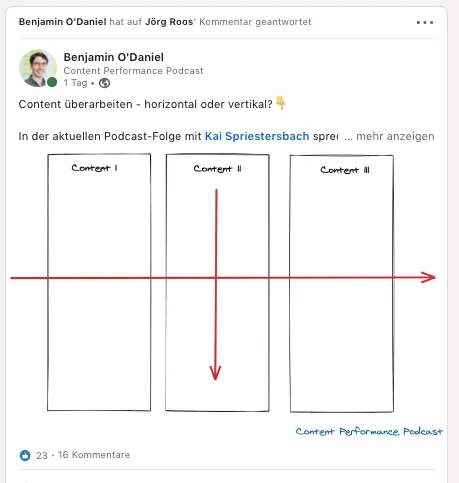
How can you revise your existing content well? Benjamin deals with this question every day. Here he describes two different approaches. In a further discussion the question is whether you revise old articles or produce new ones.