Online Marketing:
Strategies, Measures, Examples

Online Marketing Involves Developing Strategies and Measures that Lead to Increased Awareness and more Business. This Includes Disciplines Such as Search Engine Optimization (SEO), Content Marketing, LinkedIn Marketing, or Email Marketing.

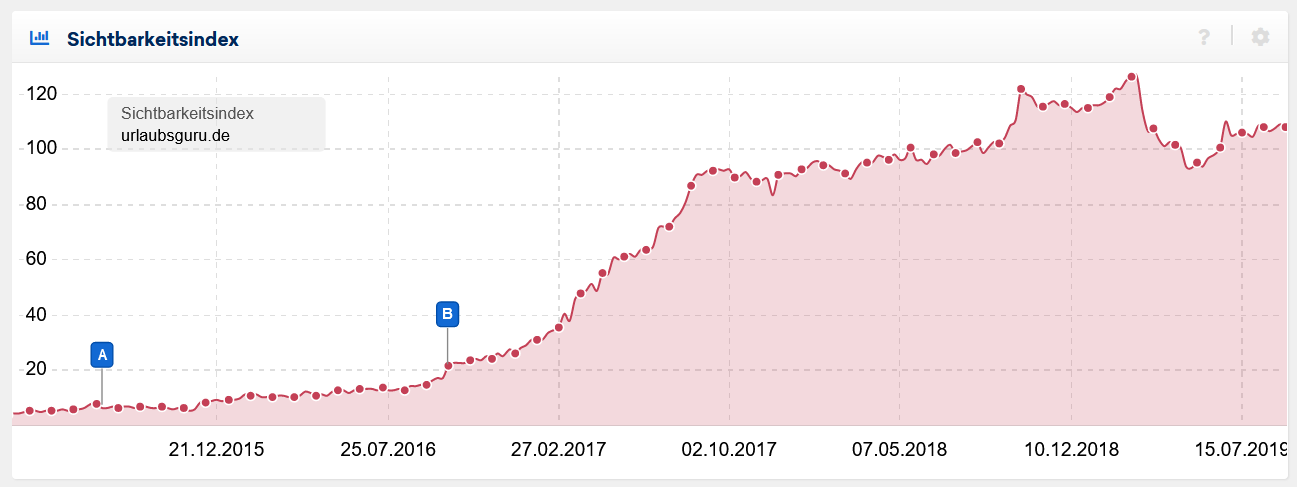
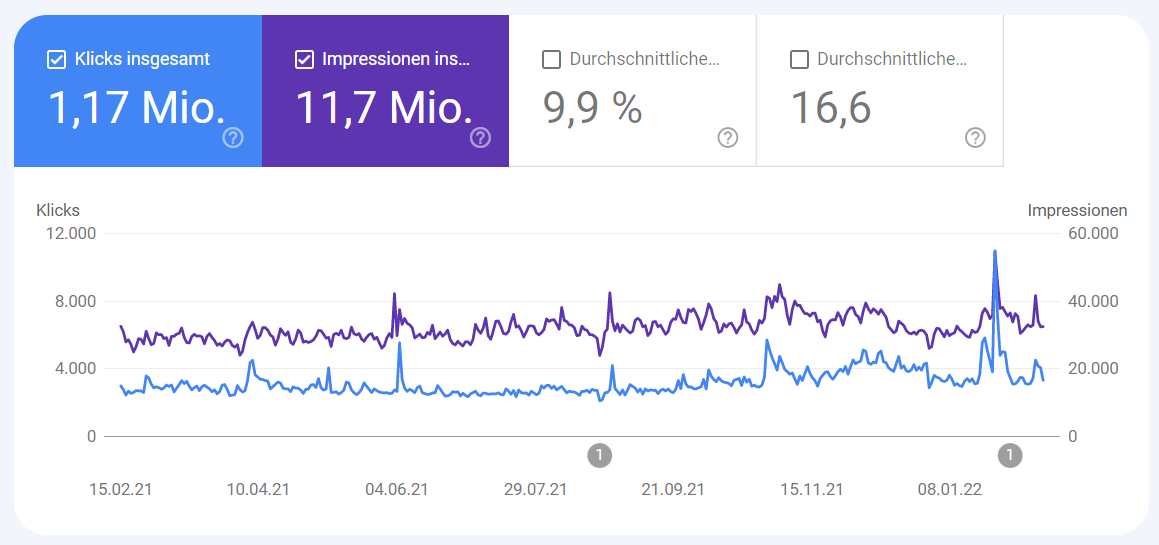
Website Clicks via Search Engine Optimization. One of many channels.

Definition: What is Online Marketing?

Online marketing encompasses all strategies, measures, and channels that serve to build and expand a company’s online reach and awareness.

Important online marketing channels include Search Engine Optimization (SEO), Content Marketing, LinkedIn Marketing, Blog Marketing, Influencer Marketing, or Email Marketing.

Often, the various disciplines intertwine or are developed in parallel.

Online Marketing Channels:
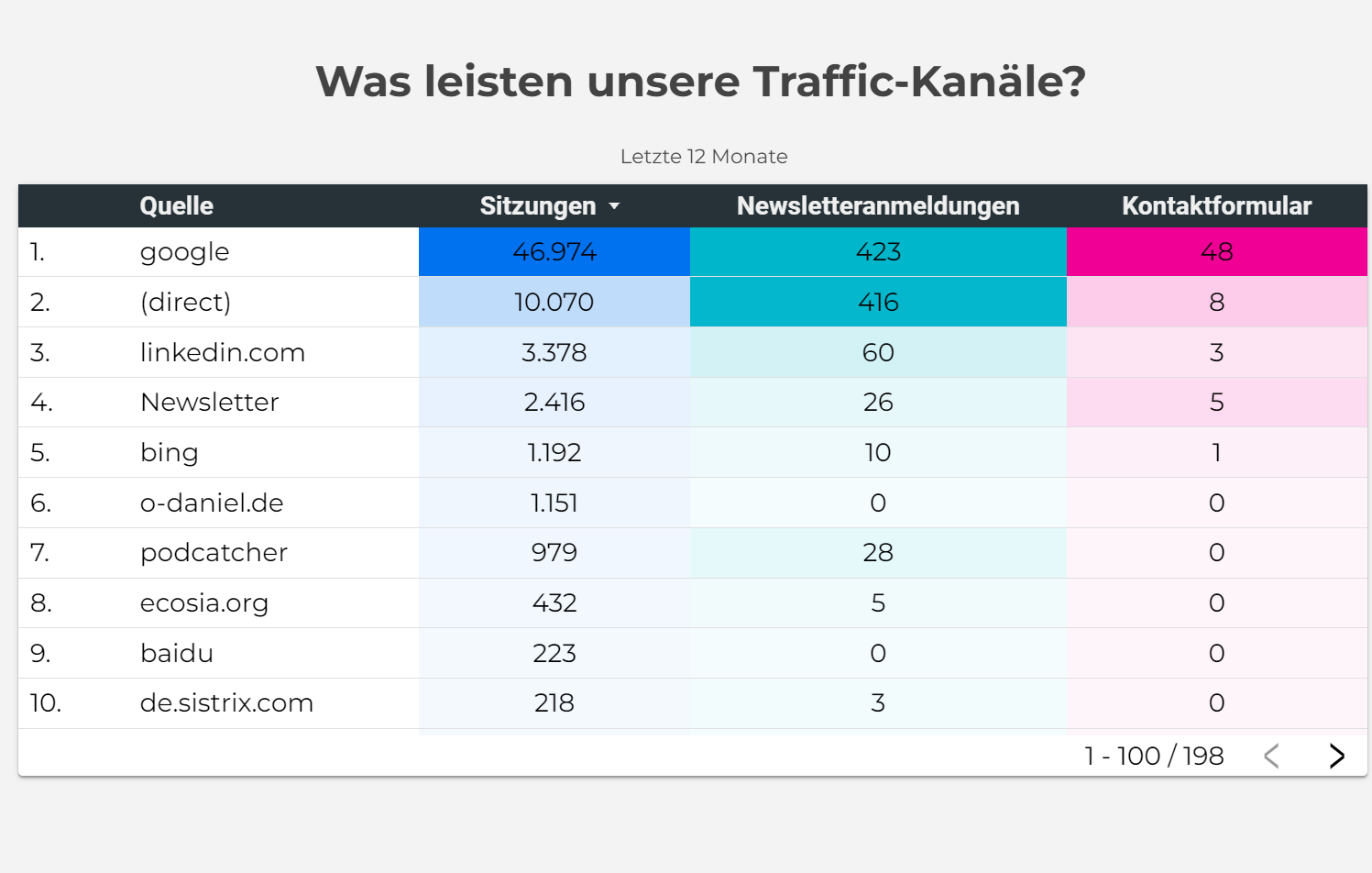
which Channels Generate Traffic?

SEO

Search Engine Optimization, or SEO, is almost always the biggest traffic driver. If companies have a clear SEO strategy and work on their website. This is what our topic page on successful Search Engine Optimization is about.

LinkedIn Marketing

On LinkedIn, very high reach can be achieved, and brand building can be pursued strategically – especially in the B2B sector. Three things are necessary for this: a strong profile, a good network, and a smart LinkedIn content strategy. To LinkedIn Marketing.

Newsletter

Newsletters are among the oldest online marketing channels – and still function very well. The great advantage of newsletters: You control access to your subscribers yourself.

Facebook, Instagram, and Others.

Many B2C companies are active on Instagram and Facebook. Here, too, one can run ads or gain attention organically with content. Each platform has its own target audiences and formats.

SEA

SEA or Google Ads bring traffic and conversions. However, this comes at a price. It is about setting up and managing efficient campaigns. And working on content can also achieve a lot. To our topic page Google Ads.

Content Marketing

In content marketing, there are very different schools of thought with equally diverse approaches. We explain the various strands and how we view content marketing. To the topic page Content Marketing.

Online Marketing Implementation: Three Options

In-house Marketing Managers

Often, marketing managers also manage the website. They handle all marketing activities and, for example, the website simultaneously. The more extensive online marketing becomes, the more sense it makes to hire specialized personnel for it. These can be online marketing managers specializing in ads, newly trained SEO managers, or content marketing managers who are more proficient in content creation.

Online Marketing Agency

The market for online marketing agencies is very diverse. There are large full-service agencies that offer everything from web development to internet marketing. And there are specialists who focus on specific measures or channels such as SEO or influencers. The choice of agency is a matter of cost and quality. From our experience, a five-figure budget should be calculated for this.

Online Marketing Consultants

We are Benjamin O’Daniel (left) and Fabian Jaeckert. For many years, we have worked as SEO consultants, combining technical search engine optimization with content marketing.

After a website relaunch, we as a brand wanted to tackle SEO. For this, we specifically sought support. Benjamin and Fabian developed technical optimizations and an SEO strategy with a content roadmap. Many thanks for your valuable input.

Anja Horn
Digital Marketing Manager, Barilla Deutschland GmbH

Many companies want to build online marketing competencies within their own organization. However, they lack the initial guidance. Especially since marketing managers usually have a lot on their plate.

This is where we, as online marketing consultants, come in.

For example, we develop individual SEO strategies for companies and present them in a workshop. If required, we then support the in-house managers during implementation.

Would you like to know your Google ranking? What potential your company has?

We would be pleased to arrange an introductory SEO meeting (30 min. video conference). We will perform an SEO check and provide you with an initial assessment.

This field is for validation purposes and should be left unchanged.
Your Name

Examples of Successful Online Marketing

Software Company Example

A B2B company from Southern Germany distributes software internationally in ten countries. For this purpose, it has been running a Google Ads campaign for many years, which provides leads to sales. At the same time, it invests in international search engine optimization to be visible for important terms.

Consulting Company Example

A consulting company from North Rhine-Westphalia advises medium-sized companies on tax matters. For this purpose, it organizes its own webinars, which it promotes via LinkedIn. In addition, the consultants have developed their own LinkedIn Content Strategy. For their website, they specifically develop Thought Leadership Content.

Food Company Example

A traditional food manufacturer has been building its own online shop over several years – also as an independent pillar alongside traditional distribution through supermarkets. Through Search Engine Optimization, the company achieves high visibility and directly acquires customers, whom it retains via a newsletter.

Startup Example in the Textile Sector

A young B2C startup initially starts on Amazon. However, after a short time, its own shop is set up. The company consistently relies on search engine optimization – and specifically on valuable, non-commercial texts and videos related to the topic. Organic visibility increases enormously and ensures a high margin on every sale.

Expert Example in the HR Sector

A B2B company from the plant engineering sector has always generated all important contacts and orders at trade fairs. However, since Corona, sales have been in limbo. The sales team is now focusing on LinkedIn instead. Here, each employee builds their own personal network. Additionally, contact inquiries come in via Google Ads.

Plant Engineering Company Example

A B2B company from the plant engineering sector has always generated all important contacts and orders at trade fairs. However, since Corona, sales have been in limbo. The sales team is now focusing on LinkedIn instead. Here, each employee builds their own personal network. Additionally, contact inquiries come in via Google Ads.

How to Develop an Online Marketing Strategy

Initial Situation

When we develop an online marketing strategy, we always start with the products, target groups, goals, and competition. What a company stands for, which offers yield the highest margins, where potential future markets are. Internal resources also play an important role. Because an online marketing strategy must also align with the available possibilities.

Analysis

The next step in developing an online marketing strategy involves analysis using professional tools. Here, we analyze competitors, research keywords and rankings, and examine how the website and channels can be better aligned.

Action Plan

Ultimately, every online marketing strategy must result in a concrete action plan. We clearly describe, using individual examples from our clients’ websites, what should be done and how. We translate this into a concrete roadmap. So that marketing managers know what they need to do, with what goals, and with what effort.

Presentation

The best online marketing strategy is only effective if everyone understands it. Therefore, we place great importance on personally presenting the strategy in an understandable presentation. Afterward, we answer questions and discuss together how the implementation can best succeed.

Consulting

During the implementation of an online marketing strategy, further questions often arise. Here, we stand by our clients with mentoring. As sparring partners, we accompany the in-house managers. In addition, we have built our own knowledge area, our SEO Academy.

GEO SEO Newsletter


Tools in Online Marketing

Ranking Tool

How well does the website rank on Google? Many managing directors and executives check this by Googling an important term. However, the results are often distorted. Furthermore, it is less about how well a website ranks for a single term. Rather, it’s about hundreds or thousands of terms – and how valuable these individual terms are. This can be analyzed using a ranking tool.

Keyword Tool

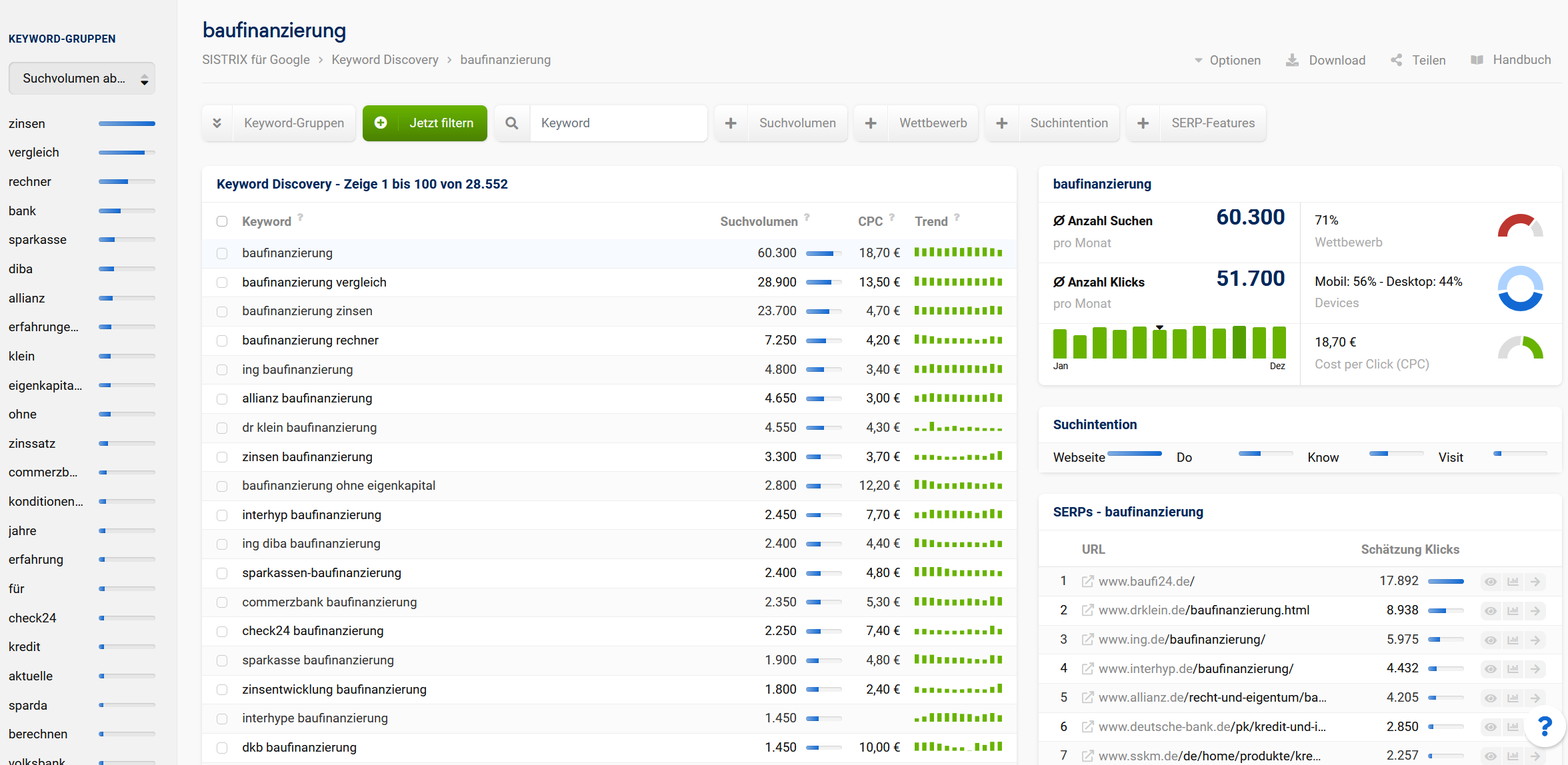
It’s similar with keywords: Practically every company has hundreds to thousands of terms that are highly relevant to the business. Crucial here is to research the so-called generic terms. These are general terms where users do not yet have a specific company in mind. Whoever is visible here receives highly relevant visitors to their website. More about Keyword Research.

Traffic Tool

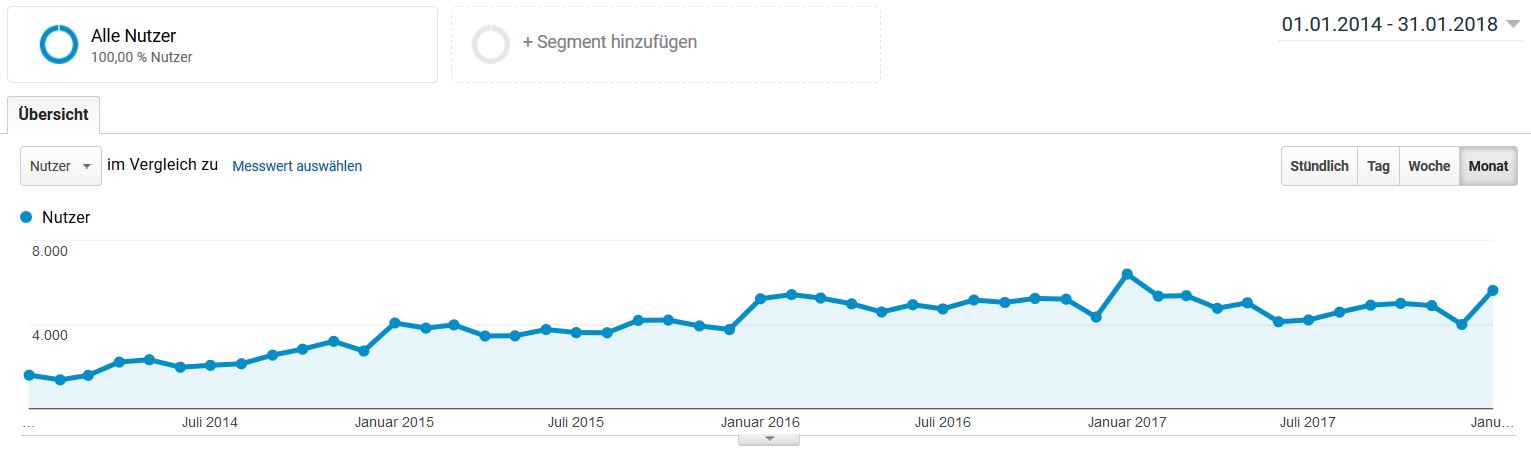
Every website has visitors. But where exactly? How many visitors are on which individual subpages? How do they behave on the website? Where do they complete an action, for example? On which pages do visitors stay longer and on which do they not? Such questions are answered with a traffic analysis tool. It should always be part of an online marketing toolset. For example, via Google Analytics.

Heatmap Tool

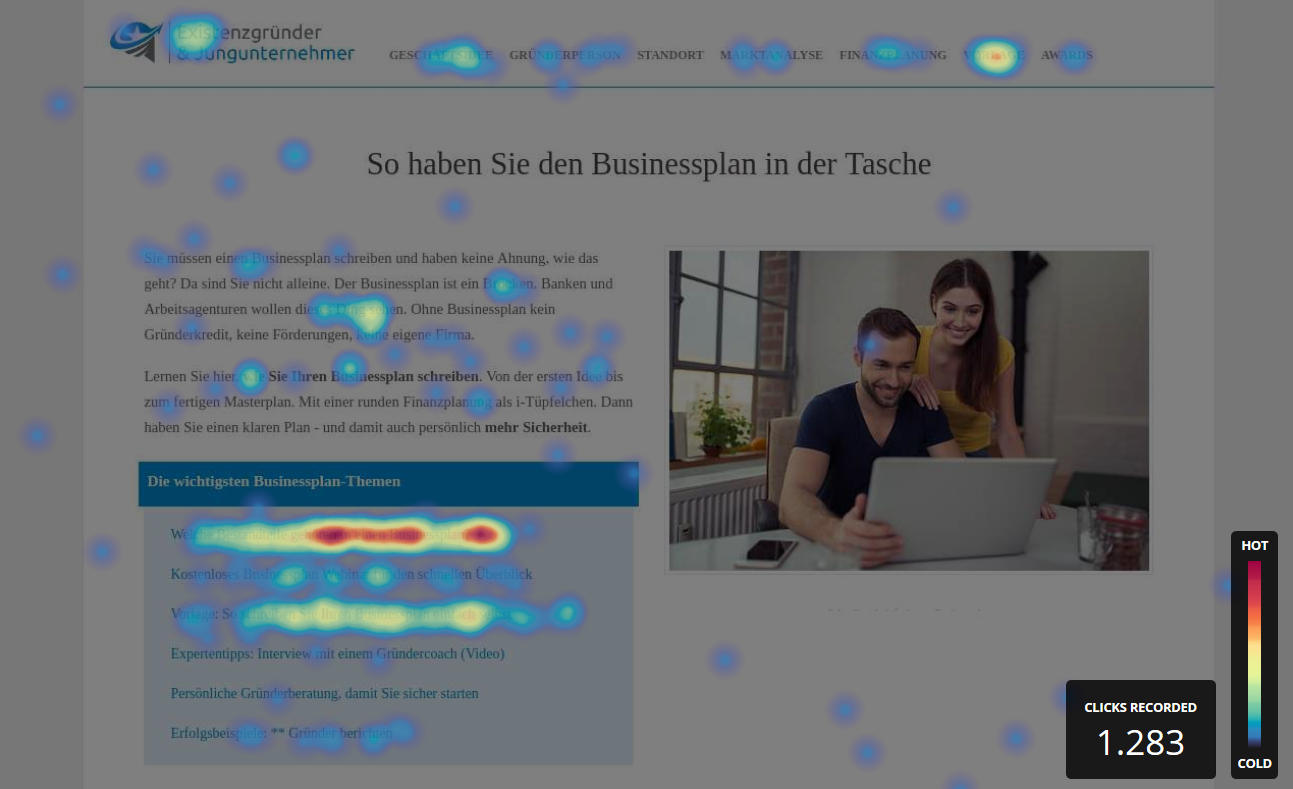
With heatmaps, you can delve even deeper into a single subpage. For example, you can see how far visitors scroll down a single subpage, where they click, and how they navigate. Naturally, this is anonymized. But in large numbers, heatmaps are very insightful. Because this way, you can further improve your content. Here we report on a concrete example of a heatmap analysis.

Our Online Marketing Podcast:
Experiences and Tips

In our online marketing podcast, we discuss strategies, examples, and approaches every week. We share our knowledge openly, honestly, and uncut. Additionally, we regularly invite entrepreneurs, executives, and experts to talk about their work, their specific online marketing measures, and their specialist topics.

Tip: Simply scroll through our episodes and pick out a few.

Frequently Asked Questions about Online Marketing

How much Does Online Marketing Cost?

The costs for serious online marketing amount to five-figure sums. Larger companies invest significantly more. For SEO, a budget for strategy development and measures must be planned. For advertising platforms like Google Ads, a media budget and a budget for operational support must be planned.

How should one Invest in Online Marketing?

From our perspective, many companies invest their budget too one-sidedly. Often, a large portion of funds flows into only a single channel. Google Ads is preferred here, although click prices and thus costs have been rising for years. In contrast, far too little is often invested in strategy and content. Furthermore, many companies have not selected a professional toolset.

What should I Consider in Website Marketing?

Unfortunately, there is still often the assumption that all online activities are not important – in contrast to attending a trade fair. However, especially online, quality is paramount. This applies to both products and online marketing. Users inform themselves in great detail before making a decision – keyword Customer Journey. Every customer is now extremely well-informed and discerning.

What is an Online Marketing Strategy?

In an online marketing strategy, goals are defined (e.g., awareness, leads, sales), measures are developed (e.g., content, ads), and these are measured, evaluated, and optimized (reporting). This can happen externally, for example, through an online marketing agency or an SEO consultant. Or it can be organized purely in-house. Combinations are frequent and also sensible.

How Can I Optimize My Online Marketing?

Many companies start with online marketing but then lose momentum. The secret to success is the continuous optimization of strategy and measures. A great advantage is the measurability of activities. Example: If a newsletter has a very low open rate, one can work on the subject line next time – and analyze whether more people click.

How Do I Start with Internet Marketing?

From our experience, a simple way to start is always: Learning by Doing. Find a platform or channel that suits you. This could be your own website, followed by SEO. Or a social media platform where you can experiment.