October 14, 2024Benjamin O’Daniel
5 Myths About Organic Reach
We are specialists in organic reach. That means traffic you earn, and do not buy.
SEO is traditionally the strongest organic channel. But LinkedIn, newsletters, and webinars are also channels and formats that generate organic reach.
Over the years we have heard certain myths and beliefs about organic reach again and again.
Time to take a closer look at these myths and ask: is that actually true? In the podcast episode we develop a counter-myth for each one.
The 5 myths, for jumping straight there
Organic reach: predictability
A major hurdle, if not a blocker, for many marketing leads: they consider organic reach impossible to plan, or not reliable. The line of thinking is: you can do a lot and still get nothing out of it.
This way of thinking comes above all from the fact that SEO offers no guarantee of a specific Google ranking. Every website can rank for tens of thousands of keywords. But there is no certainty, unlike Google Ads, where you buy your clicks.
But the comparison is flawed, in several ways.
Every day we see company websites that have generated stable SEO traffic for years. We see the same with experts who regularly share their specialist knowledge on LinkedIn, or who produce podcasts.
On that basis you can estimate very well how much traffic you are likely to generate over the coming 12 months, and what that traffic will deliver. So it is above all a question of experience.
And on Google Ads: this is comparing apples and oranges. For one thing, click prices have been rising for years. For another, traffic drops immediately if you cut the budget. SEO, by contrast, often generates traffic steadily over a long period.
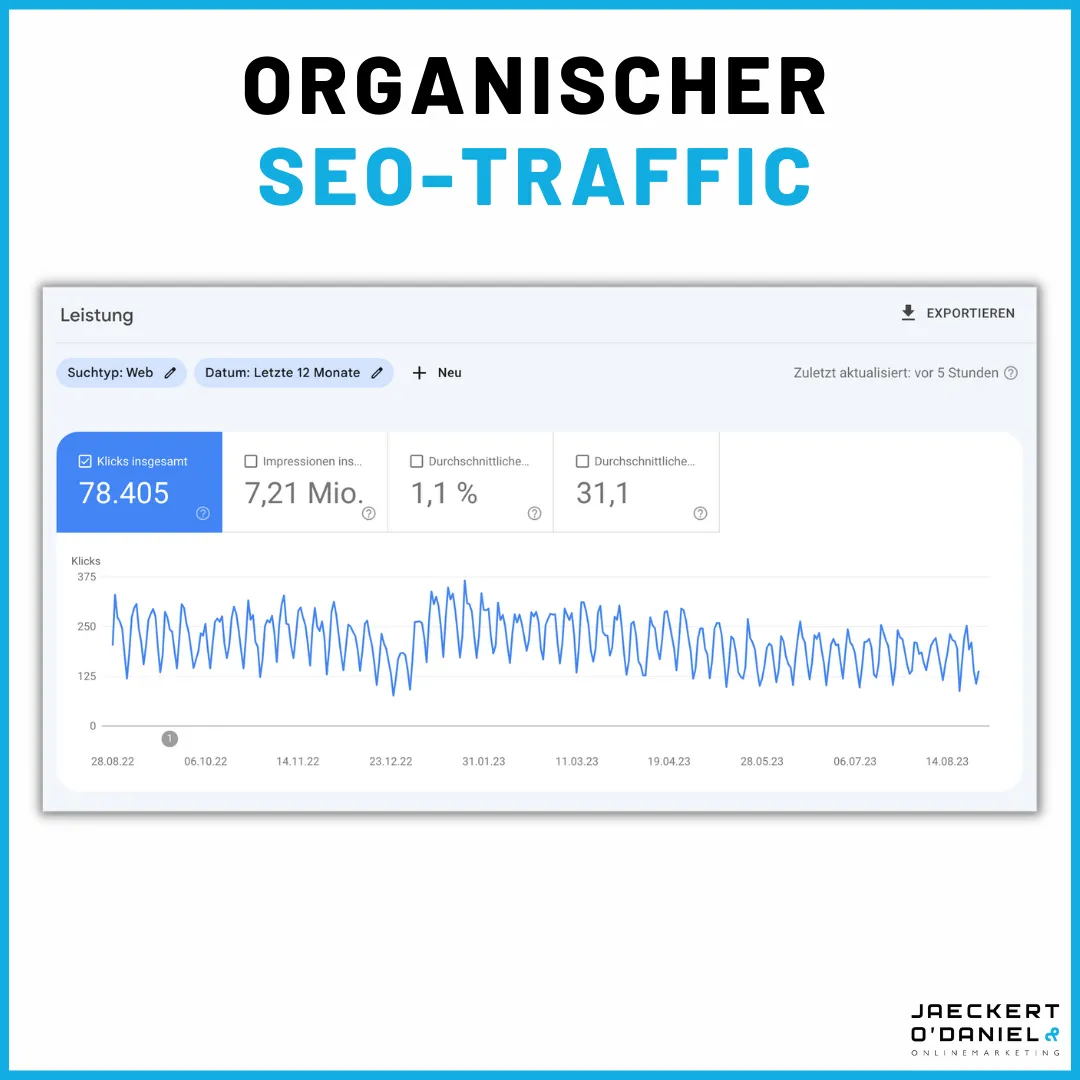
Here is an example from a project of our own. Over several years we built a guide portal with about 400 pages. The portal has been dormant for years. Even so, we still generate about 80,000 clicks a year through it, without doing anything for it. On that basis you can plan very well how much traffic we are likely to generate through it over the coming 12 months.
Organic reach: the time it takes
Another myth: it takes a long time to build organic reach.
To be honest, we often say this in our podcast too. There is an important reason: it is about containing expectations. Organic Google rankings often build over months and years. Strategic search engine optimization takes staying power. It is not a quick sales tool.
On the other hand: stated that generally, the claim is not quite right. Because, as always, the detail matters. Key factors: how well known is the company investing in SEO? A large brand usually also has a strong website and, as a result, ranks much faster with new content.
The specific keyword matters too. A term with tens of thousands of searches a month is naturally more competitive than a longtail keyword with a few hundred searches. In our experience, you rank much faster in the longtail.
A third key factor: which topics do you publish on the website? Companies are often known for certain topics. If you start there with a content hub, you often have a good chance of ranking quickly.
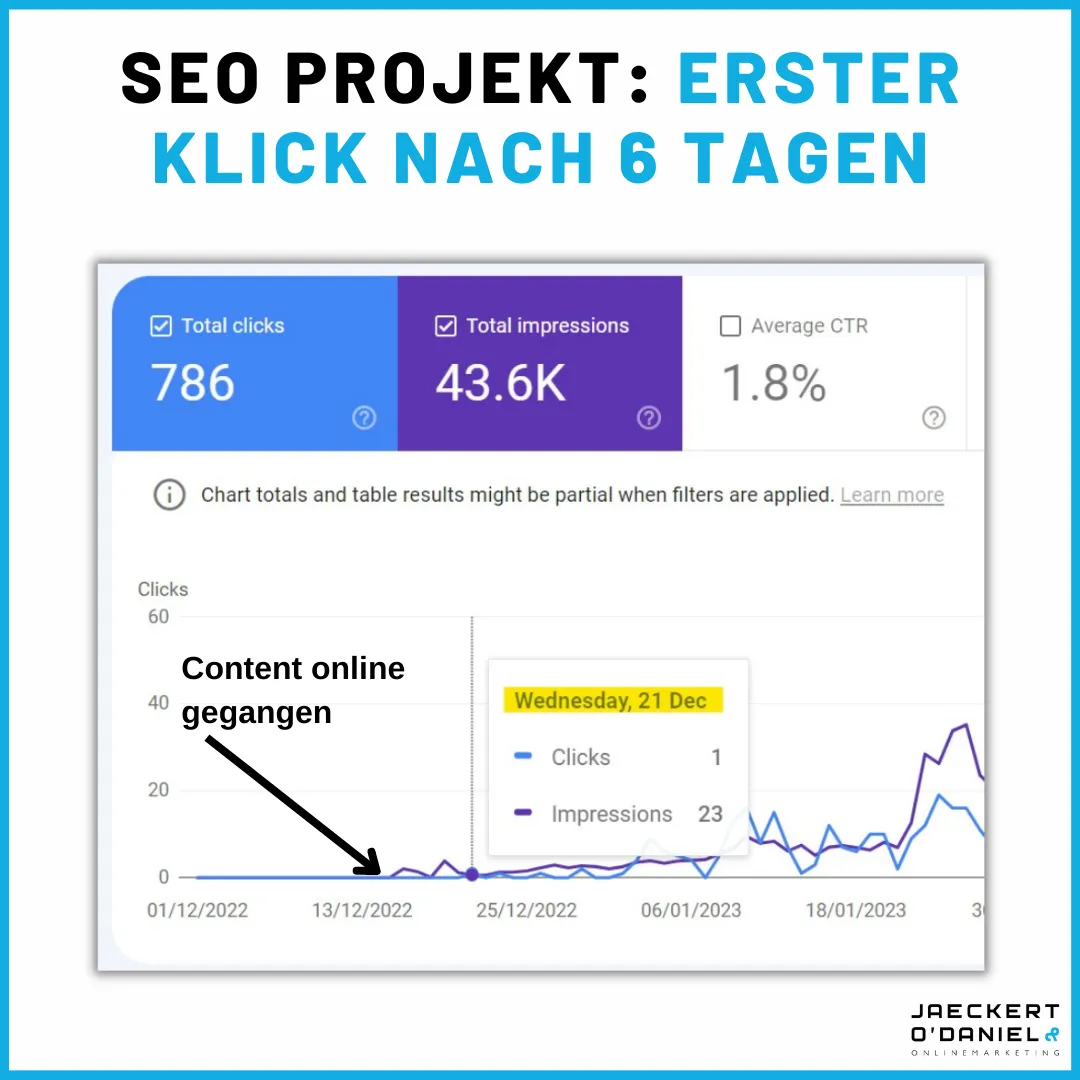
In this case study (see screenshot), the first click via Google came just a few days after the content went live. Behind it is a content hub of a single-digit number of specialist articles that now generate thousands of clicks a year. The organic reach arrived quickly, and it keeps developing.
Organic reach: measurability
People often assume that organic reach, like marketing as a whole, can hardly be measured properly. Along the lines of Henry Ford’s saying: “About 50 percent of my advertising budget is money thrown away. Nobody can tell me which 50 percent that is, though.”
For digital marketing we cannot confirm that. What we see instead is a large gap in web analytics. While classic ads campaigns are tracked, there are hardly any goals and metrics for organic channels.
Take LinkedIn: here you can determine quite clearly how many impressions you generate. Per year, per month, per week. Per post. On the other side, you can record clearly how much time the engagement there costs. That way you can determine quite clearly whether it is worth it.
Other channels, such as website traffic or newsletter clicks, can be determined clearly too. Important for website traffic: in Google Search Console, distinguish “brand traffic” (keywords and clicks with a brand connection) from “non-brand traffic” (keywords and clicks without a brand mention).
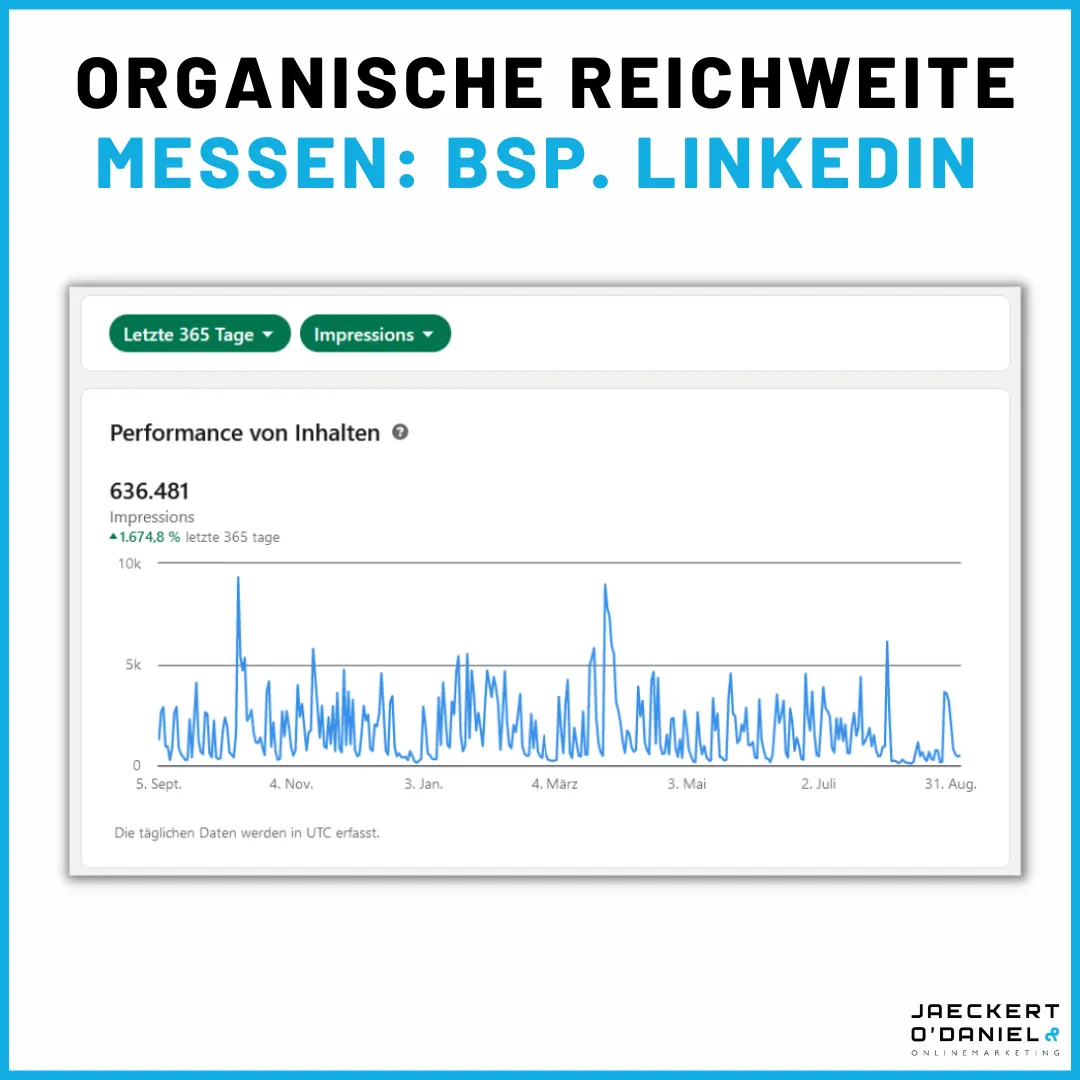
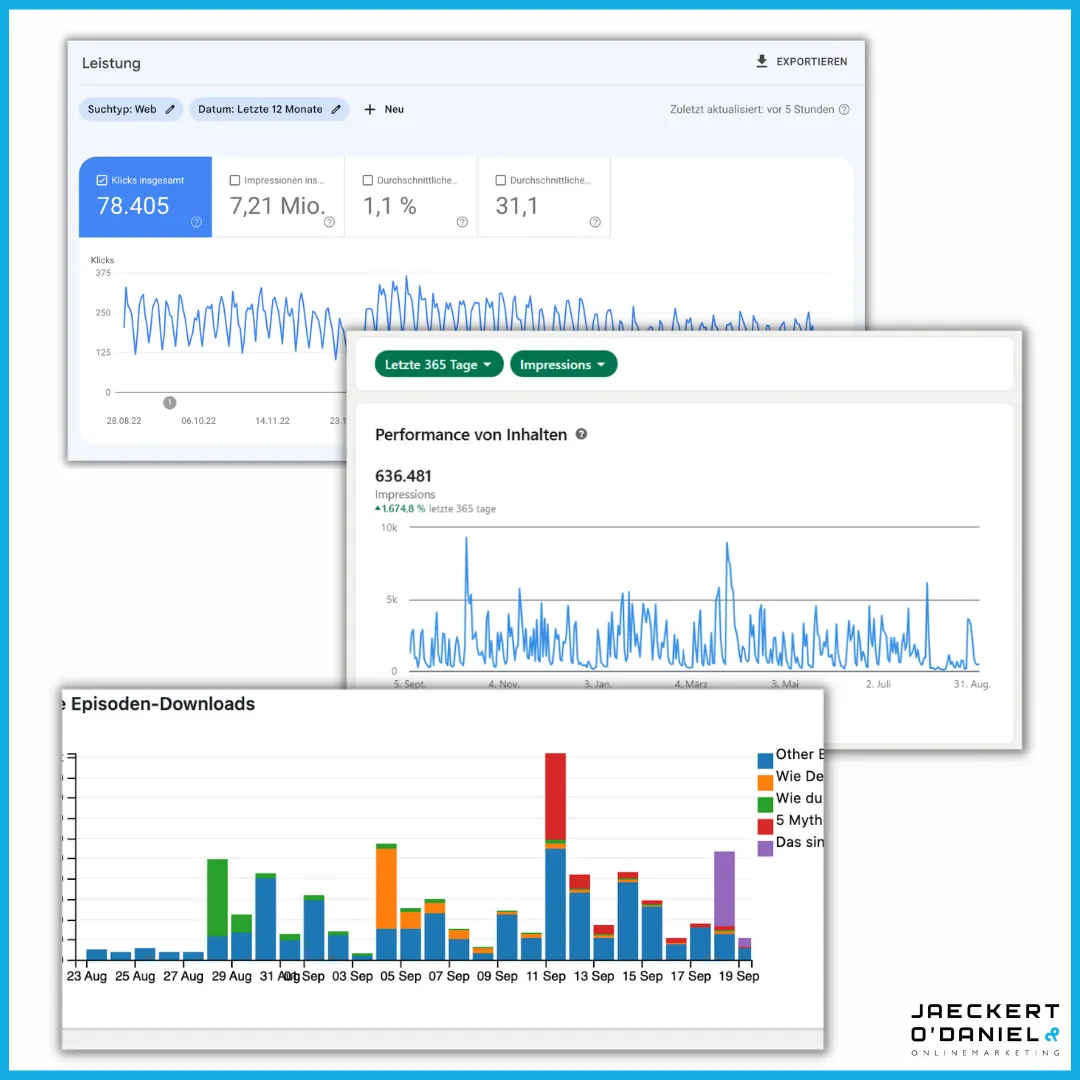
In this example you see the impressions per year from Fabian’s LinkedIn profile. He posts specialist articles on LinkedIn every week.
Organic reach: the resources
A frequent defensive stance we see: people skip organic channels because they suspect a great deal of work behind them. It gets interesting when you ask how much work it would actually take. Because there is usually no answer to that.
Most of the people responsible do not know exactly how long they need for a landing page, a blog post, a newsletter, or a LinkedIn post. It is not recorded properly. The fear of too much work comes above all from not knowing, or from a lack of controlling.
Yet exactly that kind of controlling is incredibly important. Anyone who has gained experience building a content hub of 20 articles can, in turn, calculate well how many resources you need for a hub of 100 articles, and when and how you need support (for example from freelancers).
We ourselves are set up very lean when it comes to project management tools. But for our podcast we have always set aside time quite clearly. Because we know it is worth it. The most serious customer inquiries demonstrably come through it.
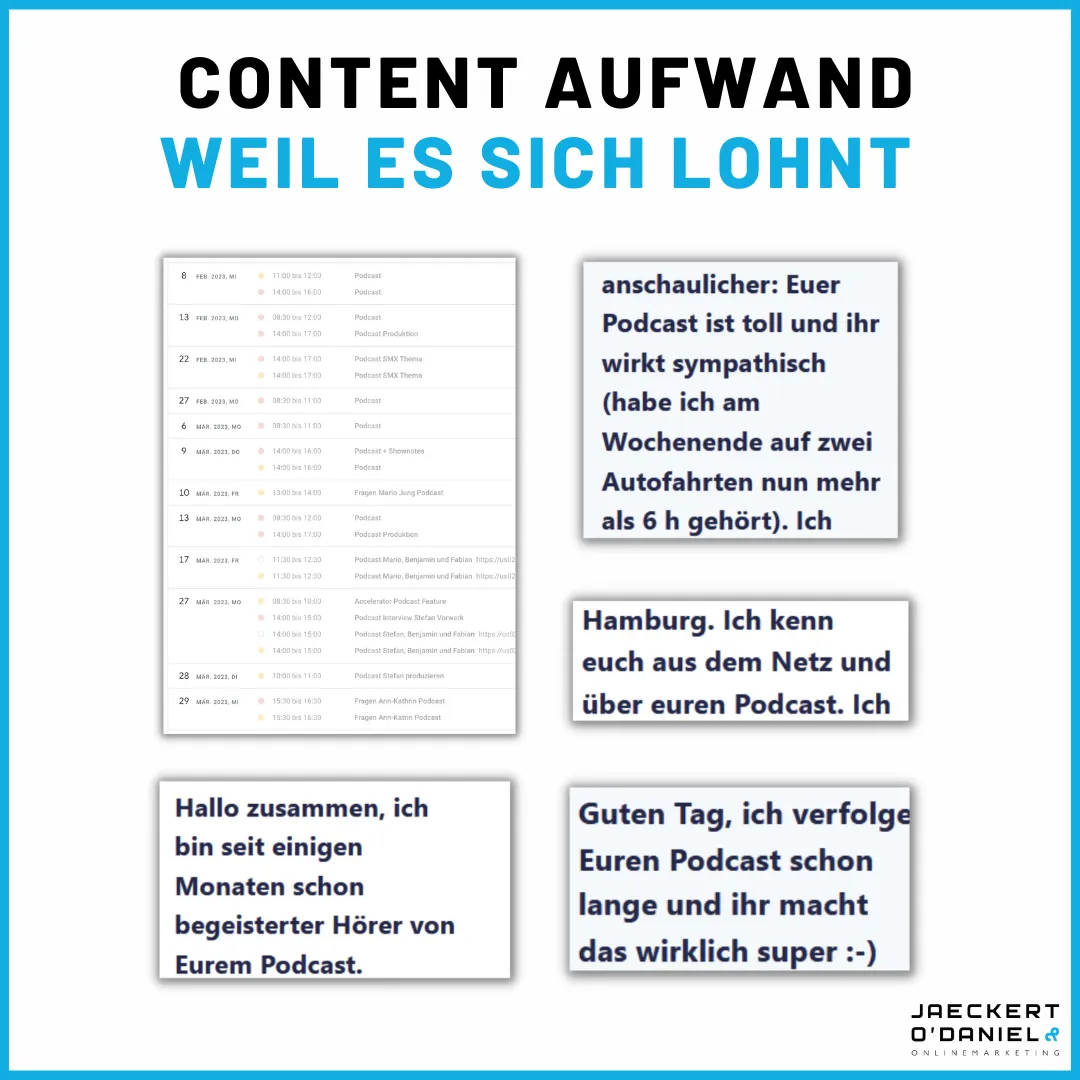
Customers refer explicitly to our content formats in their inquiries.
Organic reach: the complexity
Another point that circulates online: building organic reach is supposed to be insanely complex. Large systems and theories are often presented. Hundreds of touchpoints, each one carefully designed.
Sure, you can absolutely go deep on this topic. But often the measures for organic reach rest on a few basic principles.
Templates and processes are very often missing. That is exactly what we have specialized in, in our consulting and in our SEO training.
Marketing managers often take on the content tasks together with product departments. There is also regular work with freelancers. All of that is a good approach.
But the people responsible in companies should also look at whether they hire a content marketing manager in order to build the organic channels with more power.
The potential is huge. From our point of view it is especially large in B2B. Because there, many companies, particularly in Germany, are still set up in a very traditional way.
Our consulting: for more organic reach
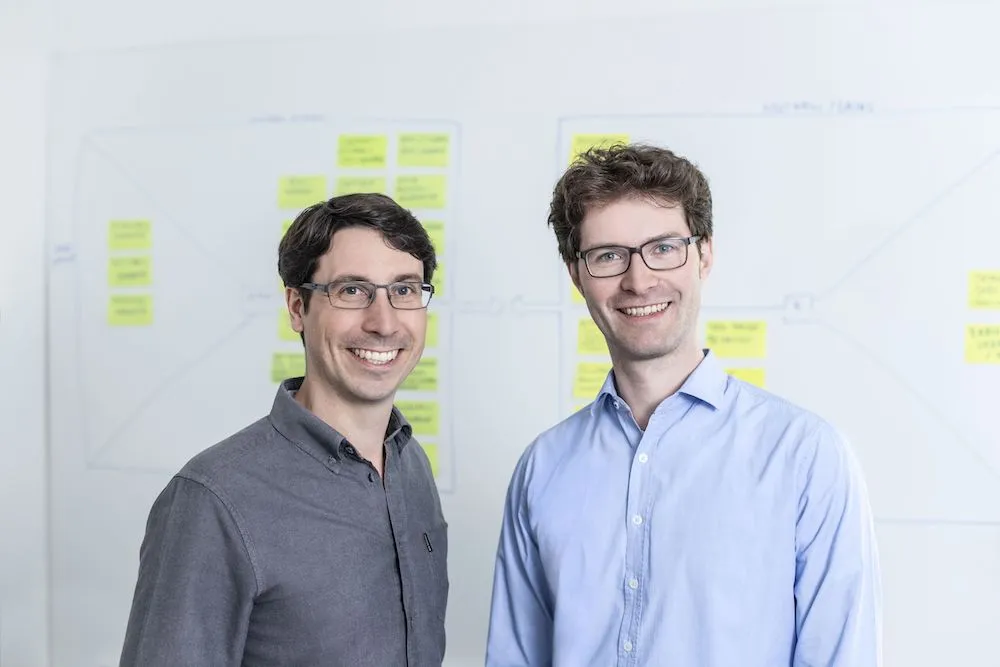
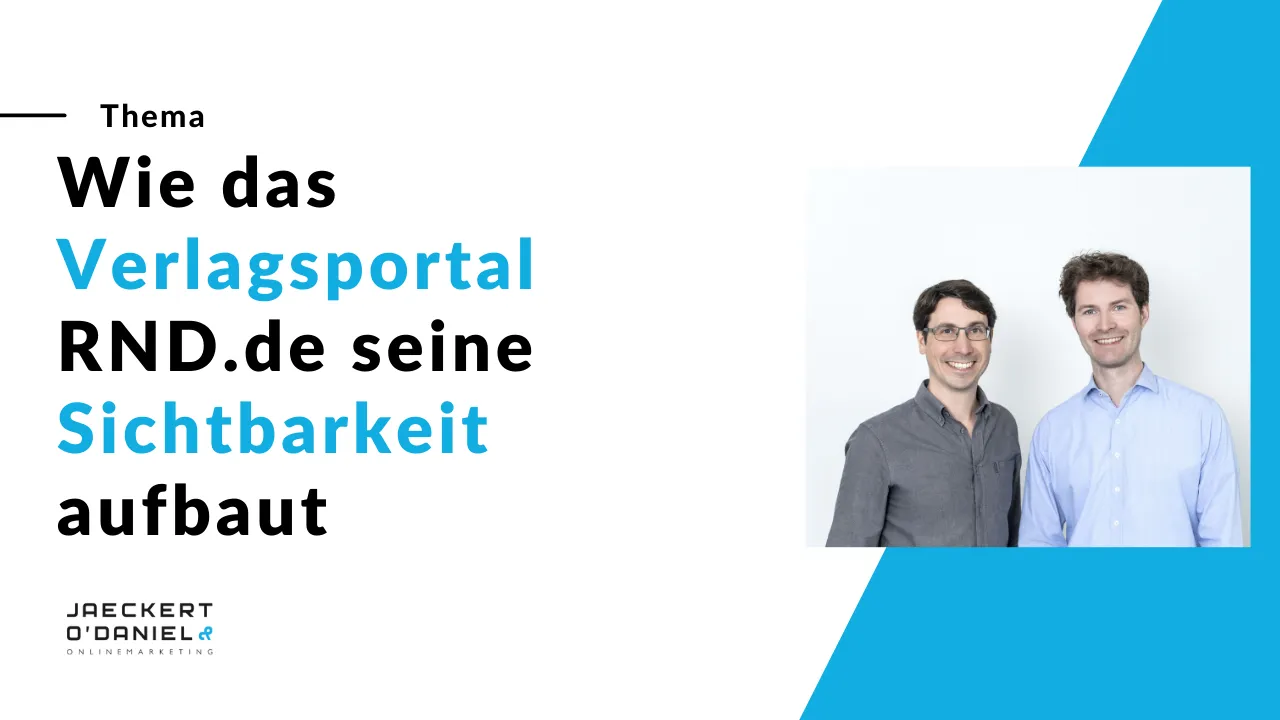
We are Fabian Jaeckert (on the right) and Benjamin O’Daniel. For many years we have worked as consultants for marketing teams. In doing so we connect two worlds: Fabian is the technical expert, Benjamin takes on every topic around content development.
With Jaeckert O’Daniel, it quickly became clear to us that we had made an excellent choice in selecting potential partners for our online marketing project. Their expertise and, above all, their ambition to thoroughly immerse themselves in our specific industry topic to provide us with the best possible support, are precisely what is now propelling us forward.
 Tobias ReitmeierF.EE Group
“How can we improve our SEO visibility?”
This fundamental question sits behind every project we are brought into.
It is often about reviewing existing SEO and content strategies from the outside and developing new levers.
That is exactly what we have specialized in.
We develop SEO strategies for companies and present them in focus workshops, in a structured and understandable way, to the people responsible. Afterwards we support the in-house leads during implementation.
Sound interesting?
We can arrange an introductory SEO video call (30 min.).
Deepen your SEO knowledge: every Monday by email
Our conversations with SEO professionals in the industry

SEO quality assurance: how to protect your rankings. Interview with Gianna Brachetti-Truskawa
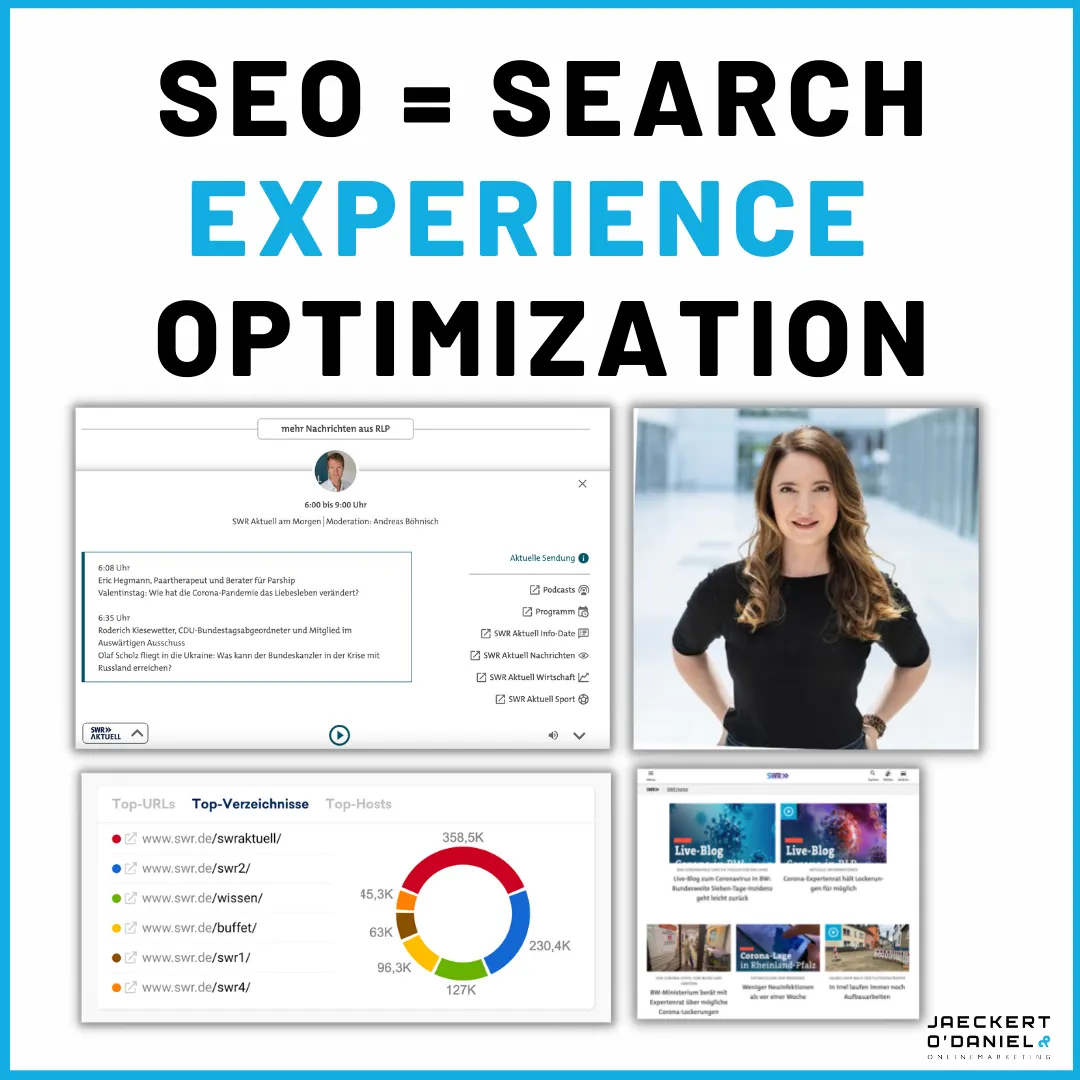
How Südwestrundfunk (SWR) works on search experience: Interview with Sarah Stein

SEO as a growth strategy: Interview with Kevin Indig

SEO for a software company: Interview with Beat Köck

What does an online shop need in order to rank successfully? Interview with Stefan Vorwerk
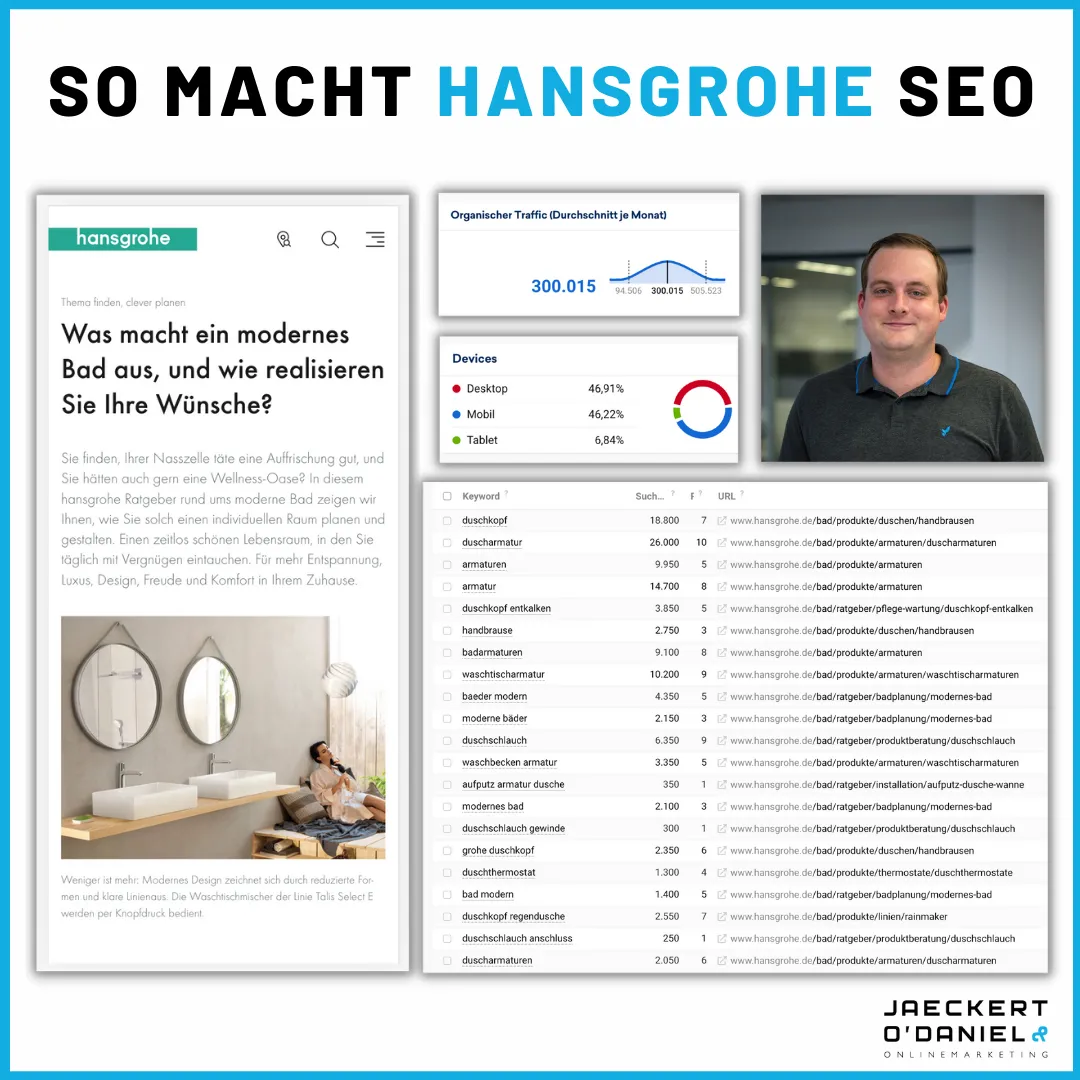
How Hansgrohe does SEO in 40 countries: Interview with Jörg Niethammer
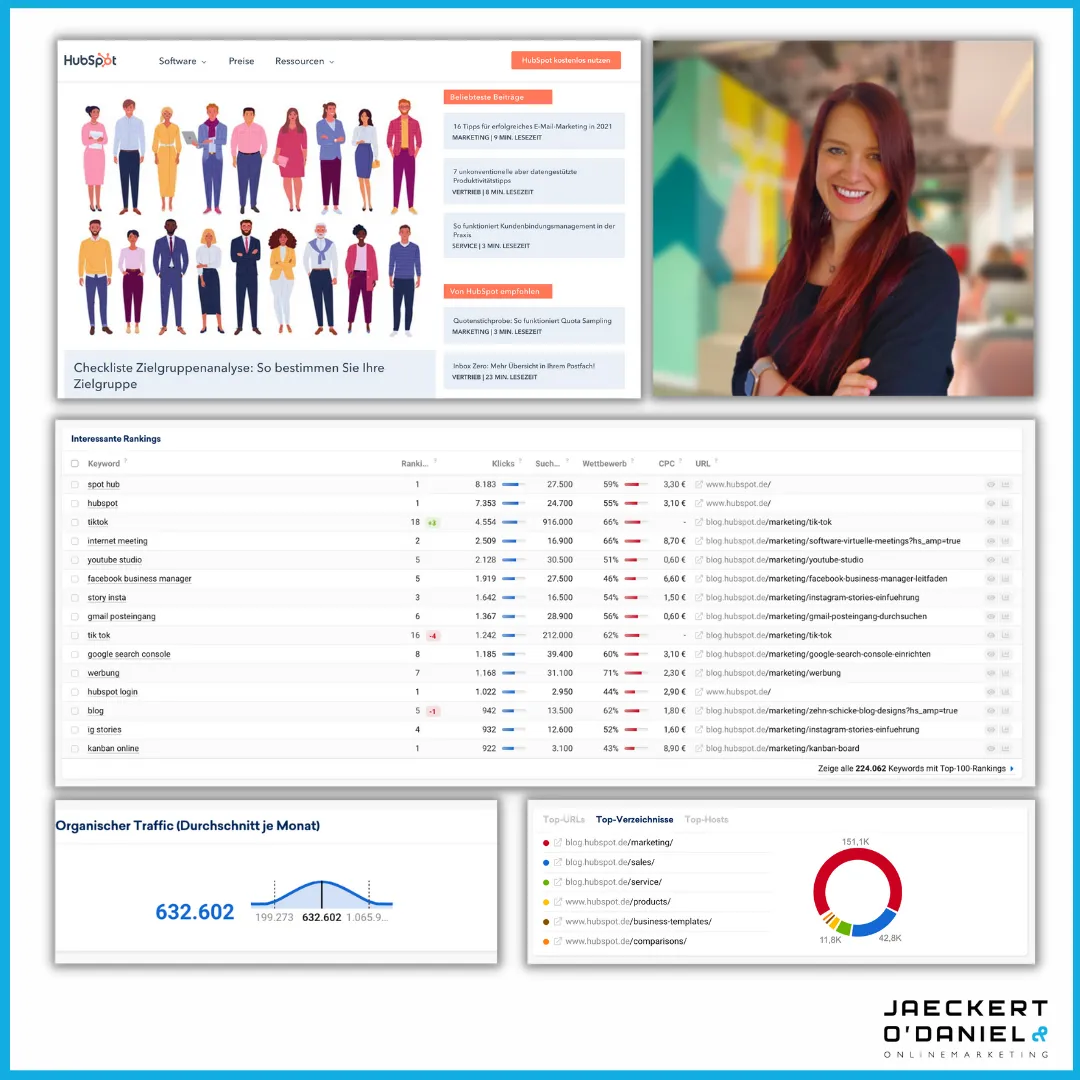
The SEO strategy of Hubspot: Interview with Jenny Lapp

How user testing works: Interview with Astrid Kramer on UX and SEO