May 6, 2024Fabian Jaeckert
Startup Marketing: How Branding, Ads, and SEO Work Together
Startup marketing often rests on two pillars: branding and performance marketing. What role does SEO play in this pairing? What common misconceptions are there about organic Google rankings - and what do you have to do for them? We talk about that here and in the podcast.
The basis for it: for many years we have worked with successful startups. From the B2C world - for example online shops that approach product categories in a completely new way. But also often from the B2B world, such as SaaS companies with clearly smaller, specific target groups. And third, startups from industry that develop and sell technical products.
What unites them all: the founders and employees have a clear focus on product quality. And they want to build as much in-house skill as possible. They look for people who spark ideas and for sparring partners for their online marketing, rather than handing the topics over in the classic way.
3 challenges in online marketing for startups
Ad channels are turning
Many startups have grown successfully through performance marketing. B2C startups through Meta Ads, B2B startups more often through Google Ads. But however flexible and granular the campaigns are: many have hit the glass ceiling here, or maxed out the channel. Click costs have been rising constantly for years - also because of growing competition. If customers are then also holding back, conversions turn out worse, or baskets are smaller, the performance channels yield less and less. That raises the question of which further online marketing pillars you should build as a startup.
The search for new channels
Every founder we deal with is completely clear that SEO is another growth channel. If only because you can see in your Google Ads campaigns which keywords perform. Still, people often have not started on it. Besides typical SEO misconceptions - more on those in a moment - that is also because SEO rarely feels urgent. At first glance, SEO traffic in Google Search Console is stable. But a second look shows: if you filter out brand searches, the actual new-customer traffic is often marginal, or extremely unevenly distributed across individual pages or articles.
SEO misconceptions
SEO often has a doubtful reputation in the online marketing world. People frequently fear that SEO texts will destroy their brand. But the contradiction is ultimately a question of approach. Not every URL has an SEO focus. And if it does, it is a question of how the content is executed, and how branding and keyword requirements have to be brought together. Endless category-page texts are of little help. And the fact that many startups that focus on quality reject SEO measures such as buying links? From our point of view that is a good thing, because we rate these measures as extremely risky and of little use.
Startup marketing: SEO and Google Ads calculations
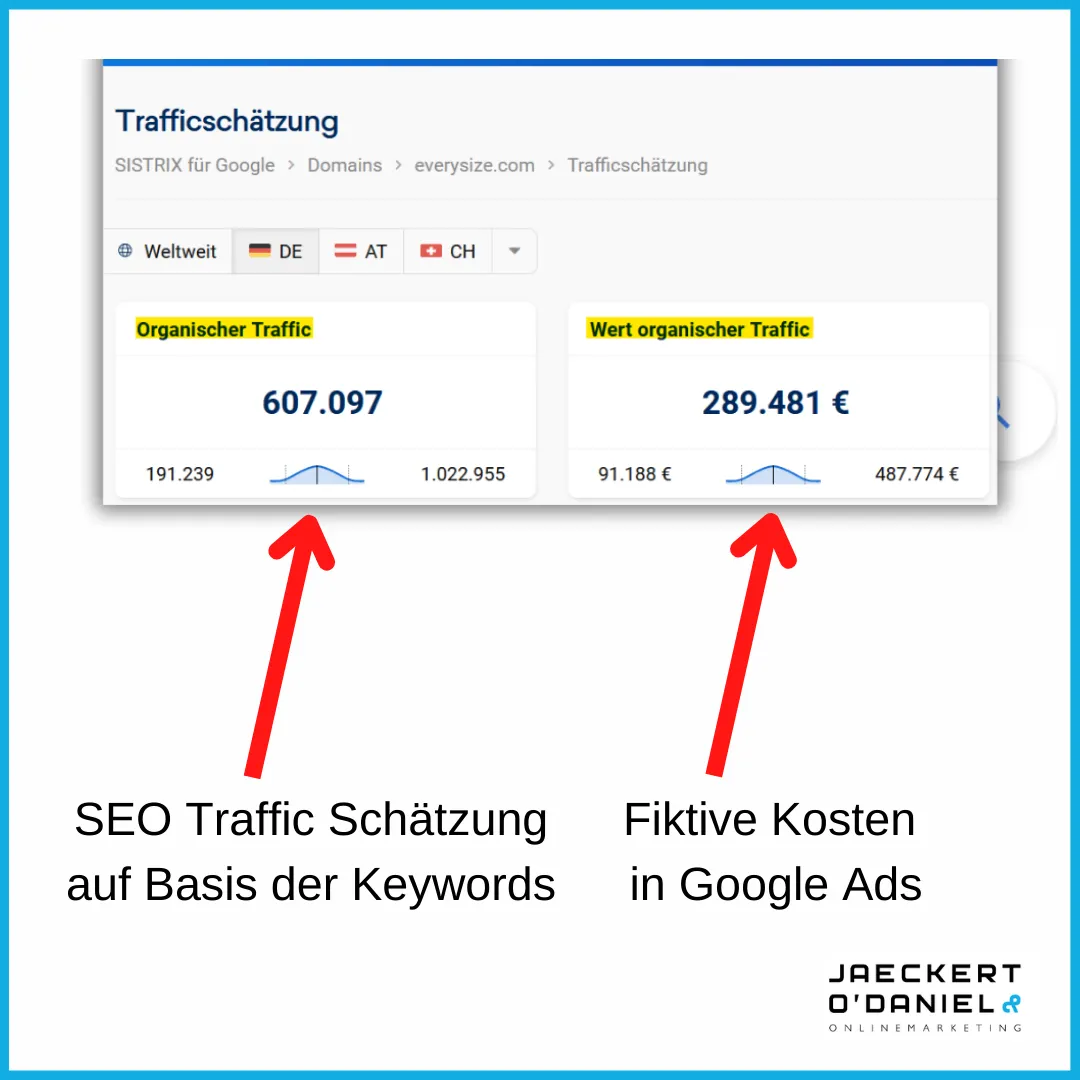
A calculation often made in SEO tools: the ad equivalent value of SEO. The math behind it: if you rank at the front in organic search for certain keywords, you receive a certain number of clicks. These clicks are extrapolated.
In the next step, the calculation works out how high the Google Ads costs are for these keywords or clicks. That can show how much you would have to spend on Google Ads to buy this traffic.
Of course these are fictitious numbers. But they show the value that sits in SEO as a marketing channel.
3 examples: these startups use SEO successfully
In a study of our own two years ago, we analyzed the Google rankings of over 400 startups. Specifically, startups that appeared on Die Höhle der Löwen. Our question was: who does SEO marketing successfully?
The sobering result: only very few startups use this extremely valuable and efficient online marketing channel successfully.
We discuss three concrete examples and the strategies behind them in this livestream, which we ran together with the SEO tool provider Sistrix. The 3 examples:
- Ankerkraut
- Reishunger
- Foodist
We advise marketing leads on SEO

We are Fabian Jaeckert (on the right) and Benjamin O’Daniel. For many years we have worked as consultants for marketing teams. We combine two worlds: Fabian is the technical expert, Benjamin covers everything around content development.
“How can we improve our SEO visibility?”
This basic question sits behind every project we are brought into.
Often it is about reviewing existing SEO and content strategies from the outside and developing new levers.
That is exactly what we specialize in.
We develop SEO strategies for companies and present them in focus workshops, in a structured and understandable way, to the people in charge. Then we support the in-house leads as they put them into practice.
Sound interesting?
We can arrange an SEO intro meeting by video call (30 min.).
3 bridges between branding, ads, and SEO in startup marketing
Bridge between ads and SEO
Besides its own effects, SEO also has many positive effects on Google Ads. If you optimize for high-converting terms from your campaigns, for example, you are visible twice. And the more SEO traffic comes in directly, the more flexibly you can invest the ads budget elsewhere. If you deliberately expand your landing pages and category pages with content, you also raise your Quality Score, which in turn makes up part of Google Ads click prices.
Bridge between branding and SEO
Instead of getting stuck in debates of principle, we recommend a data-based decision. Example, website structure: many people fear that SEO will “bloat” their structure. Yet it is not even clear how many keywords are actually involved, on which pages these terms are covered, and how strongly the website structure has to change. So a data basis is missing. That is exactly part of an SEO audit and an SEO strategy.
Bridge between in-house and external
Startups that cultivate a strong in-house culture are extremely strong at execution. But a solid SEO strategy often lacks the experience - and simply the time. That is why, as SEO consultants, we support our clients exactly here, for example with ranking audits, researched keyword lists, and content templates. The operational work is then done in-house. After that we are there as a sparring partner.
Startup marketing: an example from our podcast
In our Content Performance Podcast we also regularly talk with marketing leads from startups. For example with Manon Tolkowski. The SEO manager works at a successful furniture startup.
The founders recognized that a strong in-house marketing team is a clear competitive advantage. Specialists were built up both for performance marketing and for organic marketing.
Manon’s job is to move the website forward for generic SEO keywords. Here is the interview and the case study. Because that is demonstrably how new customers arrive.

SEO and online marketing from practice: our interviews

SEO as a Growth Strategy: Interview with Kevin Indig

SEO for a Software Company: Interview with Beat Köck
How to Roll Out Content Formats Internationally: Interview with Hendrik Breuer

The SEO Strategy of the Learning App StudySmarter: Interview with Ann-Kathrin Reitmeyer
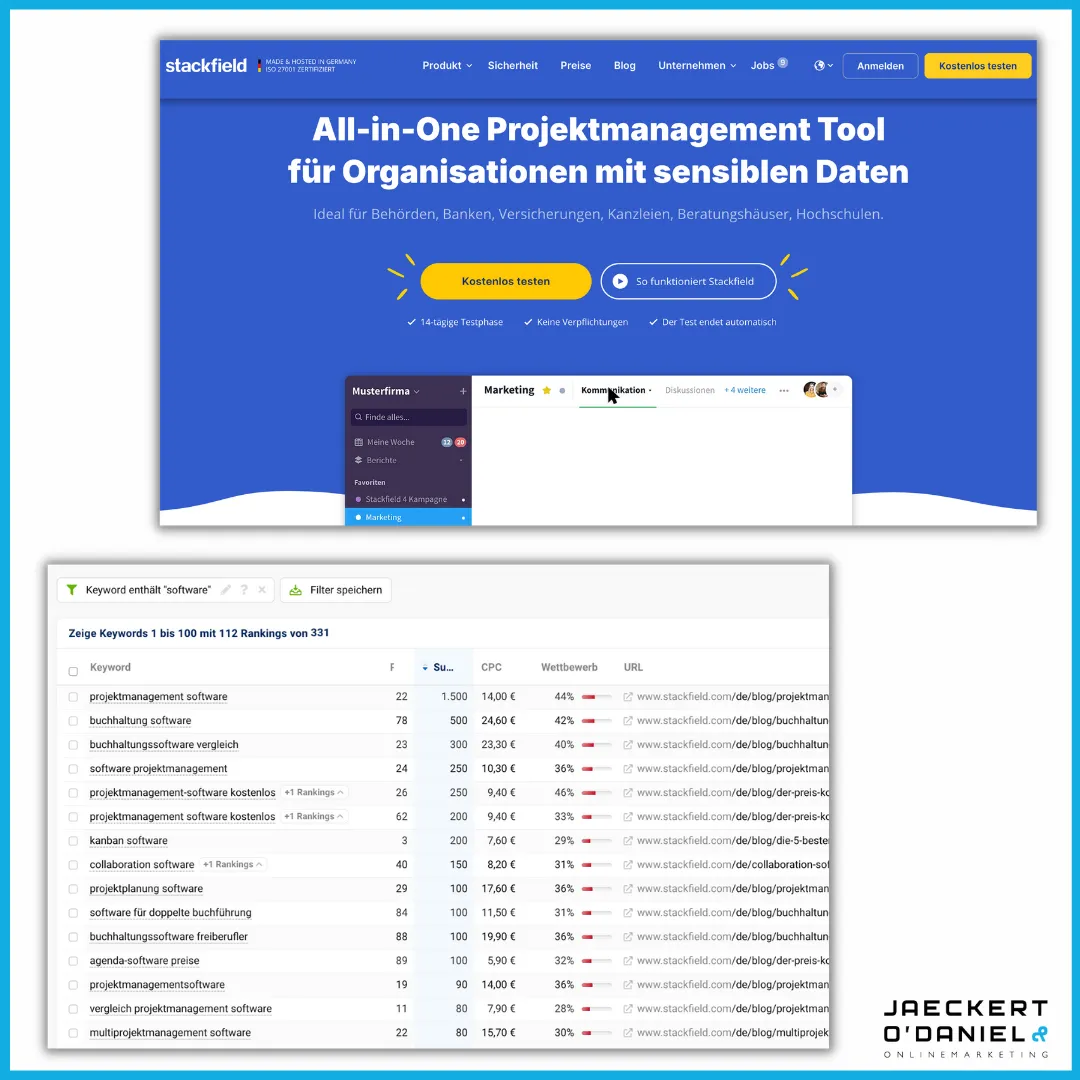

SEO for Software Companies: Interview with Lisa Karasch

How to Build an SEO Portal with 700k Clicks per Quarter: Interview with Patrick Straub

Where Is SEO Heading? Interview with Christian Kunz on the Latest Google Updates
Online marketing tips, strategies, and practical examples for startups