August 29, 2022Benjamin O’Daniel
How Does Strategic Image SEO Work?
Image SEO is part of on-page optimization in search engine optimization, meaning the work on website content.
The goal is for your images to appear in the search results. For that, image data has to be inserted correctly.
That is “only” the operational work, and from our point of view it falls short.
Strategic image SEO starts deeper: it is about the question of
- where you want to be visible with images in the Google universe
- which visual worlds you use to stand out against the competition
- how you develop those visual worlds in a way that scales
This much up front: you cannot achieve that with cheap stock photos.
By contrast, companies that invest in a unique visual world that fits them, and that are known as a brand in their industry, have strong chances of achieving that.
On this page we first clear up the operational questions, such as image naming, so that it helps everyone. Then we turn to strategic image SEO.
Naming images for SEO: checklist
Optimizing photos is mandatory and part of content management. It is mainly about the meta data:
- file name with keyword
- title tag with keyword
- alt tag, a short description of the image
The keyword should be named in the file name. At the same time, you should not just drop the search term in bluntly. The file should also be named so that it is understandable for users.
The title often has the same naming as the file name and can be adjusted quickly. You should not use internal terms such as “marketing-bild-017.jpg”, but terms that fit the topic.
The alt tag, also called alt text, serves people with a visual impairment in particular. Working on the alt tag is therefore not only a matter of optimization. It is a question of inclusion and of the willingness to provide content that as many users as possible can consume.
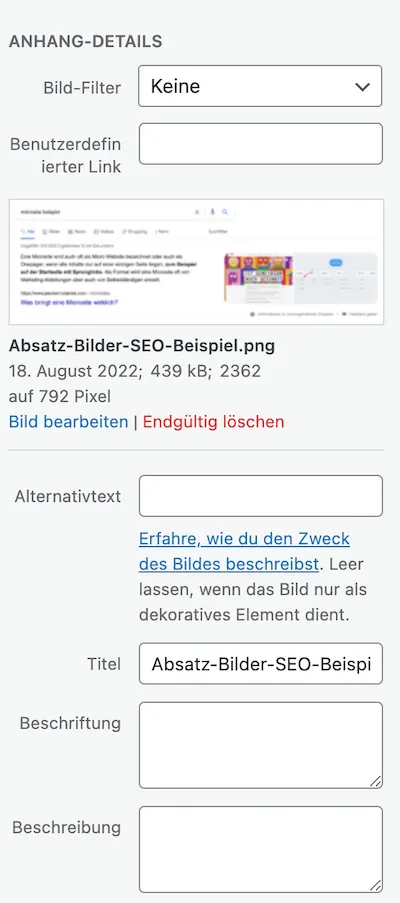
The screenshot shows the fields stored in WordPress. In other content management systems, such as Typo3 or Drupal, the fields have similar labels.
It is best to add the information right away, when you upload the images in the CMS and insert them into the content. If you do not do it immediately, you usually forget it later.
Missing alt tags are also a common “error” that SEO tools find in automated SEO checks.
That does not mean, in reverse, that work on alt tags or image titles has the highest priority. Most of the time, companies lack basic keyword research and a clearly prioritized content roadmap.
The most common image formats are png and jpg. Images should not be too large, because otherwise the load time suffers. But they should not be too small either, because otherwise they are too pixelated. We often work with very large images, because they are simply better to look at.
SEO ideas, tips, and webinars: through our newsletter

Image SEO: SERP example
When people think of image search, many think of the specific search function in Google that shows only images. That function is used rather rarely, though, or only when you are specifically looking for images, photos, or graphics.
It is quite different in the main search results, where users are open to anything and simply want good results. Here Google also shows images very prominently in numerous topic areas. That includes:
- images as an element in the top 10 results
- images as an element in the featured snippets
- images in Google MyBusiness
Take the striking example that is also shown in the screenshots on the right. In tourism, images are served very often, because users want a visual impression. Everyone knows that from their own search behavior.
And which zoo do we go to? Very many users will click the result that has an appealing image. The bar with the zoos is shown above the top 10. Many users will probably make a quick shortlist here. The image plays an important role (but of course other factors do too, such as how close the place is).
In the “image bar” shown at the top, only a single provider in the first six results also shows an animal. All the others show buildings or logos. The image for that was stored in Google MyBusiness.
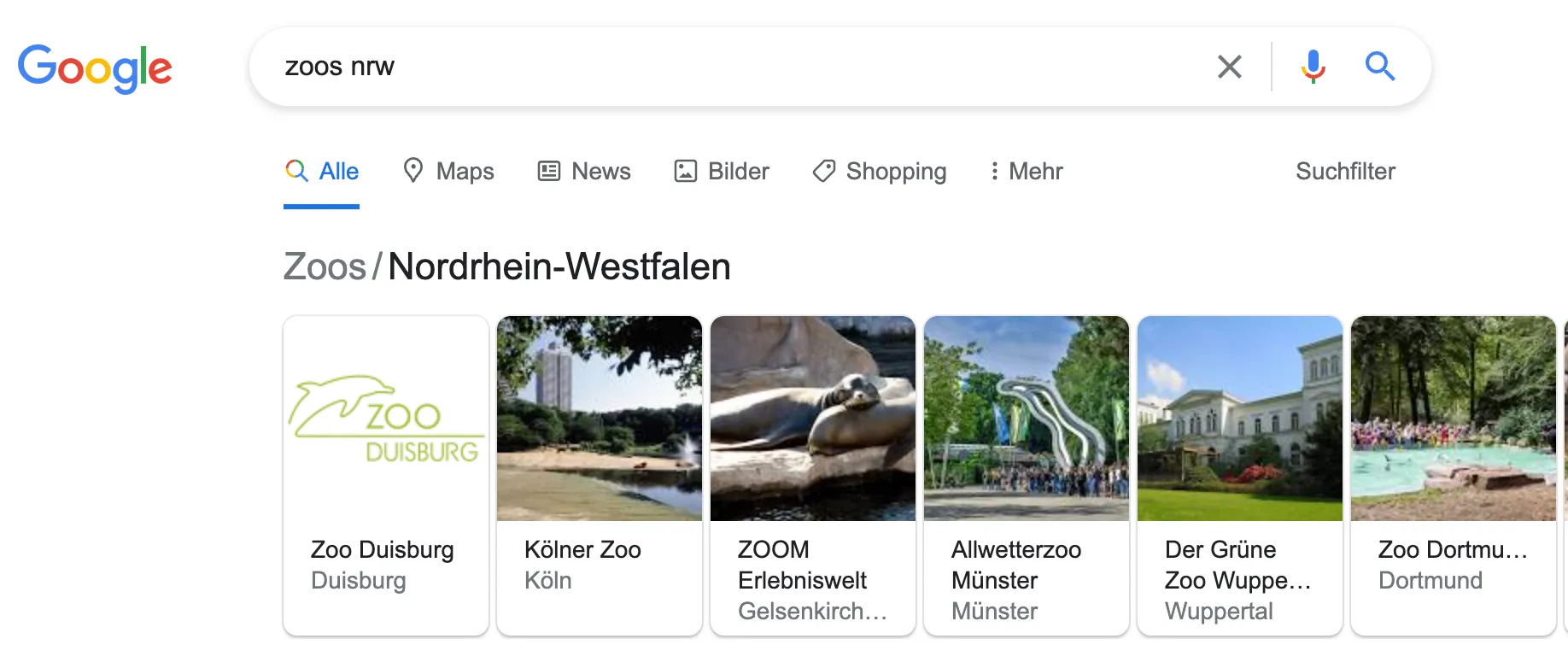
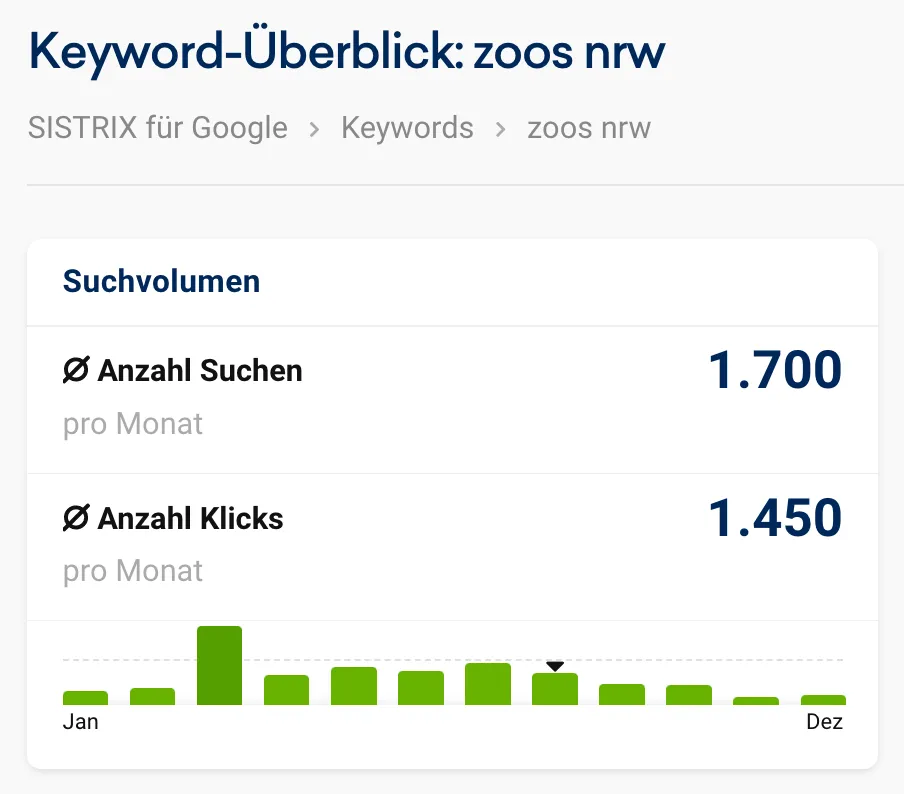
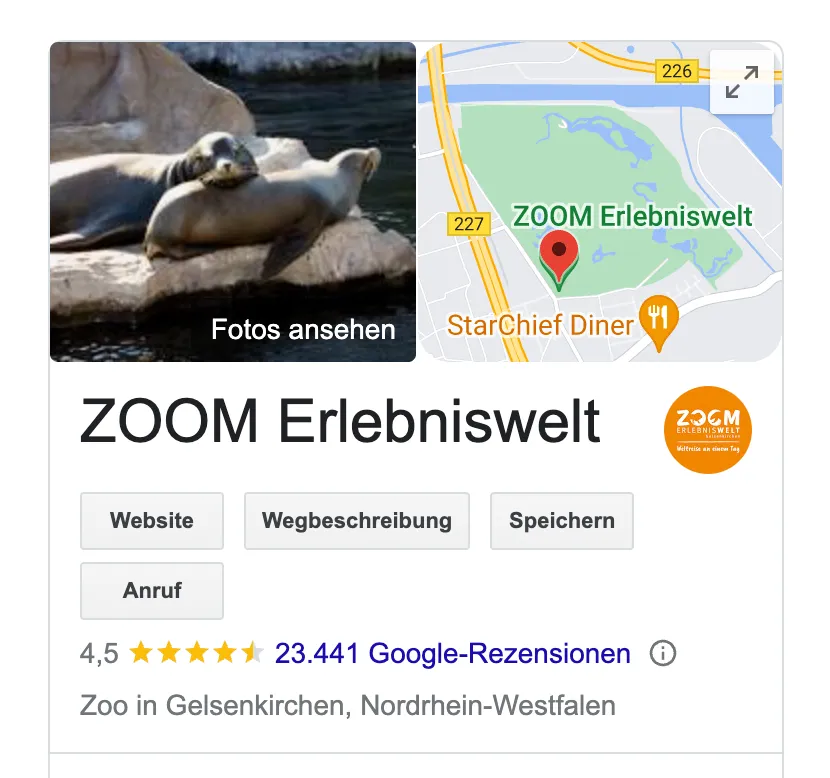
Image SEO: featured snippet example
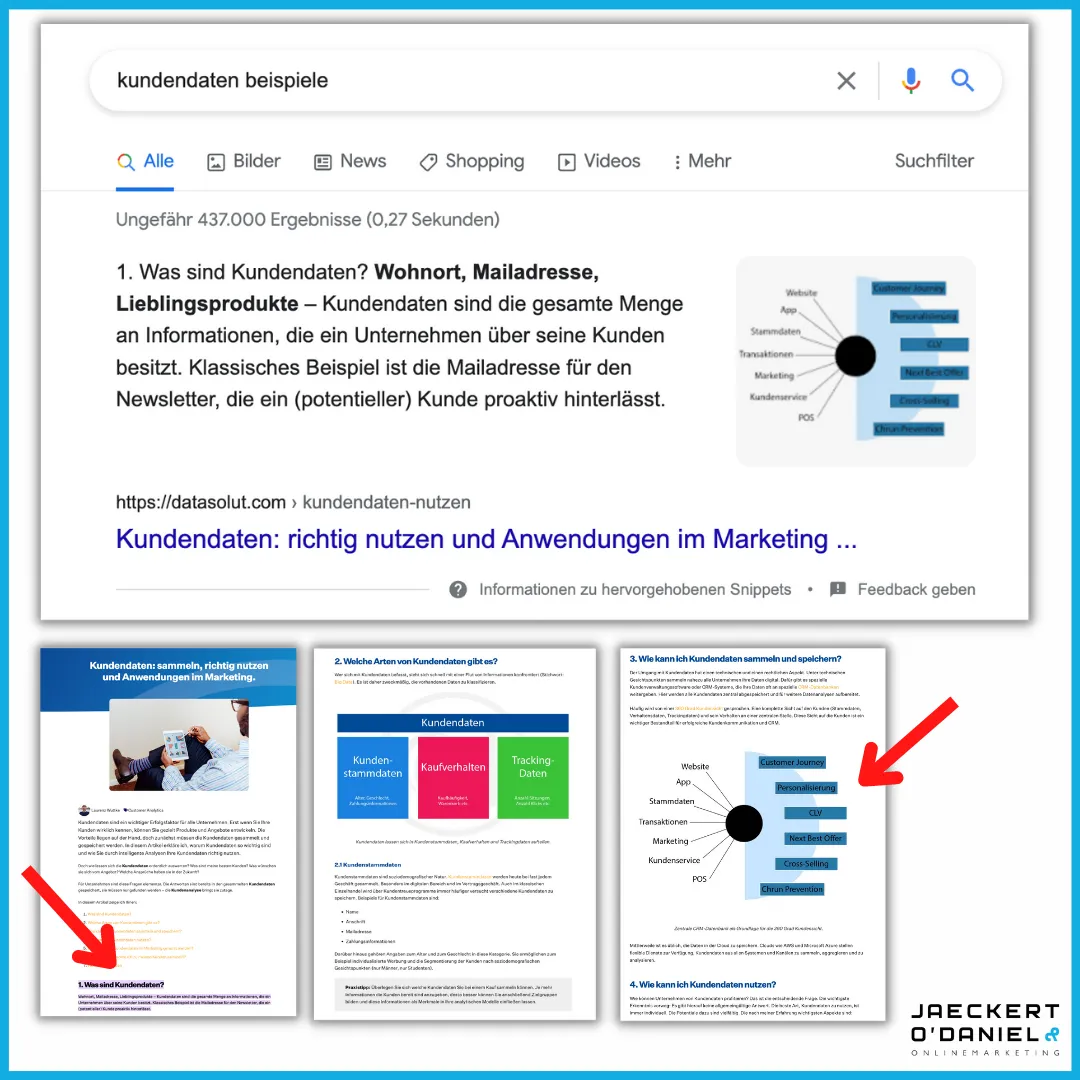
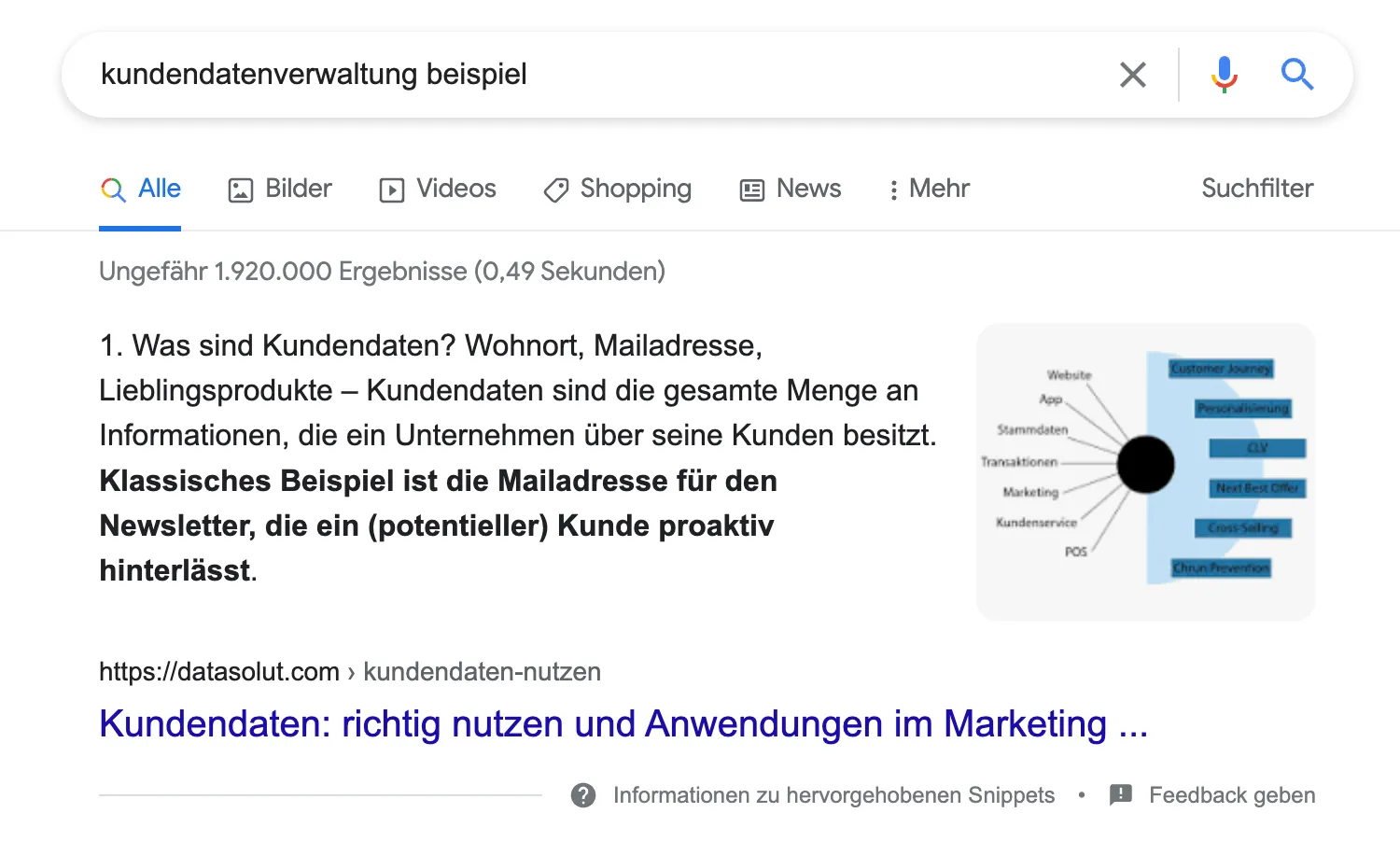
Images are integrated into many featured snippets as well. For example, in this search for “Kundendatenverwaltung Beispiel” (customer data management example).
When users search for an example, they usually also very much want to see images, photos, or screenshots, so they can judge the topic better.
It is therefore logical that Google pulls a preview image here too, or often assembles several images from different websites.
In technical topic areas, original images are often used, for example screenshots from software products or original photographs of machines in use.
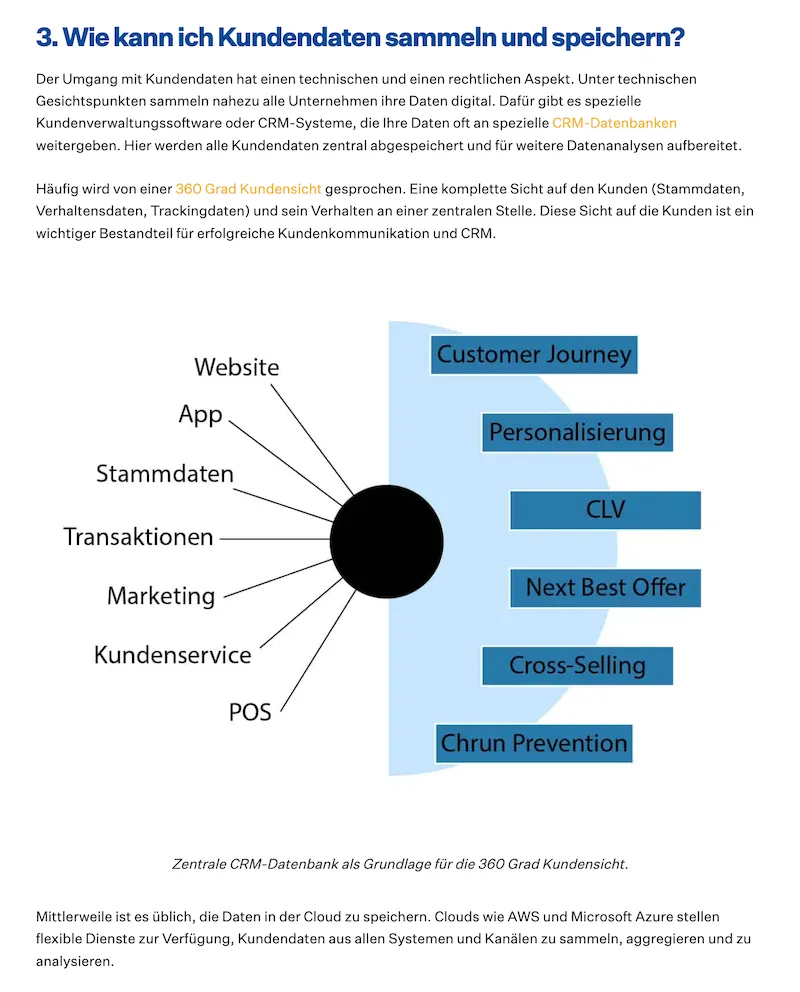
In this example, an infographic won out. That infographic is not built in at the very top, by the way. It only appears further down in the text.
At the very top you see a man with an iPad, so more of a general stock image without deeper information.
The graphic, by contrast, sums up the topic in a visual way and is therefore much more substantial for users.
What would a strategic image approach be, to win this search query and the traffic behind it?
One approach here would be Product Led Content: if you are a software provider in this field, you can show a series of screenshots of the software in use, embedded in a detailed article or a landing page. A real example, in other words.
SEO case studies: here we talk with SEO professionals

How User Testing Works: Interview with Astrid Kramer on UX and SEO

SEO for a Software Company: Interview with Beat Köck
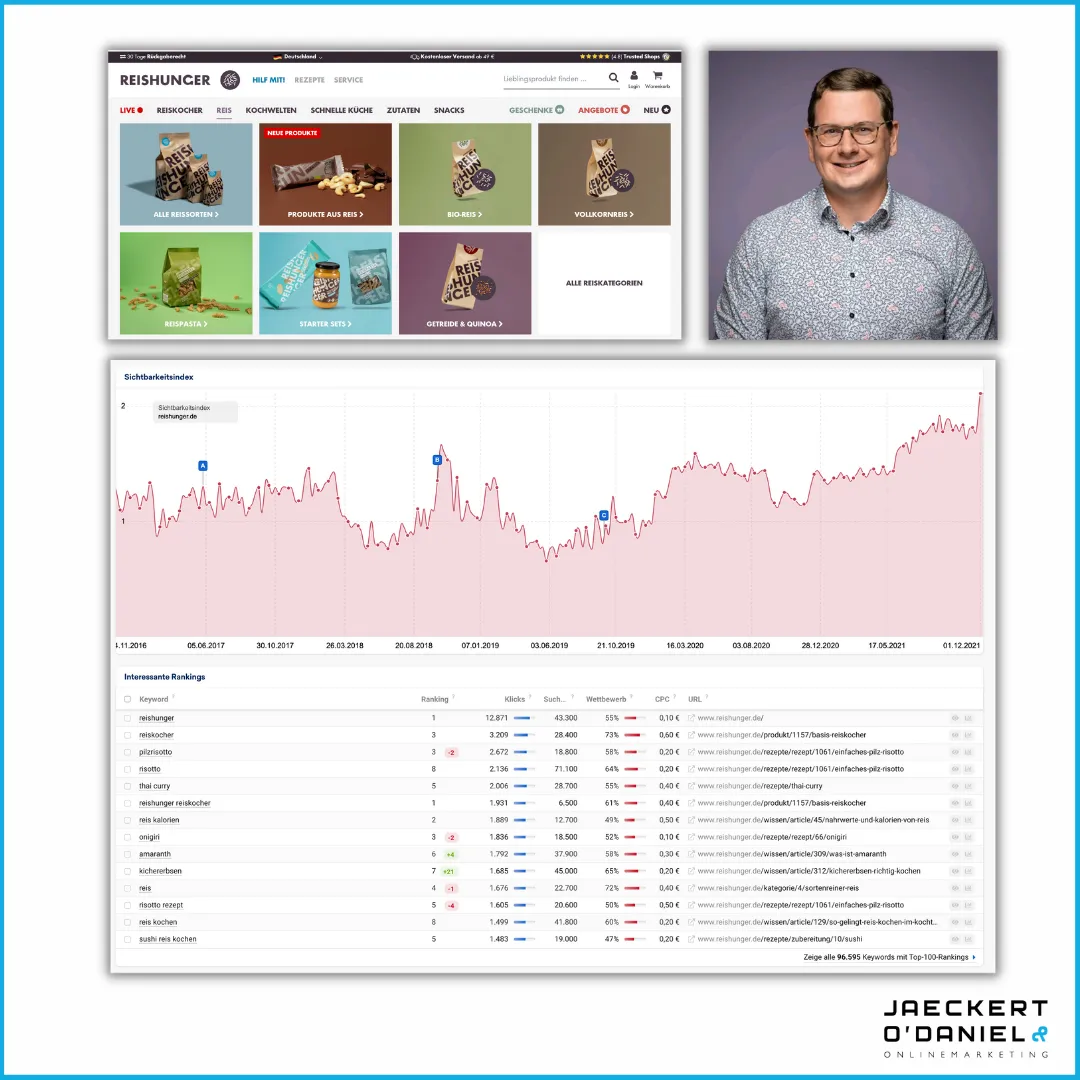
How Reishunger Uses Its SEO Traffic: Interview with Benni Uhlmann

SEO Quality Assurance: How to Protect Your Rankings - Interview with Gianna Brachetti-Truskawa
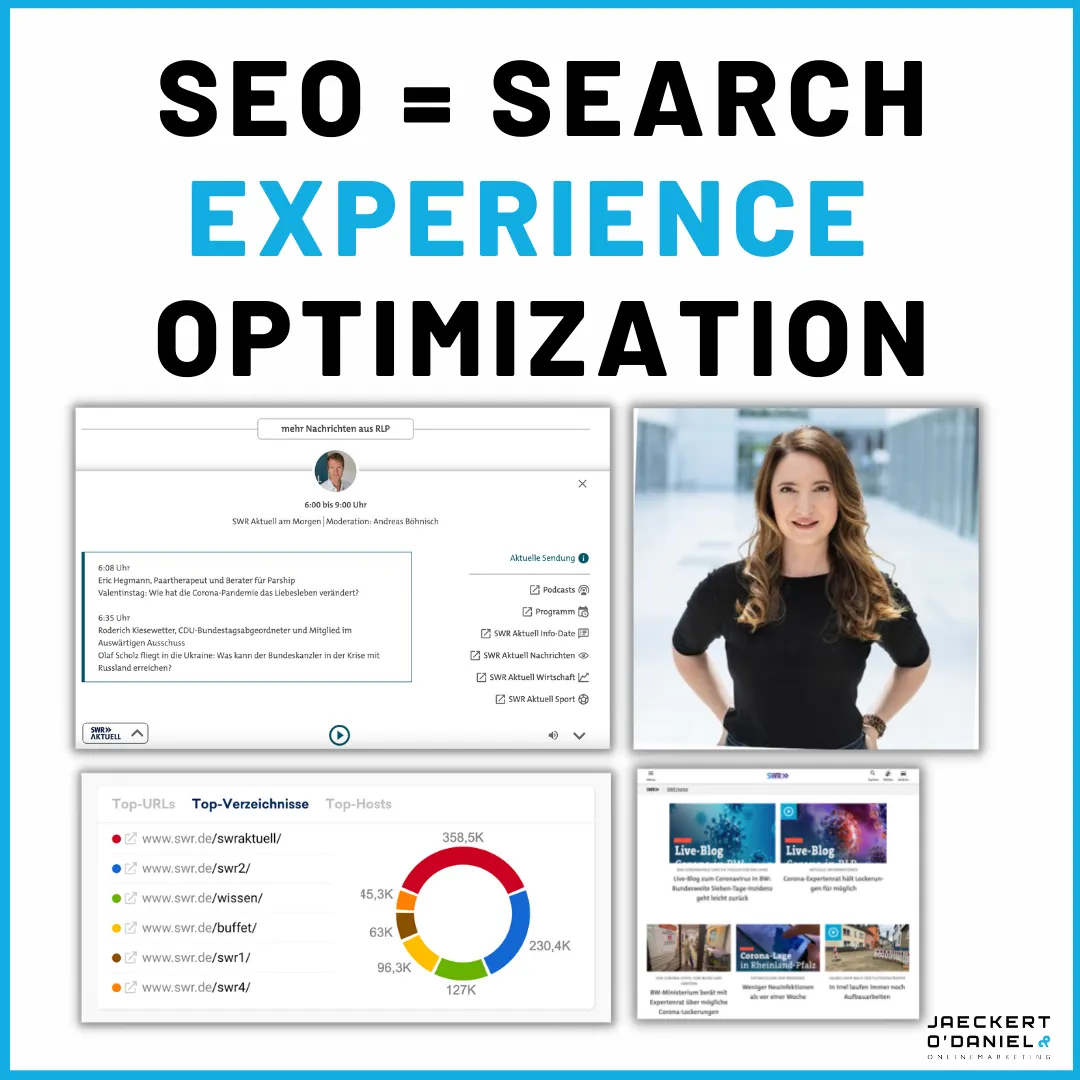
How Südwestrundfunk (SWR) Works on Search Experience: Interview with Sarah Stein

Hubspot's SEO Strategy: Interview with Jenny Lapp
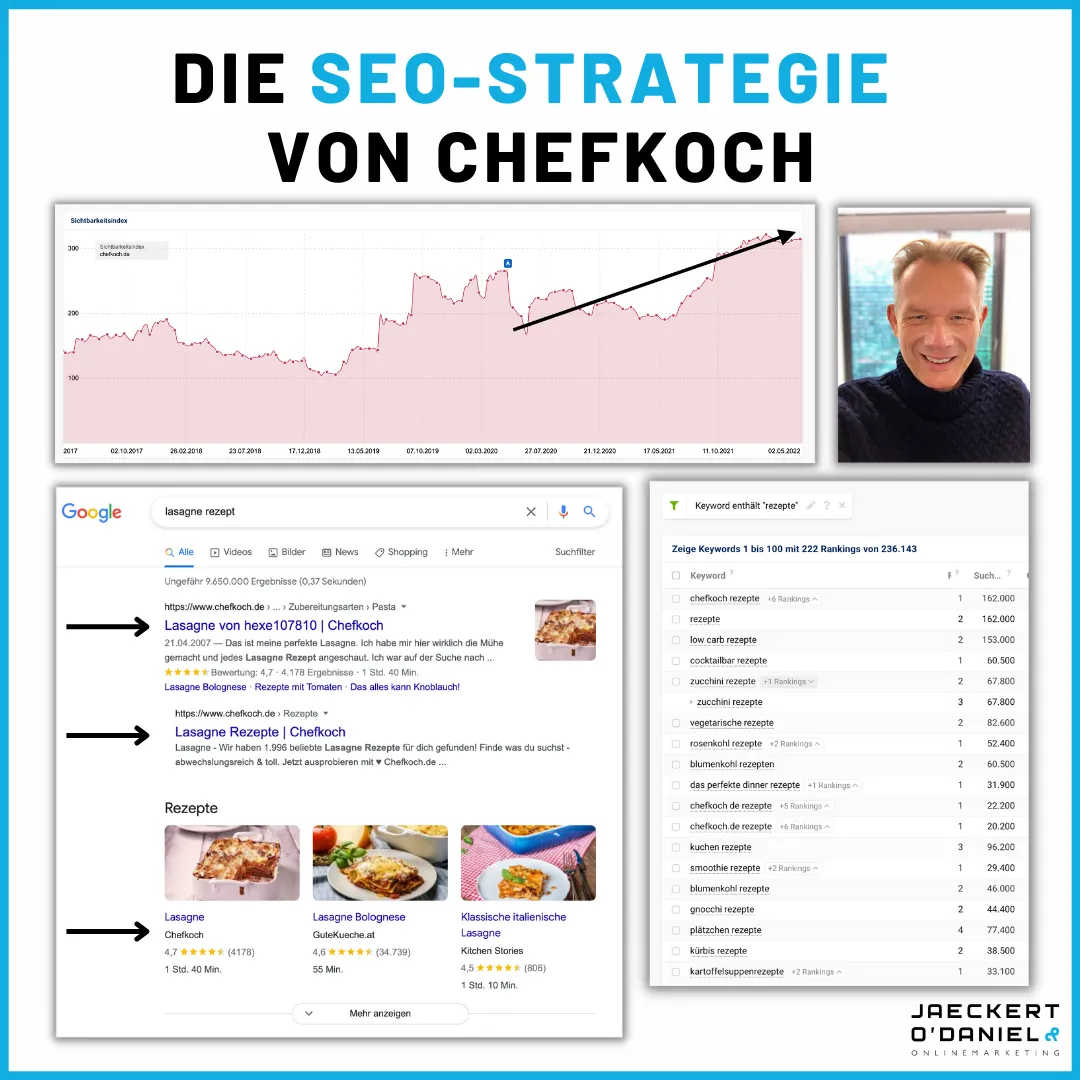
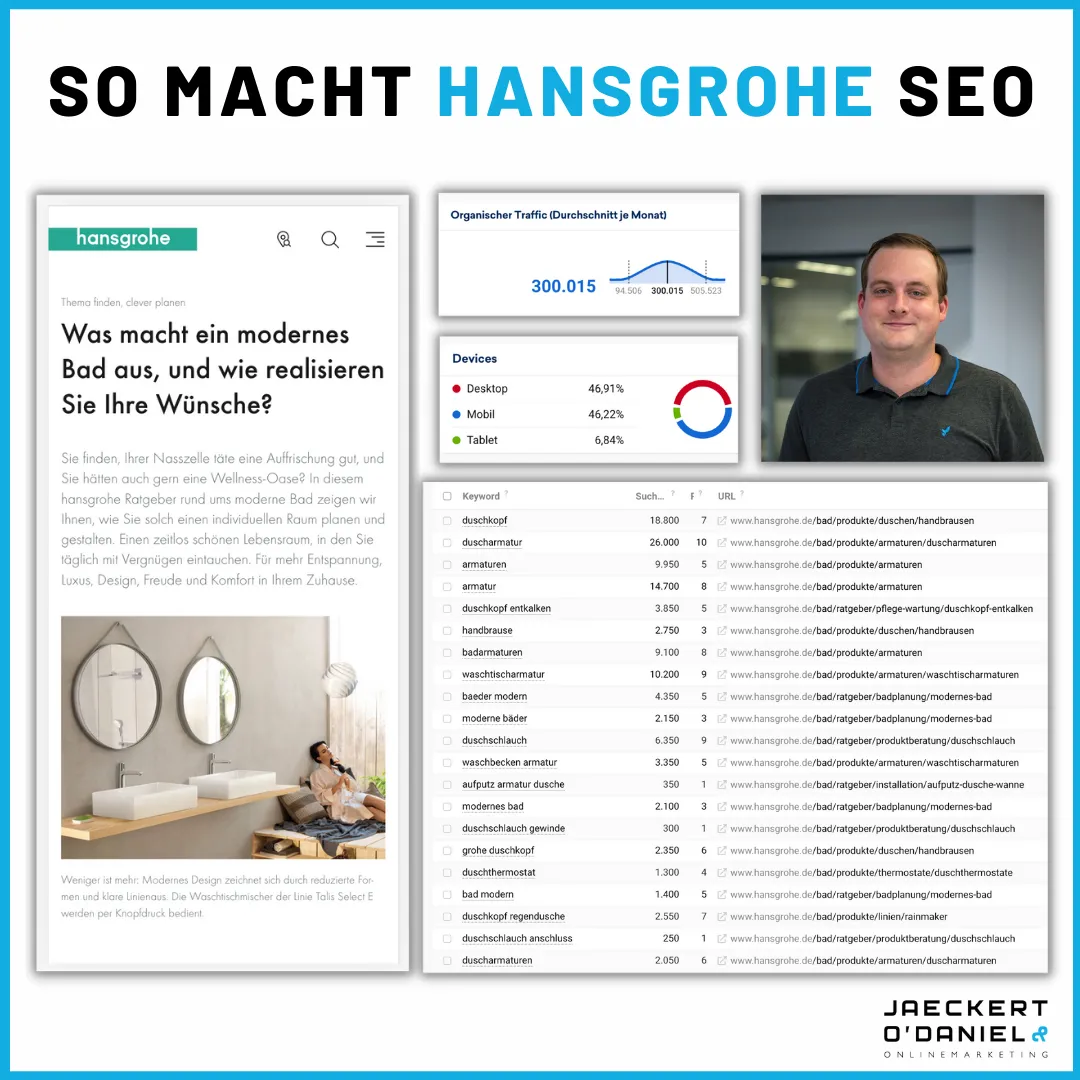
How Hansgrohe Does SEO in 40 Countries: Interview with Jörg Niethammer
We advise marketing leads on SEO

We are Fabian Jaeckert (on the right) and Benjamin O’Daniel. For many years we have advised mid-sized companies on how to get more visitors through Google and turn that traffic into inquiries and sales. So that the website becomes a measure that supports sales. Through high-quality content.
With Jaeckert O’Daniel, it quickly became clear to us that we had made an excellent choice in selecting potential partners for our online marketing project. Their expertise and, above all, their ambition to thoroughly immerse themselves in our specific industry topic to provide us with the best possible support, are precisely what is now propelling us forward.
 Tobias ReitmeierF.EE Group
Marketing leads have many projects on the table. They know that search engine optimization is relevant. But the concrete implementation, above all developing a well-founded SEO content strategy, is often hard for them.
That is exactly what we have specialized in.
We develop SEO strategies for companies and present them to the people in charge in a structured and understandable way. After that, we accompany the in-house leads during implementation.
That produces high-quality content that was made for users and at the same time meets all relevant SEO requirements. The result: the content generates more traffic on a lasting basis, and conversions as well.
Sounds interesting? We can set up a 30-minute SEO introduction by video call.