September 30, 2019Benjamin O’Daniel
LinkedIn: How to Improve Your SSI
The Social Selling Index (SSI) on LinkedIn is treated as a key means of gaining more organic reach.
What does the LinkedIn SSI consist of, and how can the individual elements be improved? We explain that on this page using an example.
But the discussion matters to us as well: is it the right strategy to look only at this metric? How important is the SSI really when it comes to building reach?
Everything about the LinkedIn SSI on this page
Three common questions about the LinkedIn SSI
What is the LinkedIn SSI?
The LinkedIn SSI is short for Social Selling Index. The SSI is a score that expresses how strong a personal profile is. The higher the SSI, the greater the base reach when you post something.
How can I improve my SSI?
The SSI consists of four scores: profile, search, content, network. You can improve each score on its own. That improves the SSI overall.
How good is my LinkedIn SSI?
How good your own LinkedIn SSI is depends on how active you are, and on how good the SSI is compared with other people in the industry. This comparison value is shown in the SSI as well.
The LinkedIn SSI, an example
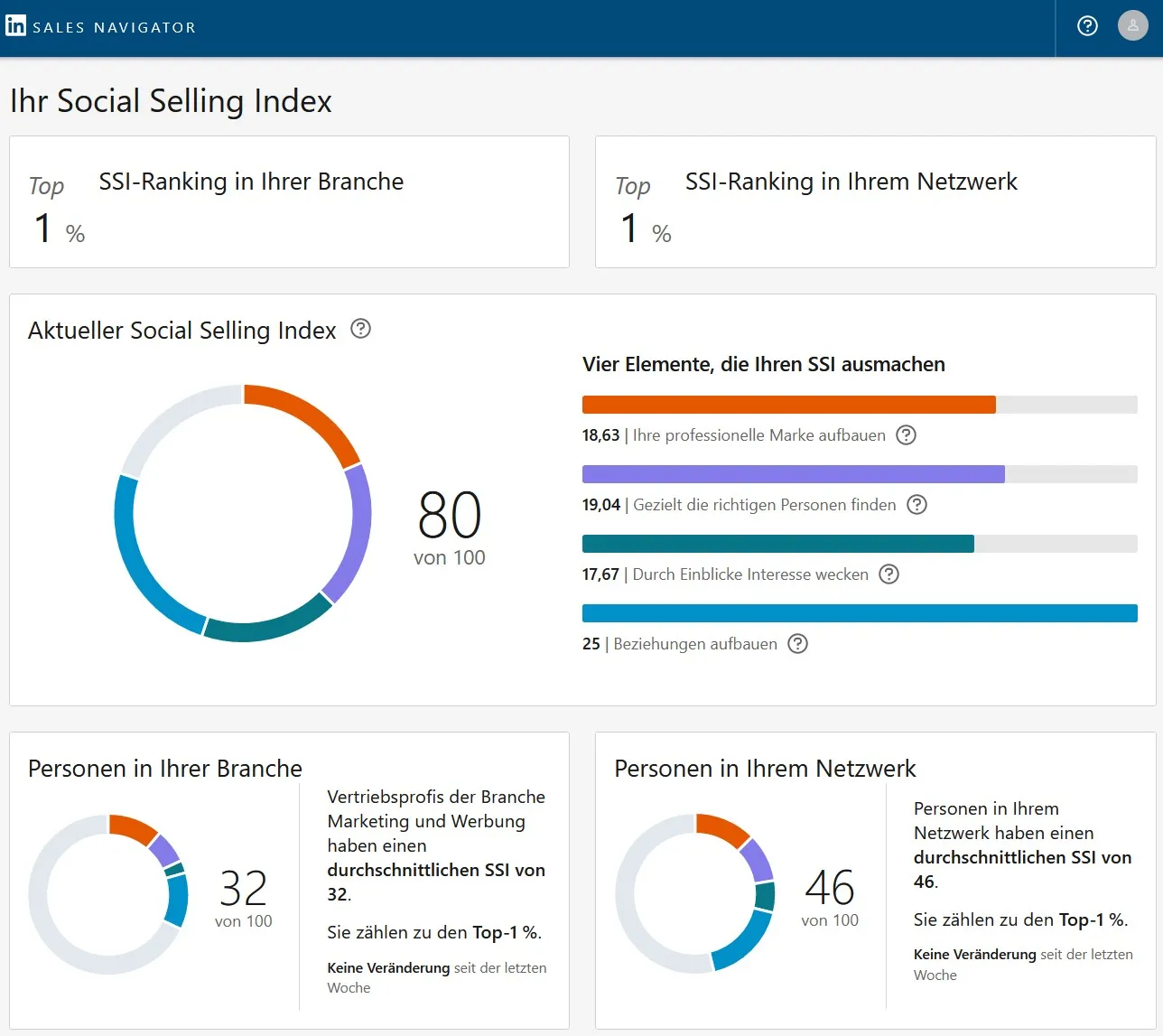
Every LinkedIn member can view the Social Selling Index via this link (sign in first). In the chart on the right, or below, is Benjamin’s Social Selling Index. The SSI fluctuates slightly from day to day, depending on how active you are. In general: the more active you are on LinkedIn, the higher the SSI is as well. The metric runs from 1 to 100. We explain the individual elements later.
Above the elements, at the very top, is the comparison with the industry and with your personal network. In this case it is the marketing industry, specifically online marketing. At the very bottom it says that people within the industry have an average SSI of 27, a usual value for specialists and managers who have not yet worked on their LinkedIn profile.
The people in Benjamin’s network are very active on LinkedIn, which shows in the fact that he ranks in the top 3 of his personal network, but not at number 1. At the bottom right it says that the people in his network have an average of 50.
The background: on LinkedIn, Benjamin is connected with many active marketing managers, but also with social media professionals, B2B influencers, speakers, and book authors.
The LinkedIn SSI, our background
LinkedIn is an essential part of our work. For more than 15 years we have been active in online marketing and work as consultants and sparring partners.
Every week we talk about our operational work in our online marketing podcast. On LinkedIn we discuss the topics with our listeners. We have a specialist podcast that is listened to above all by entrepreneurs, managers, and marketing professionals.
In our LinkedIn workshop we explain how LinkedIn works in detail, share our experience, and develop content strategies.
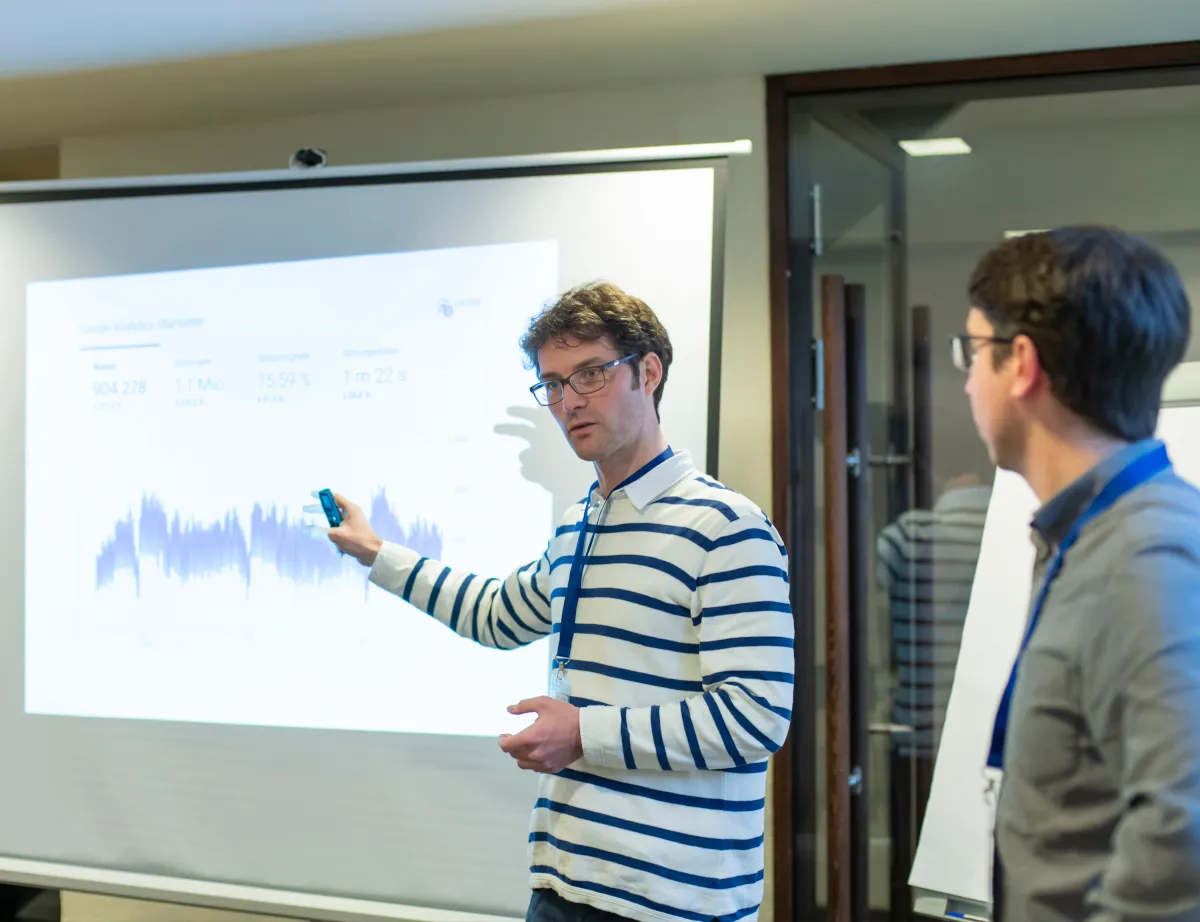
Fabian Jaeckert (left) and Benjamin O’Daniel giving a talk at a Barcamp. We combine two perspectives: the world of algorithms and tools, and every question around content.
LinkedIn SSI: what the four elements mean
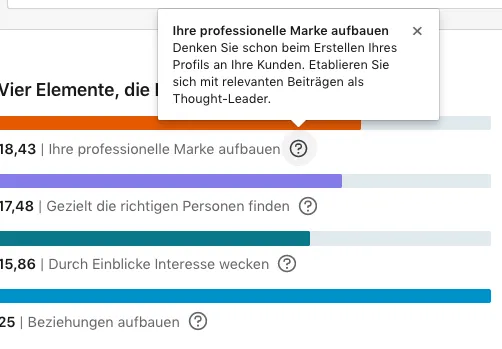
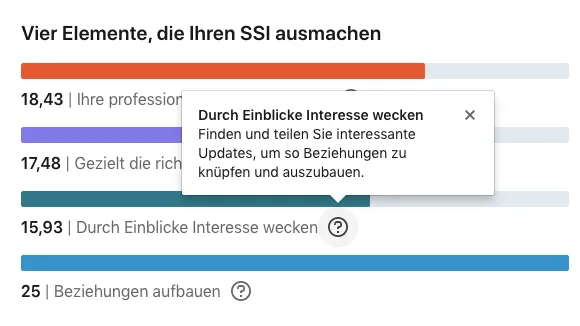
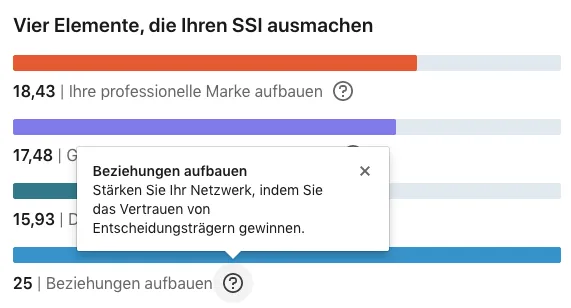
Behind each individual element there is a question mark. There LinkedIn briefly explains what it is about. Put simply, these are the four areas you have to take care of:
- Your own profile, with as much information as possible.
- Using the LinkedIn tools, above all the paid Sales Navigator.
- Sharing content, through your own posts and through interaction.
- Building relationships, growing your own network through more contacts.
All four elements, or parameters, change continuously. If you share a lot of content, for example, the third score rises. If you have a very large network (more than 1,000 contacts), the fourth bar is full, “at the limit”.
Tips, webinars, practical examples, all through our newsletter
How you can improve your LinkedIn SSI
You can improve your SSI on every element. The question, though, is with which methods. There are different approaches, or philosophies, here.
The most demanding score is the content element. Namely, sparking interest with interesting updates. Here you need a content strategy for the active person, embedded in the company goals.
The element “building relationships” looks simple at first glance. The more contacts you have, the larger the score. That leads, though, to many people on LinkedIn adding everyone they can, come what may, in order to improve the score. And indeed the last bar is then at the limit.
In the network, though, you then mainly have people you basically have no relationship with. They do not interact with the updates you post. Put casually, you have a lot of “dead contacts” in the network.
We, by contrast, connect above all with our podcast listeners, who are interested in our content. The result: our status updates get a lot of engagement, and with that high reach as well.
How relevant the LinkedIn SSI really is
A high SSI means that, at the start, you have a base reach on your posts. The post is therefore shown to a larger group at the beginning.
That group also has to interact with the post, though. Only after that is the post really “rolled out” and does it get a lot of reach.
An example: a post is shown to a few hundred people at the beginning. They react to the post, through likes, comments, or shares, and the algorithm “turns up”.
So what decides it in the end is the quality of the individual status updates. Here you need ideas, a plan, and a content process. Not every post takes off. But over time you gather experience and understand which posts work in your own network and which do not. We also pass on exactly this experience in our LinkedIn workshop.