February 19, 2024Benjamin O’Daniel
Finding Niche Keywords: 3 Examples
Niche keywords are search terms with a rather low search volume per month. But exactly these supposedly small search terms hold a lot of potential for a Google ranking, and SEO traffic to match.
Because successful Google rankings often come quickly, since the competition is low. You do have to find your niche keywords, though, and map them on your website in a smart way.
In the article and in the podcast episode we explain why so much potential sits in niche keywords. In our Academy workshop we explain the keyword research for search terms like these using examples.
What are niche keywords?
To explain what niche keywords are, you first have to clarify the term niche. In every market and in every industry there are numerous niches. That applies to B2C products as well as, in particular, the B2B market, which often lives on completely unknown specialist services and products.
In the online world there are also many marketplaces and affiliate models, which as a rule are also based on market niches. You land in a niche automatically as a company or as a solo self-employed person when you focus on a specific business area.
That is also what we recommend before marketing leads start researching their niche SEO terms. The next step is then about choosing a suitable SEO tool for niche terms. This also holds: anyone who searches with an SEO tool is researching the concrete demand in the market. SEO is always market and competitor research too.
Niche keywords often have a search volume between 10 and 100 searches per month. That is why many marketing leads never discover them in the first place, and if they do, they sort them out.
The boundary between 10 and 100 searches per month is the usual industry definition. You should always look closely at the respective topic area, though. Especially in B2B environments we know many examples in which practically all keywords often have only a few hundred searches per month.
But the terms are very valuable. Because the search here is very specific, often also in combination with an intent to buy. In addition, top positions for niche keywords in practice often bring more traffic than, say, a top-10 placement for a big term. Because on Google most users click the first three results.
Niche keywords: example
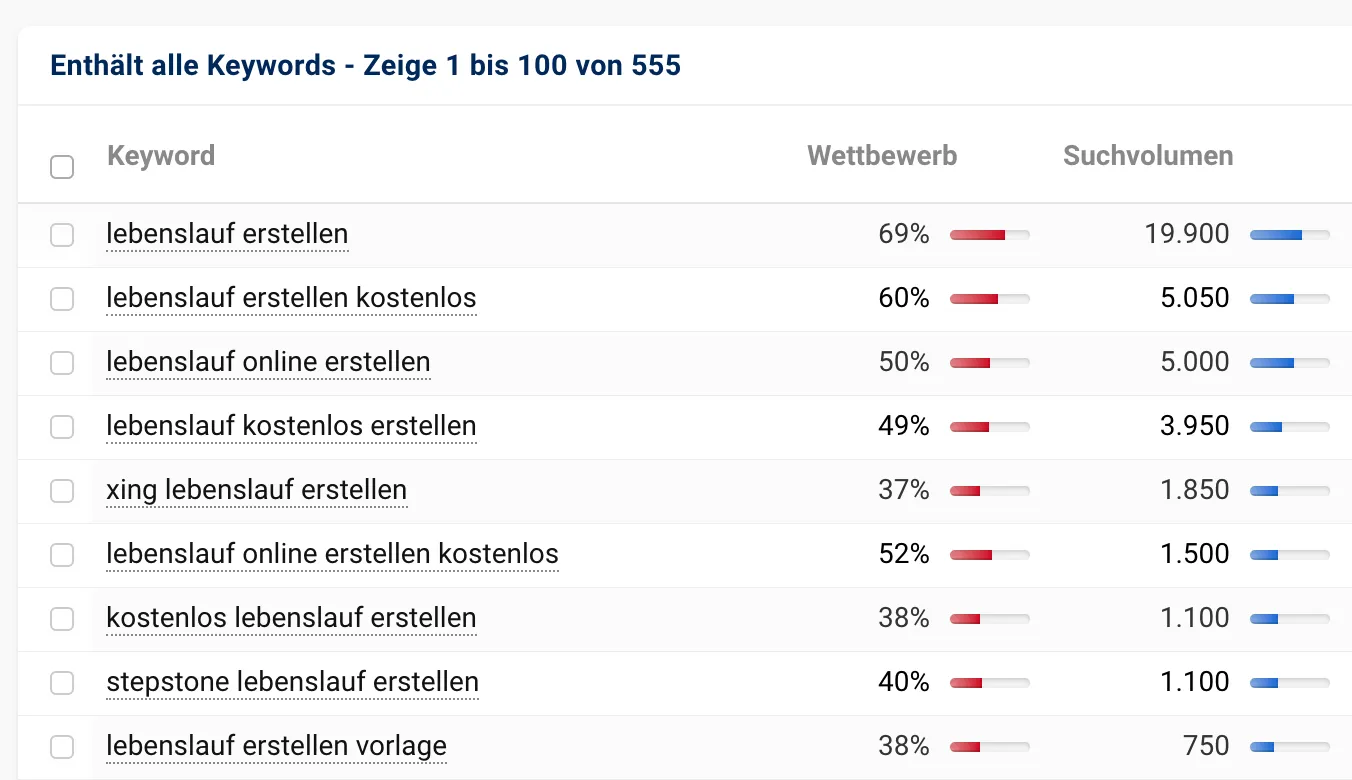
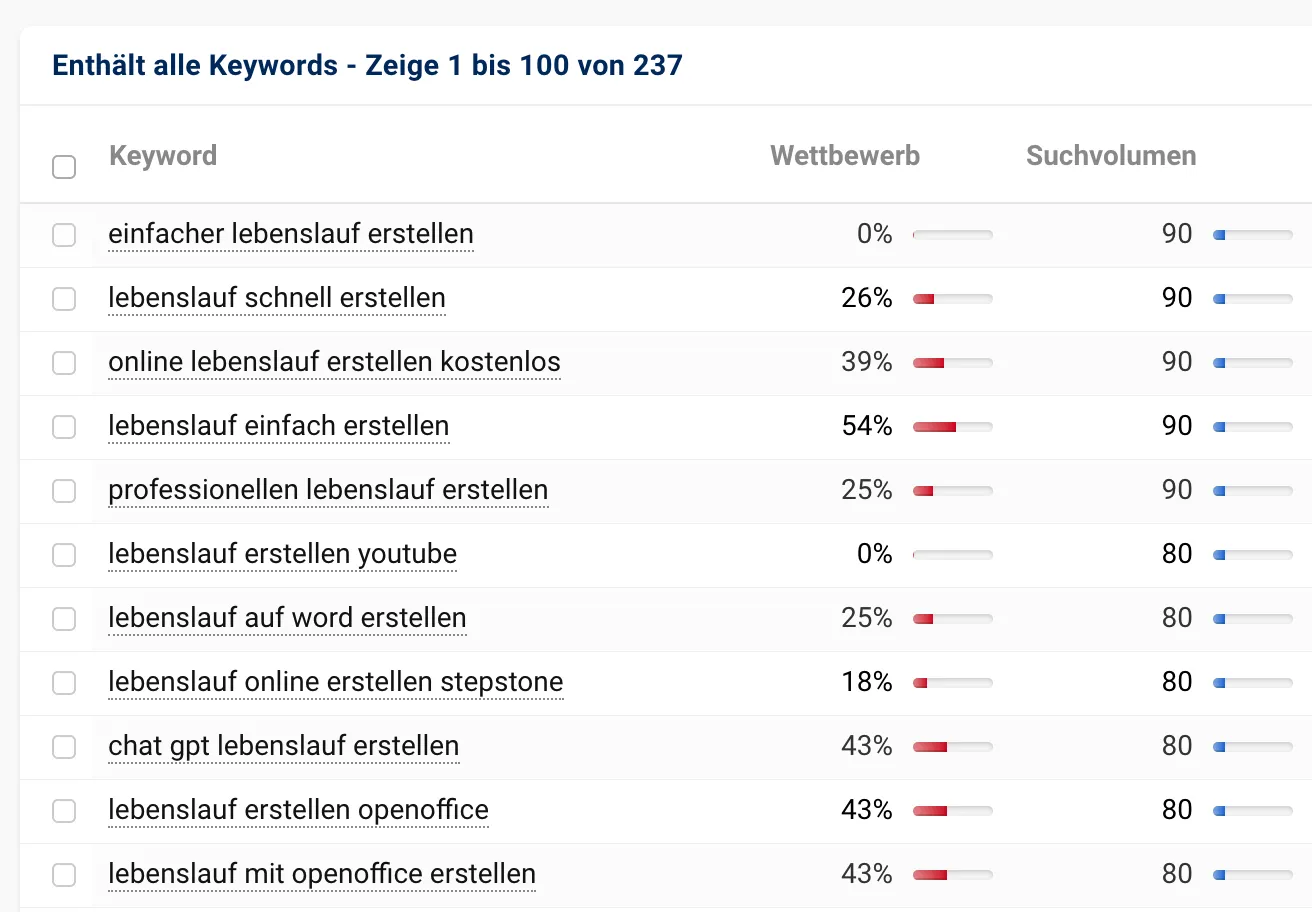
This example of niche keywords makes the problem clear. Both charts come from the SEO tool Sistrix. The search terms in the upper chart have a four-digit search volume. So a great many users search for them every month. The competition is very high too, though. It will be very demanding to build SEO visibility here.
For the search term “Lebenslauf erstellen” (create a resume) alone there are 550 keyword combinations. The deeper you go, the more niche search terms appear. For example for certain formats or platforms. The question then is whether you create your own blog articles for this, for instance. And whether it “pays off”, in the sense of effort and return.
The monthly search volume is an average. But search behavior also develops dynamically. For example, the example topic is also searched in connection with ChatGPT. Here it is likely that the search volume will keep rising. So you have to look closely and assess it with subject knowledge.
The keywords often show a “taxonomy”, meaning a certain pattern. Here, for example, that people search in connection with specific platforms. From our point of view it is clear that you can and should publish at least 10 to 20 articles on this, in order to then build SEO visibility across the breadth. One or two articles on it will hardly be enough.
Example 1
Are niche keywords worth it? Look at the SEO traffic
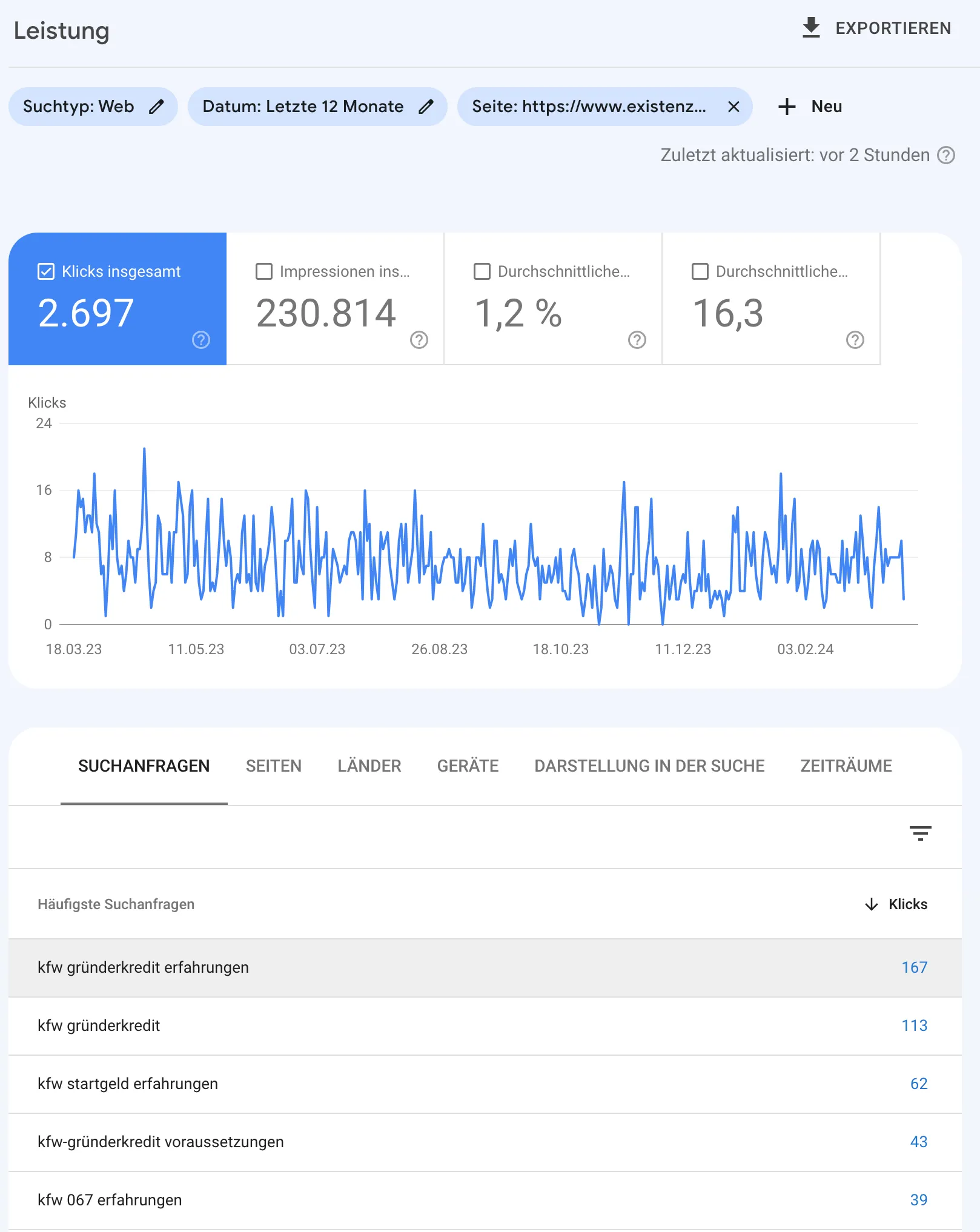
Here is an example that we also discuss in depth in our Academy workshop. A single article ranks for a finance topic. The niche keywords are a combination of three to four search terms.
Each individual search term has a search volume of only 20, 50, or 90 searches per month in SEO tools such as Sistrix. In total, though, the single article ranks for over a hundred niche keywords.
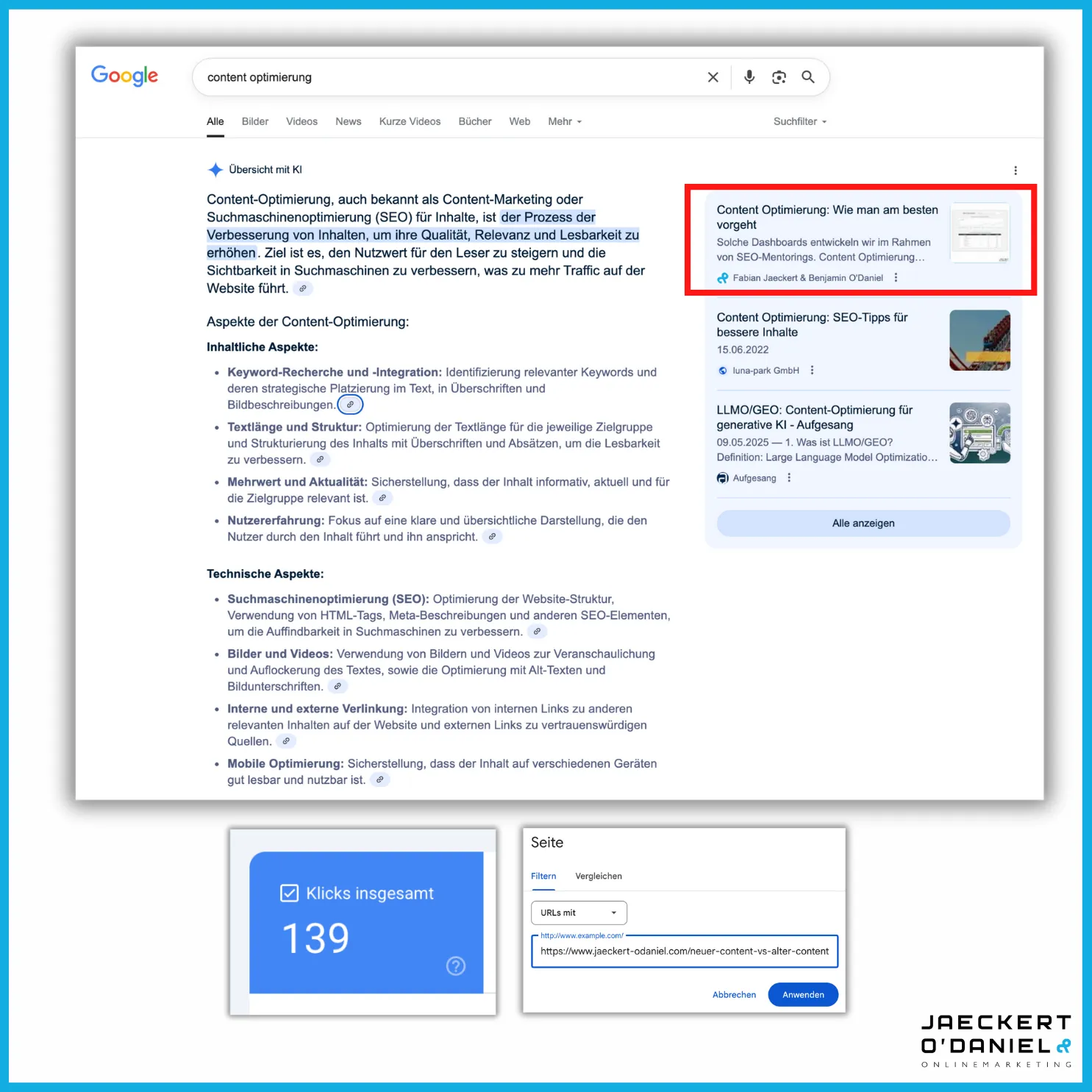
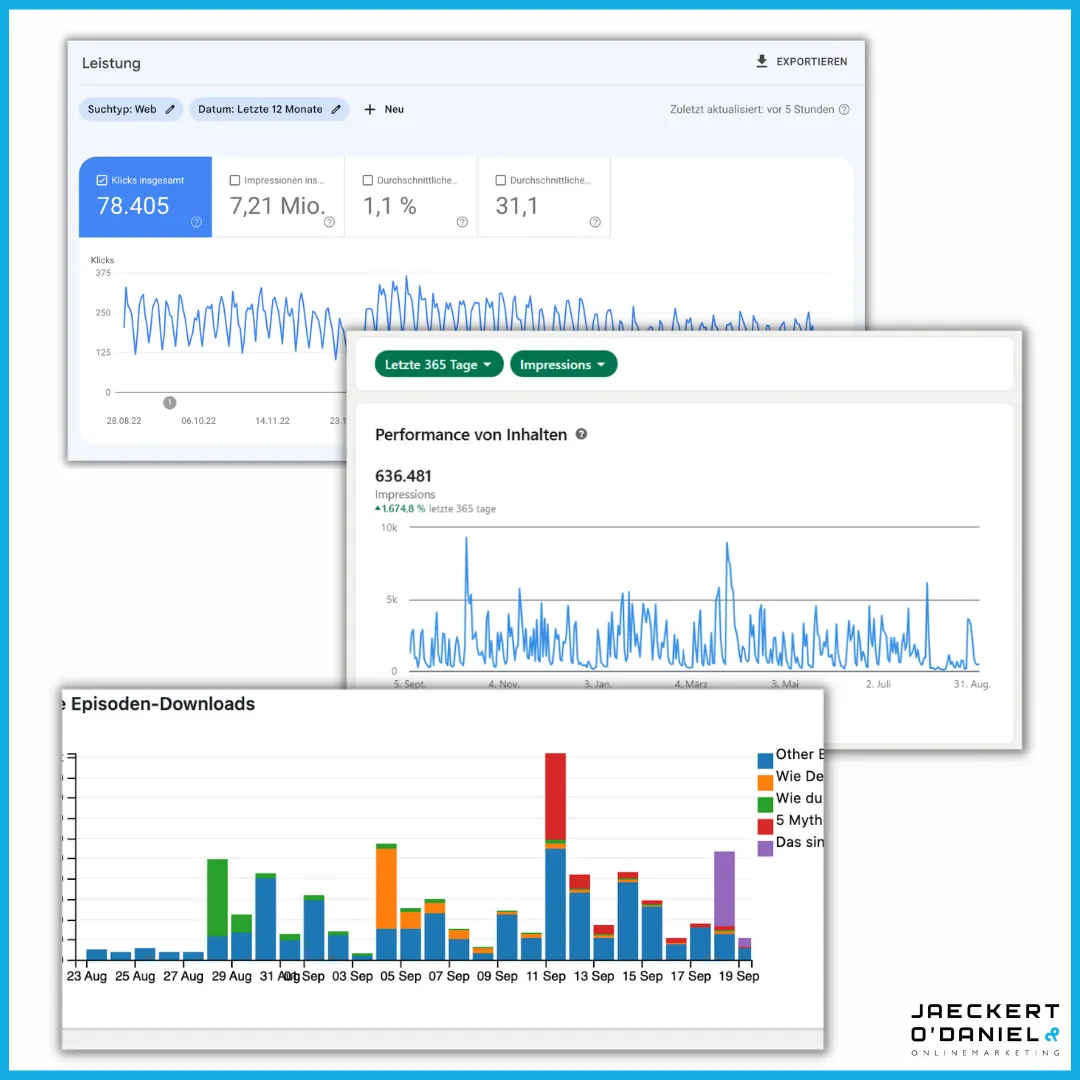
You can see the SEO traffic in Google Search Console. There you can enter a single URL, for example a product page, an article, or a landing page, and then see how much traffic arrives there via Google. The niche search terms are shown as well.
In total you see this here: the article generates over 2,600 Google clicks per year with its niche keywords. The article is over 6 years old, and it has not been revised since. So the article has generated over 15,000 SEO clicks in total, and numerous leads on top of that.
That is how successful search engine optimization works, from our point of view. The article itself, by the way, is built in a very helpful way, exactly according to Google’s helpful content principle.
Example 2
How do you research niche keywords? These SEO tools help
To research your niche keywords, you need a professional SEO tool. But which tools come into question for this?
First we always recommend that you concentrate on a valuable business area, and then identify and sort the niche search terms there in depth.
In Google Search Console you only see the keywords for which your own website already ranks. With a niche-keyword SEO strategy, though, you specifically look for terms for which you do not yet rank on Google.
SEO suites such as Sistrix, SEMrush, or Ahrefs are suitable for this. They do cost from a hundred euros upward per month, though.
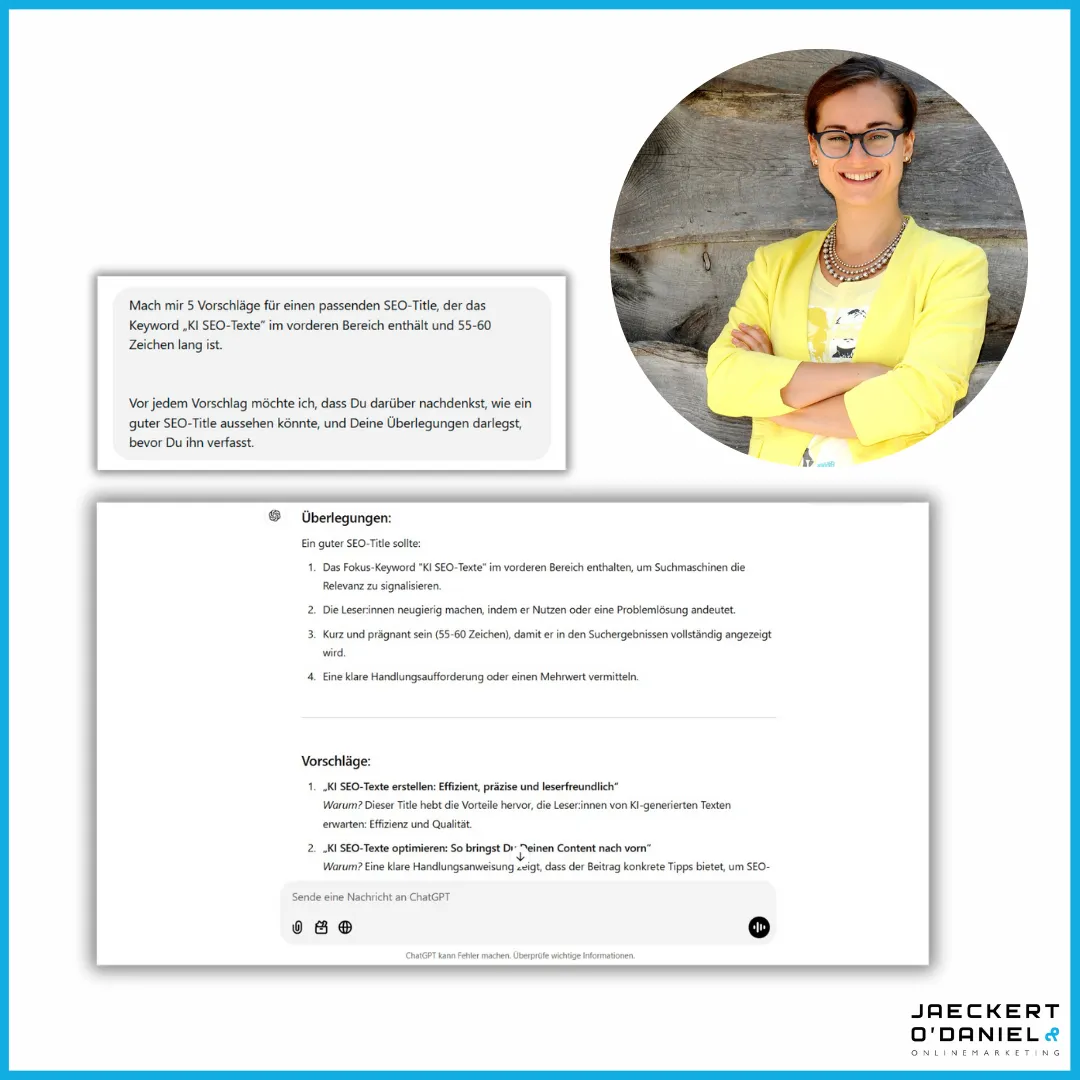
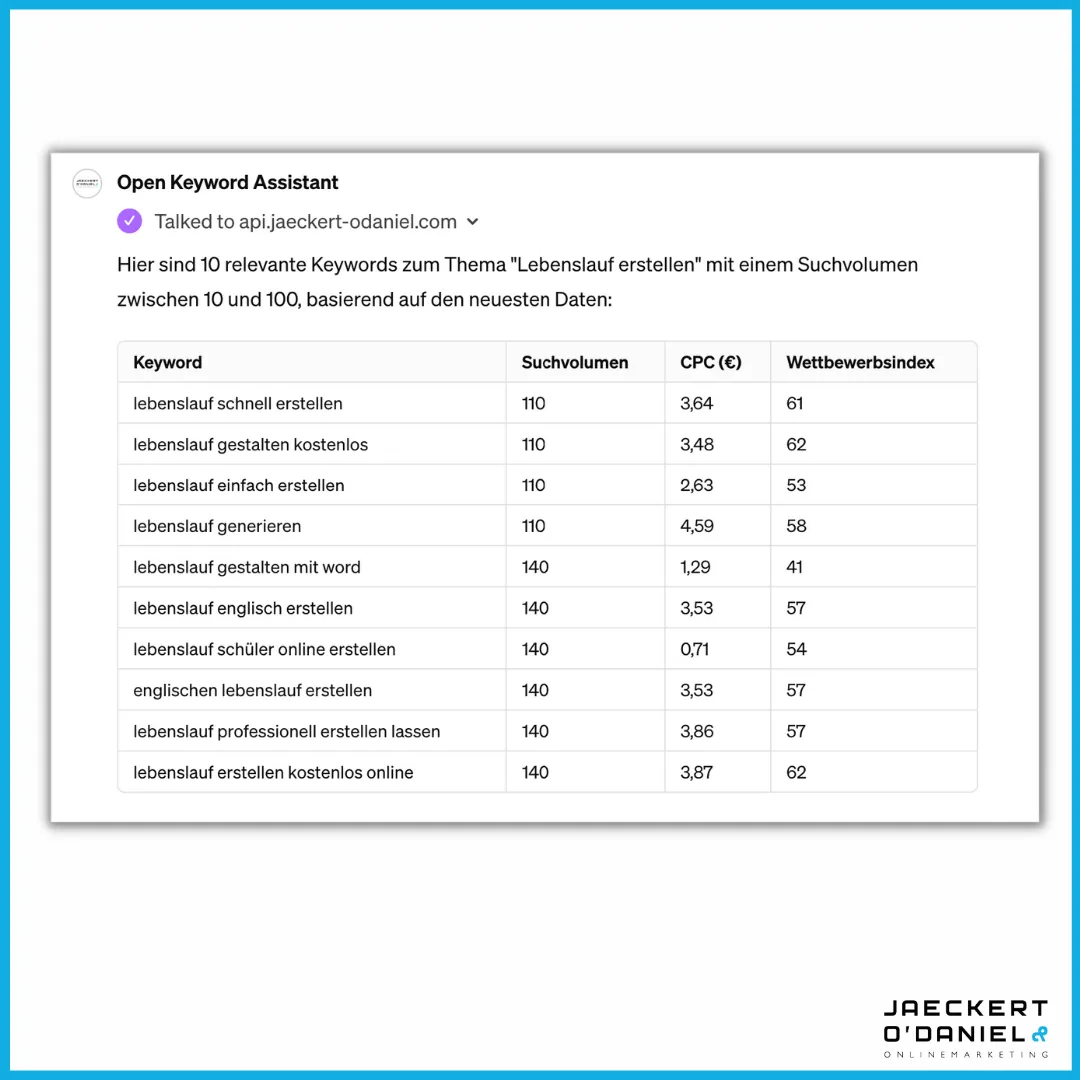
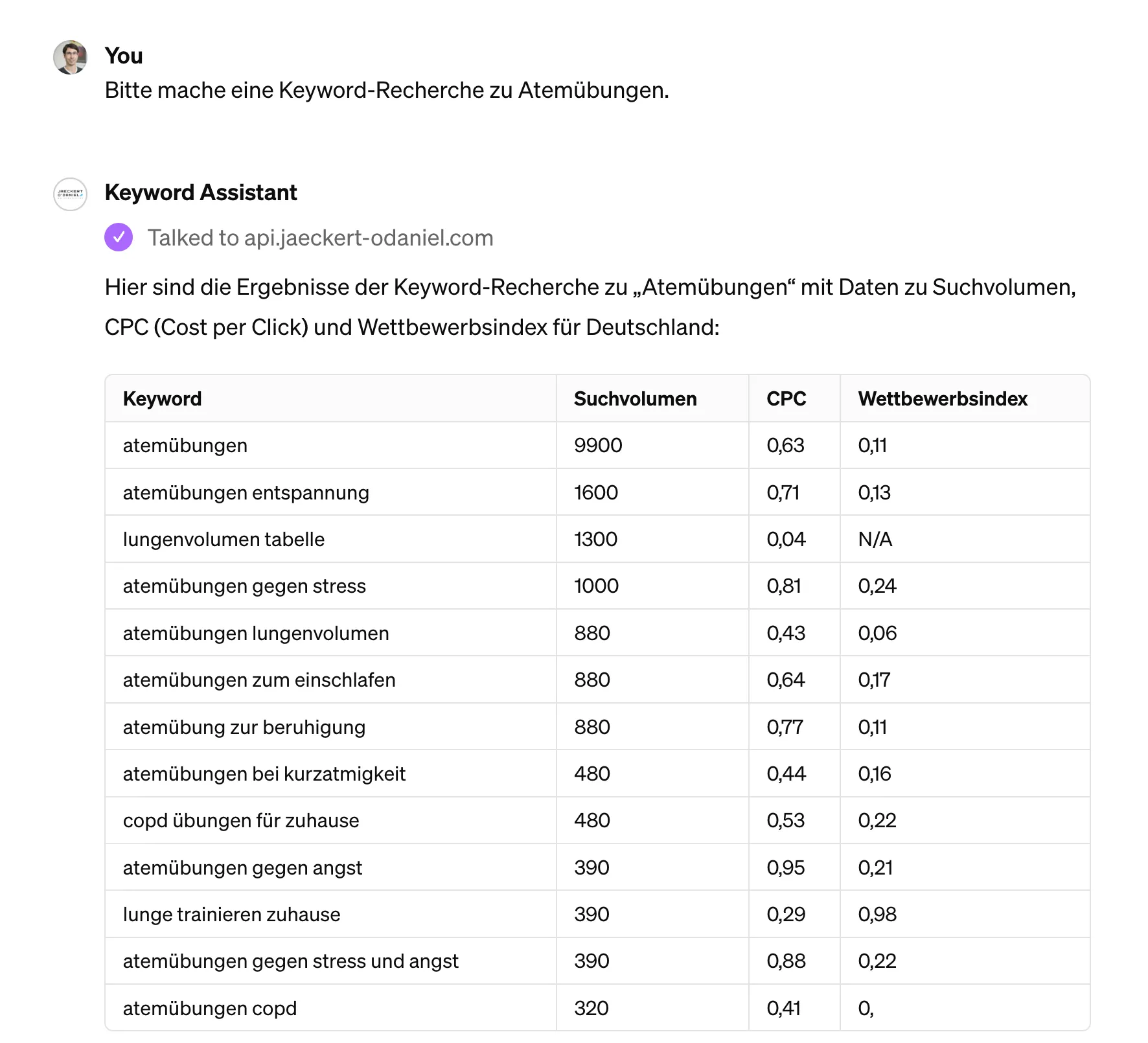
In our SEO Academy we have developed our own SEO tool: the Keyword Assistant. The keyword tool is based on ChatGPT Plus. There we developed a custom GPT and connected it to a keyword database that professional tool providers use as well.
That way our Academy members can search for their niche keywords simply and quickly.
Niche keywords in SEO: the advantages
Less competition
On many niche keywords the competition is significantly lower. That is because many shy away from the effort of creating their own content for them. The reverse of that, though, is: you have a better chance of top positions. You often build SEO visibility and SEO traffic faster that way, and benefit faster from your SEO measures.
Better click rates (CTR)
The SEO traffic for niche keywords is based on the better positions you have worked for. You can see this measurably in Google Search Console. There the CTR, the click-through rate, is reported. We have already seen in numerous examples that the click rates on supposedly “uninteresting” terms can be very good. Including the inquiries or sales that result from them.
SEO surprises
SEO tools are always the basis for our work. Even so, this holds: the data basis is not complete here either. Some terms look like niche keywords. But in fact far more visitors arrive there than the tools actually report. You then see that in Google Analytics or Matomo or similar visit counters that record the real website traffic.
Understanding and assessing niche keywords: how to get started

You are still at the beginning in SEO? No problem. That is how it is for many people.
There are often worries that SEO is too complicated. From our point of view it is exactly the opposite.
SEO gives you a feel for what customers are really searching for. Niche keywords are a very good entry point, because you get results quickly and the implementation is often very compact.
Even a single blog article or a single landing page for a valuable niche keyword is suitable for testing SEO and carrying out a basic optimization.
That is exactly what we have our SEO Academy for. In live workshops we discuss the topic of keyword research again and again, often using examples from our members.
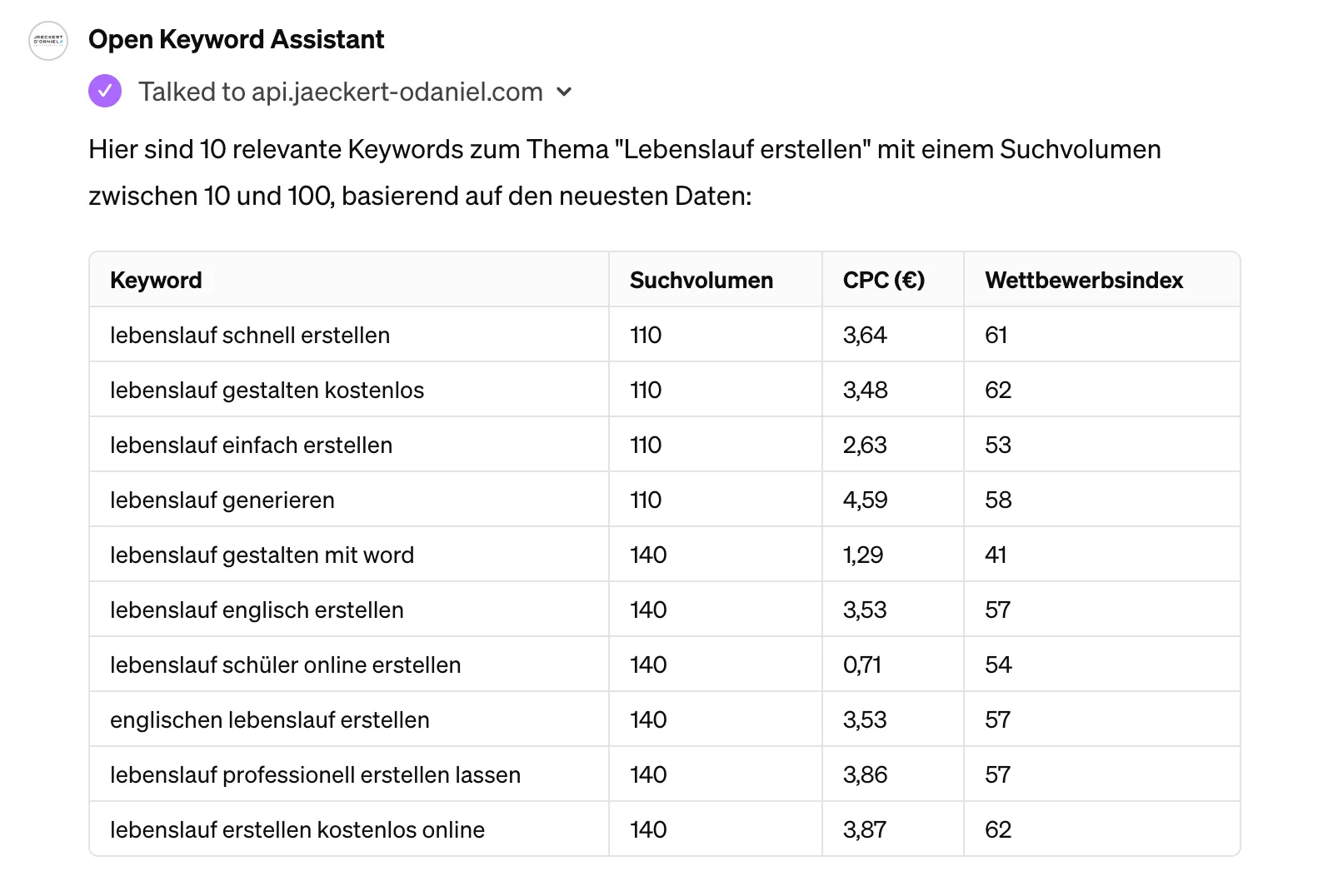
We are currently also developing our own SEO tool, which we make available to our Academy members. It is a keyword assistant connected to ChatGPT, and it is based on real keyword data (see screenshot). So you do not even have to book a tool to get started with SEO.
More on the SEO AcademyDeepen your SEO knowledge: every Monday by email

Our conversations with SEO professionals in the industry

How Südwestrundfunk (SWR) works on search experience: interview with Sarah Stein

SEO as a growth strategy: interview with Kevin Indig

SEO for a software company: interview with Beat Köck


What does an online shop need in order to rank successfully? Interview with Stefan Vorwerk
How Hansgrohe does SEO in 40 countries: interview with Jörg Niethammer

The SEO strategy of Hubspot: interview with Jenny Lapp