March 4, 2024Benjamin O’Daniel
From Research to the Hook: The Perfect Blog Article
They are called corporate blogs, journal, or online magazine.
Practically every company that does content marketing professionally has a home for editorial articles, away from direct product communication.
Blog articles like these have huge traffic potential, if you approach it the right way.
In almost every project we see one or two articles that drive a lot of traffic. But often it is only one or two pieces.
So: what does the perfect blog article look like? That is what we talk about here. In our Academy we offer a live workshop on this, in which we analyze blog articles from our Academy members and make suggestions for improvement.
3 reasons for poor article performance
No journalistic approach
Who writes the articles? In many companies there are no trained people responsible for content. But when the texts come from the product department and are put online unedited, they are often simply not interesting enough. What is missing: interesting topics that attract users. Crisp headlines or hooks that pull readers in. The trend of having ChatGPT write your articles reinforces the problem. Because what comes out is interchangeable “copycat content”. Purely promotional content à la “Our new trade-show booth” gets hardly any clicks, and not without reason.
Wrong understanding of SEO optimization
Many blog articles are “SEO optimized”. What is often understood by that: inserting a focus keyword into the WordPress plugin. But that simply does not produce rankings. It is about clearly defining a keyword approach and developing an interesting topic from it. Success often lies in researching niche keywords. That is exactly what we discussed with examples in this Academy workshop. The big advantage: it is often not a lot of effort. You can get started right away, and quite often you bring in first results within a few weeks.
Too little is made of the articles
Many companies run elaborate editorial meetings, send out briefings, and maintain Excel lists of topics. But as soon as the article is published, it is posted on social media once at most, and if things go well it is mentioned in the monthly newsletter. With so little power in distribution you get no impact. SEO rankings build up over months. But SEO alone cannot be the only traffic lever. Every magazine, every corporate blog needs a contemporary distribution strategy.
Here is a niche keyword, and a content approach to go with it
Here is a fictional example: a company or a consultant in the health sector wants to build visibility and expert status in the area of “breathing techniques”.
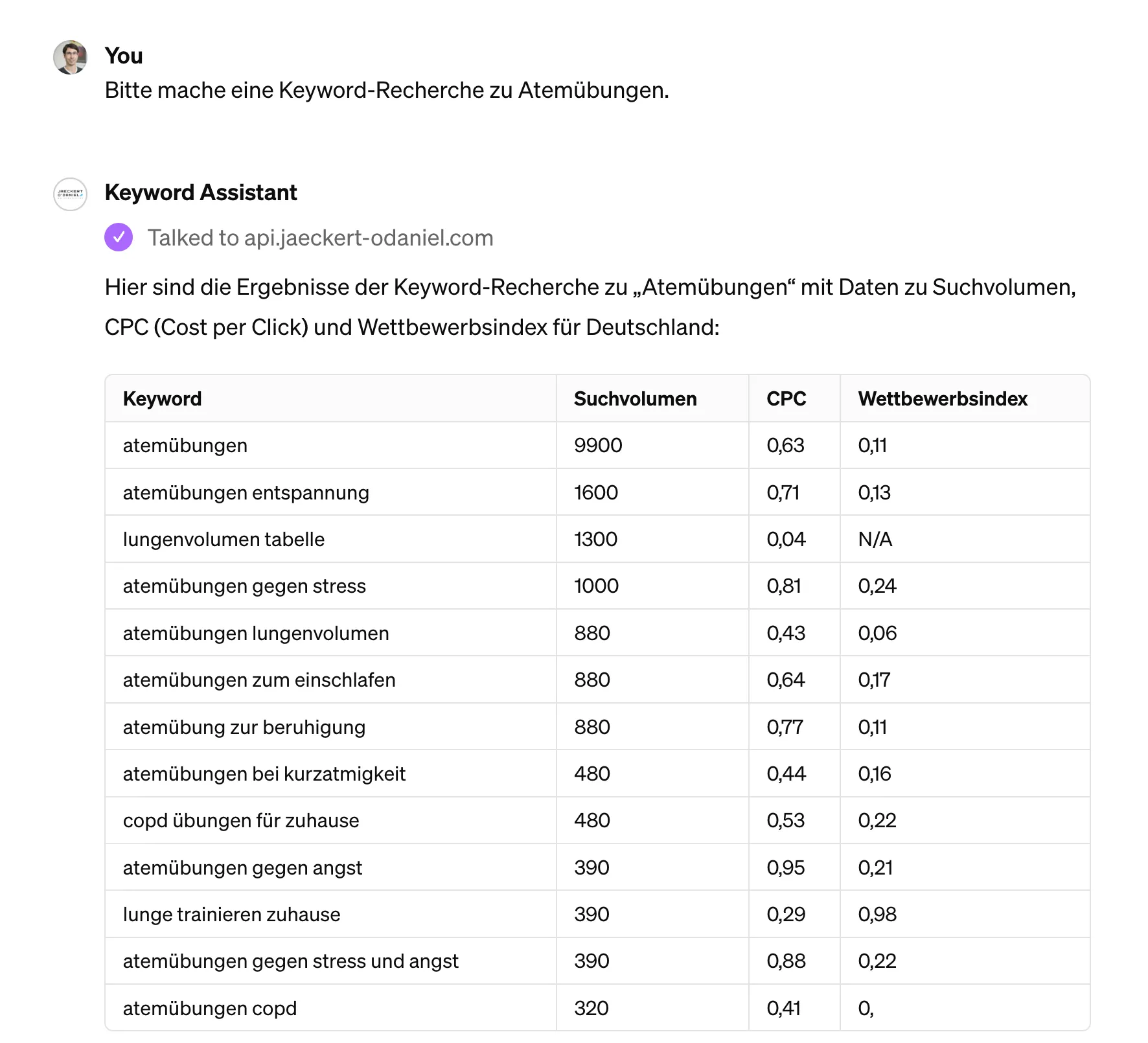
A short query in our Keyword Assistant, which we make available exclusively to our Academy members, shows: there are many search terms around breathing exercises. Shortness of breath, stress, and falling asleep are three specific situations.
A series of articles or a content hub follows directly from this.
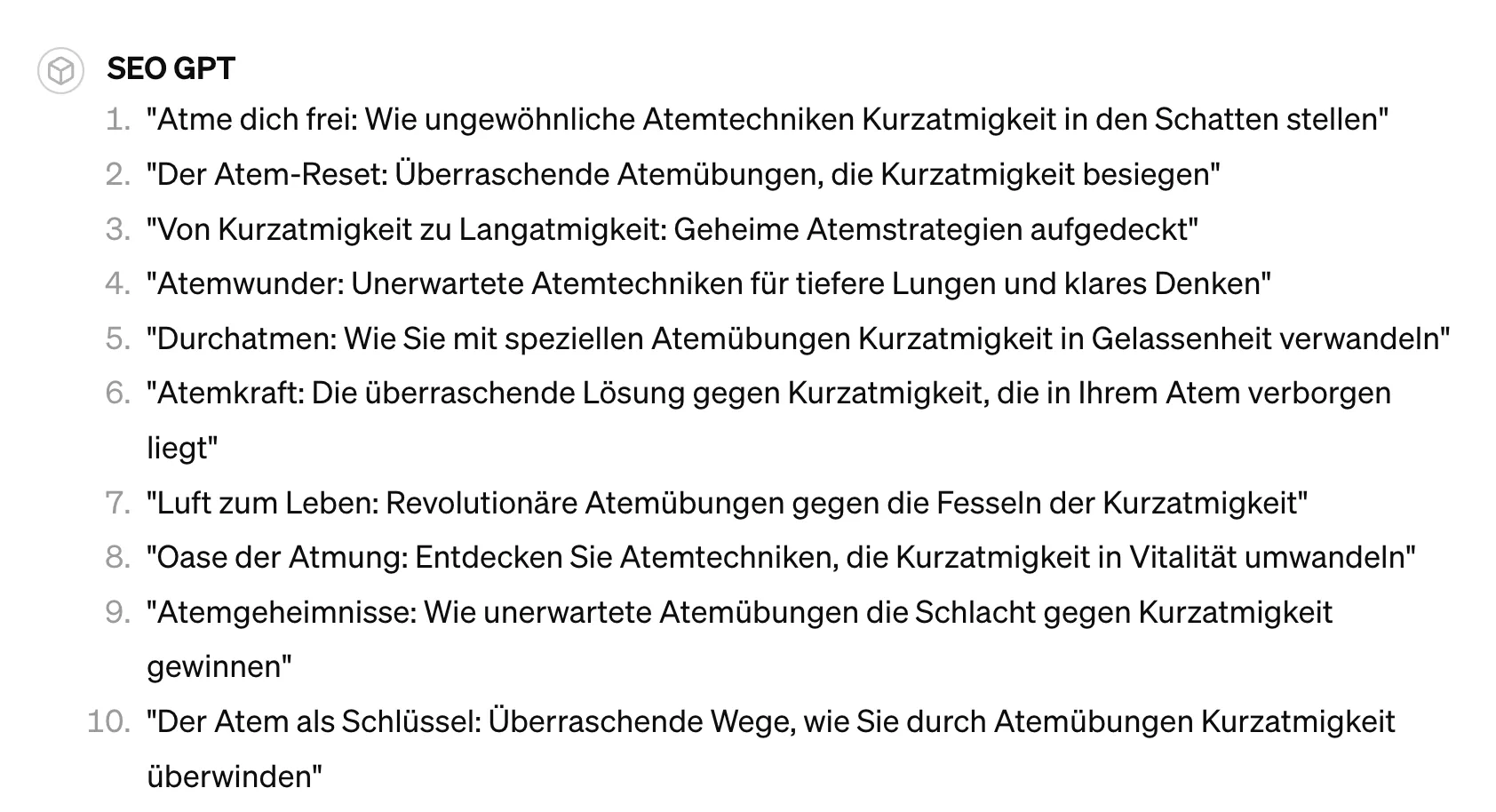
In the next step you ask ChatGPT for interesting headlines. You use the tool for brainstorming.
Typical of ChatGPT results: the AI tool delivers over-the-top hooks. “Breathing miracle”, “revolutionary breathing exercises” sound like high-click headlines at first glance. But you will not be able to fulfill this promise in the article, and so you ultimately deliver disappointment.
Our personal favorite: “The breath reset: surprising breathing exercises that beat shortness of breath.” The headline would be too long for a Google snippet. But you can work with it well. We would say the headline for the blog article is: “5 surprisingly simple exercises for shortness of breath”.
We are saving the phrase “breath reset”. That could be a good hook for another editorial topic, in which you then really talk about how you can completely recalibrate your breathing. “Breath reset” has no search volume, but it sounds compelling and could attract users that way, for example through matching social media posts.
Another look at the keywords shows the keyword in connection with “COPD”. Here we would conduct an interview with a doctor. And we would have all the other articles medically checked as well.
By the way: that is exactly how our Academy workshops run.
Not every blog article has to be “for SEO”
Many self-employed people, marketing leads, or founders fall into a certain pattern: because they finally want to celebrate success in SEO, every topic is viewed through the “SEO lens”. But that does not have to be the case.
Example: a case-study interview with a satisfied customer will not generate SEO traffic. Because interviews like these often have no keyword focus. They do not have to, either. Because the goal is a different one: namely to offer users who land on the page by chance, or who want to inform themselves about the company in general, an interesting article that in turn is part of a customer journey. Our approach: SEO is a central building block in the digital marketing strategy, but not the only one. You should clarify whether a blog article has an SEO goal, or not.

We advise marketing leads on SEO

We are Fabian Jaeckert (on the right) and Benjamin O’Daniel. For many years we have worked as consultants for marketing teams. In doing so we connect two worlds: Fabian is the technical expert, Benjamin takes on every topic around content development.
After my advanced training as an SEO Manager, I was looking for an opportunity to further deepen the knowledge I had acquired there in practice. I found exactly that in Fabian and Benjamin’s SEO Academy: They impart practical and well-founded SEO knowledge, always very close to real-world application and with very concrete examples. They do not make a secret of their methods and allow valuable insights into their own work. My conclusion: a very practical SEO learning project that delivers on its promises and is also fun because you get to work with truly nice people!
 Heike Gruber
“How can we improve our SEO visibility?”
This fundamental question sits behind every project we are brought on board for.
Often it is about reviewing existing SEO and content strategies from the outside and developing new levers.
That is exactly what we have specialized in.
We develop SEO strategies for companies and present them in focus workshops, in a structured and understandable way, to the people responsible. After that we support the in-house leads through the implementation.
Sound interesting?
We are happy to arrange an SEO intro by video call or phone.
Deepen your SEO knowledge: every Monday by email

Our conversations with SEO professionals in the industry
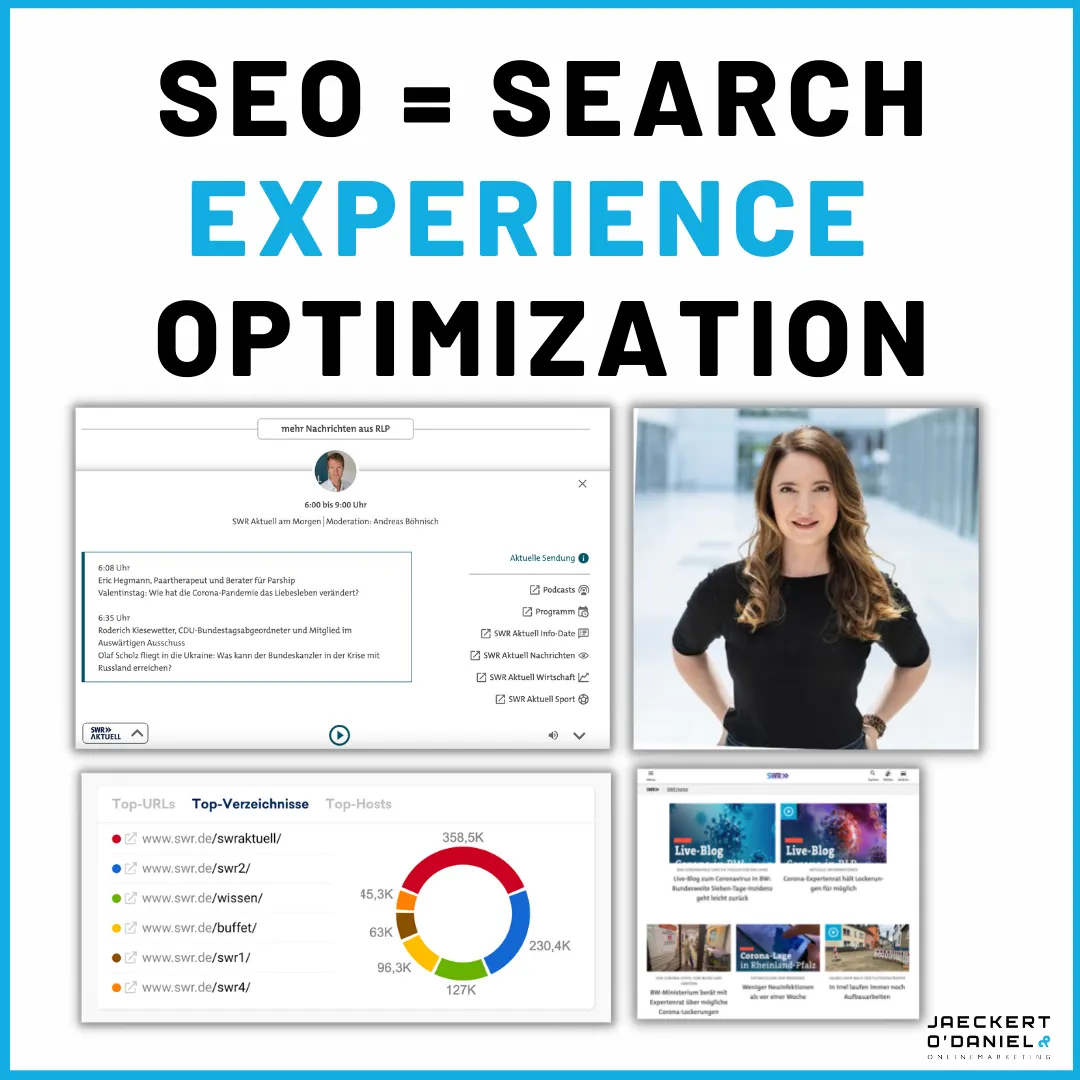
How Südwestrundfunk (SWR) works on search experience: interview with Sarah Stein

SEO for a software company: interview with Beat Köck

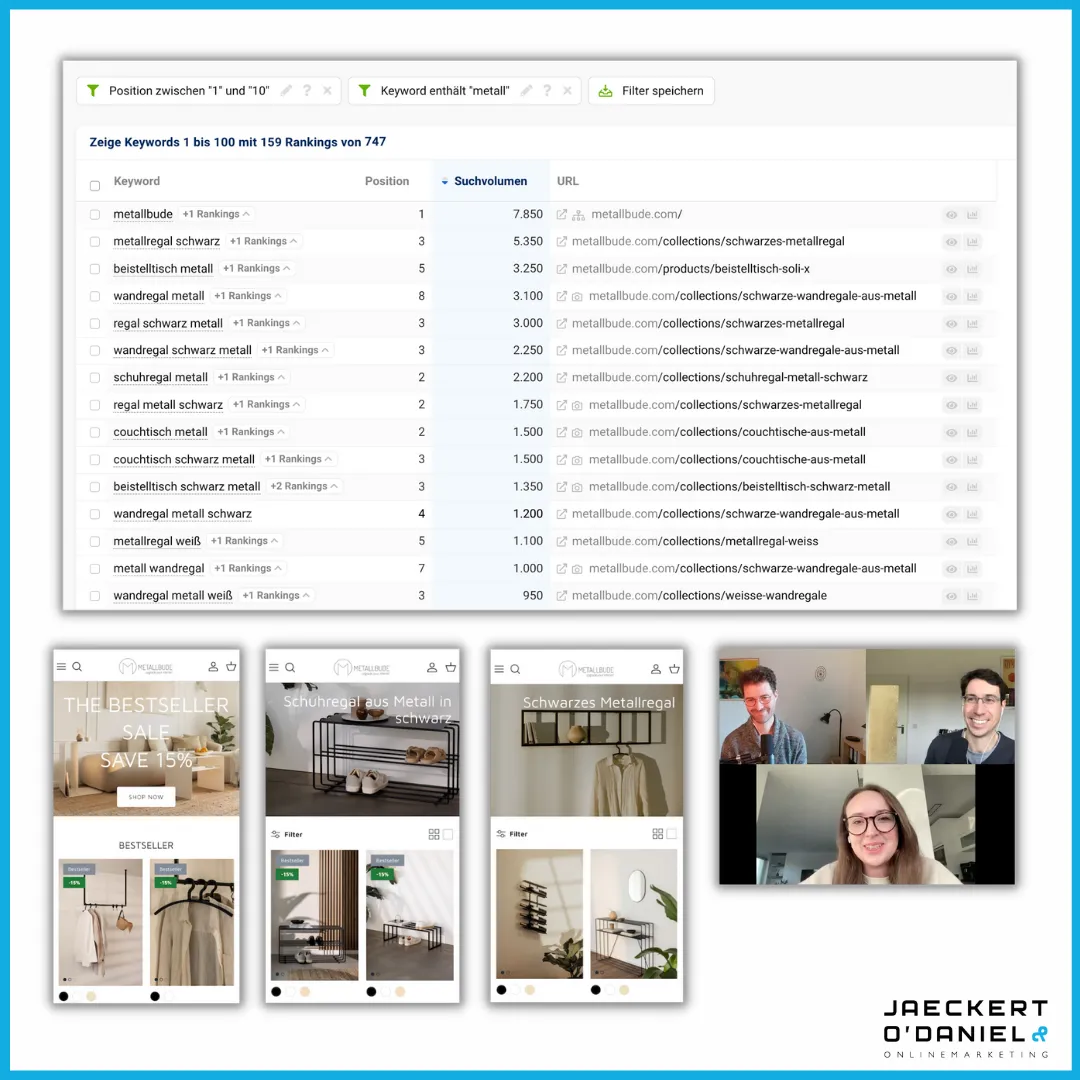

What does an online shop need in order to rank successfully? Interview with Stefan Vorwerk

The SEO strategy of Hubspot: interview with Jenny Lapp

How user testing works: interview with Astrid Kramer on UX and SEO
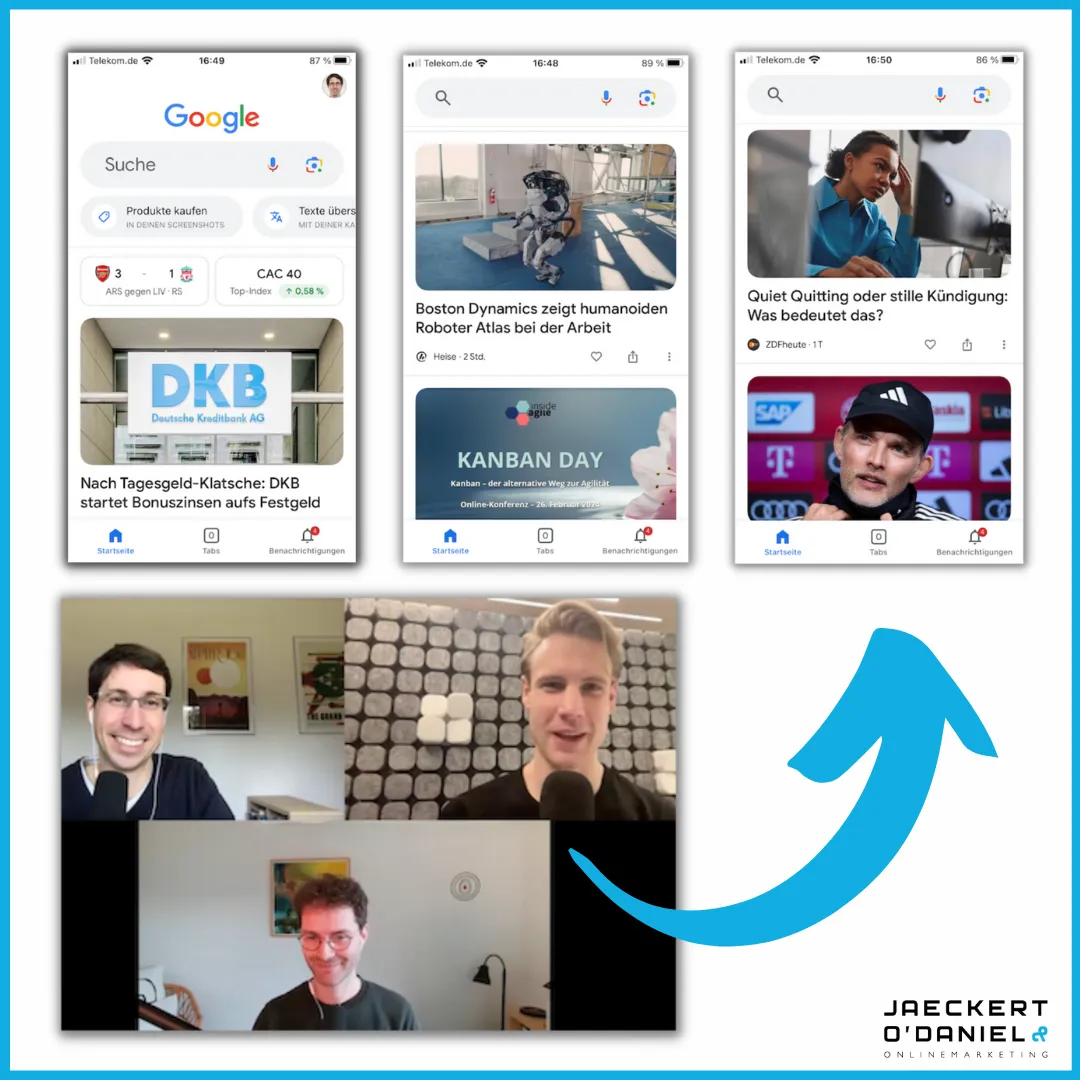
How you optimize for Google Discover: interview with Steven Plöger