June 5, 2023Benjamin O’Daniel
How to develop your content portfolio strategically in the age of AI
Little time, a lot to do: that is everyday life for everyone responsible for content marketing.
Companies have a whole range of content: from the website to social media channels to their own video or audio formats.
How can you develop this content portfolio strategically? Especially at a time when AI is on the rise?
That is what we discuss in the podcast episode, on this page, and in the coming weeks in our Academy as well, in live workshops based on examples.

What is a content portfolio?
A content portfolio covers all content formats that companies build, maintain, and develop further in their content marketing mix.
Examples of individual content formats are blogs, landing pages, white papers, podcasts, and social media channels. Each format is conceived, produced, and published on its own, and ideally optimized continuously as well.
The term content portfolio describes the overall view of all content assets. It is about the mix and the interplay of the different formats. We often see imbalances here.
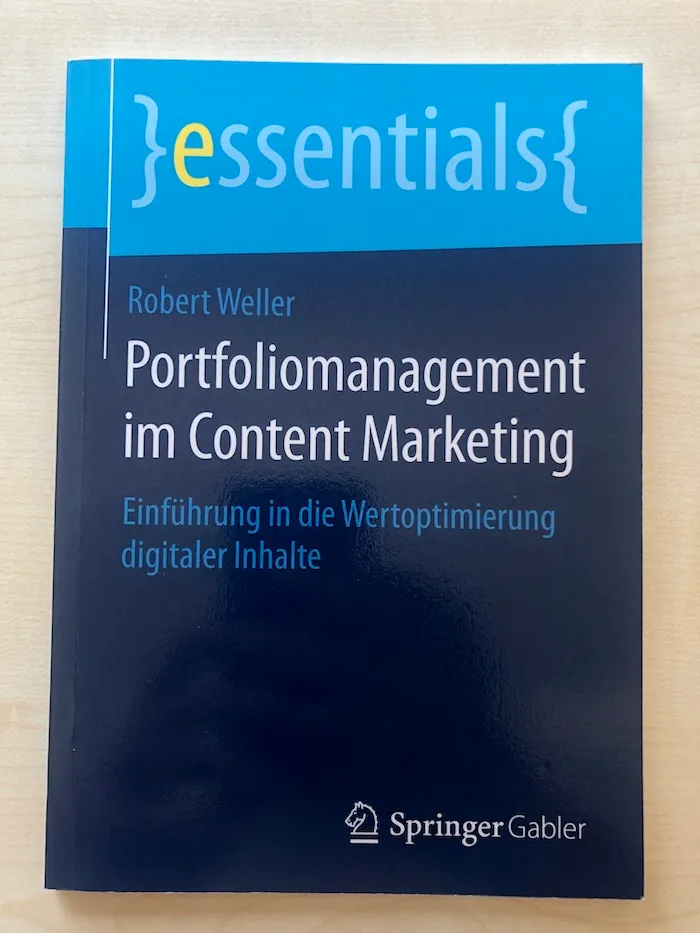
If you want to go deeper, the book by Robert Weller is worth reading: Portfoliomanagement im Content-Marketing. There is also a specialist article by Robert here.
3 challenges in developing a content portfolio
AI development
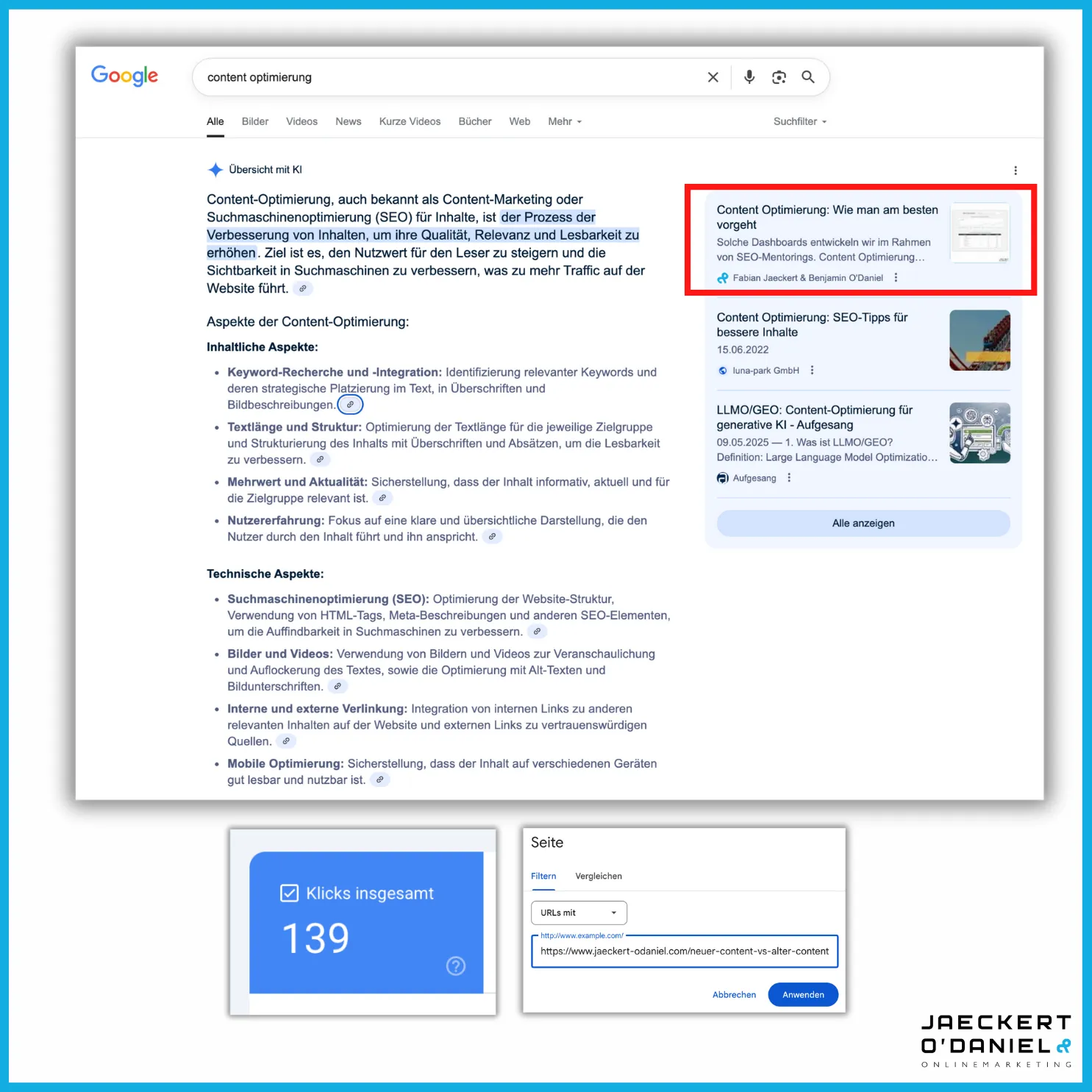
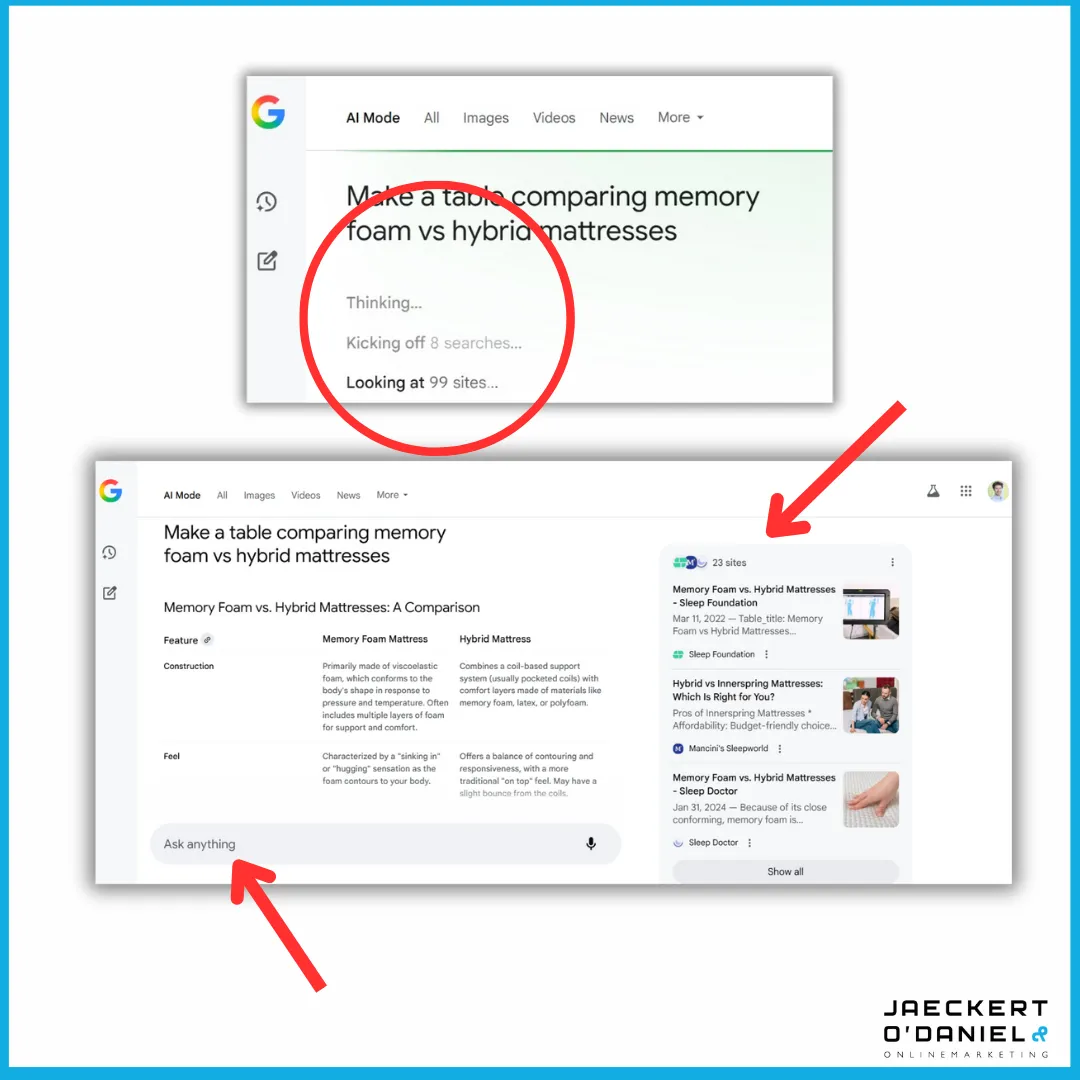
With its “Generative Search Experience”, Google will integrate AI answers into the search results in the near future. That will have a clear impact on website content. Google is the strongest traffic channel for almost every company. So the question is how you respond to that strategically and operationally across your entire content portfolio. From our point of view, that is part of an LLMO and GEO strategy.
Too many channels
A short hype, and marketing already has a new channel on the table. That is especially true in social media. But you also have to maintain and fill every channel continuously. We often see a large imbalance here. Example: four social media channels in three languages, and then no resources left for a newsletter.
Goals that are too broad
The big goals are clear: more traffic, leads, and sales. But that alone is not enough to develop a content portfolio further. You need a granular view of the individual formats and the specific KPIs behind them. Example: increase the newsletter click rate, increase podcast downloads, or get more top 10 rankings.
Get an overview with the content pyramid
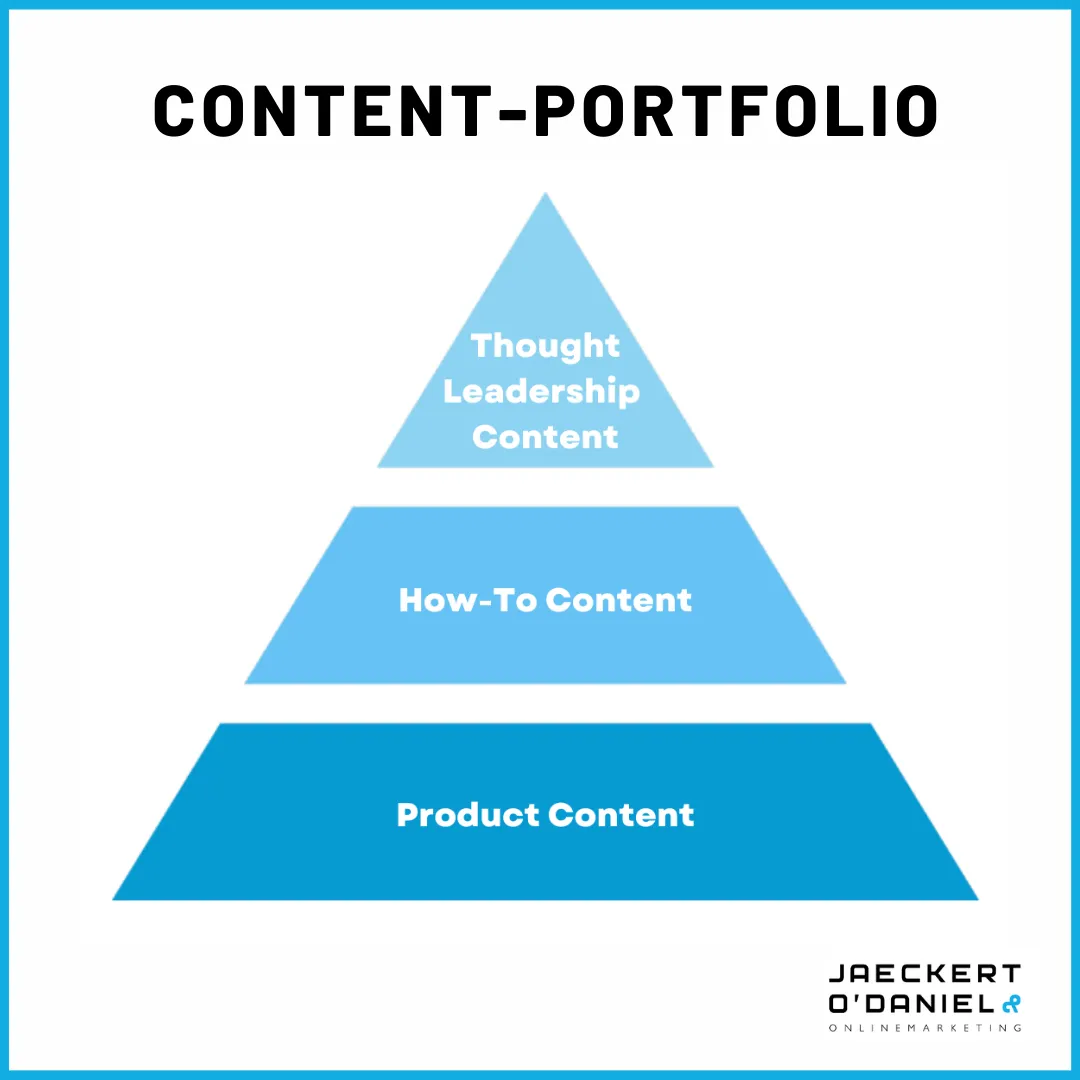
To develop and further develop a content portfolio, you need an overview. For that we use the content pyramid, which Benjamin also presented in his talk at SMX in Munich. The topic there was thought leadership content.
The pyramid makes the priorities and the distribution clear.
The base is formed by all pages close to the product. For online shops, that includes category pages and product detail pages, for example.
For B2B companies, it is above all landing pages that should be optimized for transactional terms, terms you otherwise have to spend a lot of money on in Google Ads, for example.
On the next level, how-to content plays the main role. This is about helpful content for the audience. In the customer journey, this content often sits before a concrete purchase intention.
At the top sits thought leadership content. Outstanding content with which the company wants to position itself as a thought leader in its industry. That includes interview series, analyses, studies, or opinion pieces.
Longform content vs. snackable content
Another way to look at your own content portfolio is to split it into detailed, in-depth content (longform content) and shorter content (snackable content).
A concrete example from our day-to-day work:
We develop detailed content for our podcast. Each episode lasts about 30 minutes. Time spent listening is high according to Spotify Analytics: about 70 percent of listeners are still there in the third quartile.
From this longform content we develop a magazine article (time on page: 3 minutes) and snackable content, for example for LinkedIn (time on page: 30 seconds).
Example: an episode on SEO crawling and a matching LinkedIn post.
The different content formats are therefore editorially aligned and complement each other in their function and their channels.
Deepen your SEO knowledge: every Monday by email

We develop content portfolio strategies
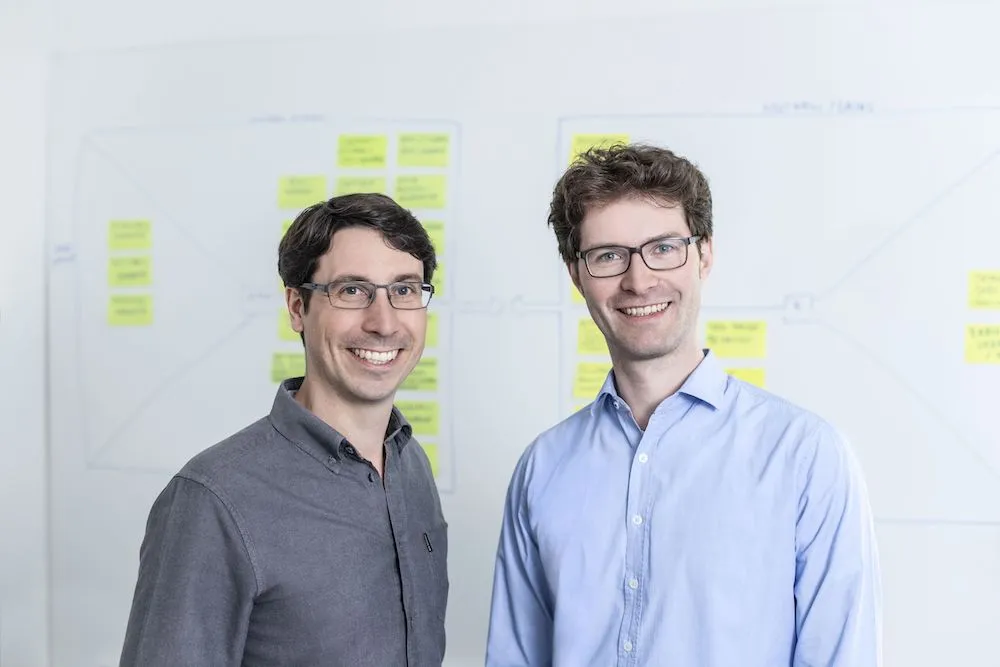
We are Fabian Jaeckert (on the right) and Benjamin O’Daniel. For many years we have worked as consultants for marketing teams. In doing so we connect two worlds: Fabian is the technical expert, Benjamin takes on every topic around content development.
With Jaeckert O’Daniel, it quickly became clear to us that we had made an excellent choice in selecting potential partners for our online marketing project. Their expertise and, above all, their ambition to thoroughly immerse themselves in our specific industry topic to provide us with the best possible support, are precisely what is now propelling us forward.
 Tobias ReitmeierF.EE Group
“How can we improve our visibility?”
This fundamental question sits behind every project we are brought into.
It is often about reviewing existing SEO and content strategies from the outside and developing new levers.
That is exactly what we have specialized in.
We develop individual strategies for companies, derive concrete topics and measures from them, and present this in focus workshops, in a structured and understandable way, to the people responsible. Afterwards we support the in-house leads during implementation.
Sound interesting?
We can arrange an introductory video call (30 min.).
Our podcast: interviews with top speakers from the industry

SEO as a growth strategy: Interview with Kevin Indig

How to build a successful startup: Interview with Johannes Kliesch

Community management in companies: Interview with Vivian Pein

How do I become a LinkedIn influencer? Interview with Jens Polomski

What does an online shop need in order to rank successfully? Interview with Stefan Vorwerk
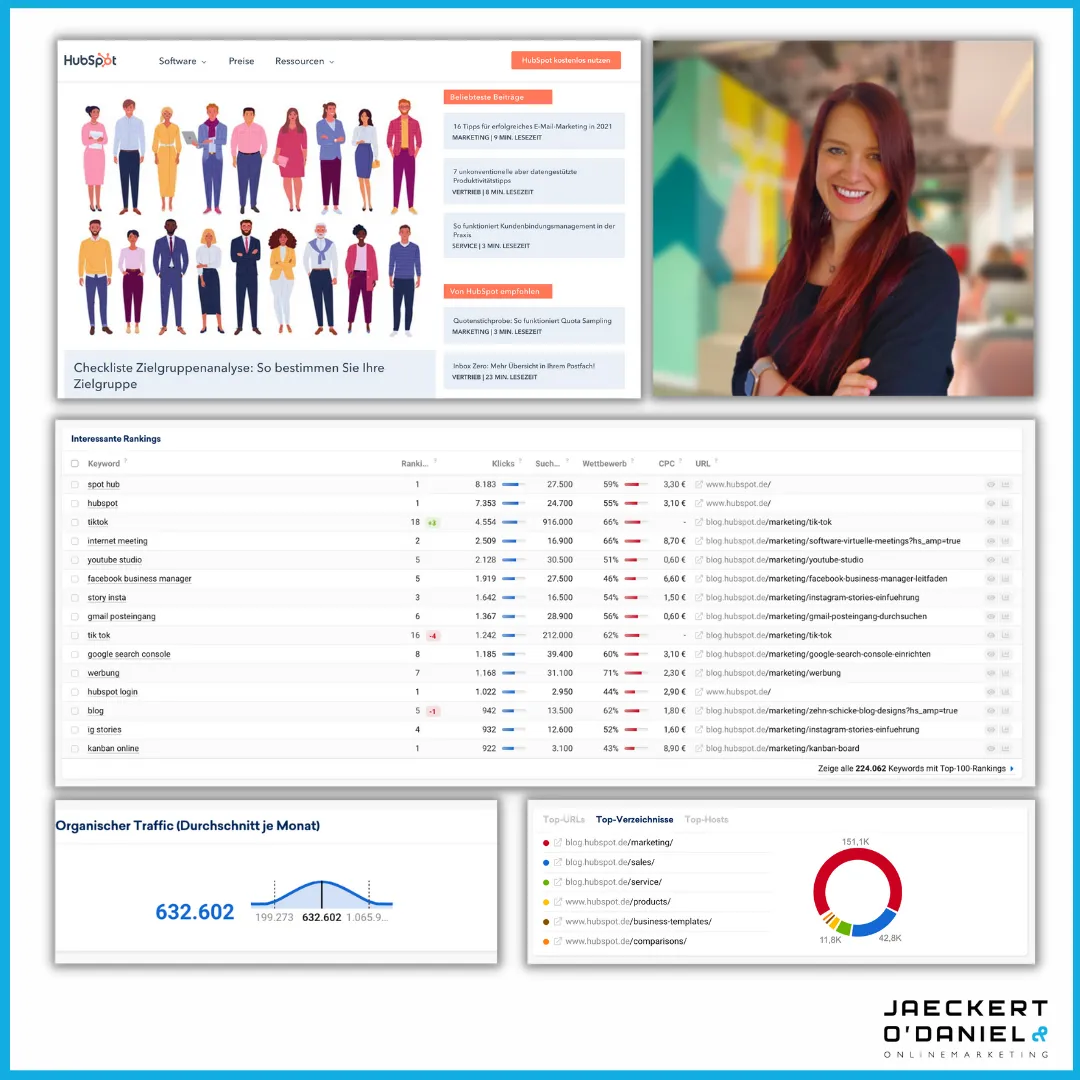
The SEO strategy of Hubspot: Interview with Jenny Lapp
How do I become a personal brand without crude self-promotion? Interview with Kerstin Hoffmann

Content design: Examples from practice. Interview with Robert Weller