January 13, 2025Benjamin O’Daniel
Two Days of TikTok Formats at TH Köln: Behind the Scenes
What actually makes a good content format? The longer you think about this question, the deeper you go down the rabbit hole.
On the surface, many buzzwords float around: good content has to be original, high quality, and offer added value. All well and good, but which criteria sit behind that? And how do you put it into practice?
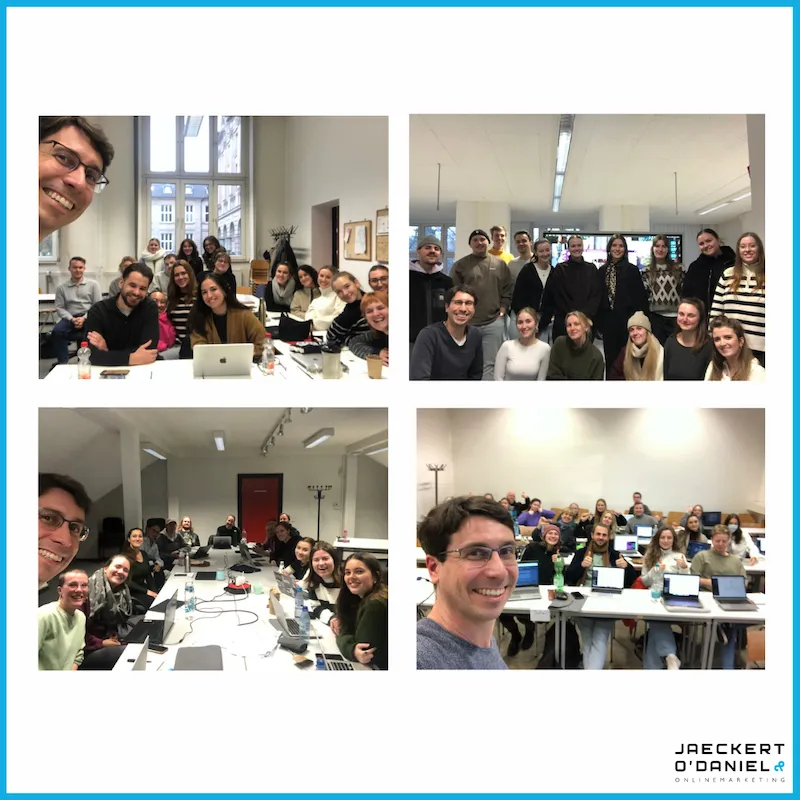
I work on that every year with students at TH Köln. For 10 years I have worked as a lecturer in the Online Editorial program. Together we develop content formats there, this year with a focus on TikTok.
In the podcast episode I describe my approach. Which methods I use, what impressions I have of Gen-Z, and why the loop of insight and implementation matters so much to me.
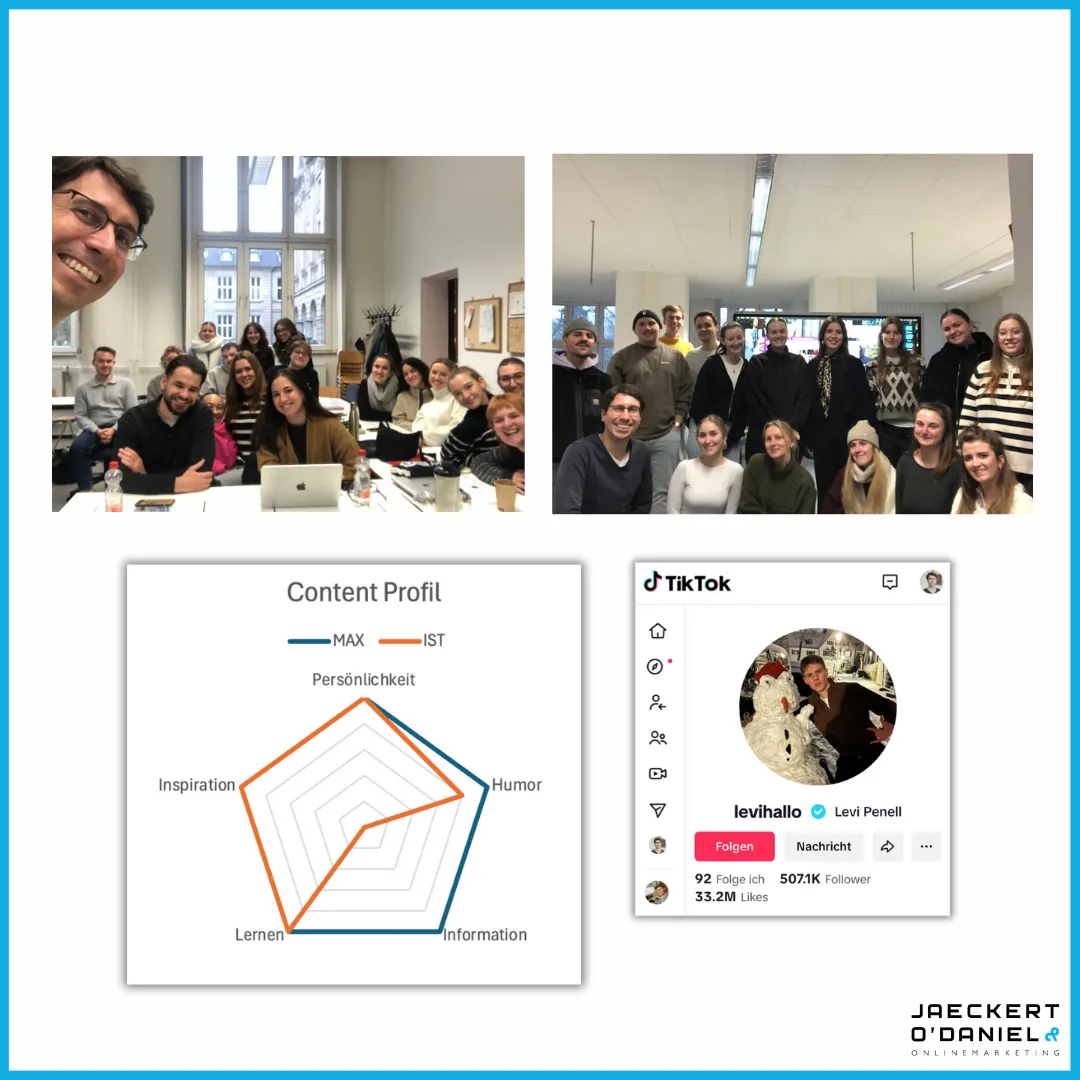
The Online Editorial program
The Online Editorial program combines journalistic craft with multimedia production, web design, web technologies, and content marketing. An interdisciplinary approach that, from my point of view, reflects reality very well.
Many students later want to work in digital journalism at media companies, but often also in corporate communications and social media marketing. Many also find the whole world of content creators very exciting, even though they themselves almost never have their own channels.
I myself have journalistic roots. During my studies I worked at a regional daily newspaper, later did my traineeship there, and then worked as a freelance journalist. For about ten years I have worked as a consultant in SEO and content marketing. As a “content person” who knows both sides, I feel very much at home as a lecturer in this program. To prepare, I started my own TikTok channel last year, which I use sometimes more and sometimes less.
Here is the program website.
What is a good TikTok format? Examples from Gen-Z
Professionally produced formats
Gen-Z likes to watch professional formats that are produced according to the rules of the platform. Length, speed, editing, language, style: everything has to fit. For several years, Tagesschau on TikTok has been named here. Tagesschau has a very specific approach: young presenters cover the serious topics. The “old” presenters from TV cover the humorous topics. Gen-Z likes this break with expectations. At the same time, every video is perfectly produced. Tagesschau is clearly “format-dominated”. The presenters matter, but in the end they are a means to an end. Approaches like this are also often well received in knowledge topics, such as food, psychology, or all Funk formats.
Authentic creator formats
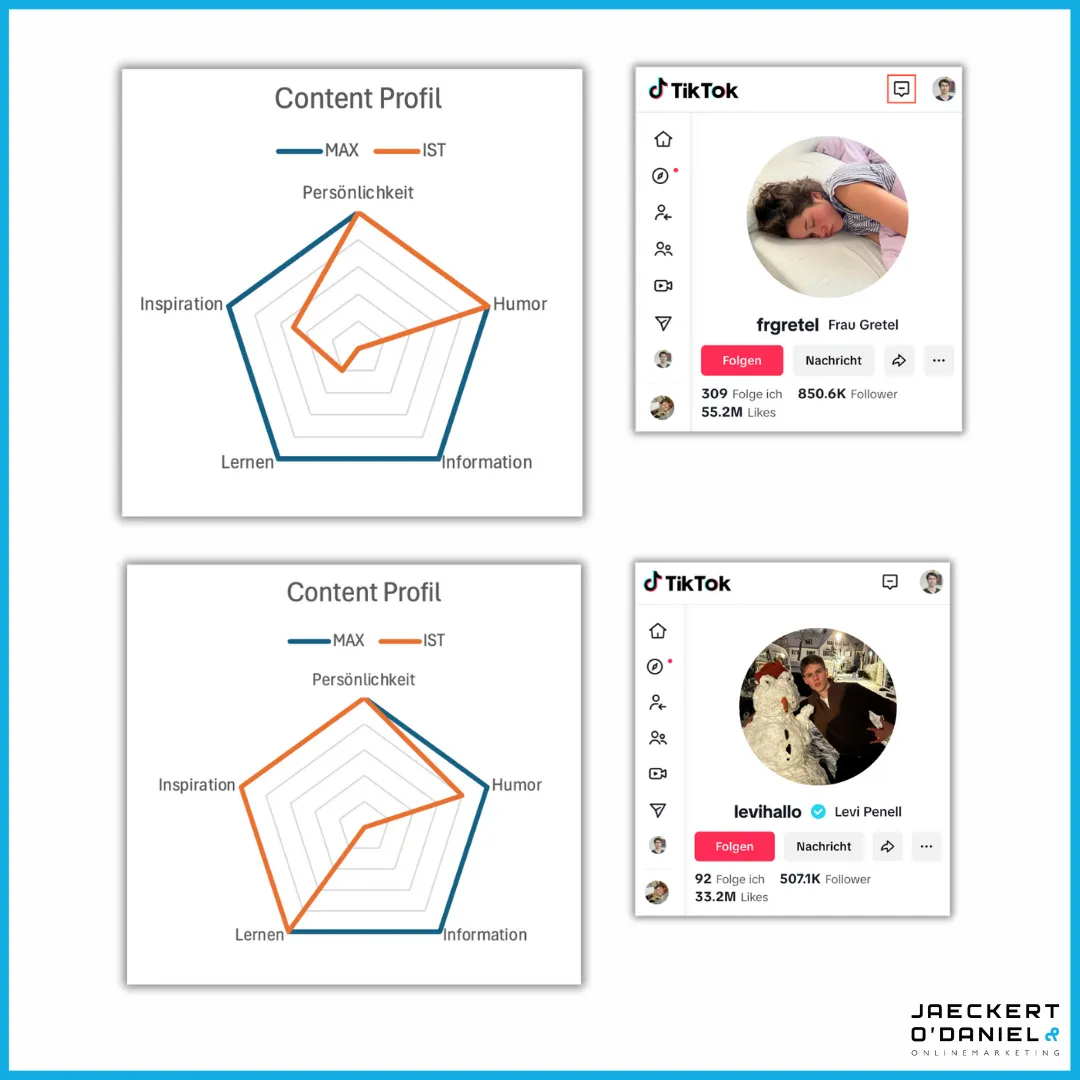
Creator content is much more in the focus of Gen-Z, though. Here a person is at the center, talking authentically about “their” topics. Examples: Frau Gretel, Thasim, Malte Zierden, Levi Penell, Josi schreibt, Carlo Sommer, and many others, depending on interest in the creators’ topics. The creators are approachable and work, among other things, with atmospheric, shaky, or “unproduced”-looking video sequences. But they are much more professional than any professional format. Because they build closeness and are carried by their community as a result. They also have the ability to meet every expectation, of language, editing, pace, and so on, and at the same time to break expectations again and again, for example through a surprising choice of topic.
TikTok channels of companies
Gen-Z also celebrates companies and organizations on TikTok, if they understand the game. What that means for Gen-Z: the channel should have a recognizability of its own and a clear style. It needs recognizable personalities who stand for the channel and bring authenticity in that way. You should not take yourself too seriously. Humor always goes down well.
Success stories are the police of Saxony-Anhalt with funny videos, Kapten & Son with an interview format, and Bank Austria with two clearly recognizable characters.
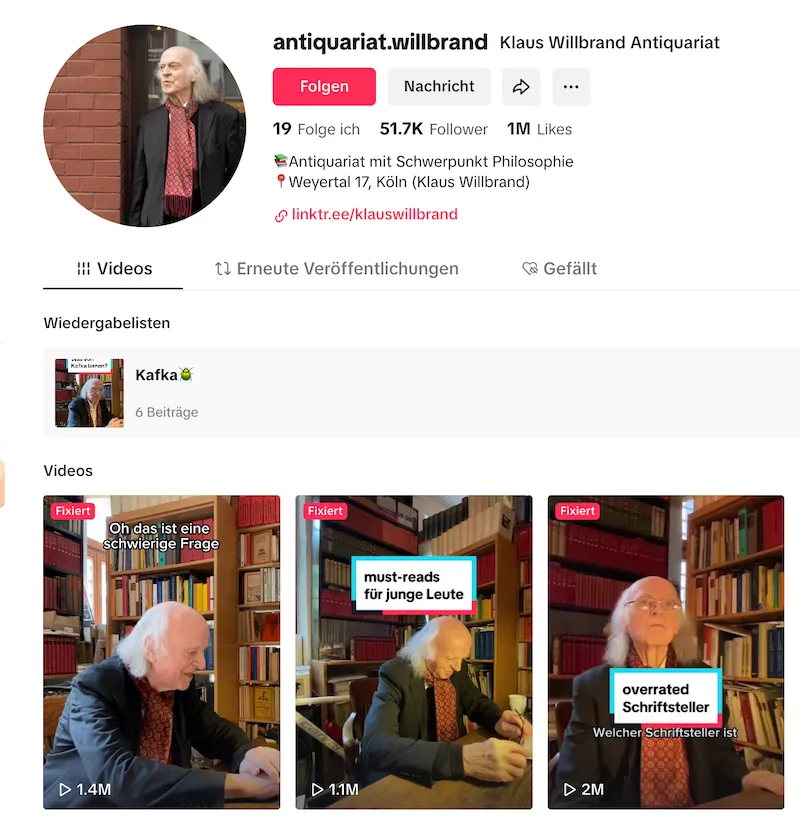
You do not need a huge budget for that, by the way. What carries it is the channel idea, the topic ideas, and strong personalities, as for example at Antiquariat Willbrand in Cologne. His videos are professional and produced, but always in the same setting and with calm cuts. It is a specific, recognizable way of making them. Exactly as with the creator formats and the formats produced by media companies. No wonder, then, that the antiquarian bookseller is very successful on TikTok as well.
The art for companies is to show personality without becoming a “creator channel” in which one personality carries the entire channel. That happened, for example, with Aevor on TikTok, which has to reinvent itself after Belinda left. In last year’s university cohort, everyone knew Aevor. This year the channel was not mentioned a single time. On the other hand, any company can be glad if it finds a personality like that who is willing to embody and build a channel over a longer period.
What does “added value” mean? The criteria behind it
With every piece of content, every user unconsciously asks: “What do I get out of this?” Content simply needs “added value”. And you can look at this added value systematically. From my point of view, the following categorization helps:
- Learning / knowledge
- Information / news
- Inspiration
- Entertainment / humor
If you are clear about which added value you create for users, you automatically build a channel that is consistent in its content. A similar model is also used at many (progressive) media companies as a “user need model”. Here is a very helpful article by Konrad Weber.
The user need model is very one-dimensional from my point of view, though. It sees the various kinds of added value rather in the overall portfolio of a news website or a newspaper. So that, for example, a topic is covered by an informative article, a background piece, and a column. The forms of presentation are clearly separated from each other.
What I notice in practice, though, is that successful content creators combine the different kinds of added value. They are, for example, very informative and at the same time very entertaining, and that across all videos (consistency). So you should look at added value in more than one dimension, as a tool in your own development or in market analysis. I do not go that deep, or that theoretical, in the seminar anymore. What matters more to me is that the students develop their own formats in the time we have.
Professional videos, but hesitation to publish
Smart production
Every group built its own TikTok channel in a very short time and produced a first video. A few formats as examples: “Teenie Filme Revisited”, “Cologne Food Spots”, “Worst Rated Cafés im Test”, “True Crime Fails”, “Female Friendship”, “Music Street Surveys”. Every video was perfectly produced and could appear on any For You Page. Everything was filmed with a smartphone only, and often edited with CapCut. From my perspective, any of the students can build their own channel, for themselves or for media companies or other companies.
Reluctance to be visible
At the same time, it was clear for every group: they do not want to publish the videos. The production was seen as a pure test, or as an assignment in their studies, even if you had the impression that everyone had a lot of fun with it. Behind that there is also a reluctance to be personally visible. Your own face on TikTok? Many people find that extremely uncomfortable. I personally find that a shame, because I believe you miss a lot of opportunities that way. And because it should be part of personal development that, as someone who creates content, you learn how to handle being in public. In the end it is also a requirement in the professional world of content creators.
Our conversations with SEO professionals in the industry
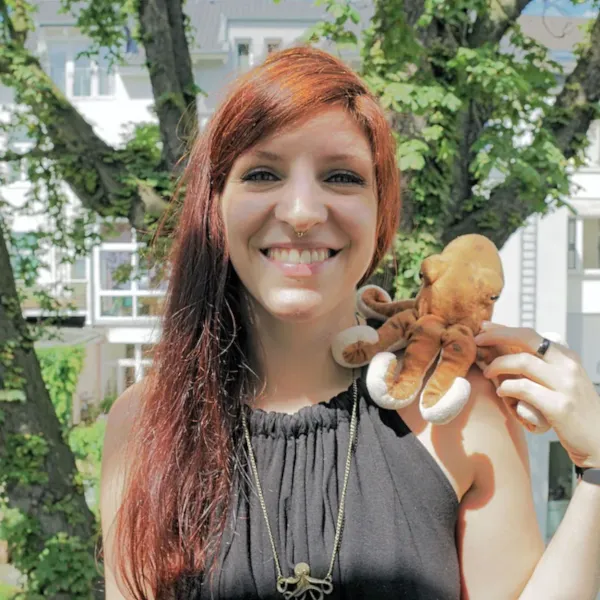
SEO Quality Assurance: How to Protect Your Rankings. Interview with Gianna Brachetti-Truskawa

How Südwestrundfunk (SWR) Works on Search Experience: Interview with Sarah Stein

SEO as a Growth Strategy: Interview with Kevin Indig

SEO for a Software Company: Interview with Beat Köck
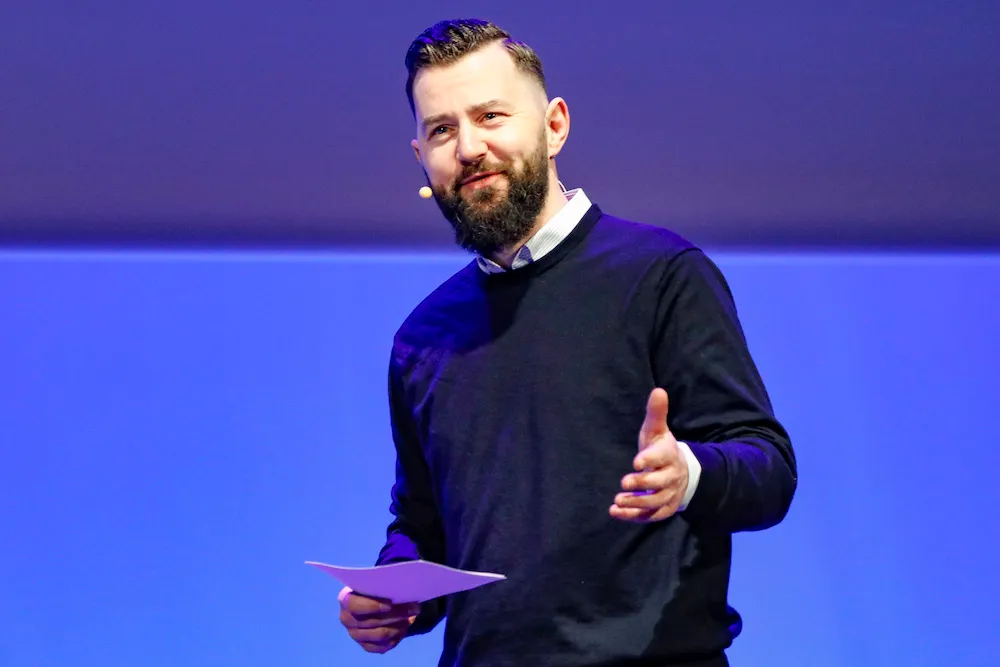
What Does an Online Shop Need to Rank Successfully? Interview with Stefan Vorwerk
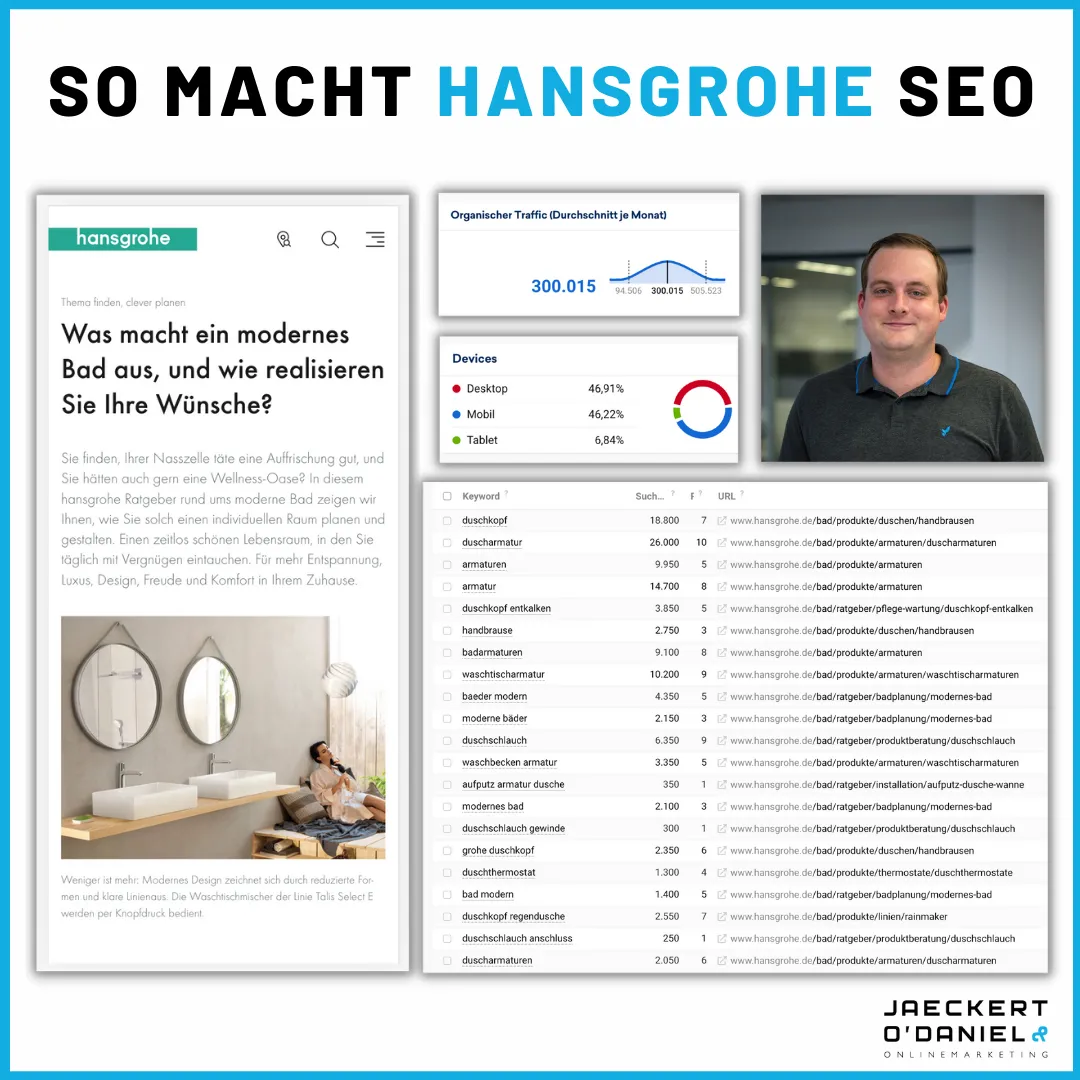
How Hansgrohe Does SEO in 40 Countries: Interview with Jörg Niethammer
The SEO Strategy of Hubspot: Interview with Jenny Lapp
How User Testing Works: Interview with Astrid Kramer on UX and SEO
Deepen your SEO knowledge: every Monday by email