

“I’m looking for a leaf blower.” A simple sentence that we entered into two AI systems: ChatGPT and Google’s AI Mode. Central question: Which AI provides the better buying advice?
In our test, we, Fabian Jaeckert and Benjamin O’Daniel, took a close look. We recognize major differences: In products, recommendations, links – and in the entire structure of the AI response. This is crucial for working on AI visibility – on several levels.
- From a marketing perspective, we need to understand how the systems react – in order to adapt our strategy accordingly. How does the customer journey proceed? Are there similarities and differences?
- Also from a market perspective, such an analysis is important: The better a system responds, the more likely it is to prevail – with corresponding consequences for the market share of the respective systems.
Topics on this Page


The “AI Response Page” in Comparison
Just as there was the SERP analysis in SEO (SERP = Search Engine Result Page), there is now the AIRP – the AI Response Page. Here we begin our analysis: How do AI systems build their responses? What systematic patterns emerge here? This also results in the Prompt Journey – i.e. the logical customer journey in AI systems.
Understanding these patterns is, in our view, crucial for GEO (Generative Engine Optimization) or AEO (Answer Engine Optimization). Both in terms of the fundamental change – and the differences in the language models.

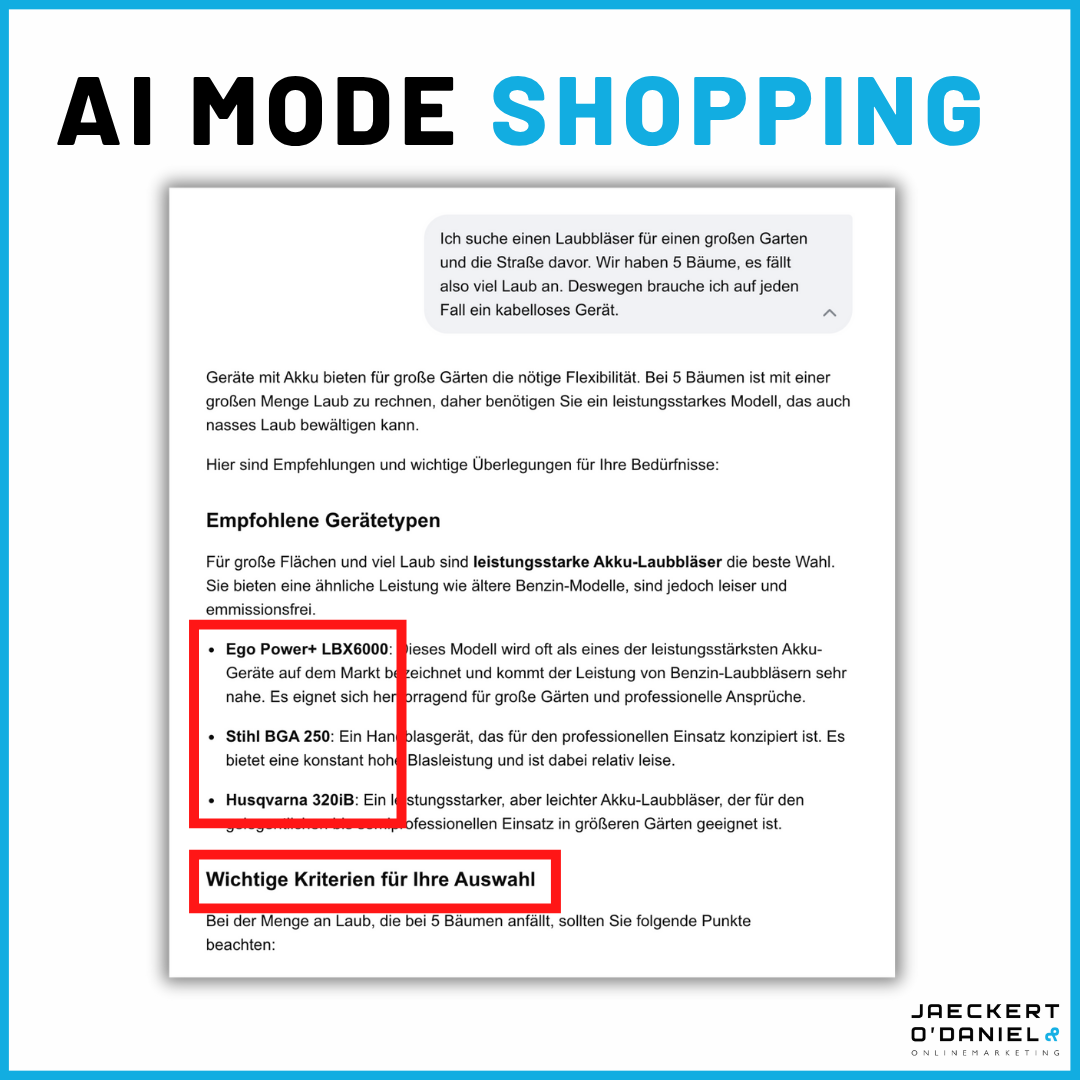
The AI Mode: Fast, Clean – but without a Click Option
The AI Mode delivers really fast. The fan-out – i.e. the querying of websites for information – runs in fractions of a second. However: No follow-up questions are asked.
Instead, it quickly focuses on the products, which are sorted according to the categories battery, gasoline and electric. Several devices are briefly presented. This seems efficient at first glance. But it is not real advice, but rather seems like a structured summary.
There is no product integration, no prices, no real possibility to visit a shop. The conversation ends where it should actually begin.
It is also interesting how the AI Mode is grounded: It draws on sources, shows them as tiles – but without a real transition into the buying process. No direct linking from the AI Mode to manufacturer pages or retailers. Often, English-language websites are also displayed.
You can tell: The system still thinks like a search engine. It delivers a lot of text – but only a rudimentary journey.
ChatGPT: Thinks Longer, Asks Questions, Leads to Purchase
ChatGPT reacts completely differently. After the first prompt, the counter-question comes immediately:
How big is the garden? Battery or gasoline? Budget? The system wants to understand before it recommends. And that’s exactly what changes the dynamic.
ChatGPT builds real buying advice. It names criteria such as volume, ergonomics, performance, neighborhood compatibility – and links them to specific products. Often the Deep Thinking Mode is activated, some results take one to two minutes.
At the same time, the products are integrated much deeper through a separate product carousel. Anyone who clicks on a product receives price comparisons, ratings, links to shops. An Instant Check-out will follow soon.
At the end there is an offer: “Should I put together two set variants for you?” You can see: ChatGPT thinks in steps – not just in AI summaries. Each answer is the next part of the journey. And that’s exactly what makes the difference. It is a “real” consultation.

Free GEO Online Training
- Current Developments in AI Visibility
- From SEO to GEO
- How to Optimize for AI Systems

Our 3 Insights after the Current Test
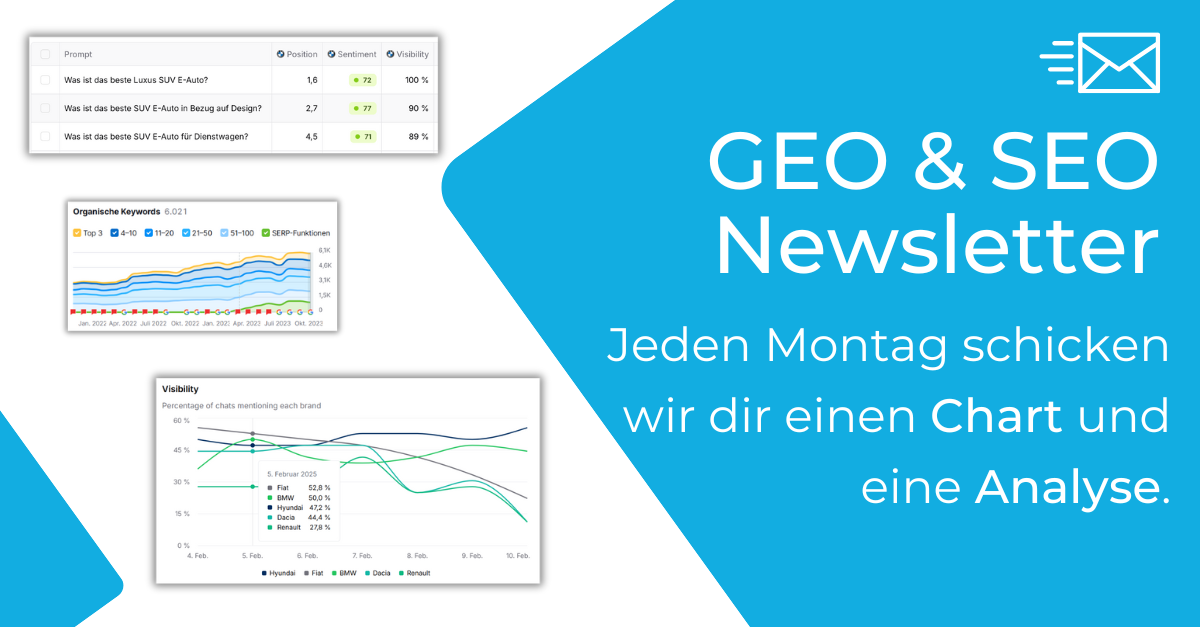
Deepen your GEO Knowledge: Every Monday via Email
Our Conversations with SEO and GEO Professionals

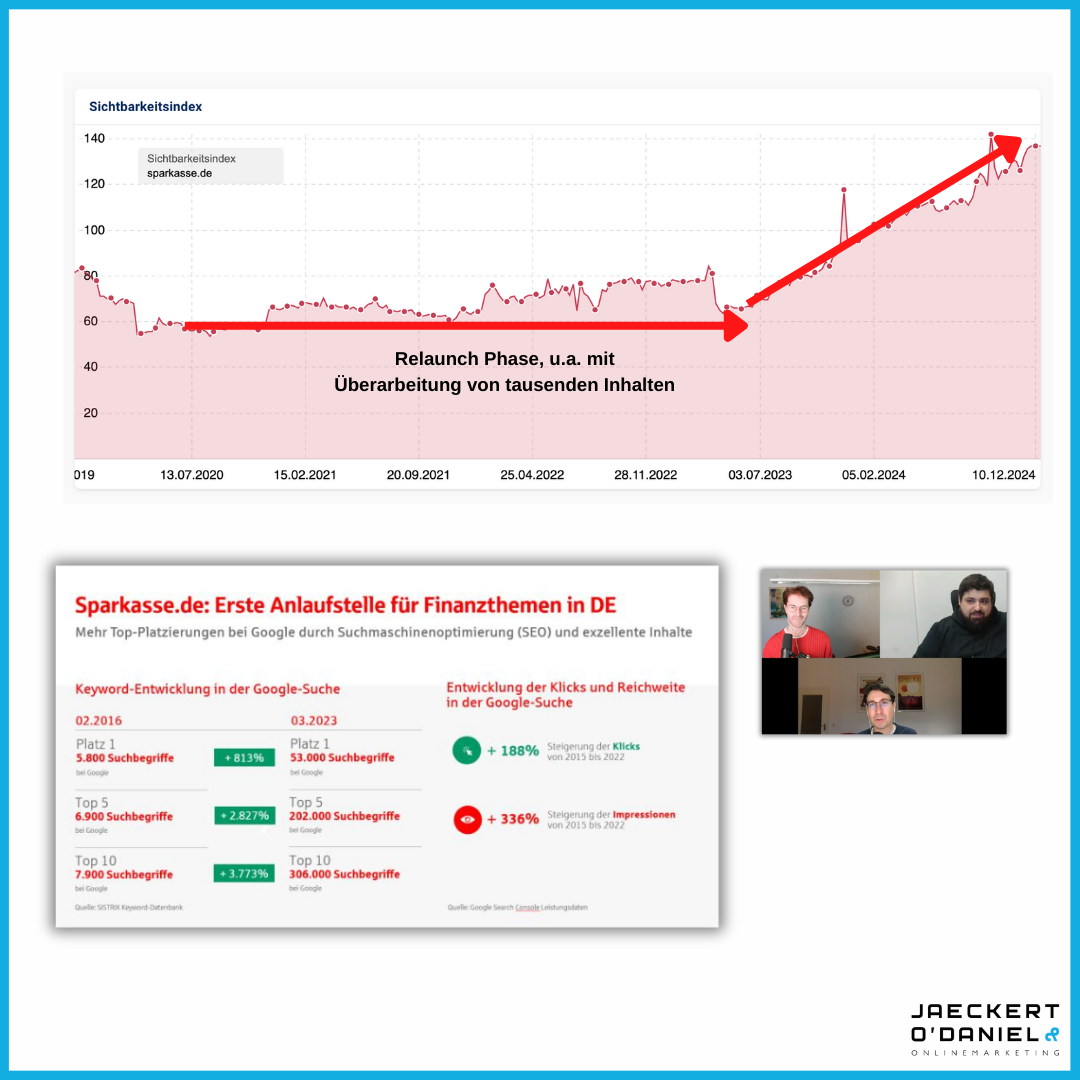

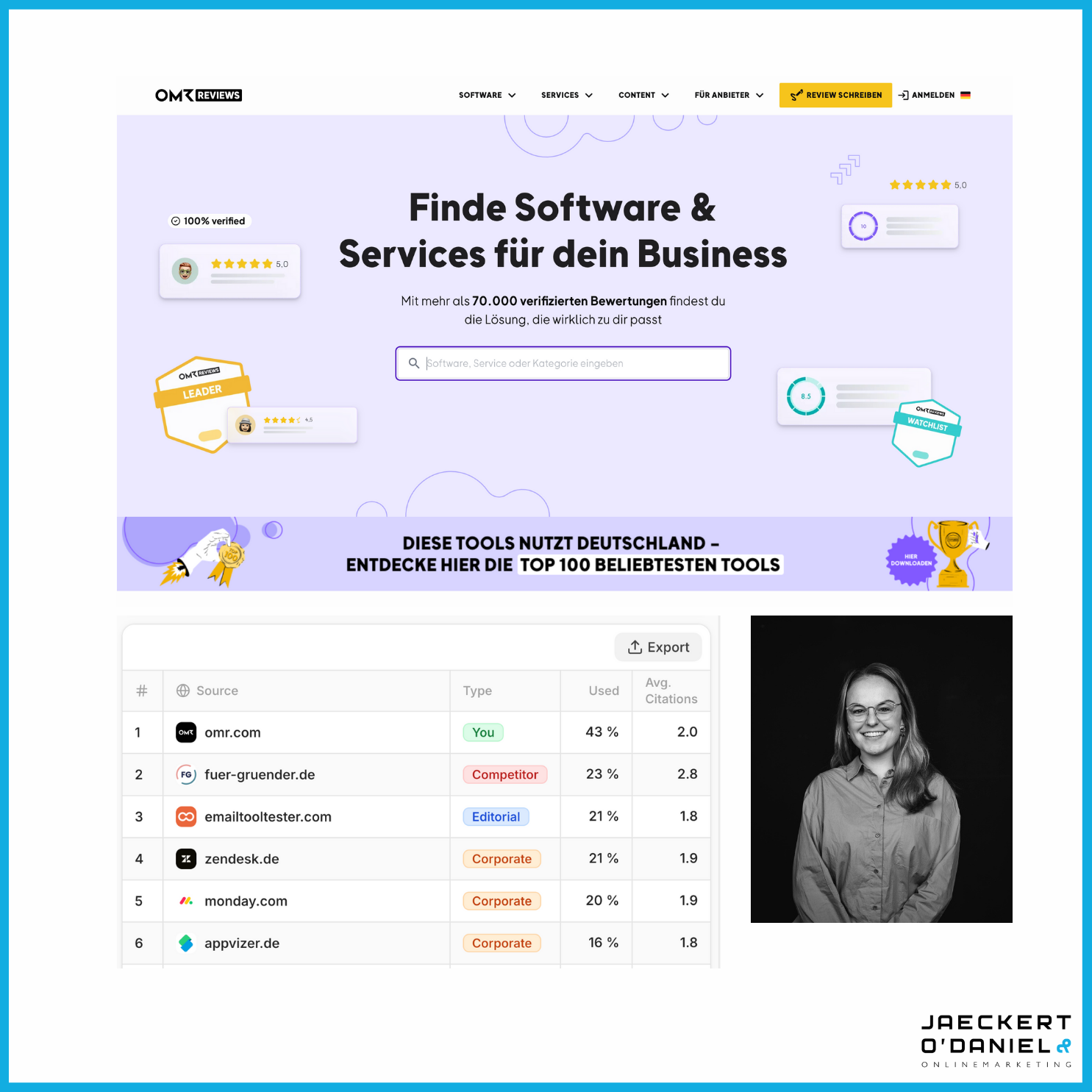
We Advise Marketing Managers on SEO & GEO
For anyone seeking an SEO sparring partner or comprehensive SEO consulting, Fabian and Benjamin are the perfect choice. As an in-house SEO expert, I sought competent SEO support and found it with them. During a very pleasant introductory meeting, we jointly developed an approach to establish SEO among the individual stakeholders and thereby gain more internal visibility for the subject. Based on this initial discussion and a joint kick-off with the stakeholders, they developed a sound SEO and content strategy for a product area. Since then, they have both supported me as sparring partners during implementation.
The collaboration with Fabian and Benjamin is a great pleasure for me and all project participants, as they are masters of their craft and bring immense passion for SEO. This combination is infectious and motivates everyone to achieve peak performance.

I look back with great satisfaction on the SEO project that we carried out with Benjamin and Fabian. Firstly, the collaboration was on a very pleasant, goal-oriented level. Secondly, the consultation was structured in such a way that we could immediately start with the implementation. We received very concrete optimization suggestions that were tailored to our internal capacities and therefore realistically implementable. Even though only a few months have passed, we can already see the first results of our work in the Google rankings. Traffic for our relevant keywords is steadily increasing, and we still have enough concrete work packages from Benjamin in the pipeline to boost our site. Furthermore, through the consultation, we have acquired so much internal SEO know-how that we can now optimize our site independently. And most importantly: Visitor numbers have doubled – with correspondingly positive effects on sales.