
The SEO world is changing: What role will Google play in the future? How do we optimize for AI systems? How do we get started, and what measures are pending? We discuss this with David Konitzny.
David is an experienced SEO manager who delves deeply into topics related to AI visibility. We regularly discuss his LinkedIn posts, and we are taking this opportunity to talk with him about the changes.
It becomes clear that there is a need for discussion on virtually every topic. This includes the question of the name (GEO, LLMO, etc.), the central KPIs, or how substantial the SEO foundation truly needs to be to achieve successful visibility in ChatGPT and similar platforms.


Our Guest: David Konitzny
David Konitzny began his professional career in SEO at several agencies. From there, he transitioned to Raisin, a renowned credit institution specializing in service banking. He initially served as Inbound Marketing Manager, then Senior SEO Manager, and ultimately Head of Organic Search.
From there, David returned to the agency sector. Today, he is Product Owner Organic Search at Kosch Klink Performance. Artur Kosch is the managing director there, who, both personally and with his agency, advances SEO AI topics. David also shares many insights on LinkedIn regarding AI optimization.

GEO, GAIO, LLMO? “I Prefer AI Search”
A debate in the SEO industry: What should the optimization for AI systems be called? Various terms are circulating, from GEO to GAIO to LLMO. David refers to it as “AI Search.” A key reason for him is that this term connects to “Search,” a concept everyone understands and for which SEO is already known. In his experience, new terms that require initial explanation are significantly harder to communicate, especially at the management level.
Here, we delve into the discussion. AI Search tends to view ChatGPT and other AI systems merely as search engines. However, users chat with the AI. This represents a different behavior compared to the classic search pattern. Often, AI responses do not cite any sources; the language model generates answers independently. From David’s perspective, however, the core issue is the user’s central intention, and from that viewpoint, it is a search for a solution.
“for AI Visibility, You Need a Good SEO Strategy”
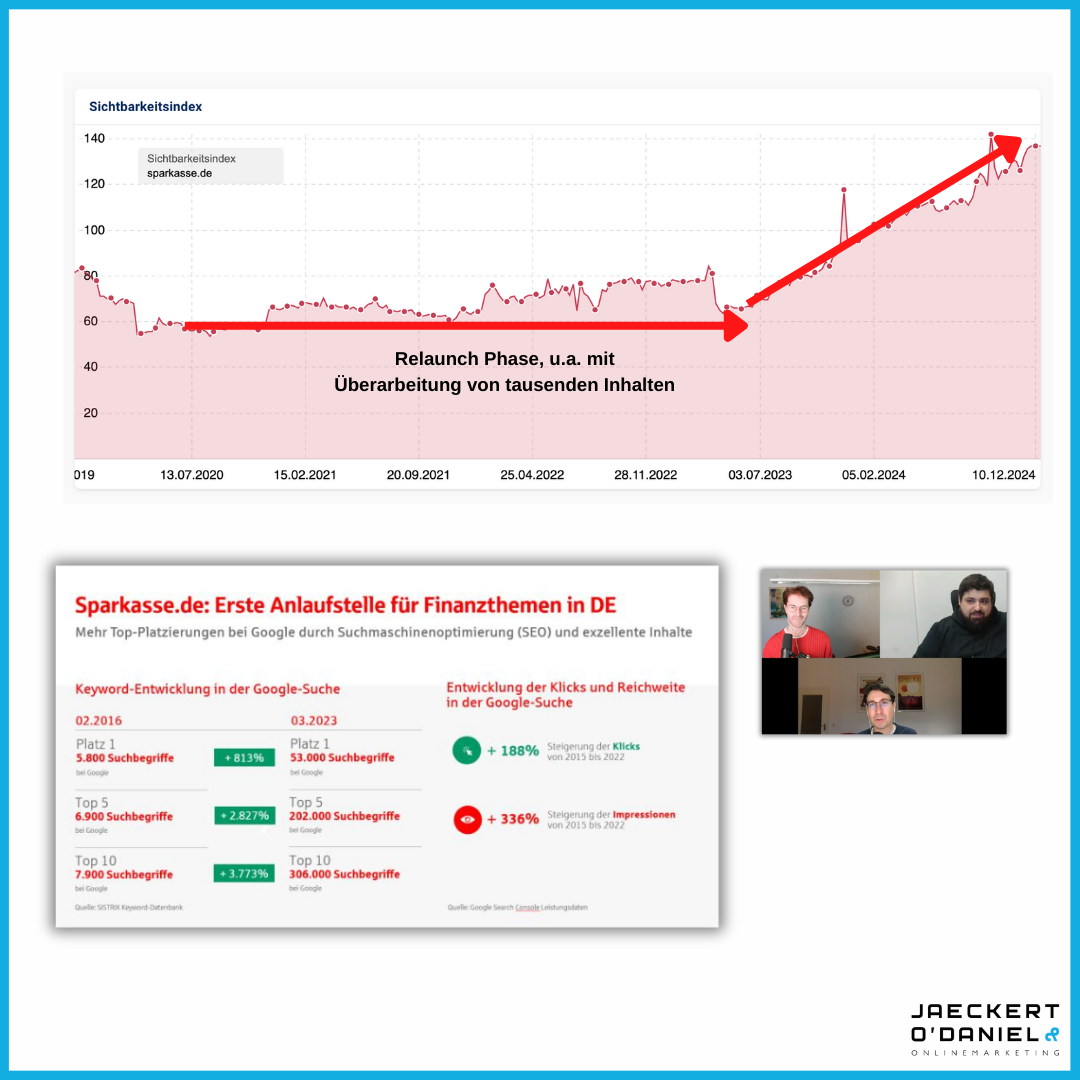
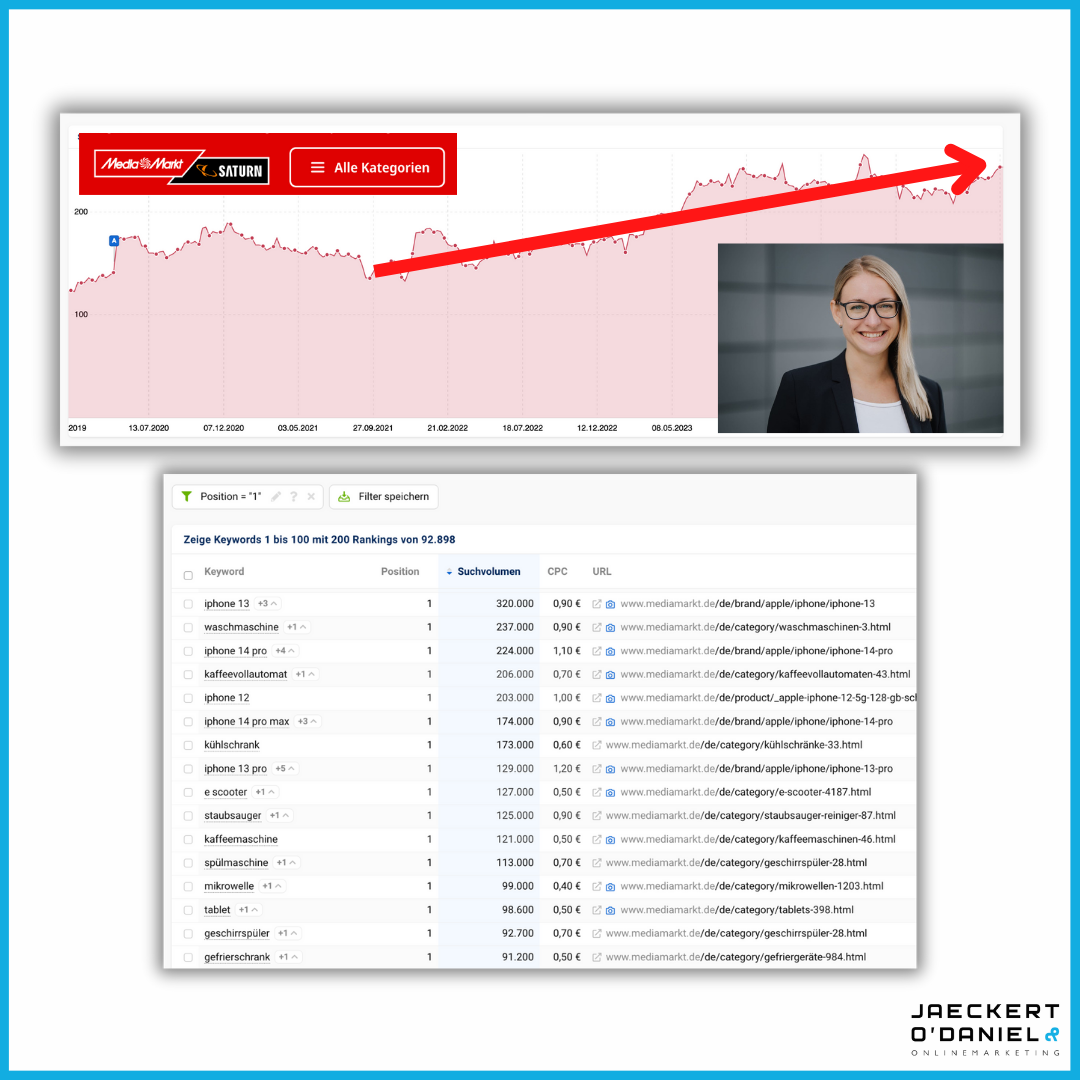
Many companies are wondering how to approach AI Search. David’s advice: “For most websites, the rule is: Start with SEO first.” Keyword clustering, website structure, in-depth content – most companies lack all of this, yet it also contributes to AI visibility. This can be in the form of brand mentions or as a source, depending on which GEO KPIs have been established. “Most companies don’t even have SEO visibility yet and, for instance, don’t even know their keywords. However, this foundation is essential.” A ChatGPT crawler also relies on search, accesses websites, and indexes individual subpages. On the other hand, many well-known brands are extremely visible in AI systems, even if they do no SEO.
David critically views the trend of some companies even blocking GPT bots (see also David’s LinkedIn post). He attributes this in part to tangible conflicts of interest within organizations. For instance, SEO managers often advocate for AI crawlers to capture as much content as possible to ensure relevance in AI systems. However, at the executive level, there is significant skepticism. This is because AI ultimately extracts and processes content independently. Content “theft” and traffic decline are directly linked. We recently wrote about which AI crawlers visit for what purposes and published our figures on this.
“most Traffic Still Comes from Google”
An overarching theme of our discussion: How important will Google remain in the future? Here too, there are multiple perspectives. David points out that Google continues to be the largest traffic source for virtually all websites. Even though traffic figures have significantly declined since the introduction of AI Overviews, Google still firmly holds the top position. From this perspective, it would be unwise to abandon SEO. “Anyone who is now solely focusing on AI is closing off another avenue. I consider that unnecessary.”
Simultaneously, AI Mode in Germany is imminent. In simplified terms, Google will then resemble ChatGPT. From our perspective, the fundamental shift from a list of search results to an AI-generated answer is unstoppable. The question is how rapidly this transformation will occur. David also advocates for companies to generally diversify their strategies and disseminate their content across numerous platforms to enhance their visibility.
“I Would also like more Prompt Data”
There is currently no valid data basis regarding the prompts users enter. To gain insight, David utilizes the beta version of Sistrix, which, among other features, applies frequently asked user questions from Google to ChatGPT. He also analyzes keyword data from Google Search Console, particularly “W-questions” (who, what, where, etc.) and long-tail keywords. However, the premise for this approach is the assumption that users will interact with ChatGPT and other AI systems in the same manner they currently use Google and other search engines. “Users have learned over many years how to search and find information,” David states. We discuss this methodology with various examples in our podcast interview.
This is where our critique, for example, begins. We believe that users will very quickly adopt a fundamentally different approach to using AI for their product searches. This is because AI explicitly prompts users to articulate their criteria and delve into specifics. The outcome tends to be lengthy, complex prompts rather than short keyword phrases or simple questions. David shares this view. “I prompt entirely differently, as if I were speaking with an omniscient friend.” Even vague sentences or convoluted formulations are perfectly understood by the AI. Upon first use, one intuitively grasps that interaction with such a system differs. Our challenge will be to comprehend this new, less defined customer journey, which unfolds in an untrackable space.
“through the Grounding Process, We Recognize Important Entities”
Another topic (starting at minute 33) is grounding, which refers to when an AI system like ChatGPT “activates” search for support—and what subsequently occurs. David has conducted his own studies on this. For instance, if one inquires about insurance, the AI system initiates “reasoning” to compile the most crucial information for the user. A search is then activated to retrieve current information not present within the language model.
For this purpose, the prompt is converted into multiple search queries, meaning specific sequences of keywords. This is similar to how a user would conduct a search. Examples include “test,” “comparison,” “costs,” “current,” “2025,” as well as criteria or local keywords. Subsequently, search engines such as Bing or Google are accessed. The search results are evaluated, and content from websites is utilized. If relevant information is still lacking, another series of search queries is initiated.
However, precisely which content or sections are utilized remains unknown. The keywords are also continuously exchanged, adapted, and individualized by the AI system. This is why David states that it makes no sense to optimize for individual keywords. “However, there is an understanding of which entities, aspects, and topics are repeatedly queried.” These patterns, in turn, can be optimized—for example, with dedicated landing pages.

Deepen your GEO & LLMO Knowledge: Every Monday via Email