June 10, 2024Benjamin O’Daniel
Clicks & Views as New Ranking Factors: Insights from the Latest Google Leak
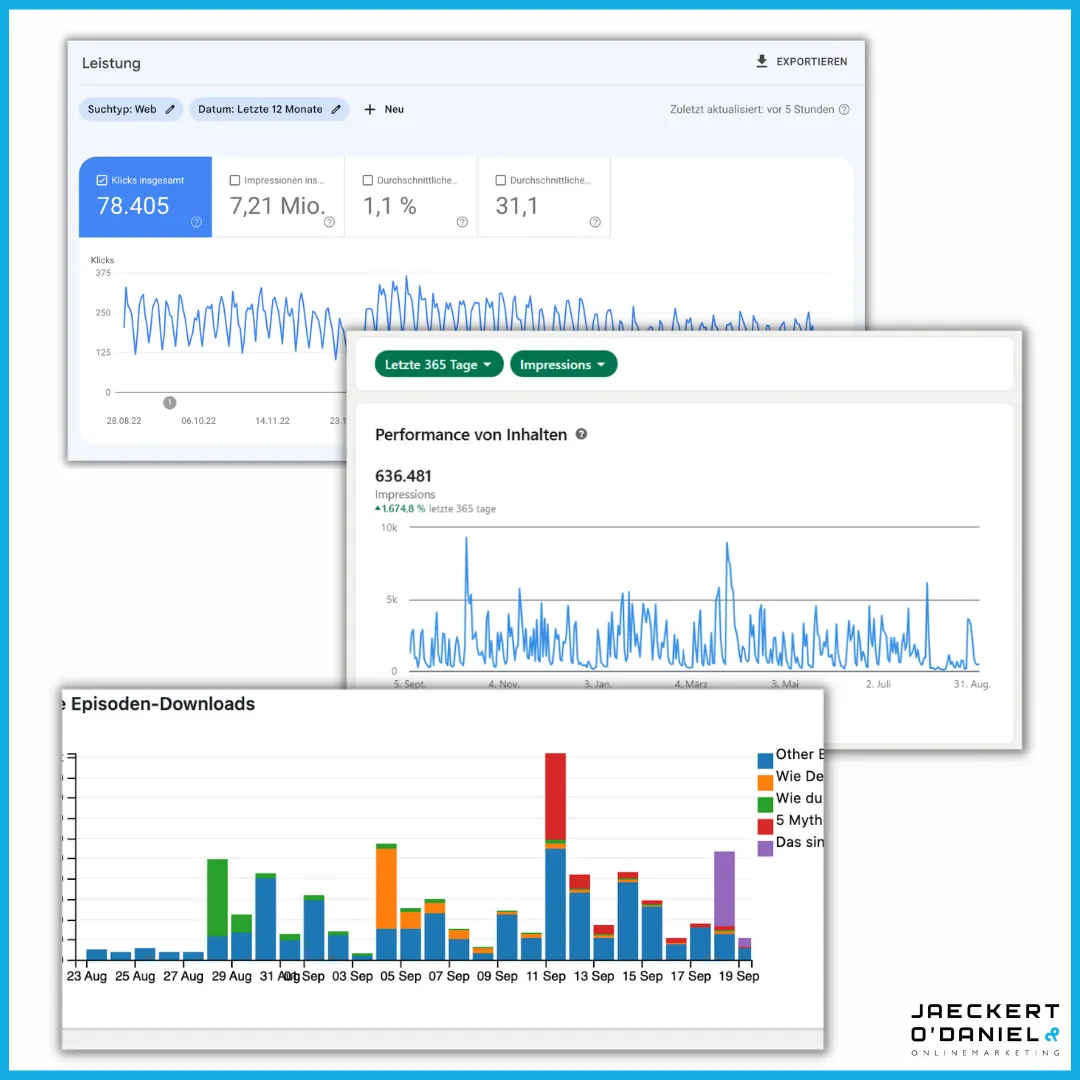
A recent Google leak has been circulating in the SEO industry for days. By accident, a document was published on the parameters the ranking algorithm is based on (articles on it here and here).
For the SEO world, a gift. Especially since people have debated how the algorithm works from the very beginning.
We looked at the leak too. One point that occupied us a great deal: the user signals. Because the leak revealed: Google actively works with user signals to find out whether a website delivers good or bad content.
Which user signals those are, and what that means for SEO work: that is what we talk about in the podcast episode and here in the article.
These are the two user signals Google works with
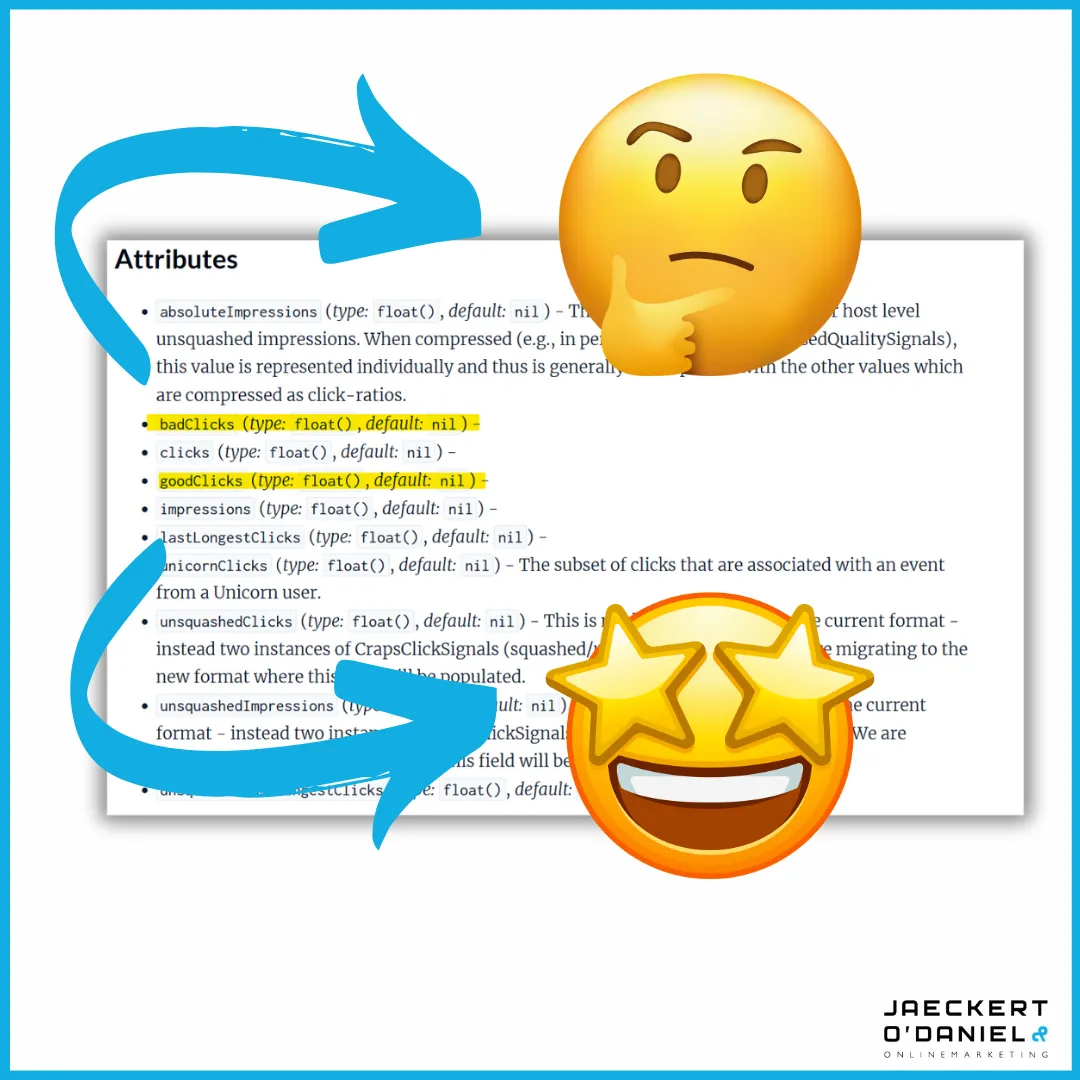
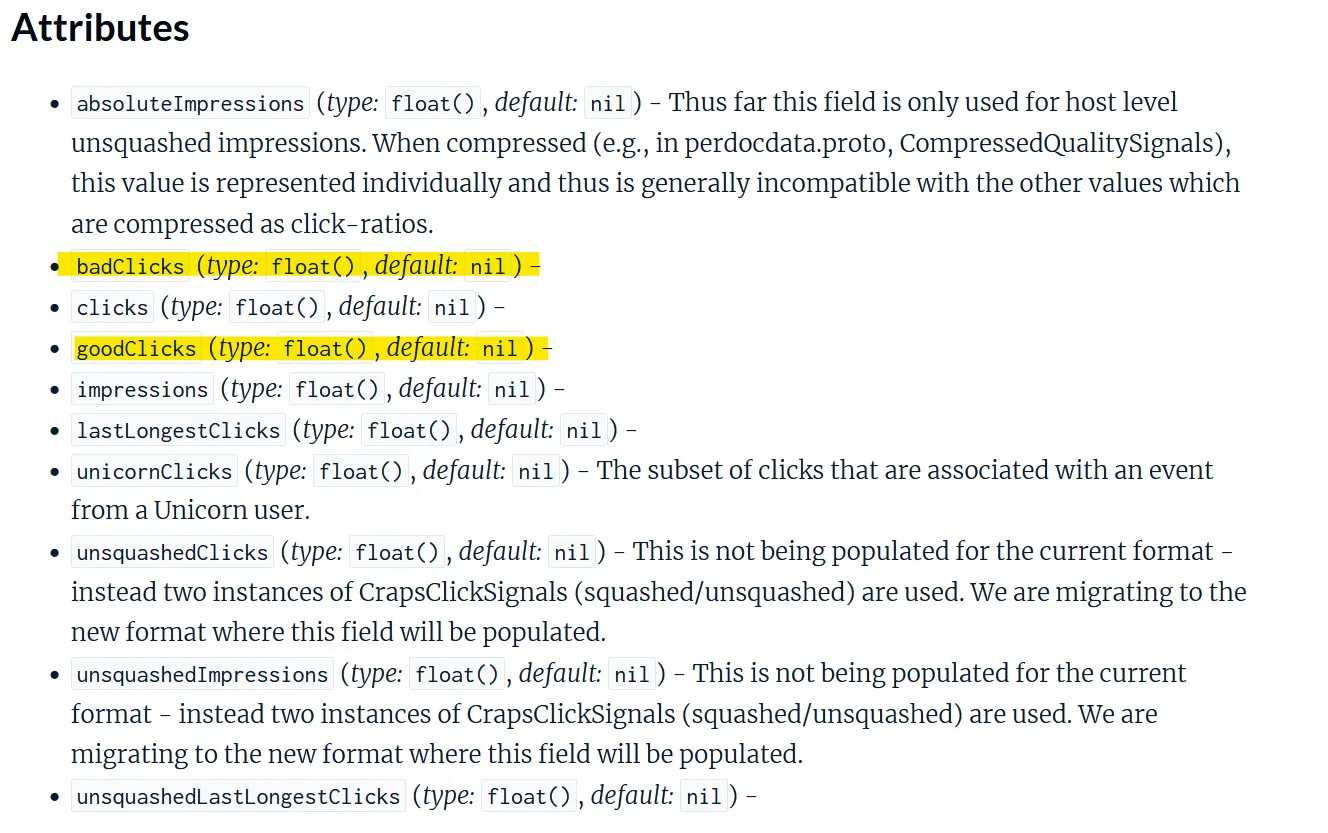
Google analyzes how users behave on websites after they leave the search results. Google distinguishes between “bad clicks”, “good clicks”, and “last longest clicks”. Put simply, it is about how long you stay on the respective website. A bad click happens when someone clicks a search result and goes back to the search results after a short time. Because then their need for information was obviously not met.
With a good click, the user stays on the website longer before going back. And with the last longest click, the user does not come back at all. Their search is over, and from Google’s point of view that is a success. The more good clicks a website triggers, the better the ranking chances. Because the stronger the signal that the website and the content behind it are good, and deserve a correspondingly good ranking.
It also became known that Google uses data from its own Chrome browser. That is interesting because search plays no role here at first. So Google determines which URLs receive views in Chrome. It is stated explicitly that the display of certain sitelinks is based on this (for example when you search for a brand or a company and certain links are shown indented, such as download, contact, and so on).
From our point of view there is much more in Chrome views, though. A view is, so to speak, the perfect form of a “good click”. After all, users spend time on the individual pages. For Google that is a clear signal that it has to have these pages on its radar and reflect them in the ranking too, because they are relevant for users. Pages that are actually viewed therefore have better ranking chances.

Satisfied users - a problem for some SEOs?
The blind spot of manipulation strategies
It is well known that there are two directions in the SEO world: one direction that works on manipulating Google (black hat, gray hat). And one direction that works in line with the guidelines (white hat). We ourselves are white hat SEOs. From our point of view, manipulation techniques are having a harder and harder time. Buying links, generating masses of AI texts: Google has been going after that for a long time. On top of that, real user signals are evaluated too, and they are hard to manipulate. Especially since Google has many years of experience, through Google Ads fraud, in recognizing fake user signals. The era of cowboy tactics is long over. Serious companies with good products, by contrast, have very good SEO chances. Because Google recognizes that users are being helped.
Cosmetic SEO fixes deliver little
There is often the idea that you optimize a few details in SEO and then shoot up the rankings. Inflated expectations, which you also see in every digital marketing discipline. Example in SEO: we tweak the meta descriptions a bit, a few SEO texts, and that is enough. But if the content behind it is not good enough, you trigger “bad clicks”. Negative user experiences, in other words. Google notices that in turn. With quick measures like that you can possibly even harm yourself. Our experience: it is best to develop a scoped, manageable SEO project, for example related to an important product area, and then bet on quality there. From there you develop your SEO activities further.
Hiding SEO does nothing
Also widespread: you bet on sealed-off areas of the website that exist only for SEO. Doorways made of thousands of pages, for example. Or pages you hang in the footer, but that are too poor for the main menu. From our point of view it has to be approached differently: keywords and search volume prove customer demand, so you should take it seriously. So you need content that satisfies users and meets SEO requirements. Plus absolutely clean Google indexing, a topic many companies fail at. Here too the leak made clear that Google has a kind of “collection” of the best URLs that are proven to be good (a LinkedIn post from Fabian on that is here).
3 SEO measures that follow from the leak
Generate good clicks
All the rules of usability apply to good clicks, and so do known SEO rules. It is known, for example, that the h1 and h2 headings are very important for SEO. The reason: users can then orient themselves more easily and more quickly. A laid-out table of contents that sets clear priorities is extremely helpful for users too. In the end, all landing pages, blog articles, and product pages that were designed with care automatically have a good chance of triggering good clicks. Here you see how SEO depends on many further disciplines, and also on the layout options in the CMS.
Reduce bad clicks
You prevent bad clicks above all by understanding page types and formats better. Example: appending an endlessly long guide text to a shop category page is very popular in SEO. But it does not trigger good user signals. The same applies, for example, when masses of products in a shop are sold out but you keep the URLs only for SEO. Long load times trigger bad clicks too. Core Web Vitals, in other words. So you can check many common SEO measures for whether you provoke or reduce bad clicks with them.
Generate views
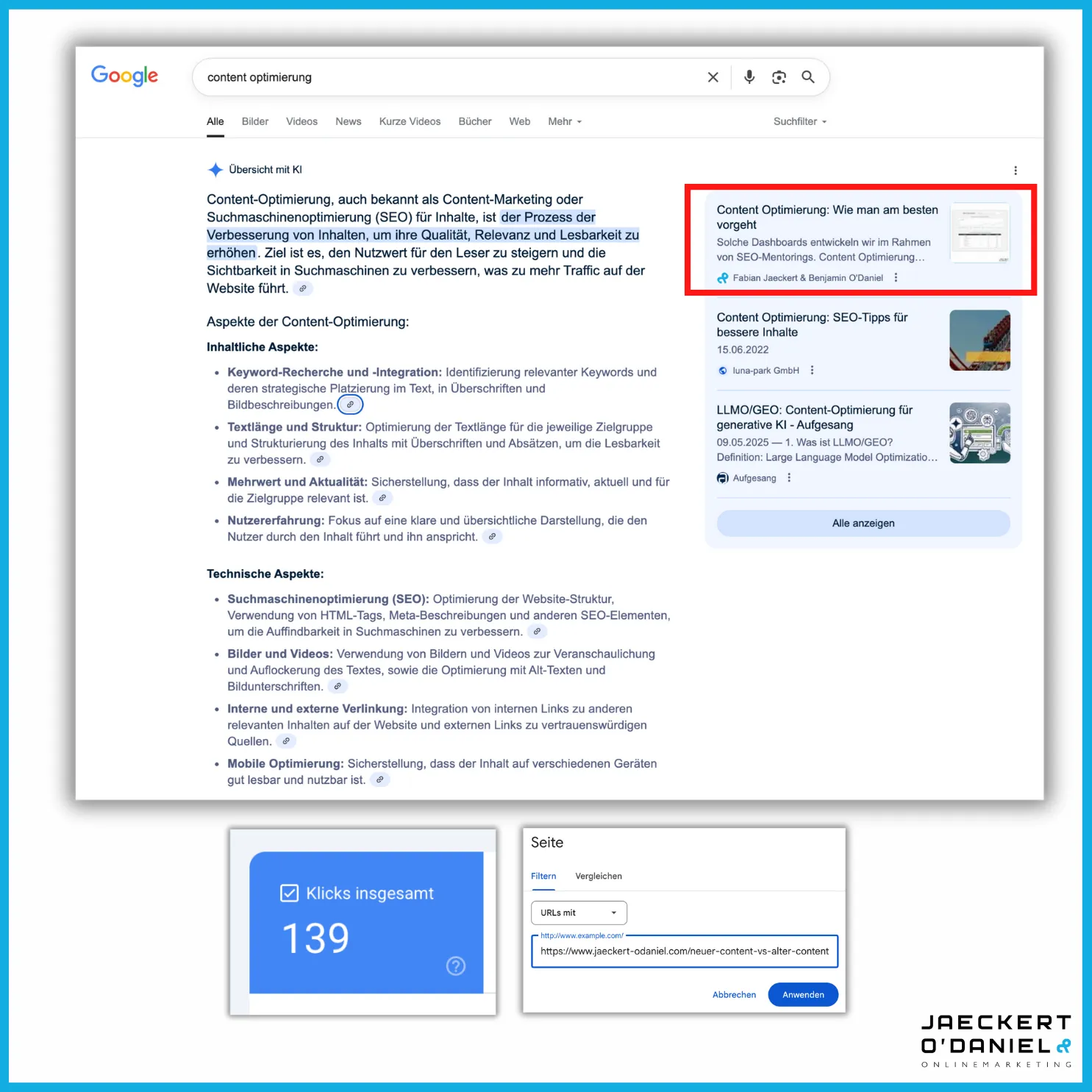
Every important URL you want to succeed with in the Google ranking should also generate views as independently as possible. Because that raises the chance that the URL becomes a “base document”, as Fabian describes here on LinkedIn. That works, for example, by teasing your articles or products in a newsletter, or sharing them on WhatsApp, LinkedIn, and other social media platforms. At the latest now it is clear: that does not work with pure SEO texts you would most like to hide. Instead you need a new strategy in content distribution.
We advise marketing leads on SEO

We are Fabian Jaeckert (on the right) and Benjamin O’Daniel. For many years we have worked as consultants for marketing teams. In doing so we connect two worlds: Fabian is the technical expert, Benjamin takes on every topic around content development.
“How can we improve our SEO visibility?”
This fundamental question sits behind every project we are brought into.
It is often about reviewing existing SEO and content strategies from the outside and developing new levers.
That is exactly what we have specialized in.
We develop SEO strategies for companies and present them in focus workshops, in a structured and understandable way, to the people responsible. Afterwards we support the in-house leads during implementation.
Sound interesting?
We can arrange an introductory SEO video call (30 min.).
Deepen your SEO knowledge: every Monday by email

Our conversations with SEO professionals in the industry

SEO quality assurance: how to protect your rankings. Interview with Gianna Brachetti-Truskawa

How Südwestrundfunk (SWR) works on search experience: Interview with Sarah Stein

SEO as a growth strategy: Interview with Kevin Indig

SEO for a software company: Interview with Beat Köck

What does an online shop need in order to rank successfully? Interview with Stefan Vorwerk
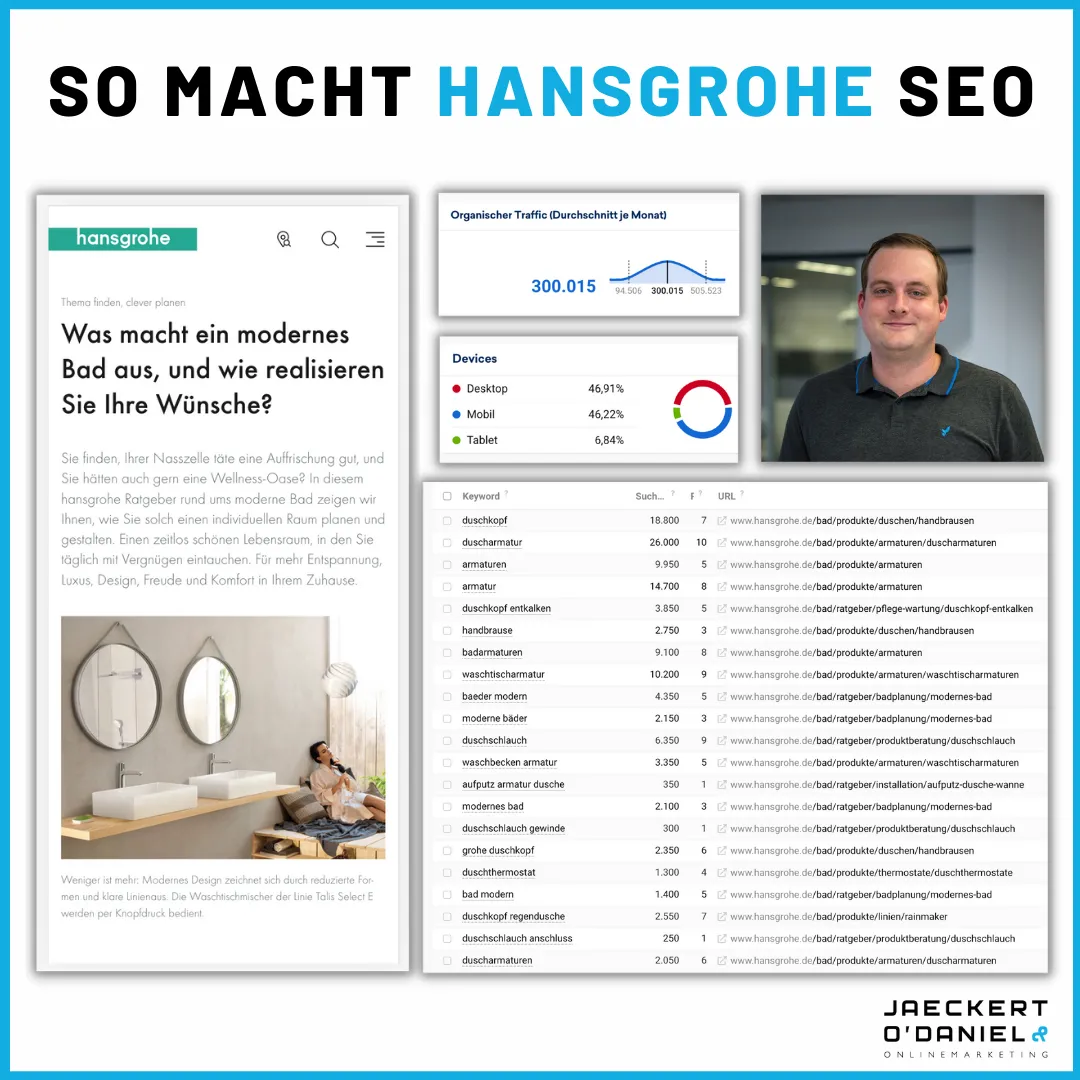
How Hansgrohe does SEO in 40 countries: Interview with Jörg Niethammer
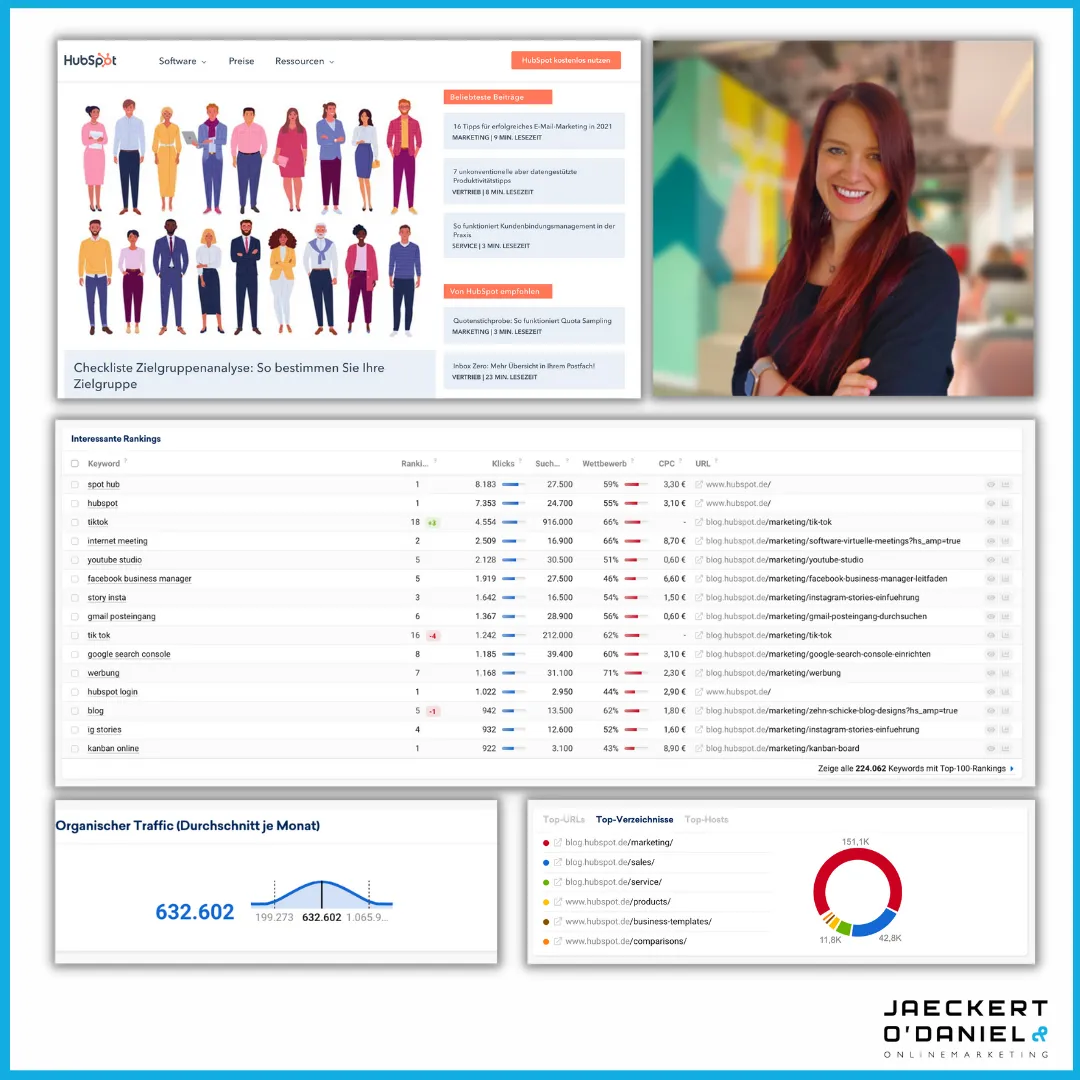
The SEO strategy of Hubspot: Interview with Jenny Lapp

How user testing works: Interview with Astrid Kramer on UX and SEO