January 16, 2023Fabian Jaeckert
How ChatGPT Will Change Search Marketing
With ChatGPT, an entirely new search system is emerging, for the first time in 20 years.
The quality of the answers is enormous. The pull on users is extremely strong. It is a clearly disruptive technology.
The current criticism of ChatGPT, namely that many answers are wrong, falls short in our view.
We also see it differently when people say you fundamentally cannot compare Google and ChatGPT, because one is a search engine and the other is a language model.
In our view, users will use ChatGPT as a search or answer machine, even if the generated answers are based on probabilities.
How does this development affect the future of search? Will we still google in the future? We discuss that in the podcast, in the livestream, and on this page.
3 types of search in ChatGPT
Informational query
In ChatGPT you can enter search queries, or rather chat queries, for any knowledge question. A few examples to make it clear: “How do I clean my bicycle chain?”, “Give me a tasty risotto dish with mushrooms”, “How are points awarded in karate?” The answers each time come out short, understandable, and often structured too, for example in the form of a list. From the user’s point of view, these answers come about much faster than with a typical Google search. Through Google Ads alone, the actual information is pushed back. You also need a second click.
Transactional query
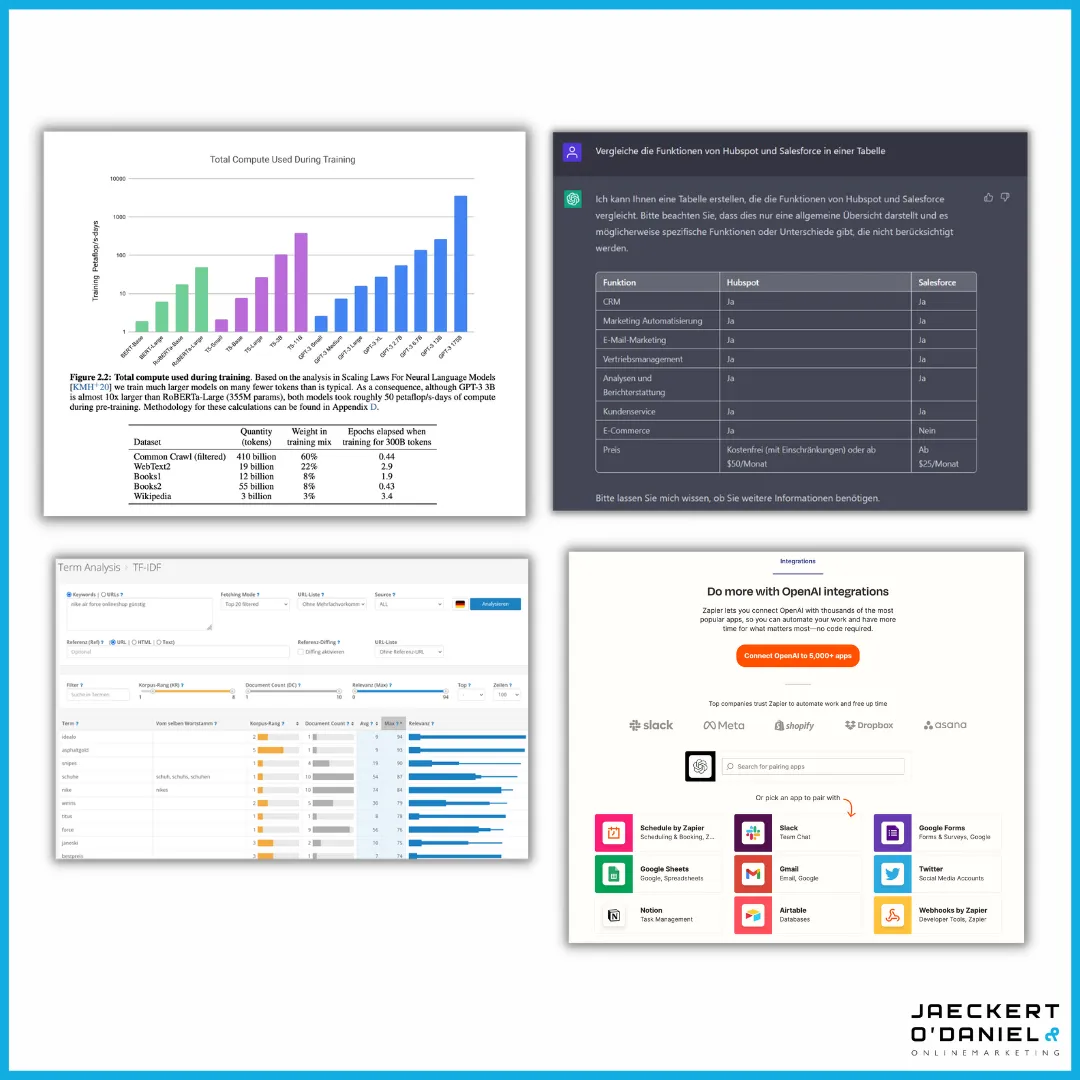
In just the same way, you can also ask transactional queries. Examples: “Name 5 online shops where I can buy Nike Air Force 1”. Or you can have different software providers compared with one another. Important to understand: the results are not based on facts, but on a statistical calculation. From the user’s point of view, though, it is a probably correct answer. The outputs are partly incorrect. That is down to the model, which does not know absolute values and is based on data from 2021. But it is only a matter of time until a model with more current data comes onto the market. That, in turn, can be connected to many further databases (prices, products, travel, and so on).
Navigational query
ChatGPT also answers navigational queries. For example, if you ask: “Where do I find the prices of manufacturer xyz? Show me the website.” A link is then output as the answer. Here too it is clear that the link often does not work, because it was calculated on a probability and is not stored as a value in the database. What matters to us, though, is the principle: if users get used to reaching their desired page very quickly through the chat, they will use this function, and the software provider, in this case OpenAI, will respond to that. Until now, navigational searches like this only happen through Google.
ChatGPT vs. Google: our discussion in the livestream
In the livestream we looked at examples and always asked the question: which platform delivers the better results?
The answers turn out very differently.
- A major advantage for the language model ChatGPT: you get a clear, tidy result, free of vested interests, without having to click again.
- The most common argument for Google: the variety of results and the naming of sources. The further content formats, such as images and video.
- Many people also say, though, that the quality on Google is often not enough for them, and that the chatbot can often keep up.
Further on, we discuss the different scenarios for how the development will affect Google and search (from minute 25), and whether and which options there are for optimizing for AI models (from minute 45).
Sources we name in the livestream:
ChatGPT vs. Google: three examples
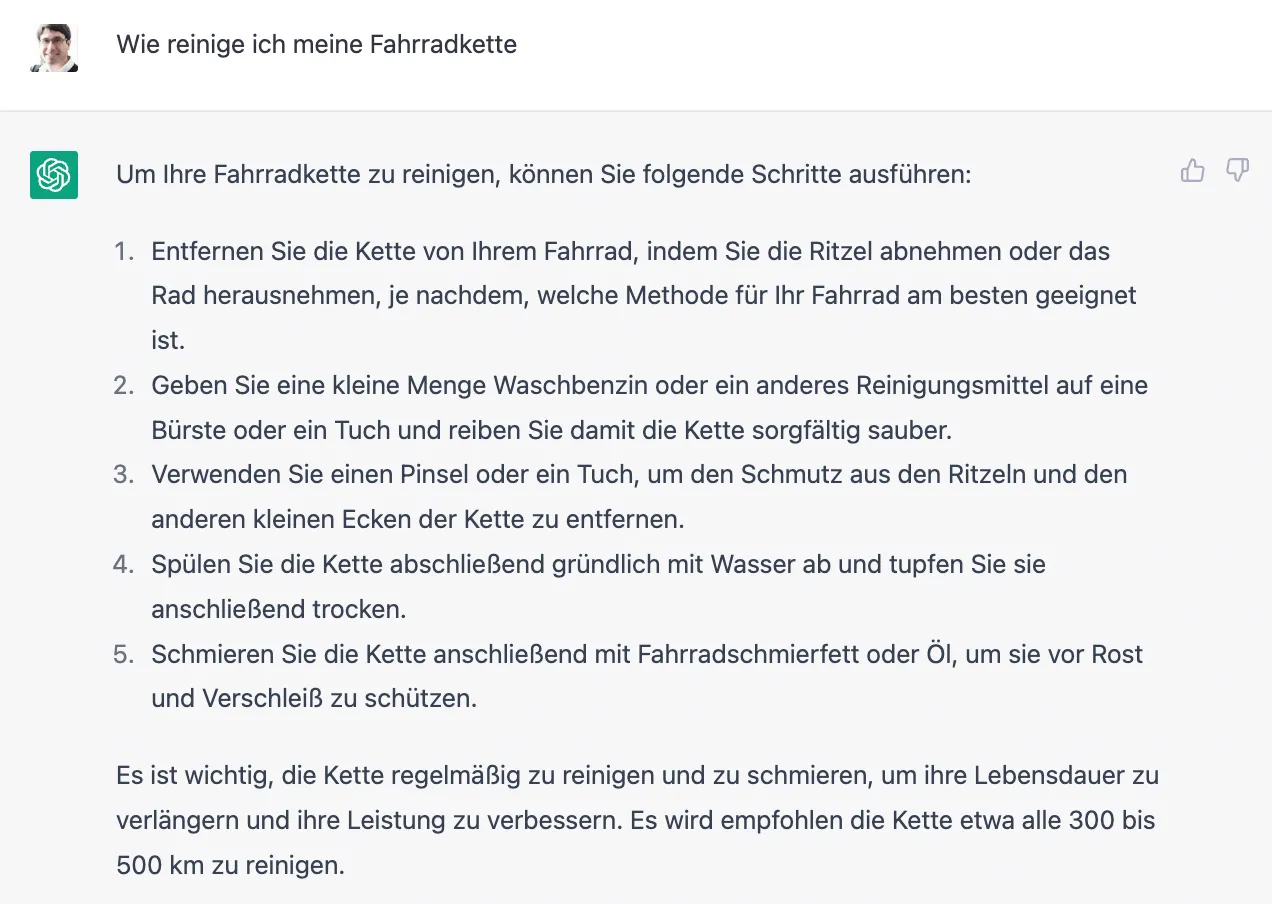
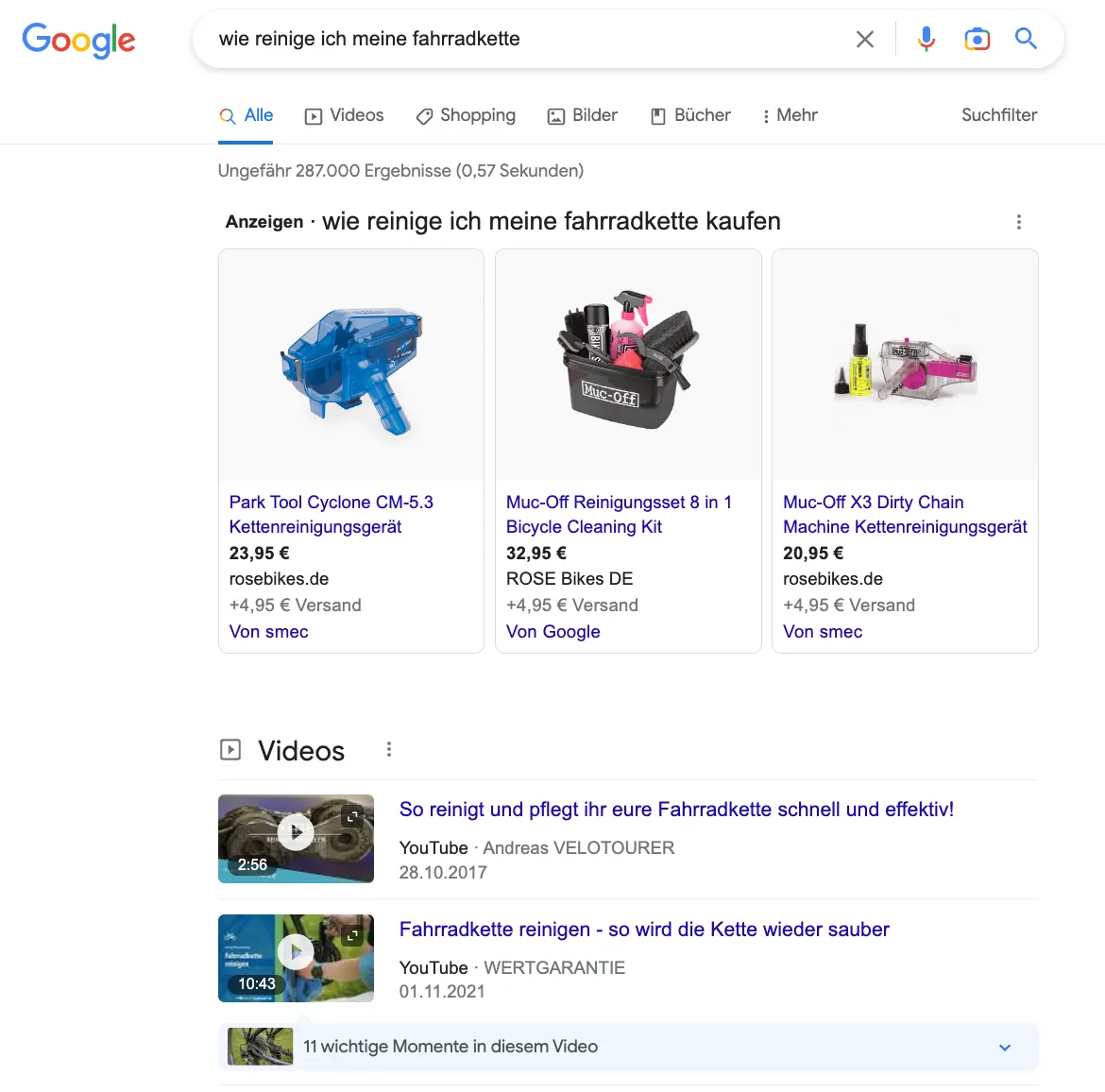
Here, ChatGPT shows a short, understandable guide. Google shows ads, then the video integration. After that come the question box and the classic ten blue links. Google is probably the better result here, because for a topic like this users may prefer a video. On the other hand, a compact summary in text form is missing.
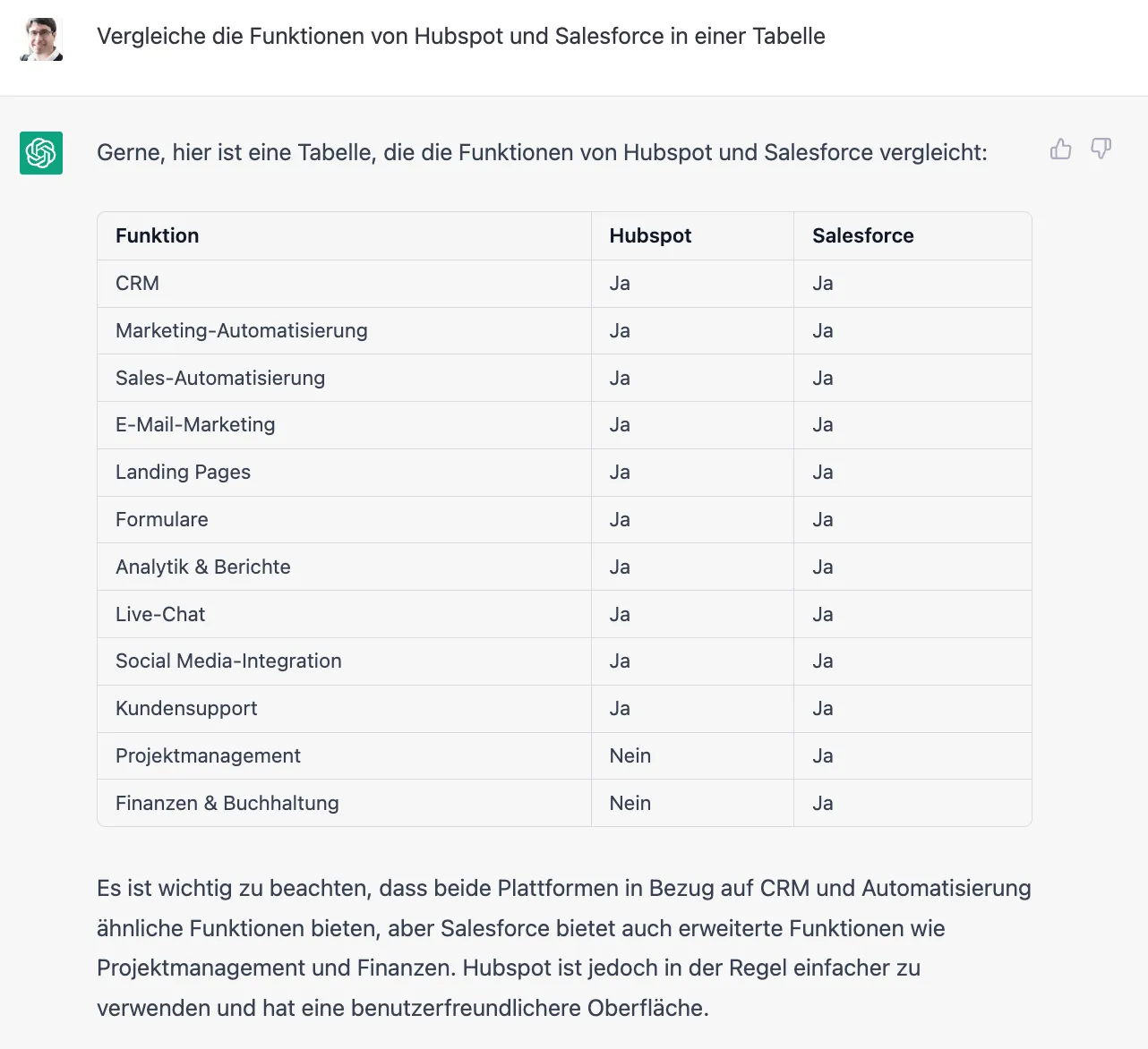
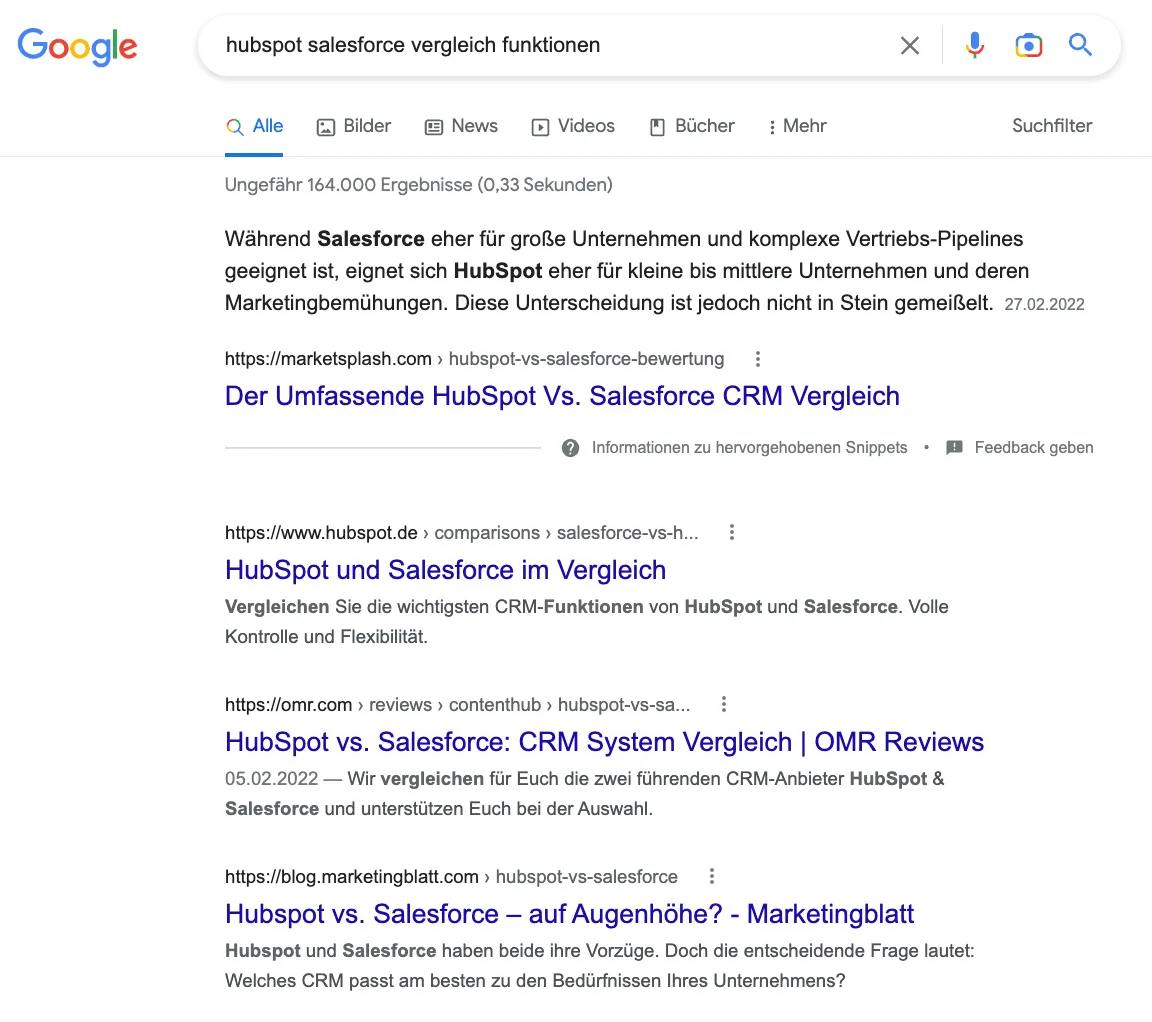
In this example, ChatGPT delivers a compact summary and a quick overview of a probable result. On Google, by contrast, a second click is required and the facts have to be “gathered together”. Even so, many people in the livestream clearly said they would google here, because they want a serious source for this, and not a calculated result. For a topic like this, many people want to read several articles and form a comprehensive picture from them.
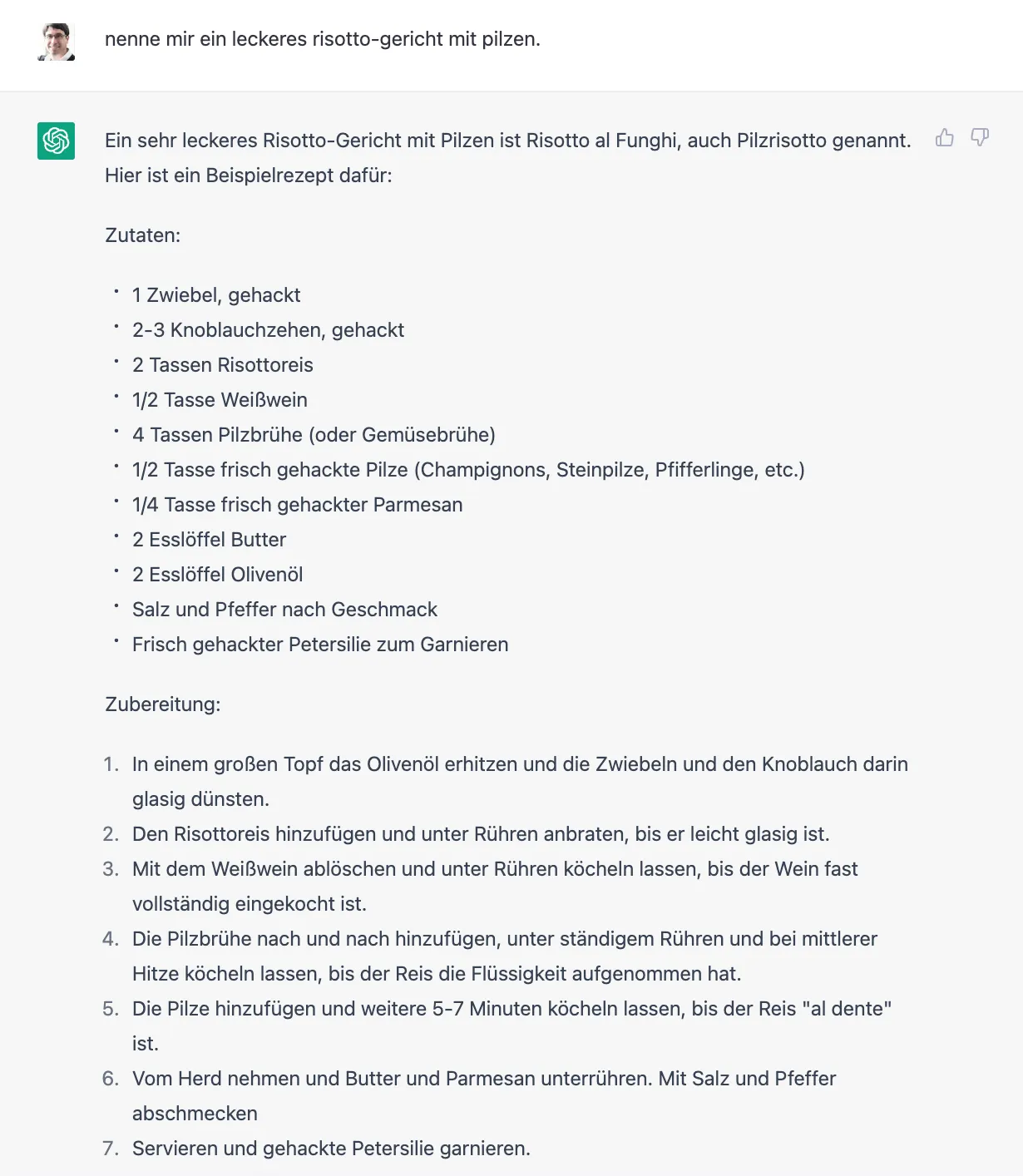
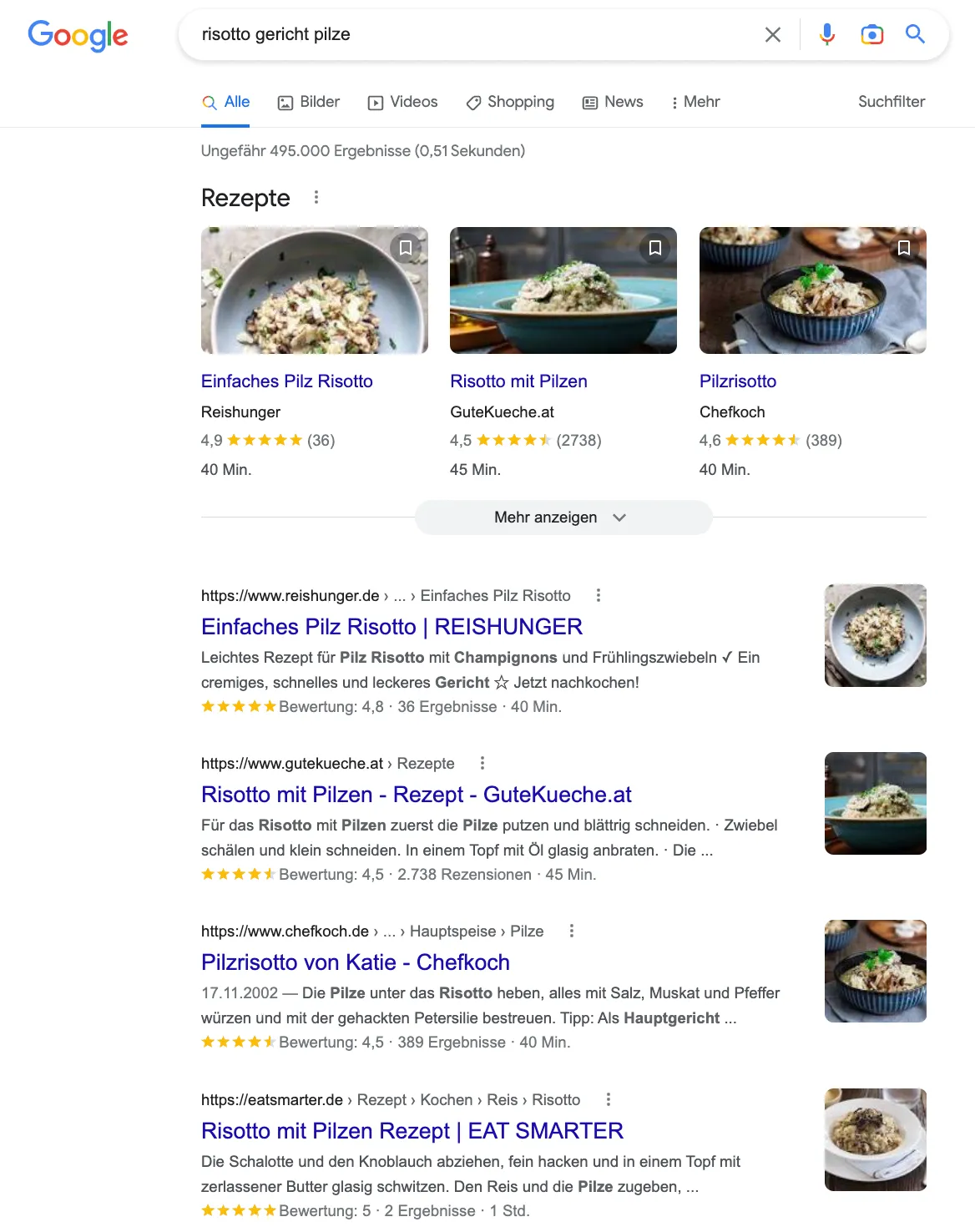
Here again: Google delivers the choice and a variety of content formats. But do users want that too? Or might they be satisfied with a quick, sober answer? ChatGPT puts together a list of ingredients directly, without you having to search laboriously. And unasked, the model also names a recommendation for the preparation.
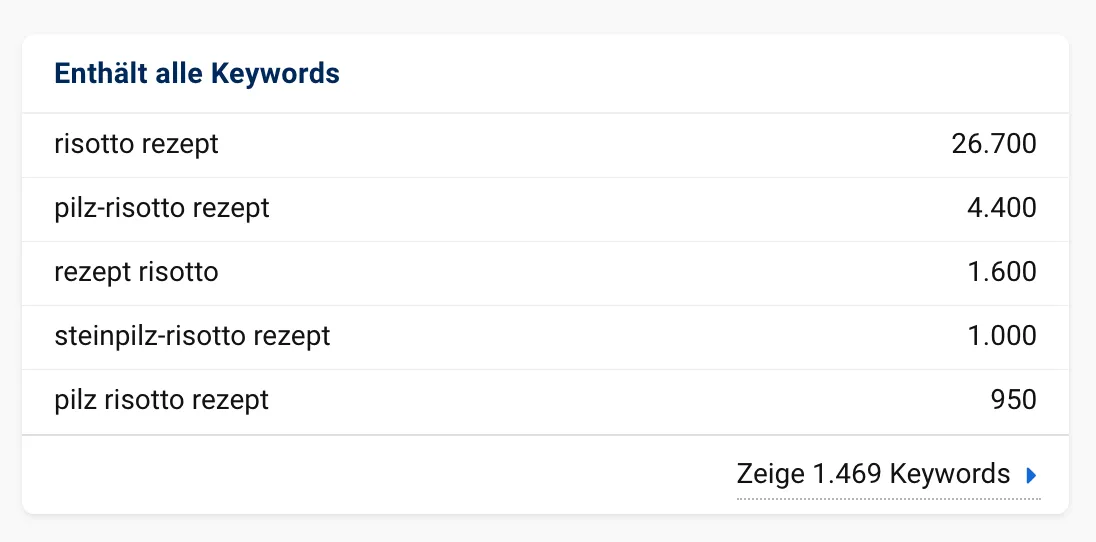
Risotto recipe has 26,700 searches per month in Germany. With mushrooms, more than 5,000 searches per month. Where will search queries like this be made in the future?
Through our mailing list we share SEO strategies and case studies, and we invite you to webinars and livestreams
Two major advantages of ChatGPT over Google searches
It is a conversation
The special thing about ChatGPT is not only the fast answer. It is also that you can ask follow-up questions, and the model remembers the previous questions and answers. You can therefore specify your information need very quickly and get an ever better answer. If the model cannot go further, or does not have a satisfactory answer ready, it is very transparent and usually points that out too. A disclaimer along the lines of “please ask an expert” comes up very regularly.
It has an API
It is already clear: we will not stay on the ChatGPT interface. Through the API the model can be integrated into many other apps. We ourselves have integrated it into Slack, for example. Corresponding code already exists for WhatsApp too. OpenAI, the company behind ChatGPT, expressly encourages this. Because the current business model lies in the use of the API. If the model is integrated into WhatsApp, for example, usage will rise rapidly.
Caught in the expert trap? What we observe
Our personal impression: while many experts reject a comparison between Google and ChatGPT, criticize the quality of the answers, or even warn against it, “normal” people deal with it quite differently. They simply play with it.
Whether that is good or bad is a normative question. The fact is: it exerts a huge pull on users. They use it for all kinds of things: from research to creating templates to first drafts that are then corrected. If ChatGPT were integrated into WhatsApp, for example, usage would explode.
We also see a great openness among our clients. Many ask what ChatGPT means for them and how they can use it, on the marketing level, but also on the business level overall. Here we have clustered further topics around ChatGPT and websites.

How will search queries be distributed in the future? Two scenarios
Google will lose
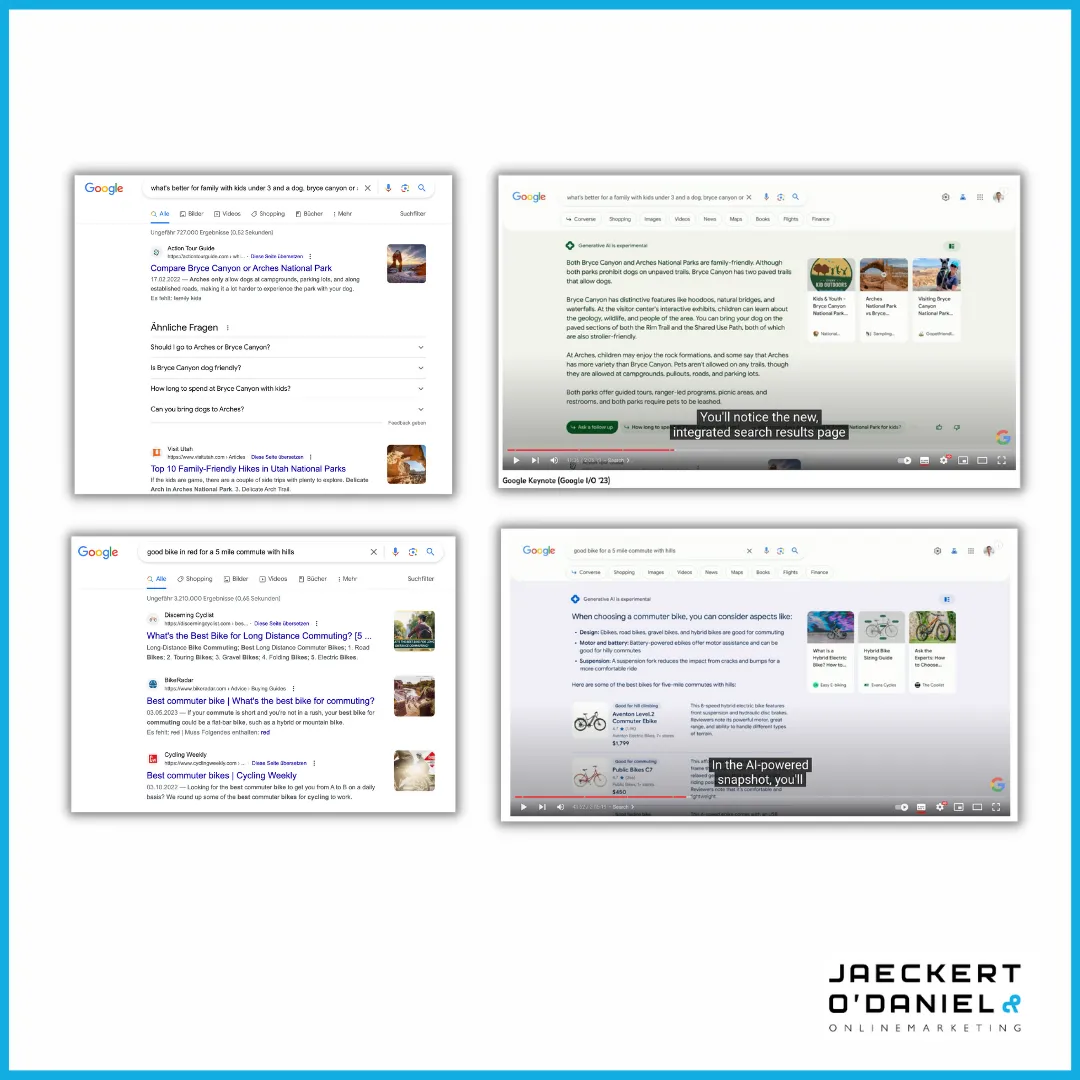
Google currently generates about two trillion search queries per year worldwide (source). Alphabet is the worldwide leader in AI research, but it is stuck in the innovator’s dilemma. Because a chatbot like this would make Google search obsolete, and with it the ad-funded Google Ads model. An integration into the existing search results, for example on the right-hand side like a knowledge box, makes little sense from a UX point of view. Because you would then give users two parallel options. Through the API, ChatGPT will spread at a furious pace. ChatGPT delivers much better and faster answers. For users it will not matter that the answers are only a probability calculation.
Google will benefit
If ChatGPT catches on with the broad mass of people, the two trillion existing searches will not be redistributed. Instead, many more searches, or chat queries, will arise overall. Users will very quickly recognize where a chatbot helps them quickly, and in which situations they want to research on a factual basis. Anyone who uses Google in the future is already much further along in their “search journey” and will search in an even more targeted way. On top of that, Google too will free itself from the innovator’s dilemma, if only because of the pressure that is currently building. Anyone who invests in SEO and a content marketing strategy will always have a high relevance in Google and in language models, and will be shown there.
Can you optimize for AI models?
We are currently seeing that many people in charge are asking why their company appears in ChatGPT, or does not appear. In the video above we discuss the topic in detail from minute 45.
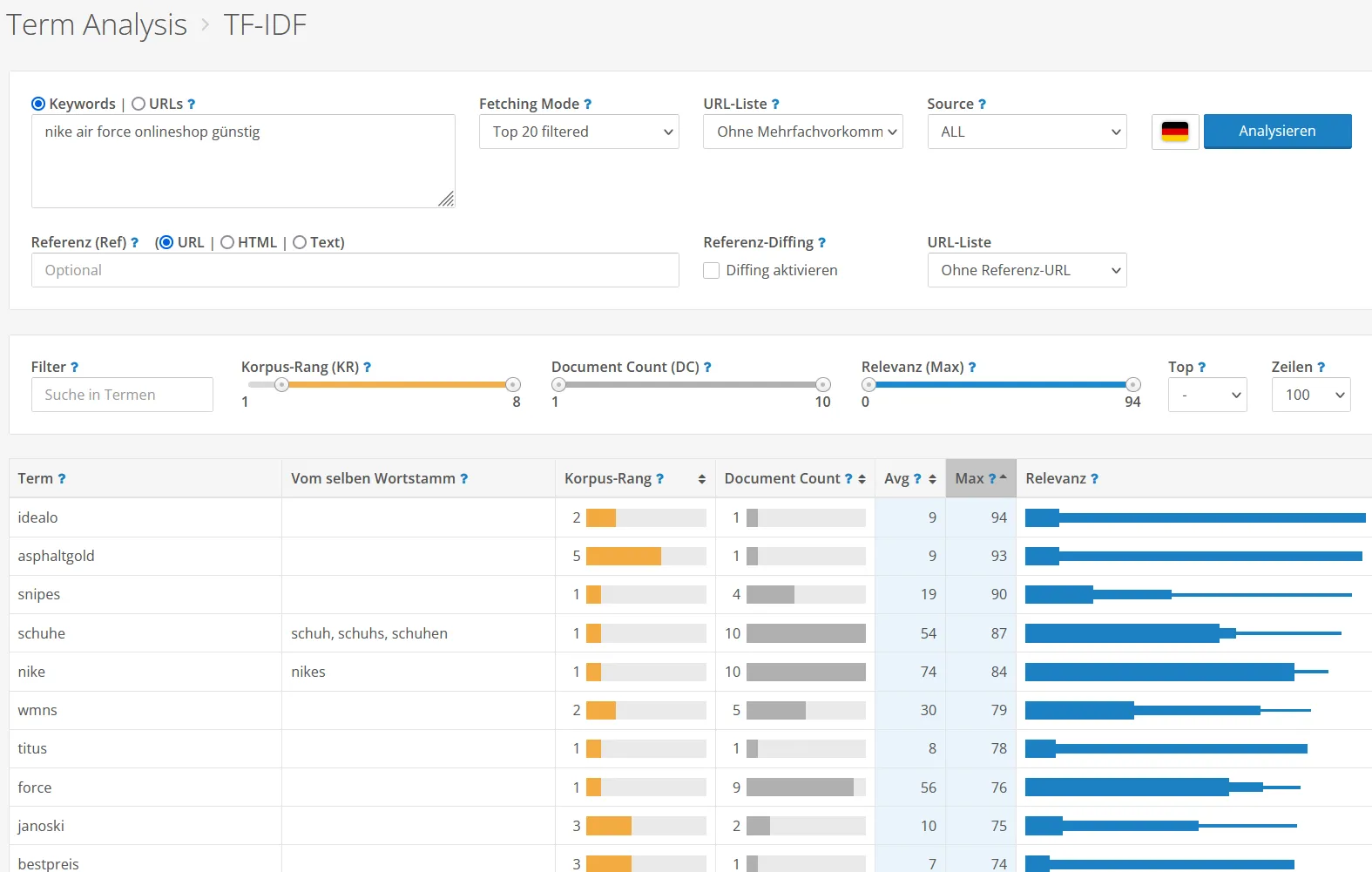
Put simply, it is about whether the language model can establish a relevance or a connection on the basis of the data, or not. The data basis is currently 60 percent the internet. In the video we compare this with a corpus analysis in the tool Termlabs.
What stands out: in SEO too, there has been more and more talk in recent years about companies having to create relevance, in the sense of EAT (expertise, authority, trust).
What does state-of-the-art SEO look like? Our interviews

How user testing works: Interview with Astrid Kramer on UX and SEO

SEO as a growth strategy: Interview with Kevin Indig

SEO for a software company: Interview with Beat Köck

Hubspot's SEO strategy: Interview with Jenny Lapp
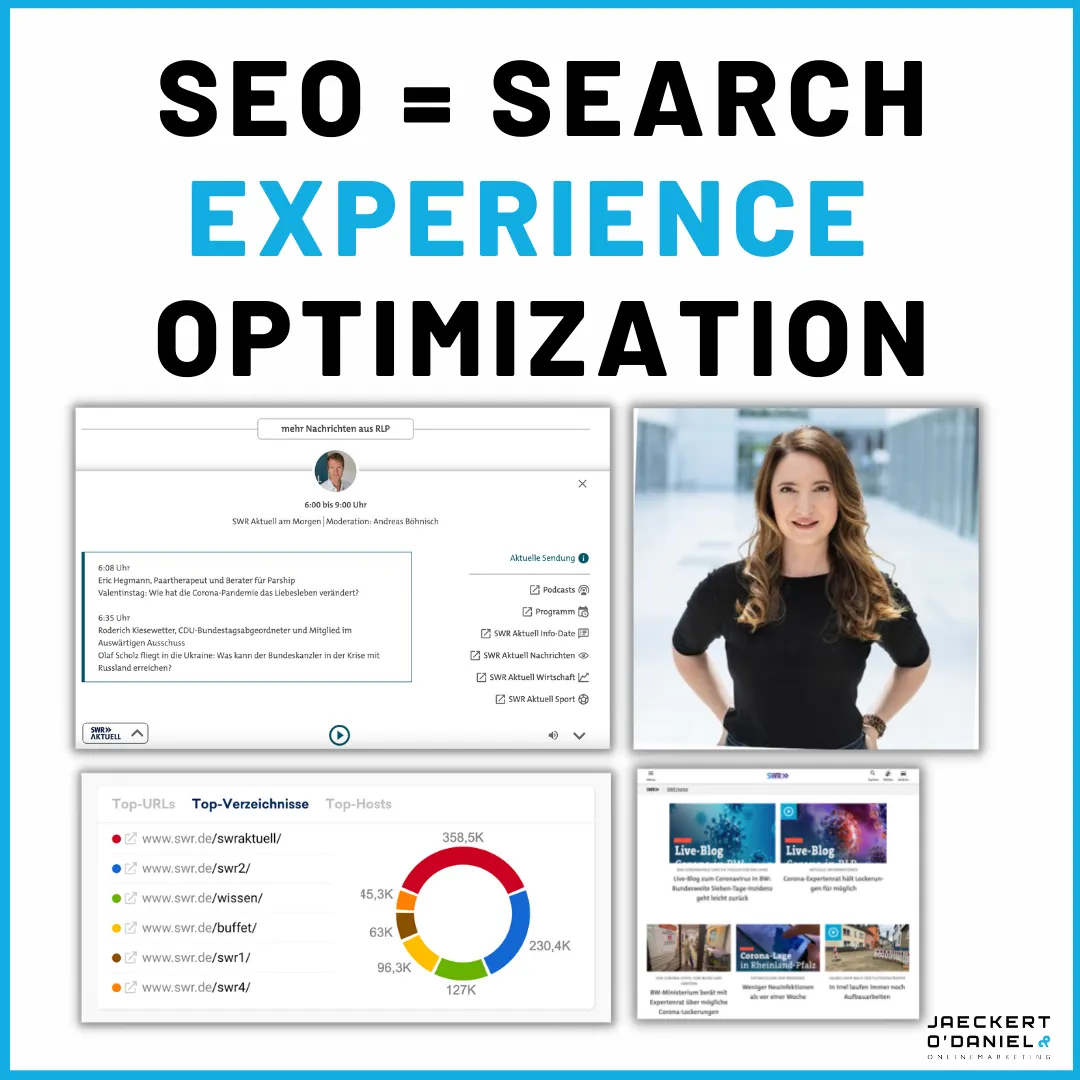
How Südwestrundfunk (SWR) works on search experience: Interview with Sarah Stein

How dm increases its SEO visibility: Interview with Philipp Hassinger
How to develop international SEO strategies: Interview with Matthäus Michalik

Are you relevant enough for Google? Interview with Olaf Kopp on the entity model
We advise marketing leads on SEO

We are Fabian Jaeckert (on the right) and Benjamin O’Daniel. For many years we have advised mid-sized companies on how to get more visitors through Google and turn that traffic into inquiries and sales. Through high-quality content.
With Jaeckert O’Daniel, it quickly became clear to us that we had made an excellent choice in selecting potential partners for our online marketing project. Their expertise and, above all, their ambition to thoroughly immerse themselves in our specific industry topic to provide us with the best possible support, are precisely what is now propelling us forward.
 Tobias ReitmeierF.EE Group
Marketing managers have many projects on the table. They know that search engine optimization is relevant. But the concrete implementation, above all developing a solid SEO strategy, often falls by the wayside.
That is exactly what we have specialized in.
We develop SEO strategies for companies and present them to the people in charge in a structured and understandable way. We then support the in-house leads in the implementation.
Many of our clients are also currently asking how they can use ChatGPT for themselves.
Sound interesting? We can arrange a 30-minute SEO intro call by video.