

Billions of people now use AI systems like ChatGPT or Google’s AI mode. Yet the SEO world still clings to keywords—the old search phrases we all entered into search engines.
The fact is: millions of keywords will disappear forever. These terms will become extinct. Because people no longer need to enter them to obtain specific information. This particularly affects “modifiers”—certain longtail keywords that users employed to specify their searches.
To be clear: the underlying need will not disappear. But the search terms will—and with them, the entire data foundation. We discuss this in this podcast episode using concrete examples. We researched the keywords using the Sistrix software.
Topics on this Page


“Buy” Keywords Are No Longer Necessary
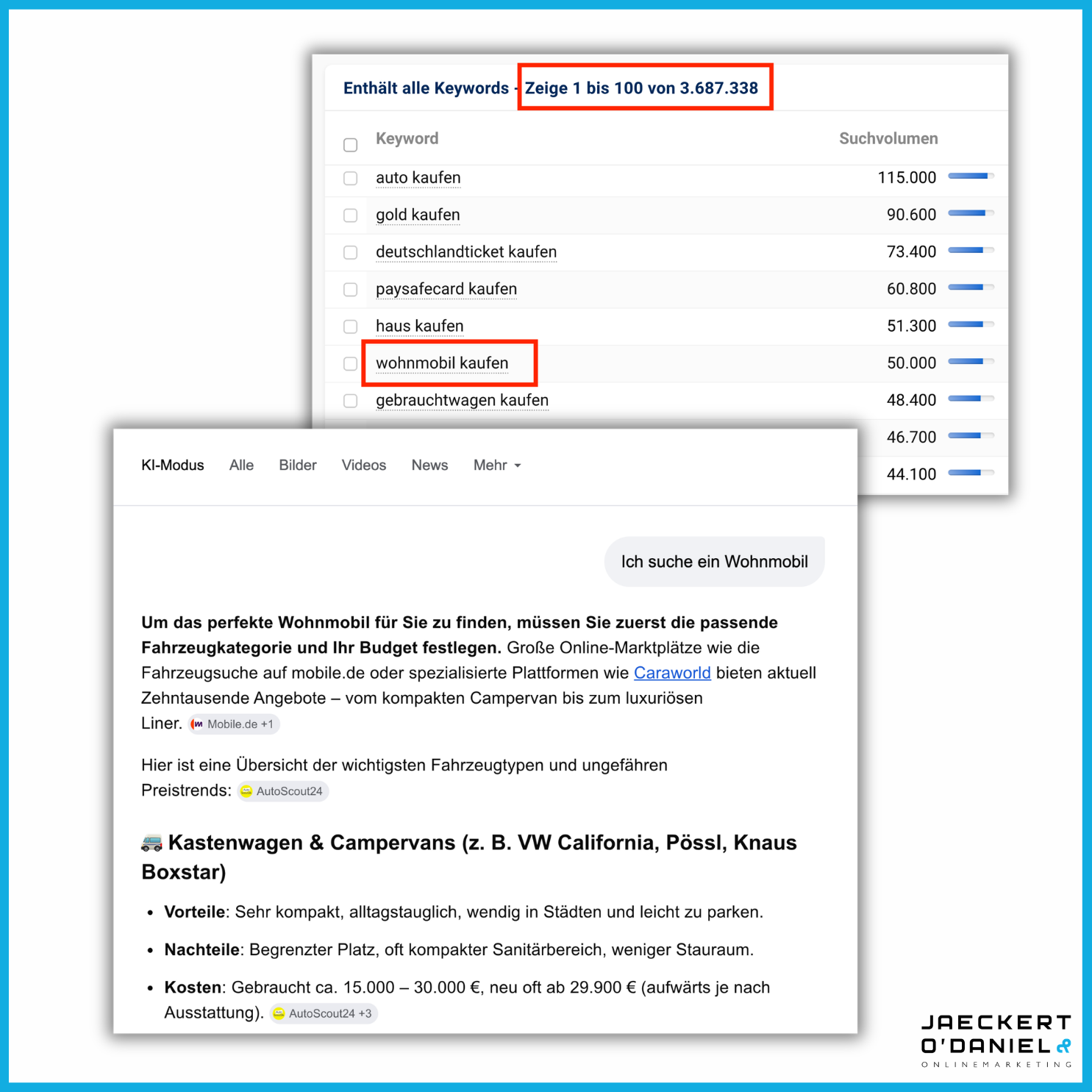
The SEO tool Sistrix shows over 3 million keywords combined with the term “buy.” People enter this search term because they explicitly want to buy something—and want to see relevant shops or platforms. Similar terms include “order,” “book,” “rent.”
These keywords are highly transactional—and accordingly the core of many optimization efforts. Titles and meta descriptions were optimized for them, as well as internal linking and much more. Websites ranking at the top here directly meet customer needs. SEO has always contributed directly to company revenue in this area.
Now users no longer need to use this term. For example, if you enter “I’m looking for an RV,” the AI automatically researches options for what types of RVs exist, how much they cost, and where you can buy them—including three specific platforms that are recommended. Users no longer need to specifically write that they want to buy an RV.
The same applies to “book flight,” for example. Hundreds of thousands of users search for this every month in Germany. Anyone who enters “I want to fly to Mallorca” in Google’s AI mode automatically receives flights from suitable providers.
Our assessment: users will break the habit of using search phrases like “buy.” This behavior stems from the pre-AI era, when you had to tell a “dumb” search engine exactly what you wanted. This means millions of keywords and the data behind them will disappear.
Comparison Keywords No Longer Make Sense
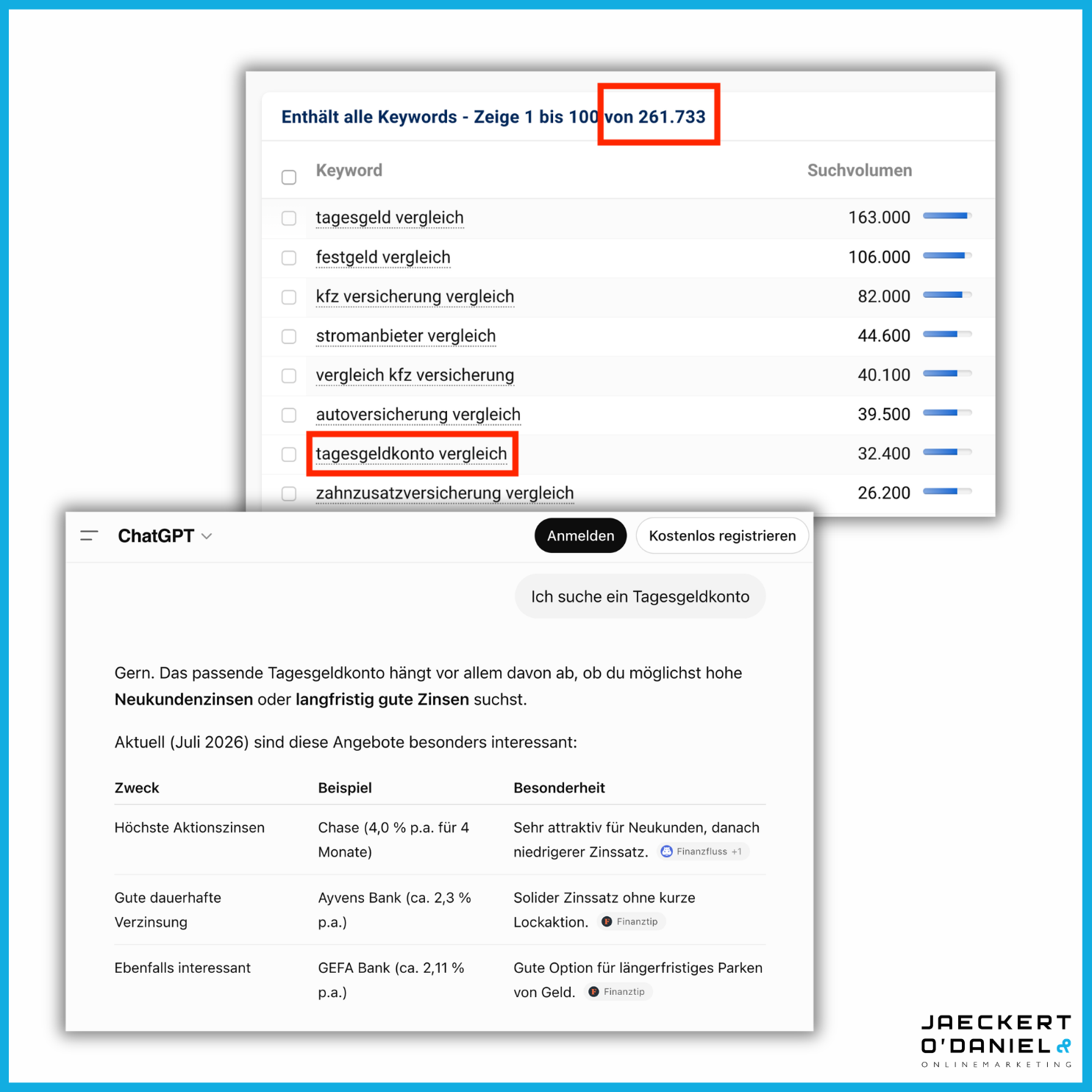
The same applies to “comparison” keywords. Here too, keyword data shows that the term “comparison” is used across numerous categories. For example, “savings account comparison.”
However, anyone who enters “I’m looking for a savings account” in ChatGPT or AI Mode automatically receives a comparison. AI systems always compile various options. They also evaluate and sort the products presented. ChatGPT, for example, frequently generates a comparison table directly or a “best overall” recommendation.
This also causes numerous other search terms to collapse, such as “best,” “test,” “reviews,” “provider.” All these aspects are often included in the generated comparison tables—or added by users with an additional prompt if needed. Behind all these search phrases are also millions of variants.
In AI, all these specific search queries merge. That’s why users perceive AI research as so efficient. Regarding SEO and content strategy, you should therefore ask yourself whether you even still work on such terms and, if so, in what way.
Three Consequences of This Development
Free GEO Online Training
- Current Developments in AI Visibility
- From SEO to GEO
- How to Optimize for AI Systems

Our Conversations with SEO and GEO Professionals




Deepen your GEO Knowledge: Every Monday via Email

We Advise Marketing Managers on SEO & GEO
I look back with great satisfaction on the SEO project that we carried out with Benjamin and Fabian. Firstly, the collaboration was on a very pleasant, goal-oriented level. Secondly, the consultation was structured in such a way that we could immediately start with the implementation. We received very concrete optimization suggestions that were tailored to our internal capacities and therefore realistically implementable. Even though only a few months have passed, we can already see the first results of our work in the Google rankings. Traffic for our relevant keywords is steadily increasing, and we still have enough concrete work packages from Benjamin in the pipeline to boost our site. Furthermore, through the consultation, we have acquired so much internal SEO know-how that we can now optimize our site independently. And most importantly: Visitor numbers have doubled – with correspondingly positive effects on sales.