September 4, 2023Benjamin O’Daniel
How Deloitte develops thought leadership Content: Interview with Michael Grampp
How do you address and retain top decision-makers at C-level? With deeply researched content that is completely non-promotional.
That is what Michael Grampp says.
Michael leads Deloitte’s research team in Switzerland. His team produces studies, interviews, and specialist articles. Exactly what is discussed under “thought leadership content”.
In the podcast we talk with Michael about
- how thought leadership content has to be structured
- why his team operates independently of marketing
- which metrics are applied to his work
That and more in the interview. We have summarized the key points here in this article.
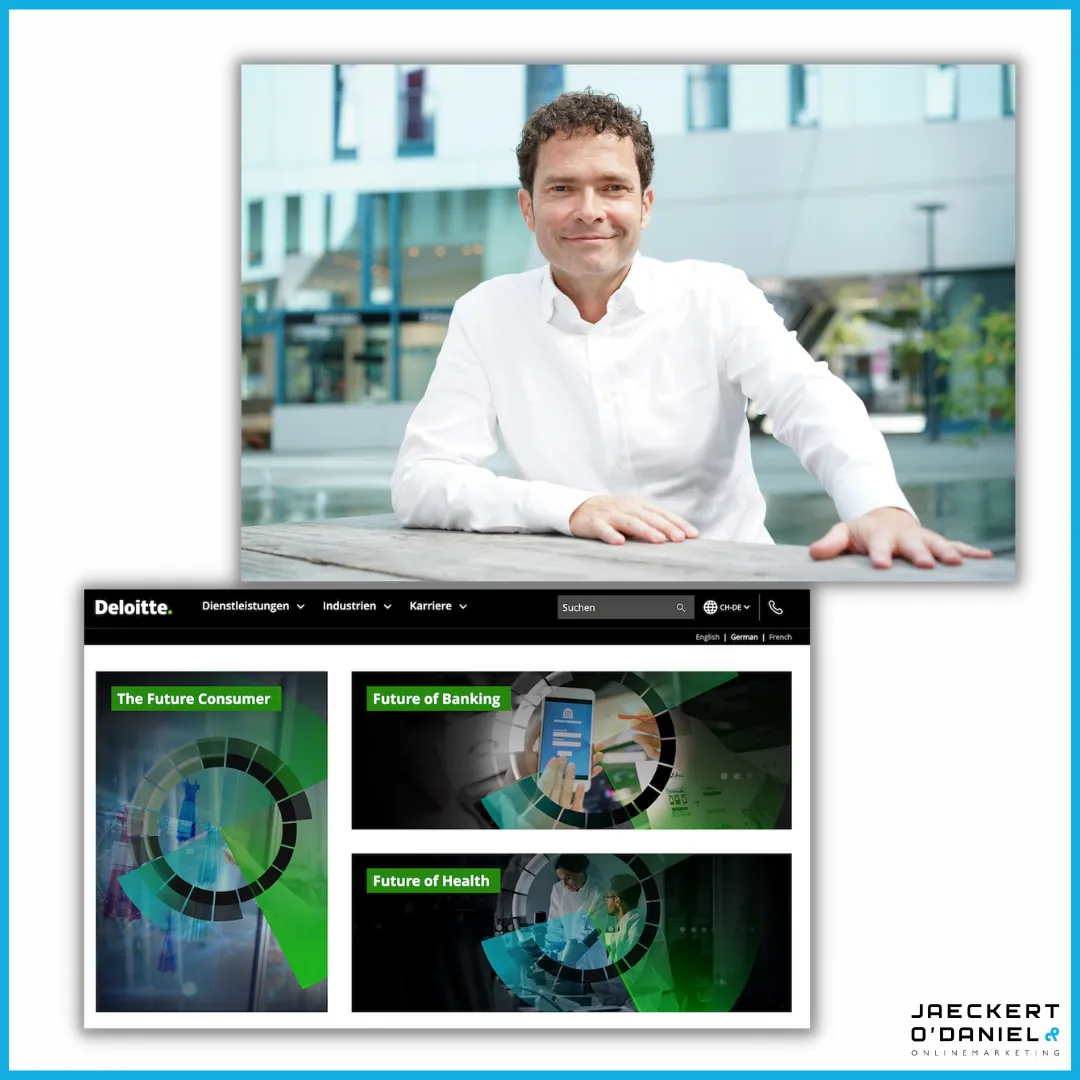
Our guest: Dr. Michael Grampp
Michael Grampp is chief economist at Deloitte in Switzerland. He leads the research team there and is responsible for all thought leadership publications of the company in Switzerland.
The publications and content formats include studies, analyses, and a podcast of their own: the “Future Talk” with more than 160 episodes. There Michael and his co-hosts interview researchers, executives, and startup founders from various industries.
From that role, Michael argues that thought leadership content should not sit inside marketing, but apart from the products and services. That way you can produce content for your own audience that is less promotional and therefore much more interesting.
Why does Deloitte invest in thought leadership content?
For Deloitte, publishing thought leadership content has a clear strategic goal. “It is about being perceived as thought leaders and as experts. It helps to build and strengthen client relationships,” Michael says in the interview.
The audience plays a special role here. With its content, Deloitte wants to reach the C-level and middle management in large companies.
Decision-makers at that level can hardly be reached with classic marketing anymore. “Marketing sales messages no longer work. So you have to take a different path,” Michael says. Interest in deeply researched, neutral, and specialist topics, by contrast, is very high.
“When it comes to topics, we always look for white spaces as well. Topics that have not yet been covered by ten others. For that, though, you have to react quickly.”
With 450,000 employees, Deloitte is the largest consulting firm in the world. The company is organized in independent country firms.
The thought leadership area is structured in three levels.
A global thought leadership team based in the USA creates certain publications for global topics. Then there are regional teams, for example for EMEA. And finally the local teams, such as for Switzerland or for Germany.
Each local thought leadership team has its specific industry focus, for example the automotive industry in Germany and the financial sector in Switzerland. On top of that come cross-cutting topics, for example on technological change.
In Switzerland, five people work in the thought leadership and research department. In Germany, around 25 people.
Two examples of thought leadership content
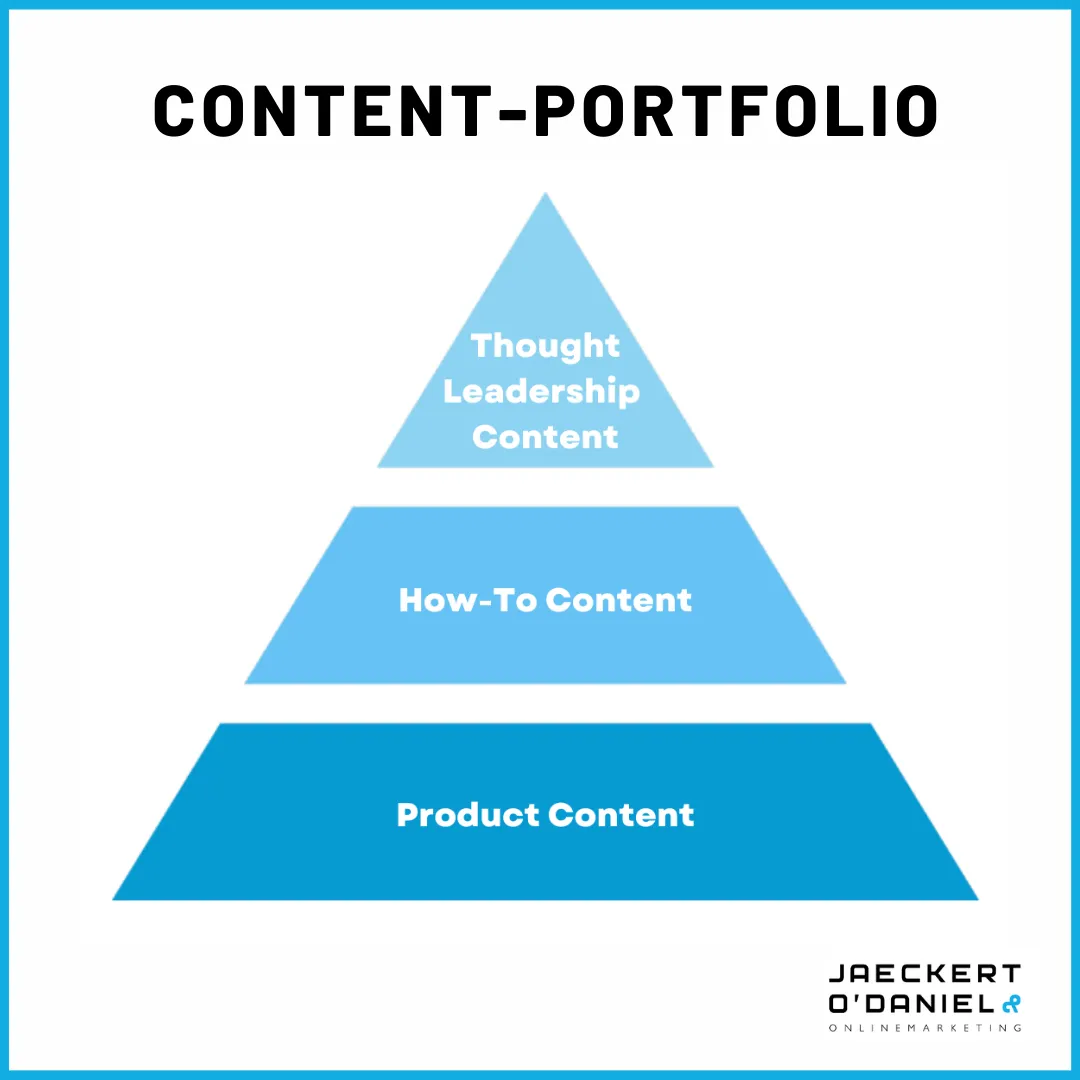
Deloitte follows the approach of developing central core content and then building micro content from it across all channels, in order to increase shelf life and reach. An approach we follow as well, under the heading content portfolio.
This central core content is often the company’s own studies. For those, Michael and his team go deep into the topic. They read external research reports and conduct interviews with experts. They also talk with consultants from their own firm who work in the industries. “That is how we find out very precisely where the real problems are.”
From the studies come magazine articles, social media posts, newsletters, webinars, and events. On social media, Deloitte has a clear focus on LinkedIn and Twitter for its thought leadership content, because many decision-makers and media representatives are there. Instagram is seen more as a platform for HR.
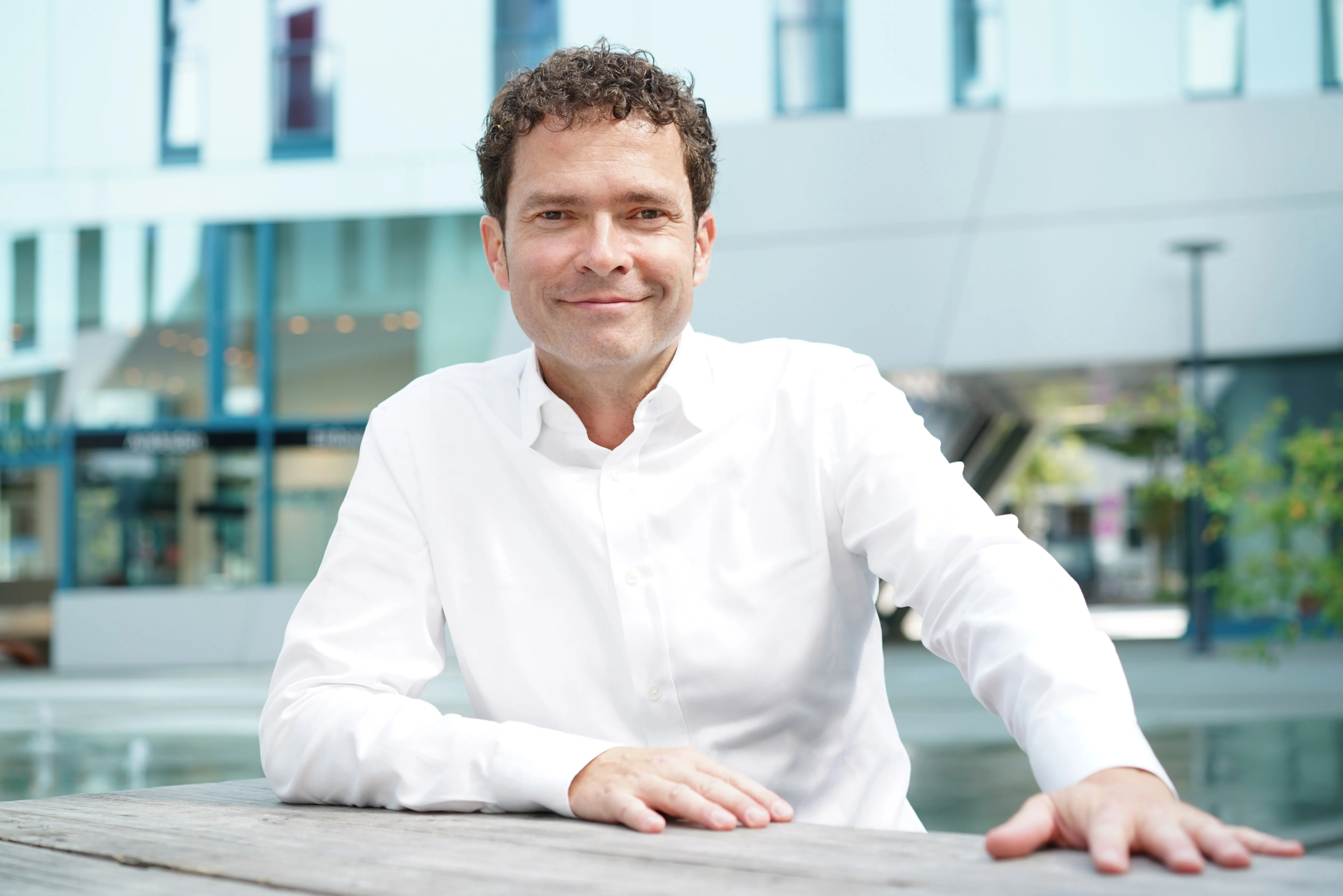
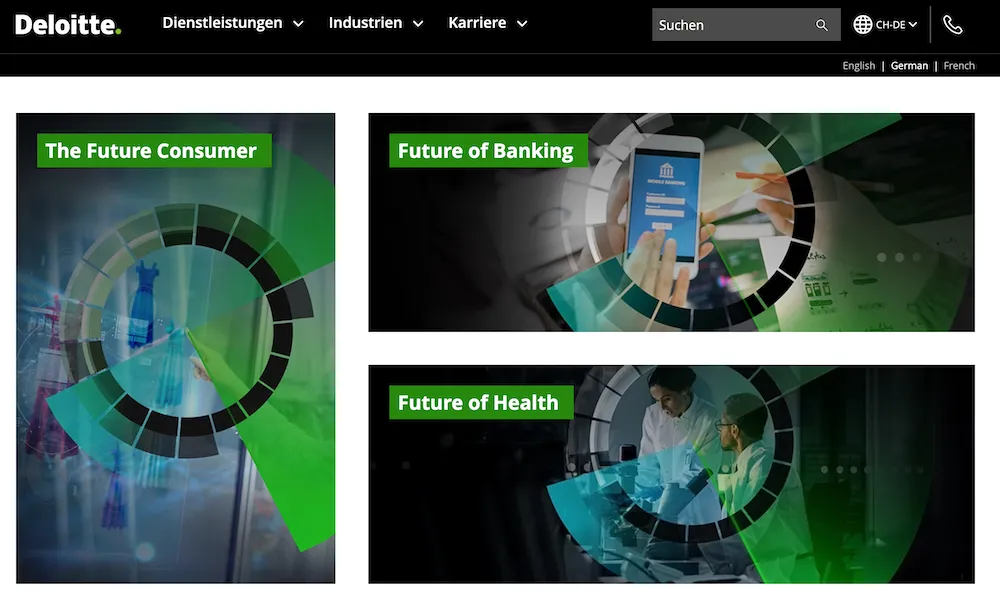
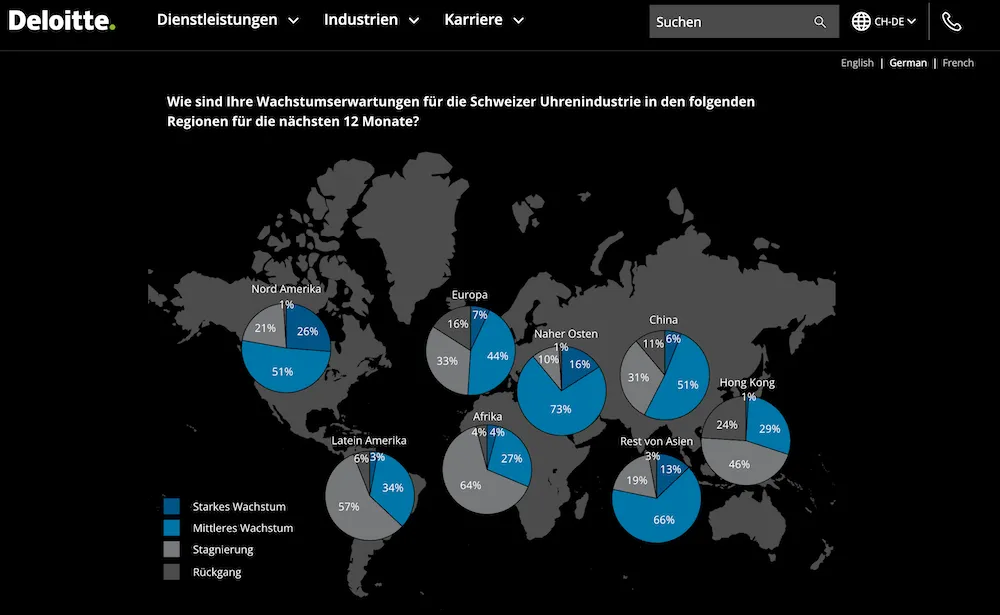
For larger topics, lavish microsites are built, such as this study on the Swiss watch industry. “On microsites like that we have a time on page that is two to three times higher than on our other content,” Michael says. Similar pages are also set up for the trend reports on individual industries.
“Content drives marketing, and not the other way around”
From Michael’s point of view, it is a central mistake that many companies place thought leadership inside marketing.
“But you need content and research experts for it. People who can research freely and in depth and prepare the topics.”
That is exactly the approach Deloitte takes. “We are completely content-driven.” That means: a topic is researched and developed and then handed to marketing, PR, and customer relations, who use it for their channels.
Deloitte has also opened up to the outside for this. “We also publish interviews and articles by experts who do not come from our company.”
From Michael’s point of view, this openness is a decisive success factor. The company’s own website is understood as a platform, and not primarily as its own advertising channel.
The KPIs of thought leadership content
Digital KPIs
For the digital KPIs, Deloitte looks at the website, but also at all other channels. For the website that includes traffic (visits), but also scroll depth and time on page for the articles. Leads are recorded as well. For social media, the KPIs are split into organic and paid, looking at impressions, clicks, and engagement.
Marketing KPIs
Marketing looks very closely at the many different touchpoints with clients, the measures behind them, and the reach those measures deliver. The thought leadership team contributes substantially here with its content. For example, events are regularly developed from the studies.
Media KPIs
For classic media, coverage in newspapers, online, TV, and radio is recorded. The quality of the audience plays a central role here in particular. A local radio station is weighted differently from the FAZ. The media echo is also compared with direct competitors.
Customer KPIs
The most important KPI is direct client conversations. For example, interviews conducted for studies. Many consultants use the studies as a reason to talk, for instance over lunch with their clients on site. Follow-up conversations about new project assignments often come out of that. That, though, is the hardest thing to measure, Michael says.
Thought leadership content and SEO
One topic we did not go into deeply in the conversation: thought leadership also clearly feeds into SEO. Google places more and more value on expertise. “E-E-A-T” is the abbreviation for that, and it is widely discussed in the SEO industry. Behind it are the terms “Expertise, Experience, Authority, Trust”.
Benjamin gave a talk on the topic at SMX in Munich. SMX is the leading European trade show around SEO.
Here we discuss the topic in depth: thought leadership content and SEO. We also go deeper on the topic this month in our Academy.
The SEO perspective is interesting for the content portfolio as well: for some topics there are matching keywords. For others there are not. Seeing that clearly, also with a view to the KPIs, helps a great deal with content planning.
Deepen your SEO knowledge: every Monday by email
How contemporary marketing works: our interviews
How software companies grow successfully: Interview with Christian Twardawa

SEO as a growth strategy: Interview with Kevin Indig
How do I become a personal brand without crude self-promotion? Interview with Kerstin Hoffmann
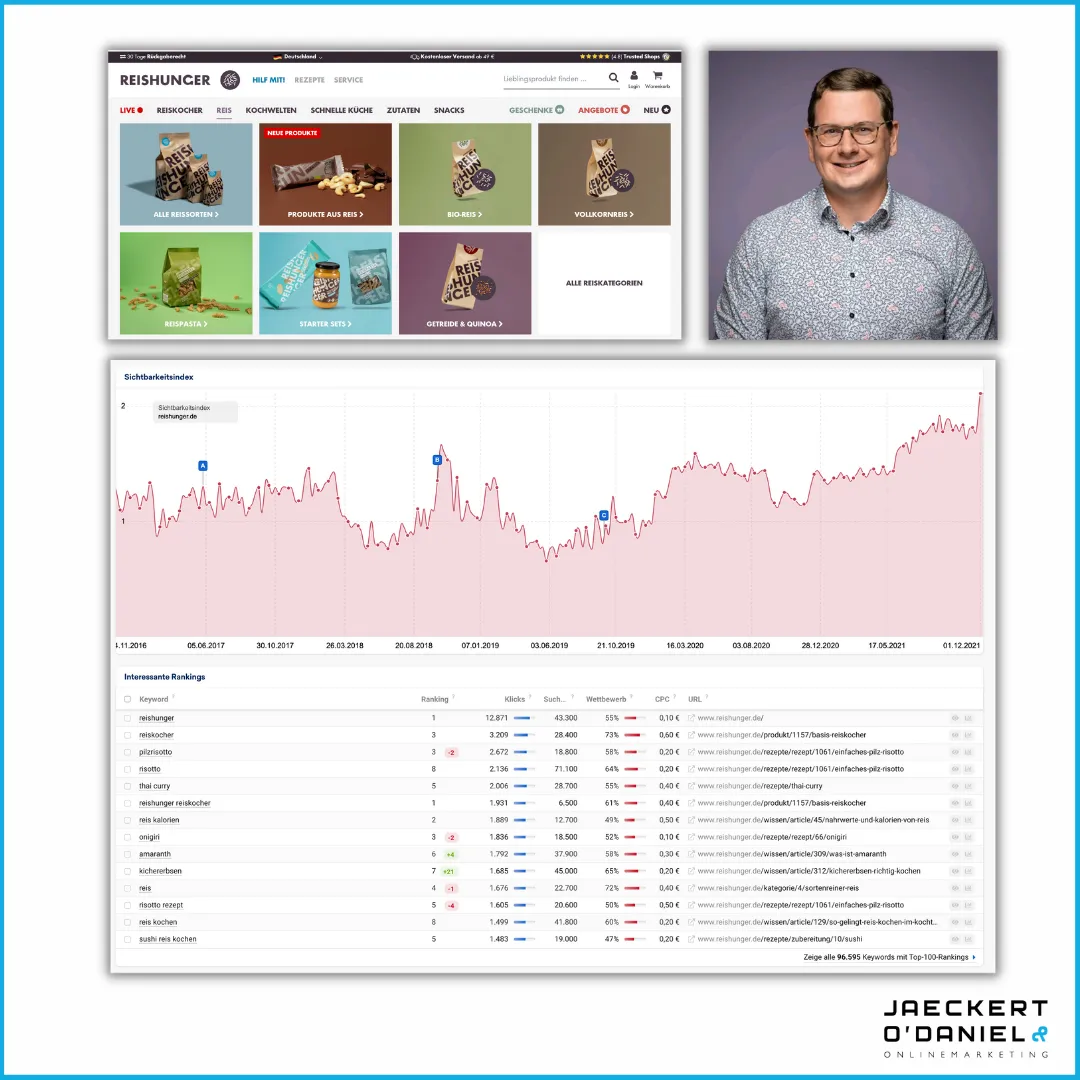
How Reishunger uses its SEO traffic: Interview with Benni Uhlmann
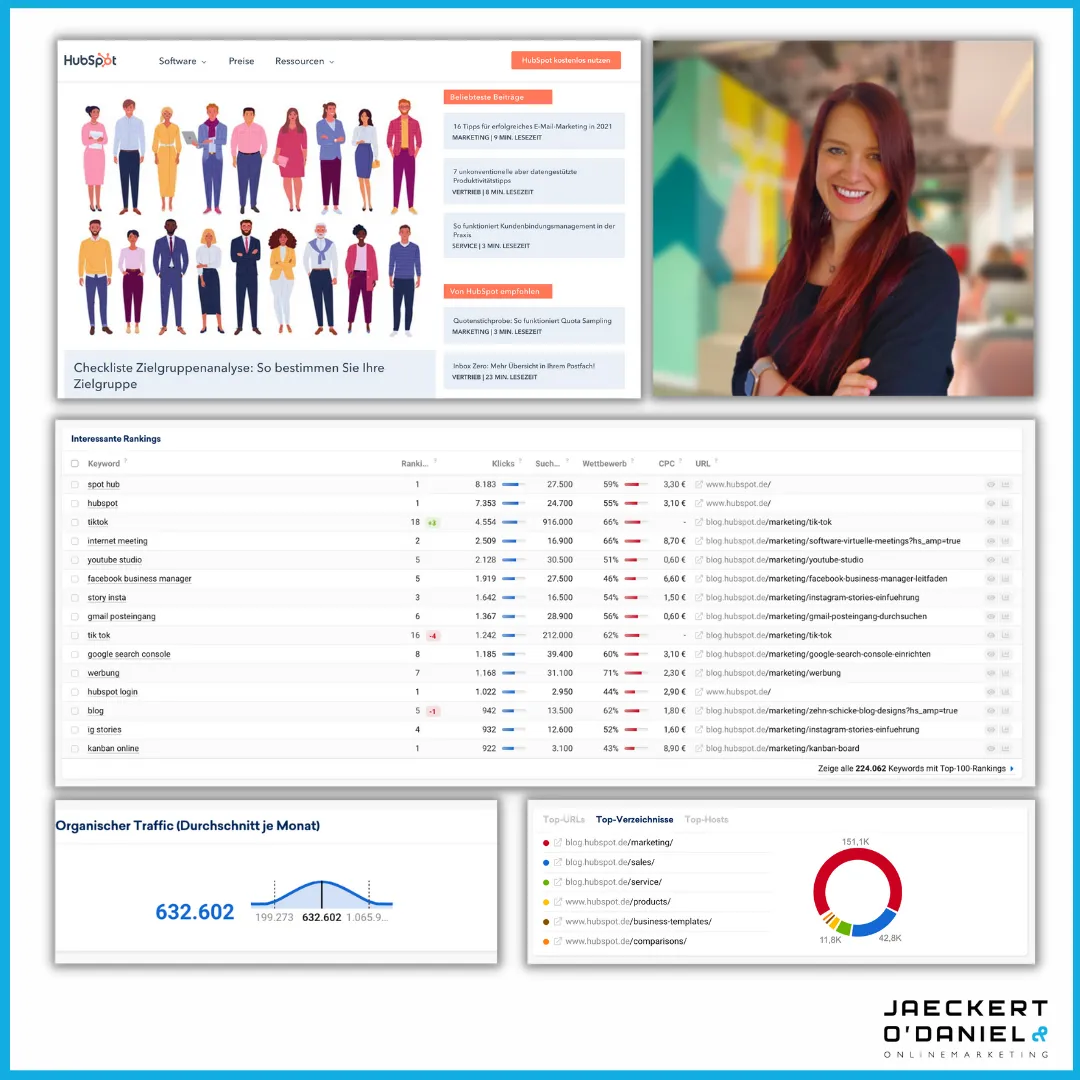
The SEO strategy of Hubspot: Interview with Jenny Lapp
Search intent: How do your users think? Interview with Johannes Beus of Sistrix

SEO case study: How Urlaubsguru works. Interview with Sascha Blank
B2B case study: What do ten years of content marketing deliver? Interview with Jan Aengenvoort
For more organic reach
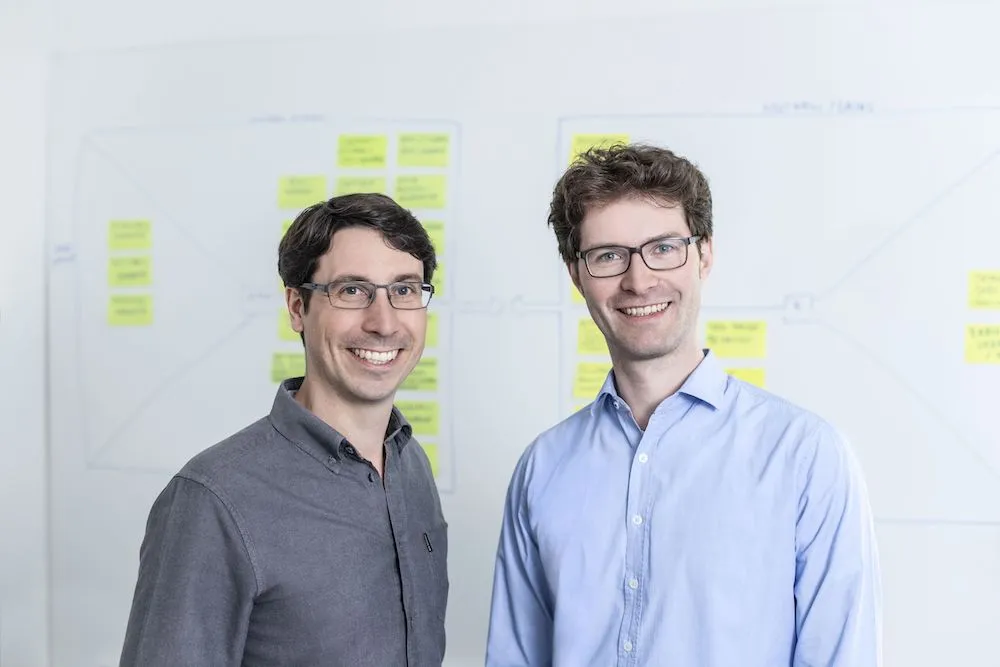
We are Fabian Jaeckert (on the right) and Benjamin O’Daniel. For many years we have worked as consultants for marketing teams. In doing so we connect two worlds: Fabian is the technical expert, Benjamin takes on every topic around content development.
With Jaeckert O’Daniel, it quickly became clear to us that we had made an excellent choice in selecting potential partners for our online marketing project. Their expertise and, above all, their ambition to thoroughly immerse themselves in our specific industry topic to provide us with the best possible support, are precisely what is now propelling us forward.
 Tobias ReitmeierF.EE Group
Many companies want more relevant organic reach. Via Google, via LinkedIn, via their newsletter.
That works with the right strategy, the right topics, and a clear roadmap.
That is exactly what we have specialized in. We develop SEO and content strategies, following the pattern described here as well. Afterwards we support the in-house leads during implementation.
Sound interesting?
We can arrange an introductory video call (30 min.).