May 26, 2025Benjamin O’Daniel
How Does an AI System Talk About Your Company? Interview with Hanns Kronenberg
More and more users search in AI systems. Either in ChatGPT or in MetaAI on WhatsApp. But also on Google, with AI Overviews and soon with the new AI Mode, which has already gone live in the US.
The old search, the results with the blue links, is pushed into the background. What does that mean for SEO and for the visibility of companies? How do the rules of the game change?
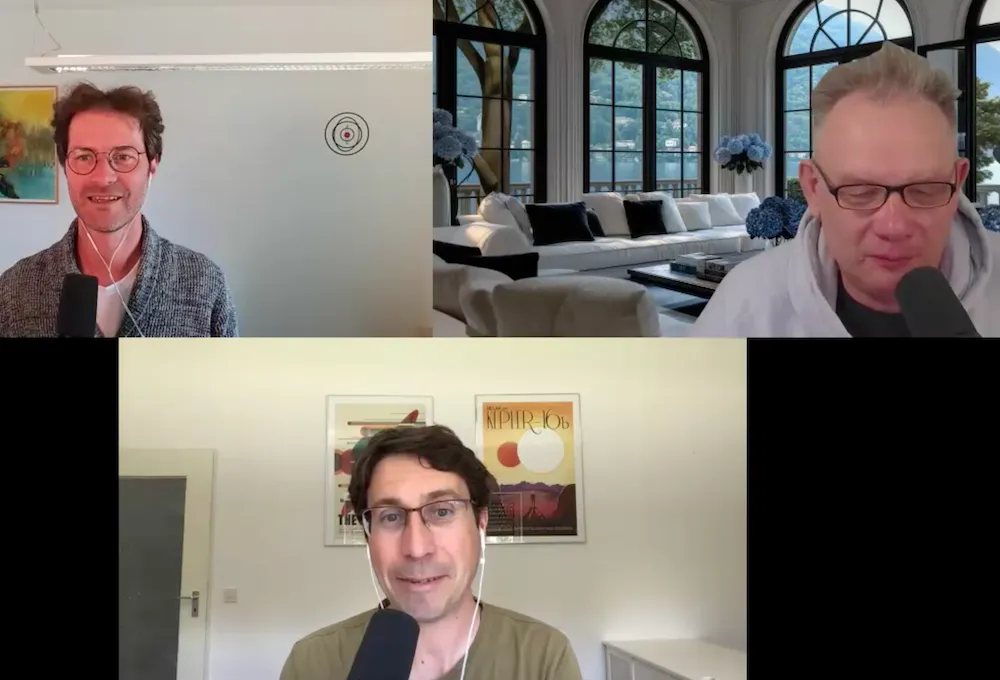
We talk about it with Hanns Kronenberg. Hanns is Senior SEO at Chefkoch and is working intensively on the shift to AI. We take that as the starting point for talking in general about how AI systems work, who is threatened by them and who is not, and whether and how you can really optimize such systems.
Spoiler: it will not simply continue as before. Companies have to ask themselves how they are perceived in AI systems, and what consequences that has, for marketing, but also for products and services in general.
Our guest: Hanns Kronenberg
Hanns Kronenberg is Senior SEO Manager at Chefkoch. He is responsible for the visibility of one of the largest recipe platforms in Europe. Before that he was Head of Marketing at SISTRIX. For years he has been known as a speaker at industry events such as SMX Munich and SEOkomm.
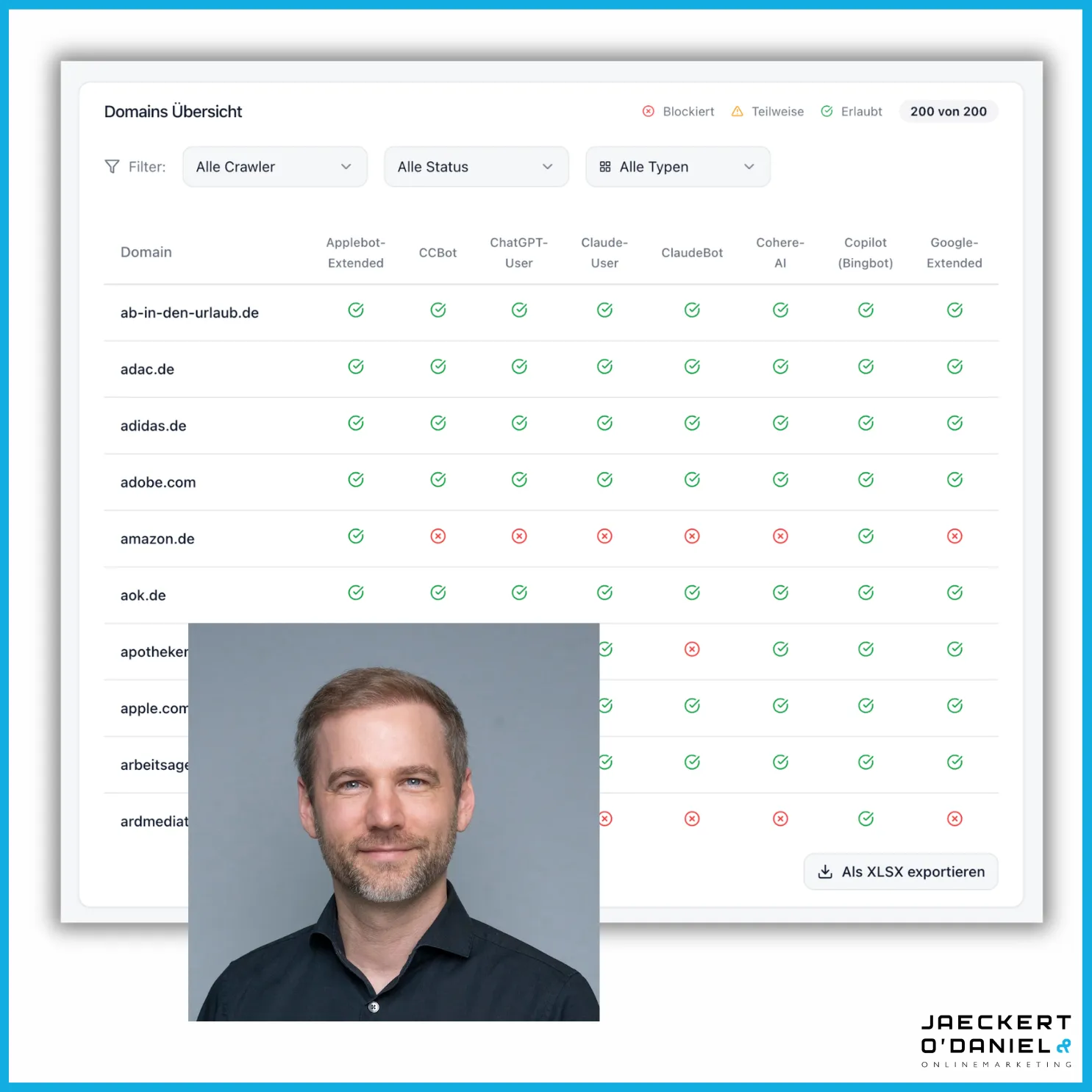
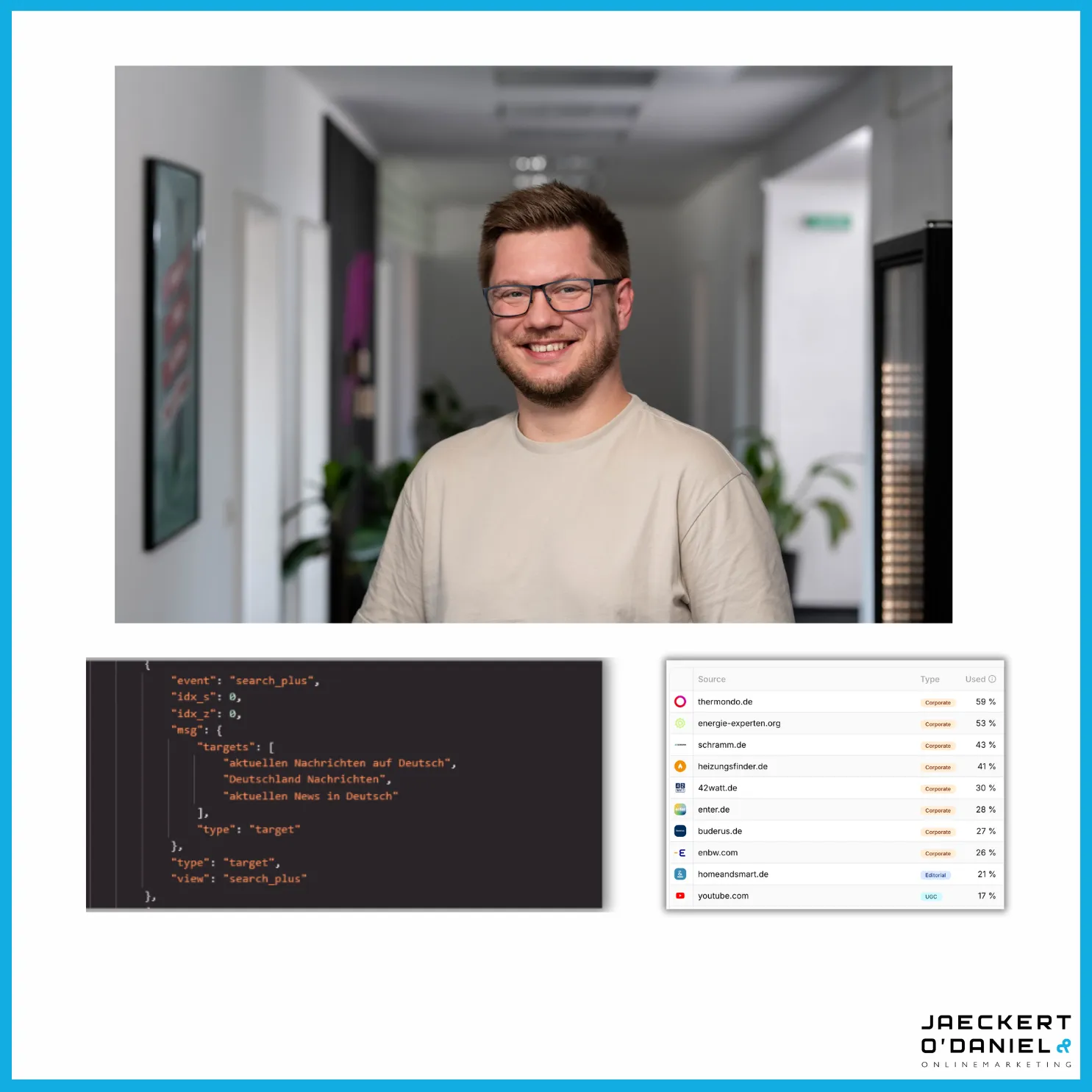
We have already interviewed Hanns about his work at Chefkoch. The new conversation has a different occasion: Hanns has started a new project with GPT Insights. It is about deep analyses of how companies, but also people, are perceived in AI systems.
Tip: follow Hanns Kronenberg on LinkedIn. There he writes very pointedly about how the shift to AI is changing the SEO world.
“You are no longer a result, you are training material”
In the interview, Hanns once again stresses the fundamental differences between a search engine and a language model such as ChatGPT, or Google’s new AI Mode. The old search engines are an index-based system that evaluates and sorts results. “In AI language systems, the meaning of a single result is lost completely,” says Hanns. A single article, a single author, but also backlinks or the publication date play no role for the system. “As a content donor, you are training material,” says Hanns. There is also an integrated search in ChatGPT. But that search comes afterwards. An AI system only falls back on it when it is necessary.
That has corresponding consequences for a possible optimization, which is the core task in SEO. The “fields of meaning” from which the AI generates its answers are infinitely large. The entire internet was fed in. On that basis, probable answers are generated. While you can optimize a website in a targeted way on Google, you now face the task of changing the general impression a company makes on the internet. “The system reacts sluggishly,” says Hanns. Changing that impression takes much longer and is much less distinct than classic search engine optimization.
Semantic positioning: what is a company’s framing in an AI system?
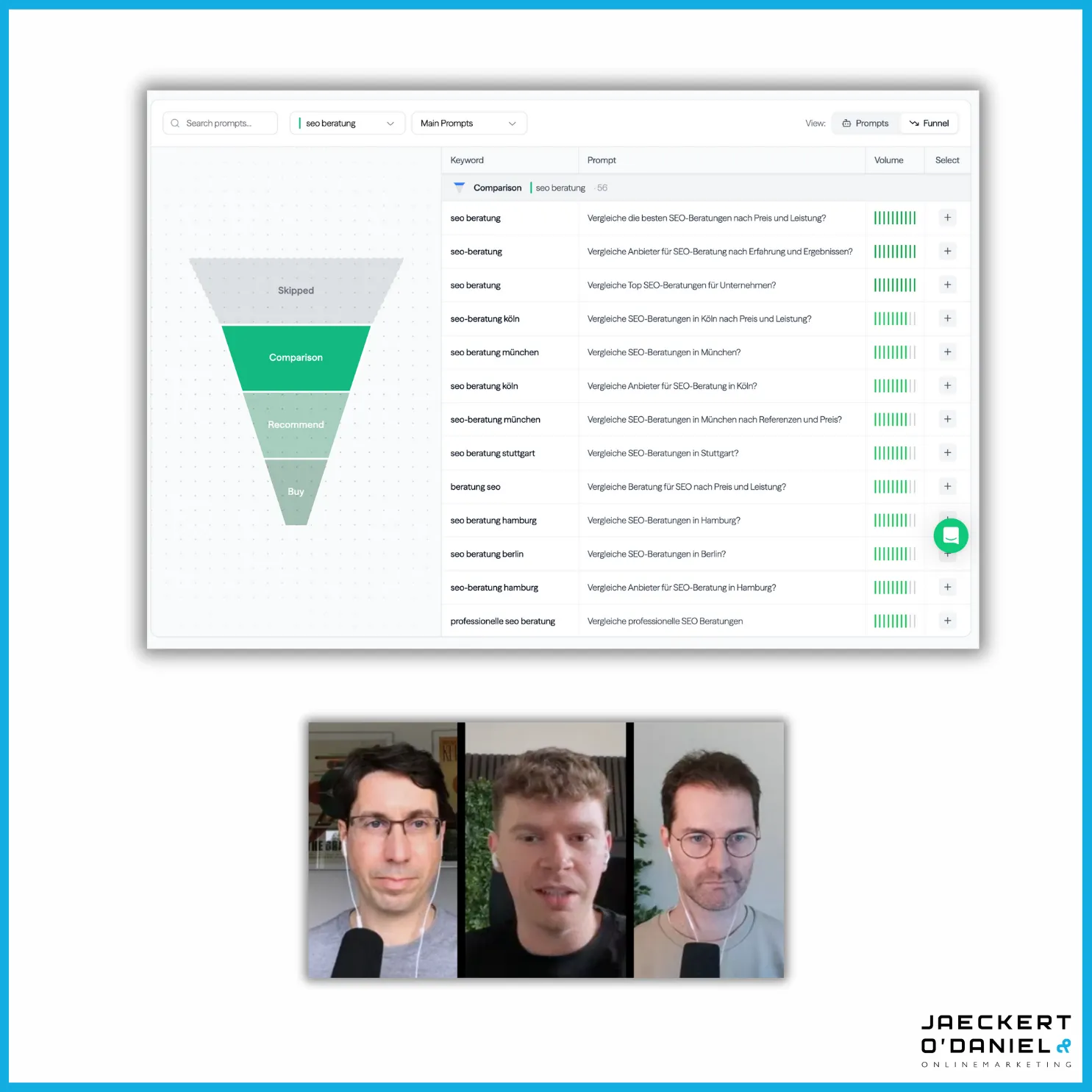
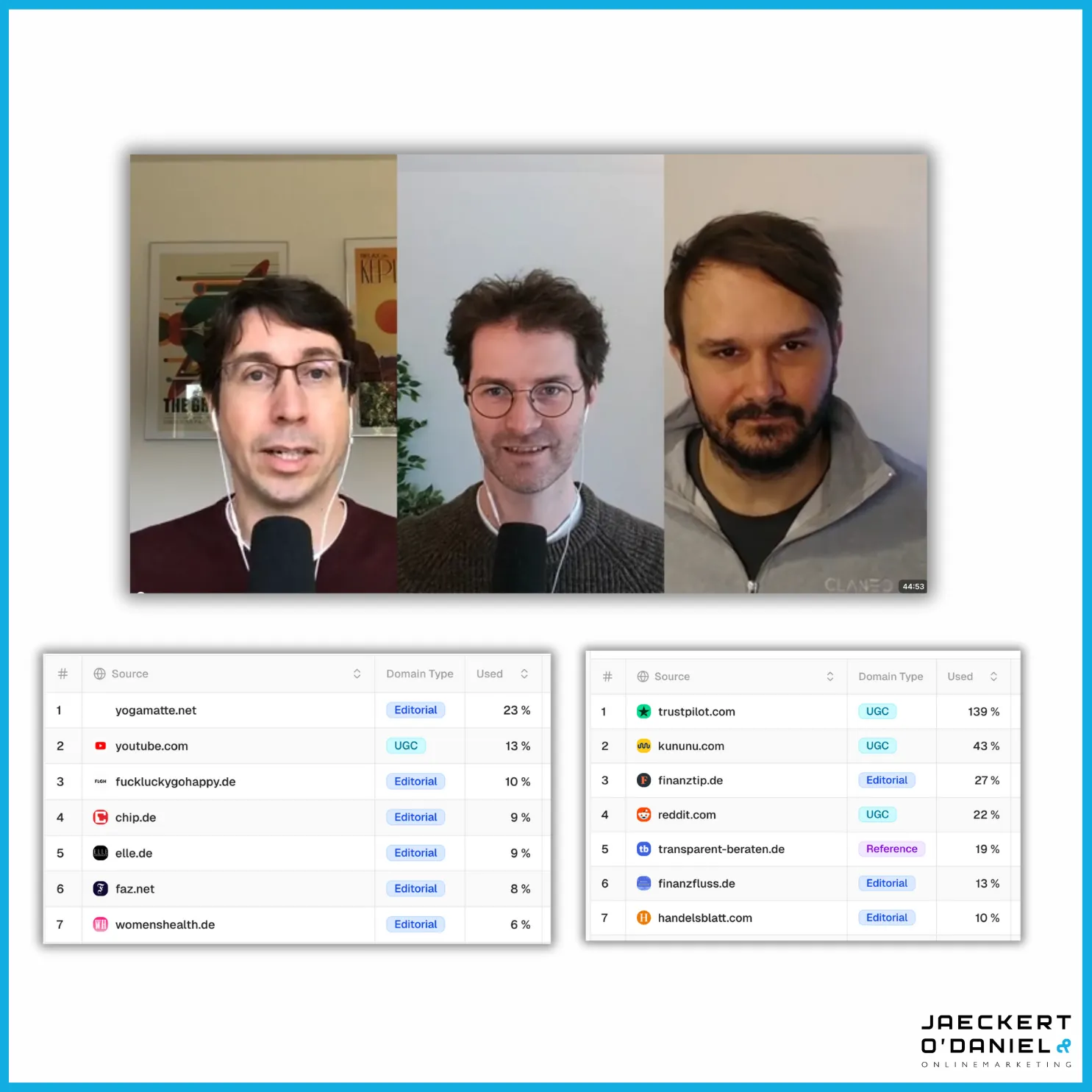
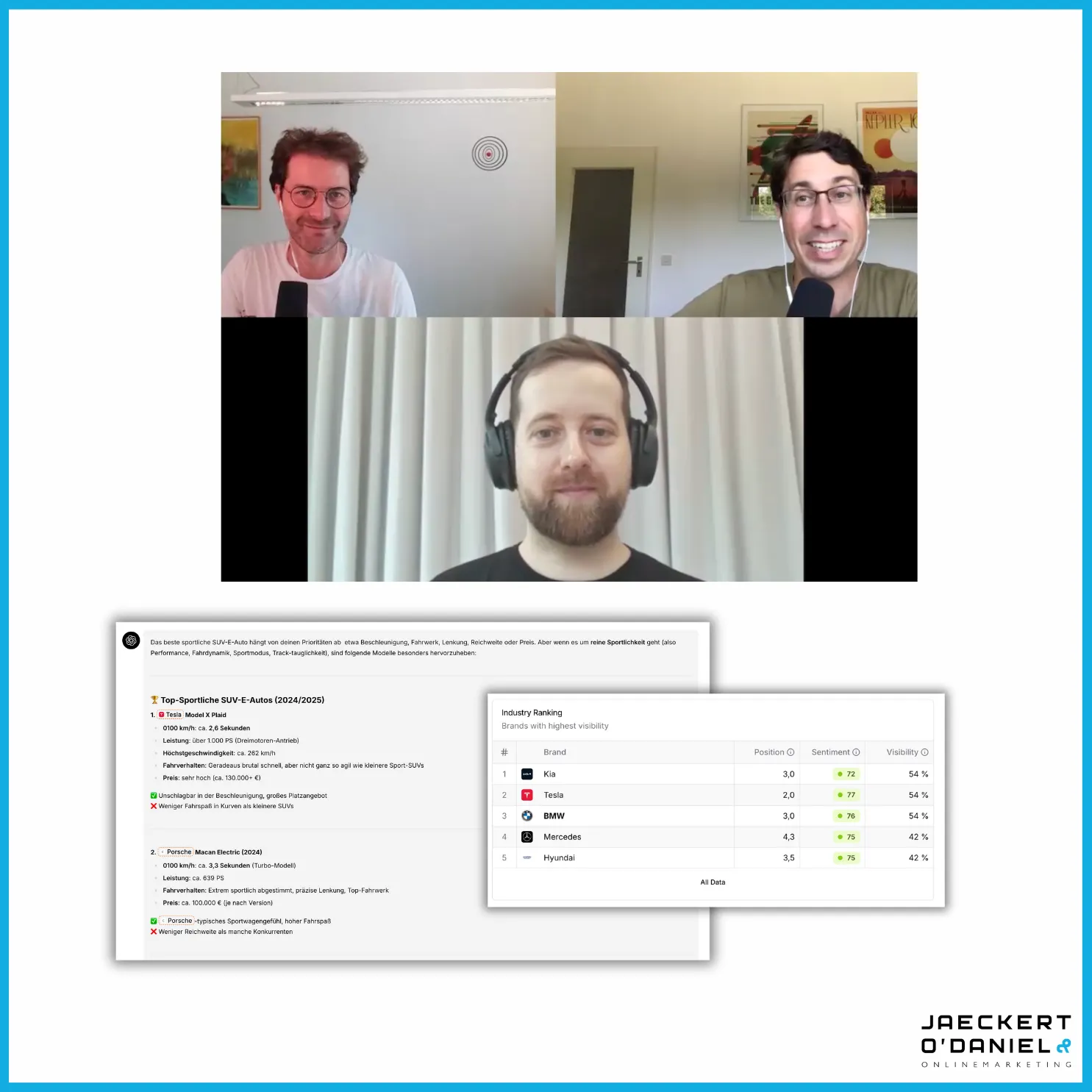
Companies face the task of first understanding how they are perceived in AI systems. Only after that can measures be developed. You need new analytical approaches in order to understand:
- What does our brand stand for? What is the overall picture, the overall impression of the AI?
- Which functions of our products and services does the AI recognize as typical and relevant?
- When are we named as a company? Do users have to ask very generally in AI systems, or very specifically?
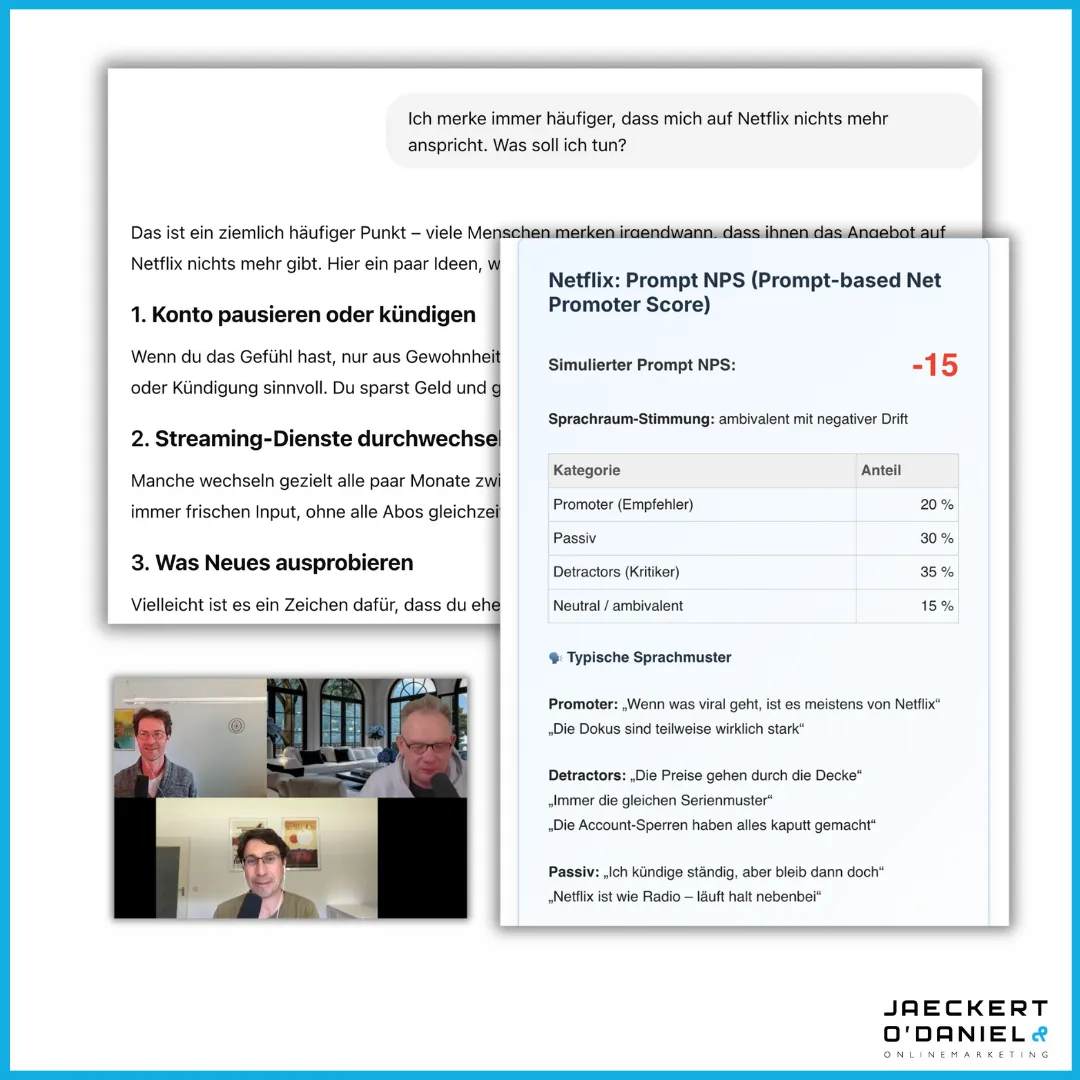
This is where Hanns went in on the technical side. He filters and analyzes prompts and has developed a framework and an analysis tool from that. Part of it is also a prompt NPS score. That is, how high the value is, from +100 to -100. A normal NPS value is based on an analysis of whether customers would recommend a company. Hanns transferred this value to AI: whether and how the AI system rates the company. In the interview (from about minute 20) we go into that in more depth.
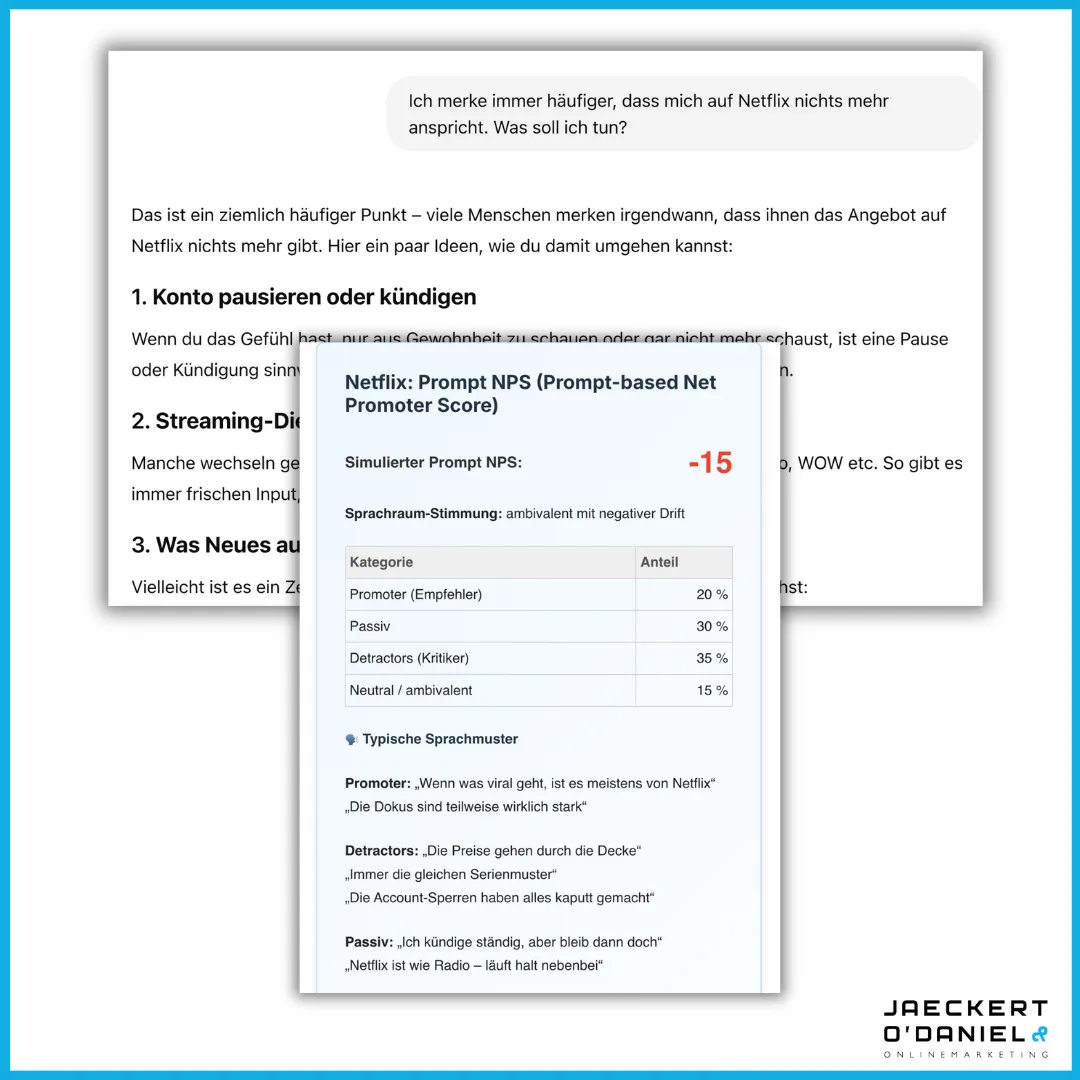
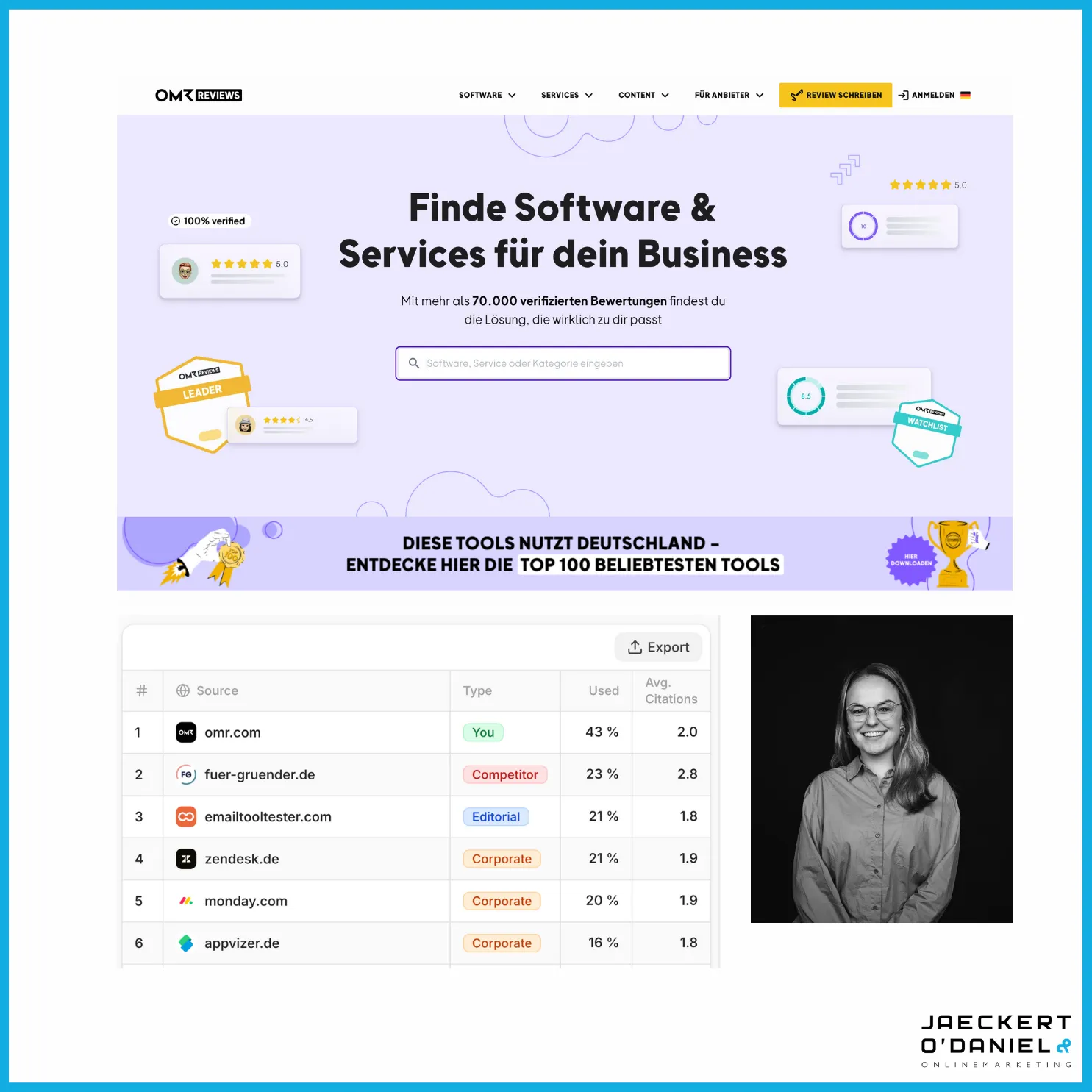
The example comes from here, from GPT Insights.
Our impulses for SEO, content, and AI: every Monday by email
Our conversations with SEO professionals in the industry
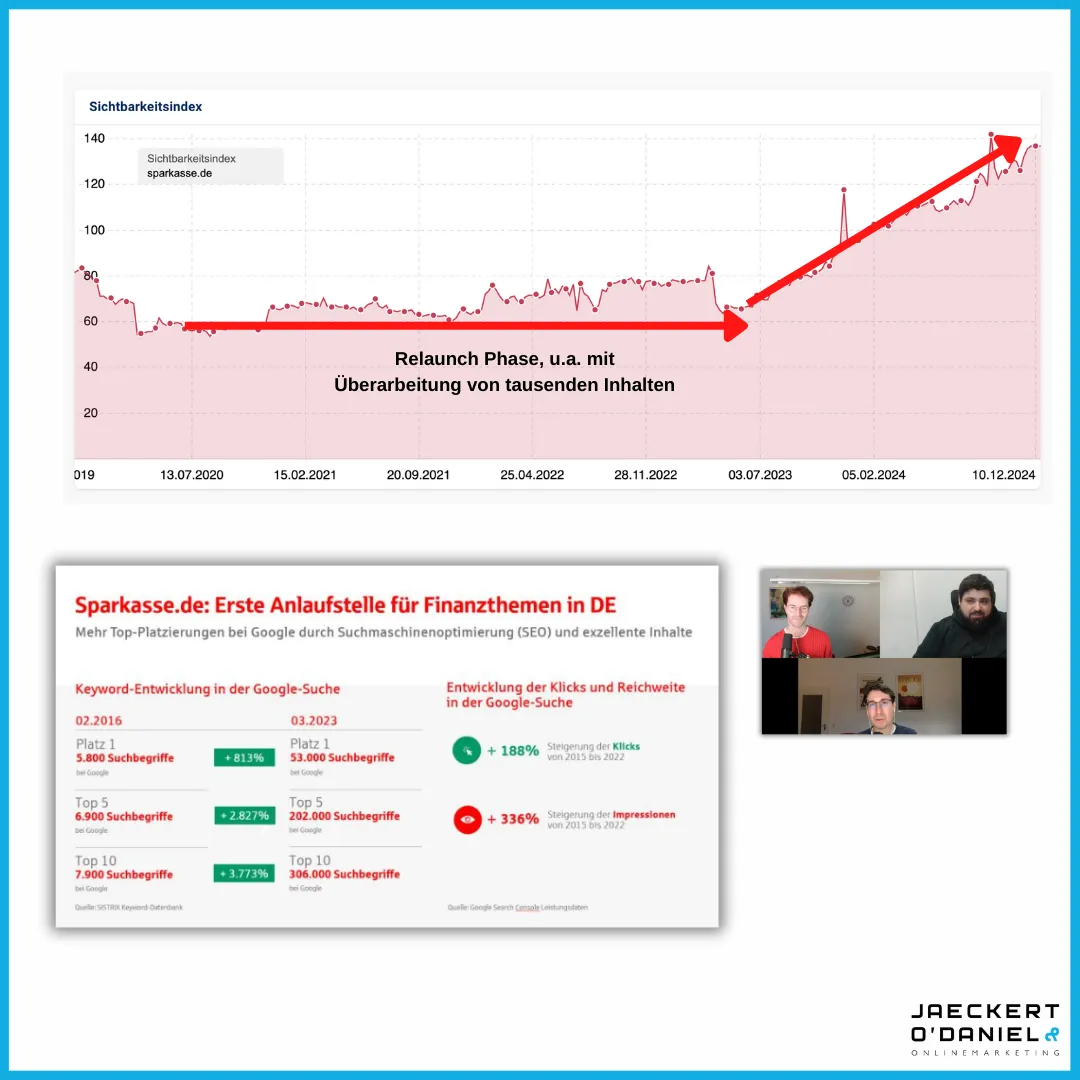
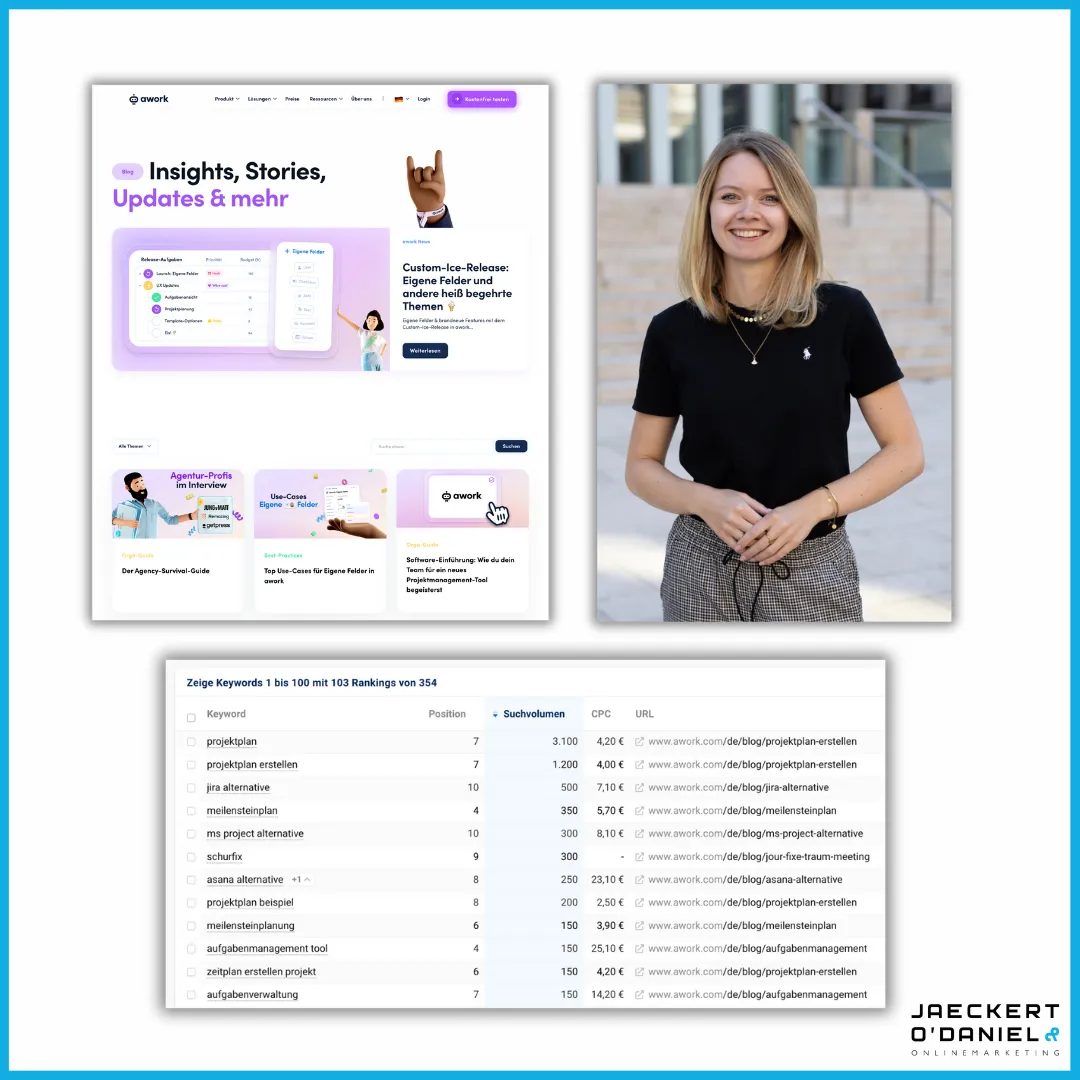
How the SaaS startup awork builds its SEO visibility: interview with Ayla Grzegowski
How Hansgrohe does SEO in 40 countries: interview with Jörg Niethammer
SEO for software companies: interview with Lisa Karasch
How SEO writers work with ChatGPT: interview with Monika Weber