

“Where can I, as a brand, take place on external platforms?” We discuss this with Matthäus Michalik, because AI systems often access external sources from the internet. What are these sources and what opportunities do companies have to influence them?
Matthäus is a well-established figure in the SEO industry and is intensively involved with Generative Engine Optimization (GEO). Source optimization is a new interface topic between off-page SEO, digital PR, affiliate marketing and own content marketing.
“There are voices that say that GEO is ultimately just SEO – only repackaged. But we see strong differences here,” he says right at the beginning. From there, we talk about source optimization, but also about prompt research, the tool landscape, organizational challenges and much more.


Our guest: Matthäus Michalik
Matthäus Michalik is co-founder and managing director of Claneo. The online marketing agency has around 80 employees and is based in Berlin. Matthäus has been a speaker at SEO conferences for many years. Anyone who speaks to him immediately notices: Matthäus is passionate about his topics and the AI revolution. With his team, he sets up his own tests and speaks at conferences about successful digital PR campaigns, among other things.
Claneo is one of the agencies that openly enter the new field of AI optimization – even though so much is still unclear. This is not a matter of course, because in the industry many experienced SEO colleagues regard the new field of Generative Engine Optimization as hype.

Offpage SEO vs. AI Source Optimization
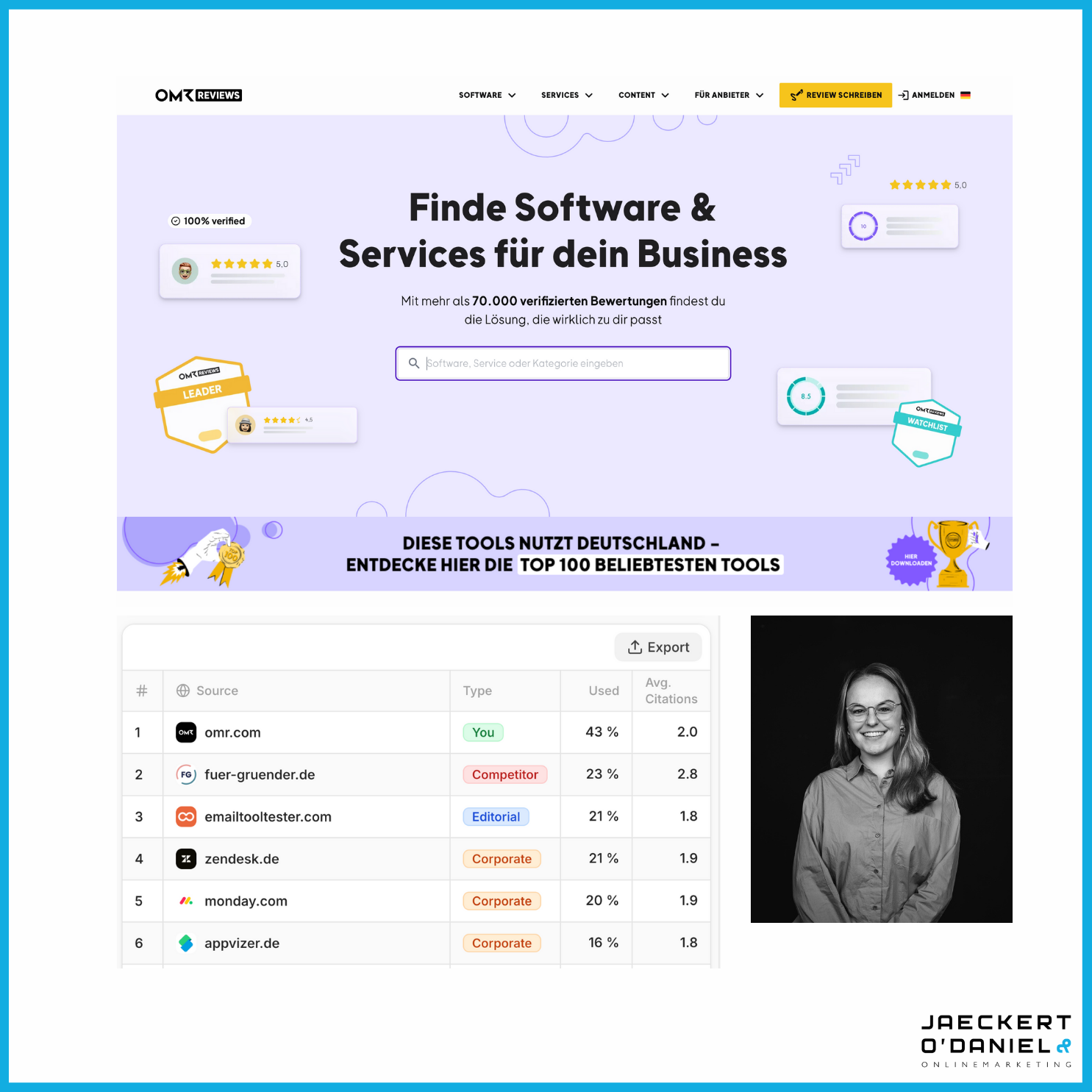
What sources are used by AI systems?
AI systems use very different sources in grounding. These include:
- Journalistic articles from media
- Comparison portals and info portals
- Affiliate articles from blogs and publishers
- YouTube channels from creators and publishers
- Forum discussions on Reddit
- LinkedIn articles and postings
- Review platforms such as Trustpilot
Every company and every project has its own profile here. In AI monitoring, the individual composition is systematically recorded and analyzed. General recommendations such as “You have to do more Reddit” are useless. It’s about developing a tailor-made strategy.
The subsequent measures are an interface discipline between PR, media, SEO, social. Who should take care of it is often unclear. We discussed the organizational challenges here: “Who takes care of AI sources?”
A related approach is to create new sources or citations yourself through digital PR. This could be your own surveys and studies, for example, for which you send out press releases. In a successful scenario, this in turn leads to mentions in the media. The contacts you make are complementary to those you need for AI source optimization, because AI systems often tap into websites from industry media. YouTube, Reddit and LinkedIn, on the other hand, fall more into the social media category.

In this Academy Workshop we analyzed a specific example from the B2B sector for an hour and derived recommendations for action.
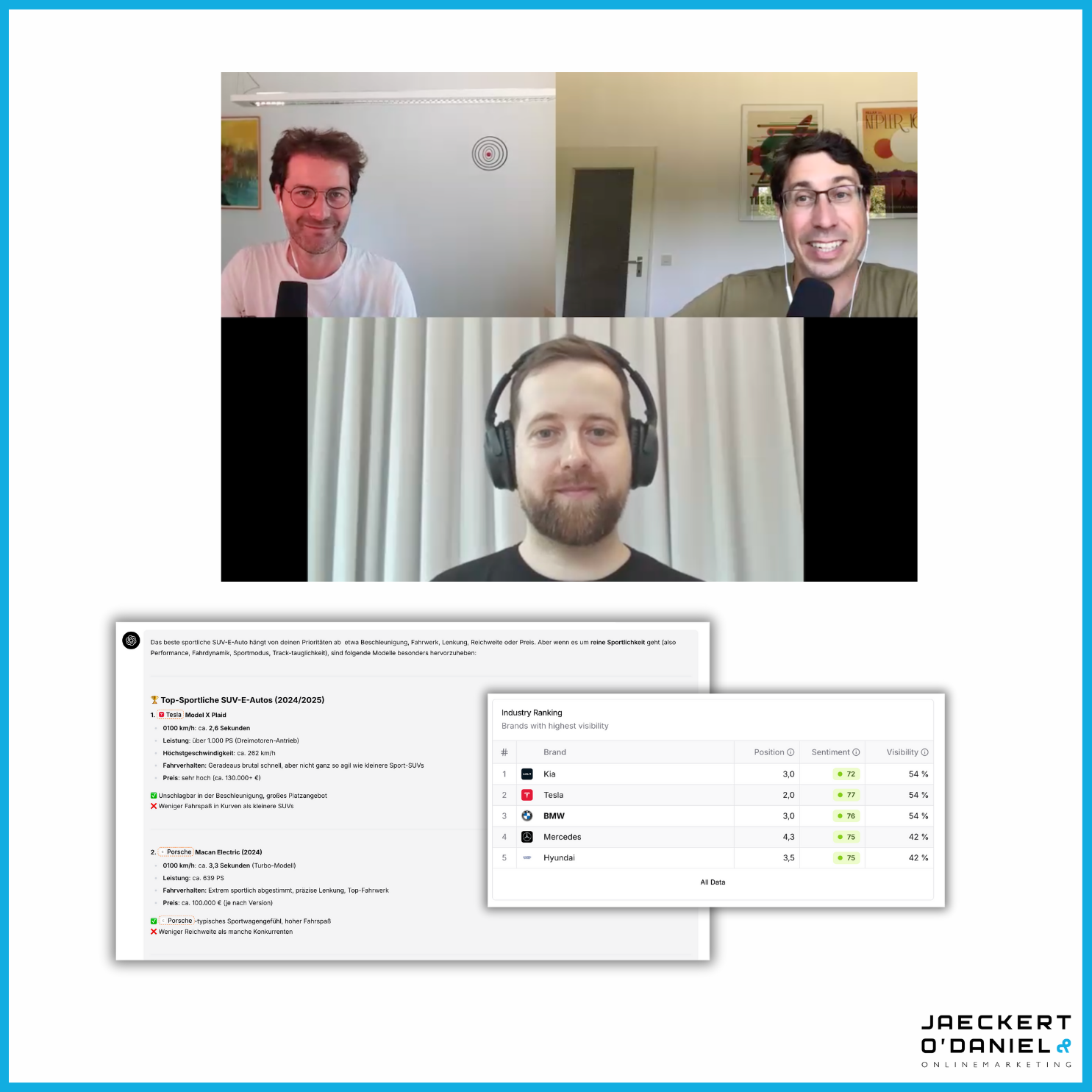
Data problems of the new AI monitoring tools
In the interview, Fabian Jaeckert and Benjamin O’Daniel and Matthäus Michalik discuss many other relevant aspects of GEO (Generative Engine Optimization). An important point: The data problems of the new AI monitoring tools.
Simply put, the tools query the prompts in ChatGPT and read the answer. But ChatGPT cannot simply be “read out” by the external tools. After several queries, there is a downgrade. Then ChatGPT jumps back to a basic version (4.o). In this basic version, there is no more grounding, i.e. no more sources are output. Also, brands are often no longer recommended. Instead, there is only a short answer or counter-questions. However, these unusable AI answers are in turn read out by the tools and automatically fed into the monitoring.
The most important AI platform in the world is only read out in a rudimentary way. This only partially reflects reality, because many users are logged in and already receive better results from the newer models. There is an imbalance in the sources in the AI monitoring tools. Perplexity, for example, is much more prominent in the sources than in the user market share.
Reading tip: LinkedIn posting by Matthäus and the discussion about it in the comments
Other topics we talk about:
- How can prompts be monitored cost-effectively?
- What role does content freshness play for AI citations?
- What relevance do advertorials have for the future in AI visibility?
- Is the “best” approach permanently valid?
- What are the weaknesses of current studies?
- What successes do gray hat methods like prompt injection have?
Free GEO Online Training
- Current Developments in AI Visibility
- From SEO to GEO
- How to Optimize for AI Systems

Our Conversations with SEO and GEO Professionals


Deepen your GEO Knowledge: Every Monday via Email
We Advise Marketing Managers on SEO & GEO
For anyone seeking an SEO sparring partner or comprehensive SEO consulting, Fabian and Benjamin are the perfect choice. As an in-house SEO expert, I sought competent SEO support and found it with them. During a very pleasant introductory meeting, we jointly developed an approach to establish SEO among the individual stakeholders and thereby gain more internal visibility for the subject. Based on this initial discussion and a joint kick-off with the stakeholders, they developed a sound SEO and content strategy for a product area. Since then, they have both supported me as sparring partners during implementation.
The collaboration with Fabian and Benjamin is a great pleasure for me and all project participants, as they are masters of their craft and bring immense passion for SEO. This combination is infectious and motivates everyone to achieve peak performance.

I look back with great satisfaction on the SEO project that we carried out with Benjamin and Fabian. Firstly, the collaboration was on a very pleasant, goal-oriented level. Secondly, the consultation was structured in such a way that we could immediately start with the implementation. We received very concrete optimization suggestions that were tailored to our internal capacities and therefore realistically implementable. Even though only a few months have passed, we can already see the first results of our work in the Google rankings. Traffic for our relevant keywords is steadily increasing, and we still have enough concrete work packages from Benjamin in the pipeline to boost our site. Furthermore, through the consultation, we have acquired so much internal SEO know-how that we can now optimize our site independently. And most importantly: Visitor numbers have doubled – with correspondingly positive effects on sales.