November 4, 2024Fabian Jaeckert
We Analyzed the Footers of the 100 Most Visible Websites in Germany. Here Is What We Found
Every website has one, and almost every person responsible for SEO asks themselves whether they want to work with it: we are talking about the website footer.
But how do SEO managers work with the website footer in concrete terms? How do they use the so-called footer line for search engine optimization? We investigated that in a study.
We examined the top 100 of the most visible websites in Germany. We called up every single website and analyzed the footer, with a view to whether and how SEO is done there.
Here we summarize the central findings. In an Academy workshop we discuss in depth the various SEO strategies we discovered in the course of the analysis.
What is a website footer?
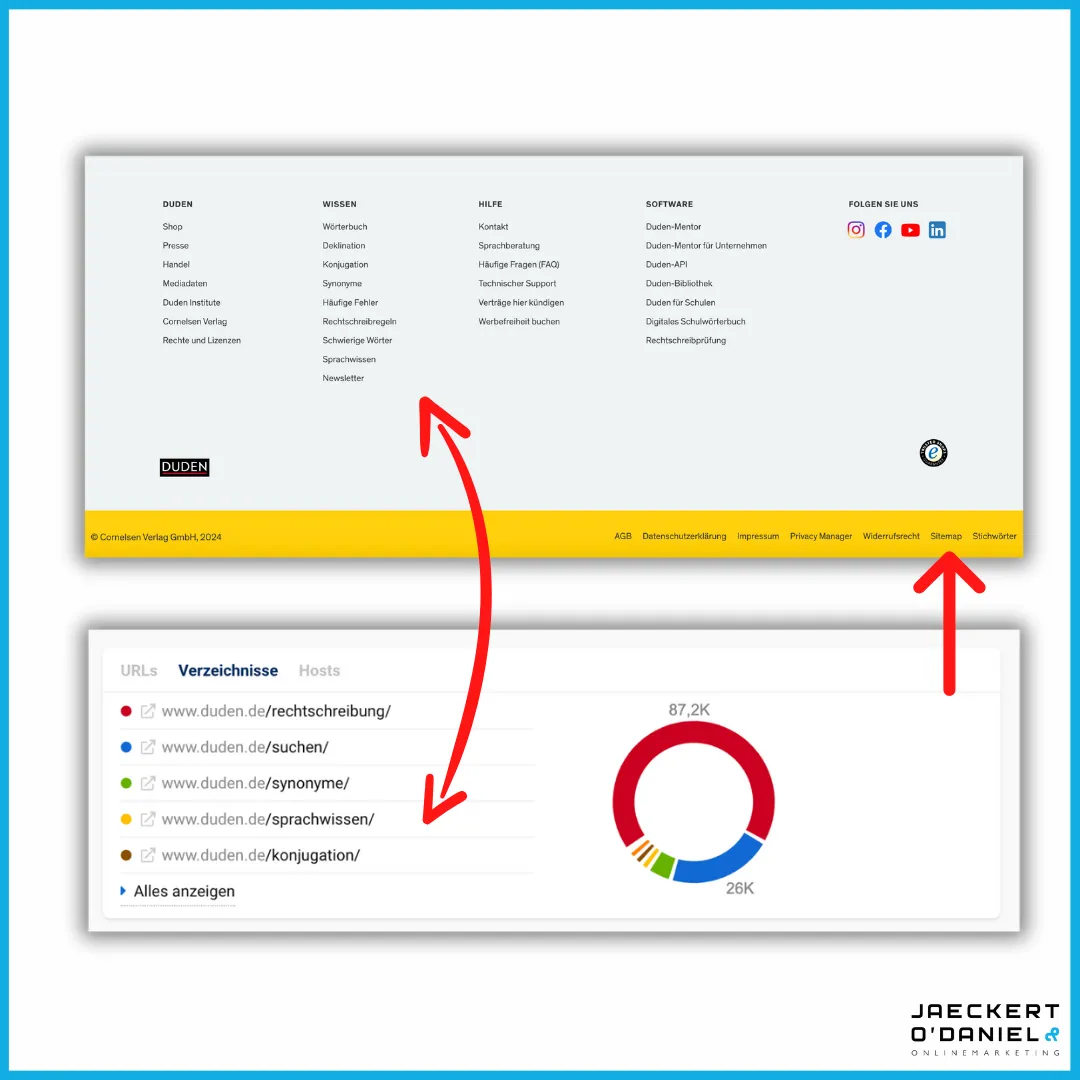
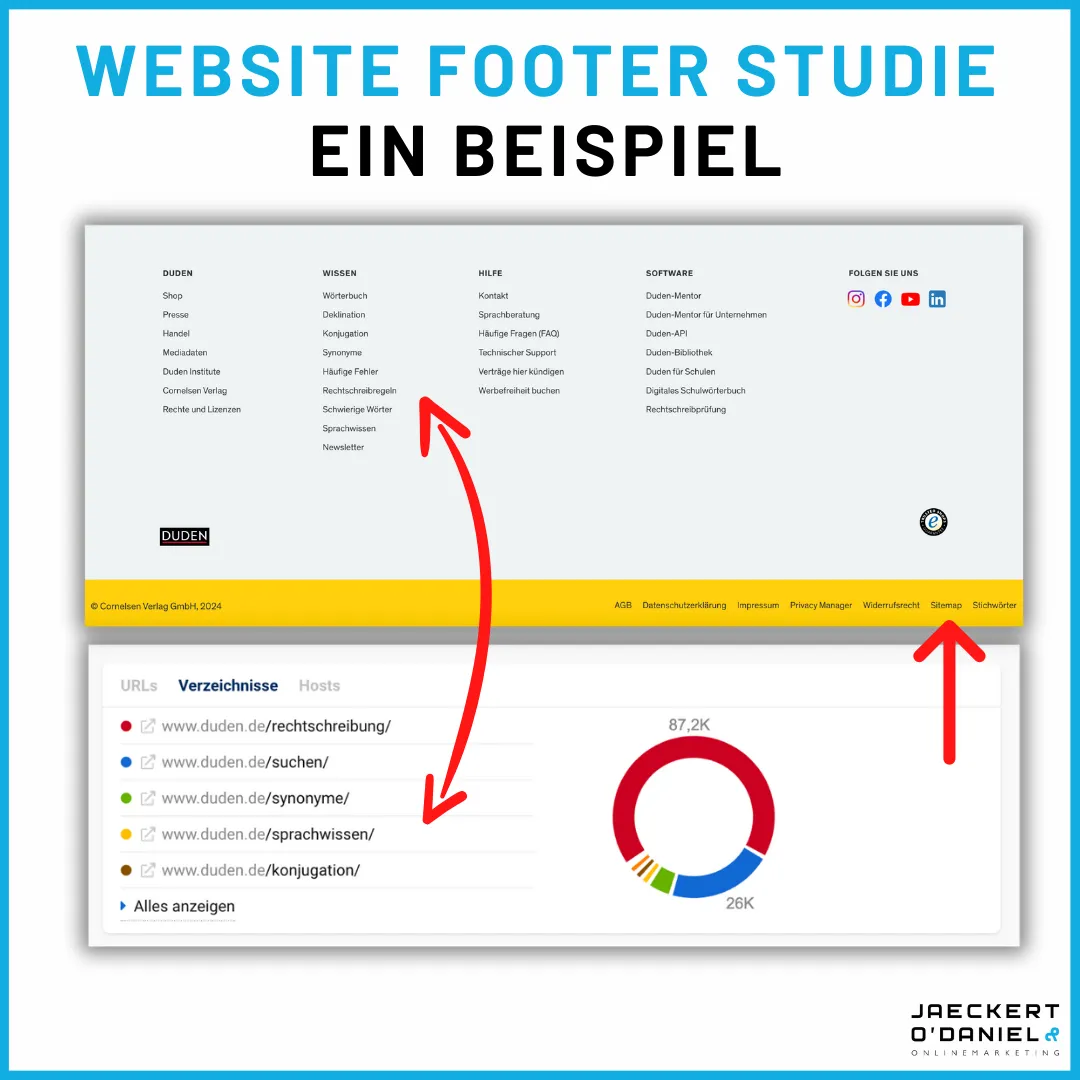
A website footer is the so-called footer line of a website. It forms the lowest area and thus the close of the page. The footer is shown on every individual page (URL).
The footer is often used for SEO as well. The background: a single URL that is linked internally often receives more “SEO power”, or is rated as more relevant by the algorithm. If a URL is linked from the footer, it is visible on every individual page and accordingly receives a great many internal links.
Crawling can also be supported by a link in the footer. Google gets a great many points of connection through it, in order to find a single URL or a directory.
That, at least, is the pure SEO doctrine. But there are also numerous SEO experts who question the effect of the footer for SEO. That is why we were interested in how the most visible companies work with the footer.
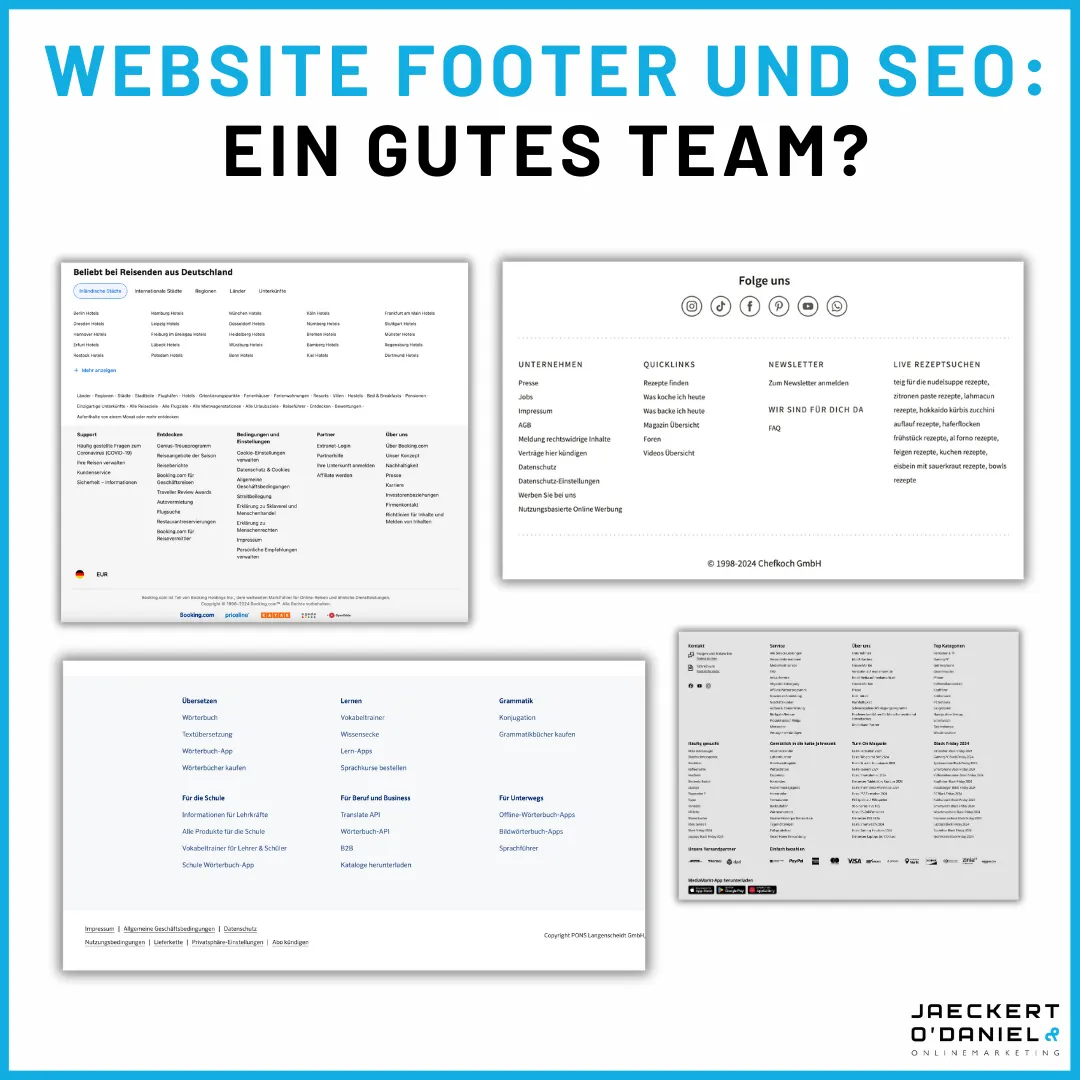
Examples of website footers
Our study on website footers and SEO
For our study on website footers, we took the 100 top domains from Germany with the greatest SEO visibility in the SEO suite Sistrix, which are stored there as a list.
We then opened every website and looked at which elements recur. We then counted and categorized the links in the footer. On the one hand there are purely functional links such as the legal notice, terms and conditions, or about us. On the other hand there are internal links with an SEO focus, for example to certain URLs that are tied to ranking goals. We carried out the classification on the basis of our experience and, in case of doubt, checked it in SEO tools.
What became clear: there are often several sections or elements that the website footer consists of. The elements are also frequently changed or adapted, for example on the homepage and in categories. There is almost never “the one footer”.
We discuss the best SEO footer strategies and approaches in an Academy workshop.
3 findings from our website footer study
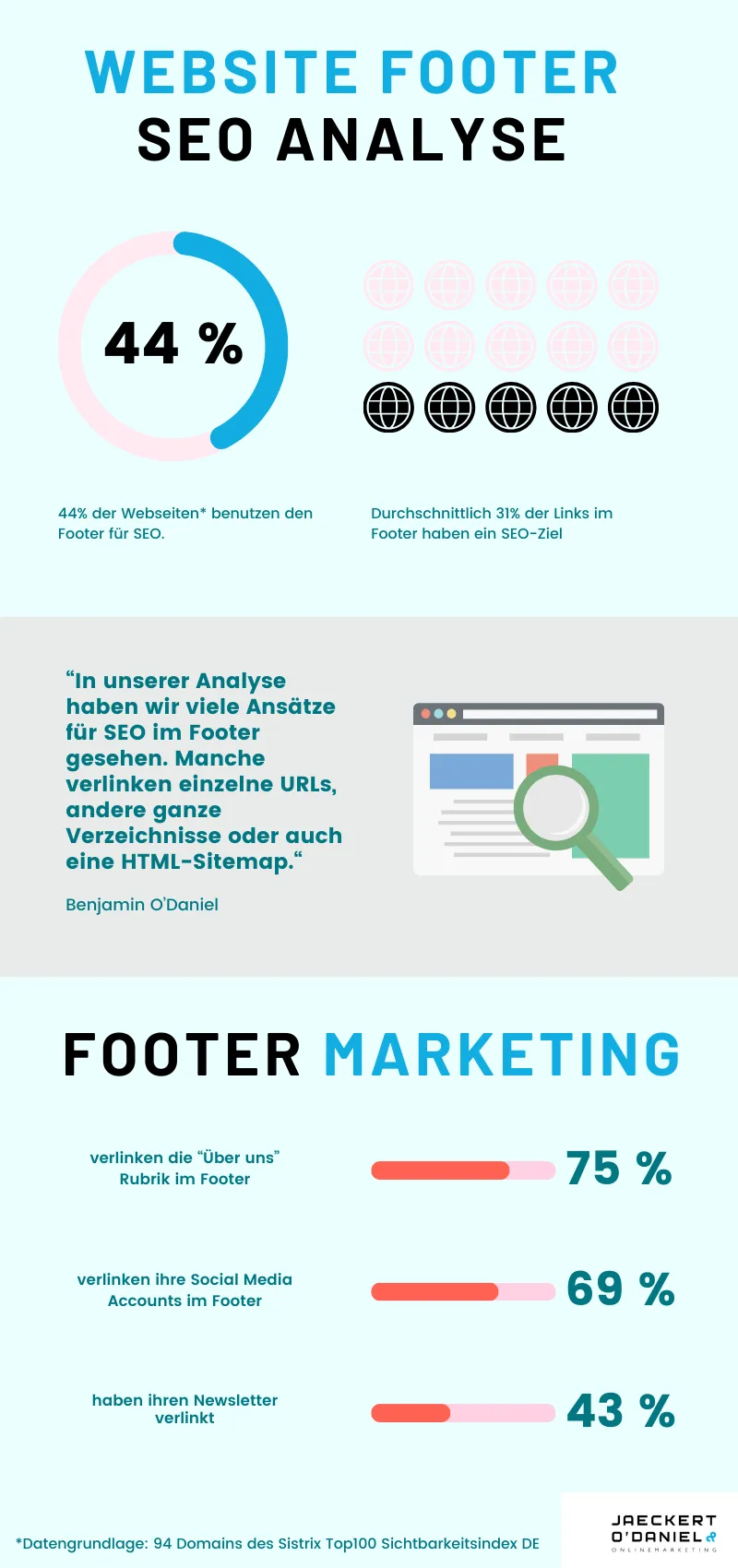
44% of websites use the footer for SEO
By no means every website that has high SEO visibility also uses the footer for SEO. On 66% of the websites analyzed we did not recognize any SEO measures in the footer. That means: the people responsible there apparently do not place greater value on the footer as an SEO instrument. Whether consciously or unconsciously, we cannot judge. But it is also a fact: 44% use the footer for SEO. And in very different ways.
A variety of SEO approaches are visible
In our analysis we saw very different approaches to SEO in the footer. Some link individual URLs, others whole directories, or the sitemap as well. Some websites work with dynamic internal links that change live. Others use changing elements above the core footer. The share of SEO links among the links in the footer overall is also very different: the range runs from 3% to 90%.
Marketing as a whole uses the footer
A further finding of our study: marketing as a whole uses the footer for its channels. 75% have an “about us” section once more, in which company information is linked. 69% link their social media accounts. 43% have linked their newsletter. What you see here: the footer seems to be interesting not only for the people responsible for SEO. You want to offer users something at the end of the website and keep them if possible.
We analyze footer SEO strategies in our Academy
In our Academy workshop on Friday, November 15, we go into depth. We show various systems by which the footer is used for SEO. In doing so we look at websites from very different areas, from online shops to brands to platforms. That way, different strategies and approaches become visible.
The Academy workshop lasts about one hour, as always. We share our screen and discuss with the participants. Anyone who gets access can use all the content immediately, both the upcoming workshops and all recordings of earlier workshops.
To the Academy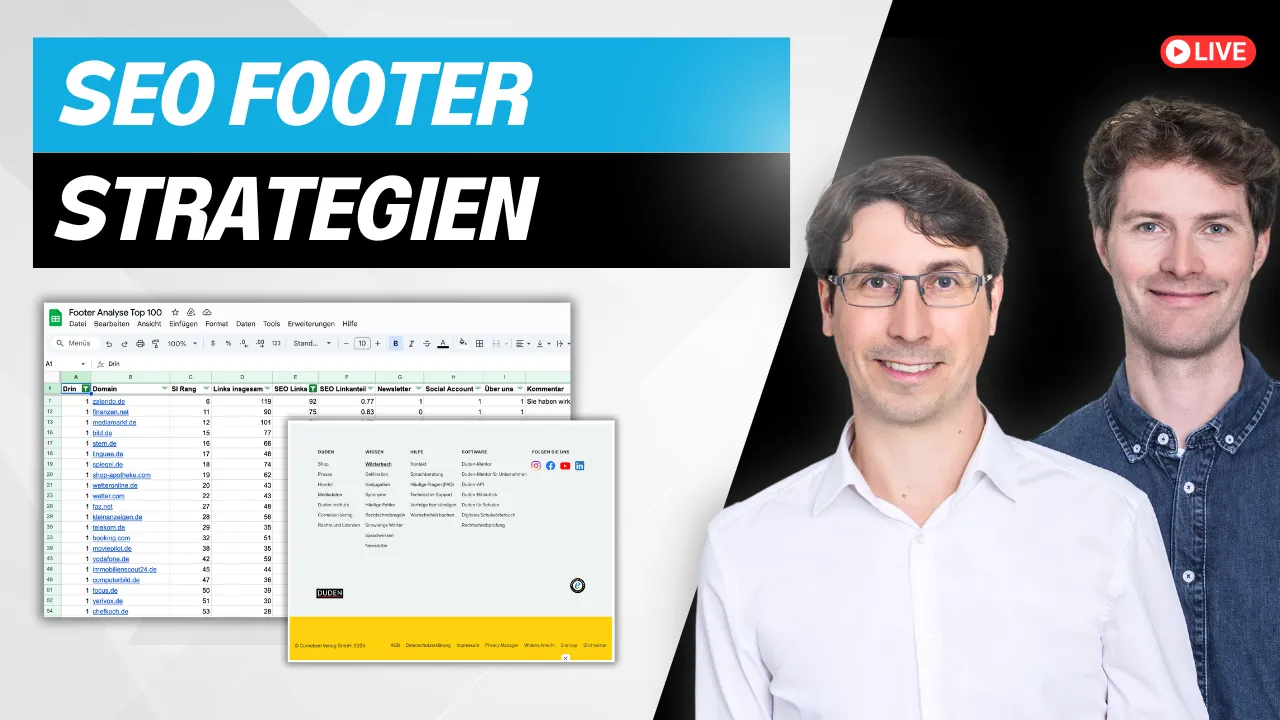
Deepen your SEO knowledge: every Monday by email

Our conversations with SEO professionals in the industry

SEO Quality Assurance: How to Protect Your Rankings. Interview with Gianna Brachetti-Truskawa

How Südwestrundfunk (SWR) Works on Search Experience: Interview with Sarah Stein

SEO as a Growth Strategy: Interview with Kevin Indig

SEO for a Software Company: Interview with Beat Köck

What Does an Online Shop Need to Rank Successfully? Interview with Stefan Vorwerk
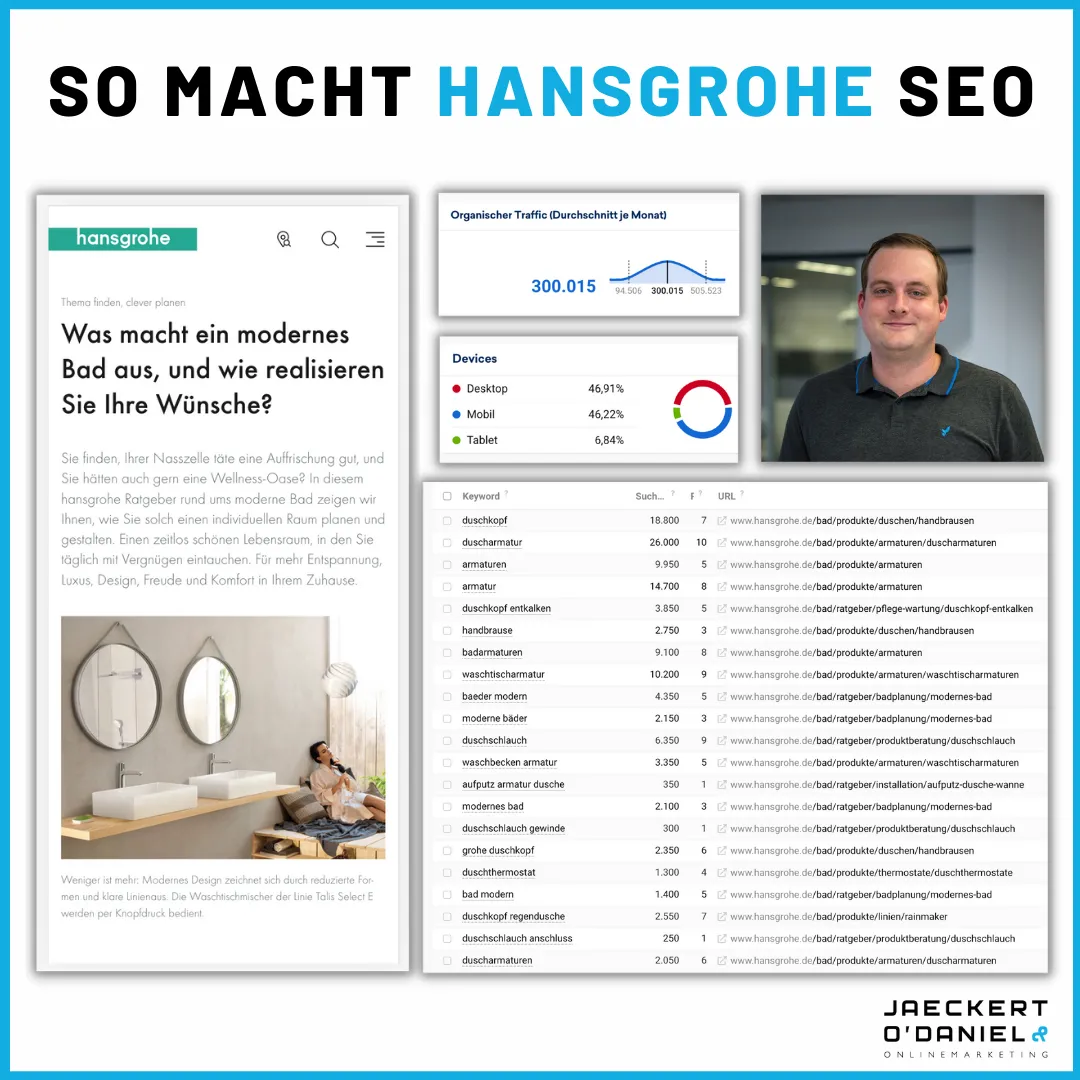
How Hansgrohe Does SEO in 40 Countries: Interview with Jörg Niethammer
The SEO Strategy of Hubspot: Interview with Jenny Lapp

How User Testing Works: Interview with Astrid Kramer on UX and SEO