February 28, 2022Fabian Jaeckert
How Hansgrohe Does SEO in 40 Countries: Interview with Jörg Niethammer
Many premium manufacturers invest in their website, and they connect that with professional search engine optimization. That is how they build reach and awareness.
One example is Hansgrohe. The long-established and well-known manufacturer of sanitary products such as fittings, thermostats, showers, and bathroom accessories has more than 5,000 employees and is active in more than 40 countries.
Jörg Niethammer was Global SEO and SEA Manager at Hansgrohe. Organizationally he sat at headquarters in the digital marketing department. He worked very closely with the product owners and with engineering.
In the interview he tells us why Hansgrohe invests in SEO, how you steer more than 40 country-specific domains, what the content processes inside the company look like, and how you align SEO and Google Ads with each other.
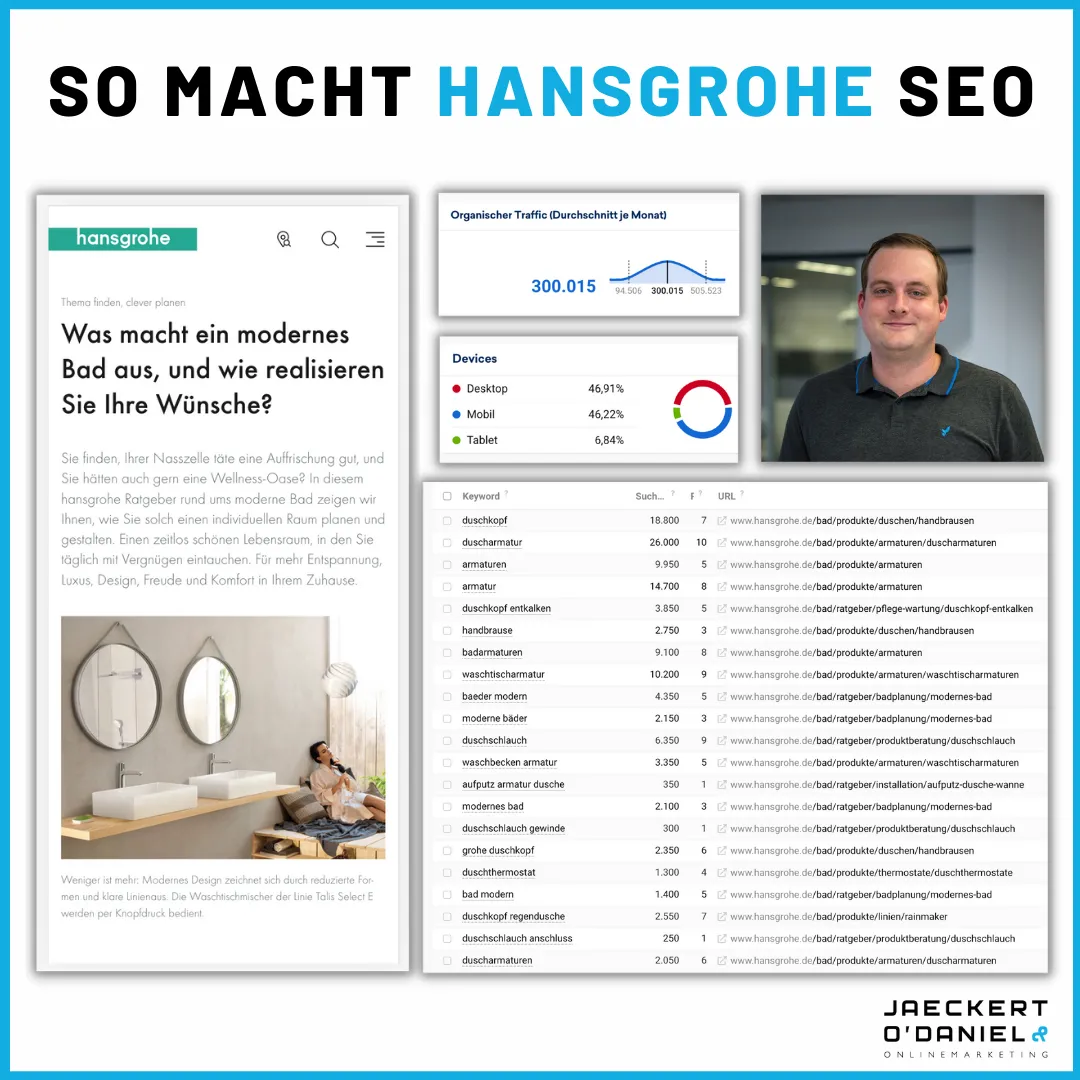
About Jörg Niethammer
Jörg Niethammer is Senior Search Experience Manager at the fashion brand mey.
Before that he was responsible for SEO at Hansgrohe for 5 years. There he worked in the digital marketing department with 15 people. Added to that were further colleagues at the individual brands and in engineering, who also work on the website and supply material.
Before his job at Hansgrohe, Jörg gathered experience in the agency world and was team lead SEO at Onlinesolutions Group.
On LinkedIn and on his website “SEO Diary”, Jörg regularly shares findings and experience from practical work.

Overview: Hansgrohe’s Google rankings
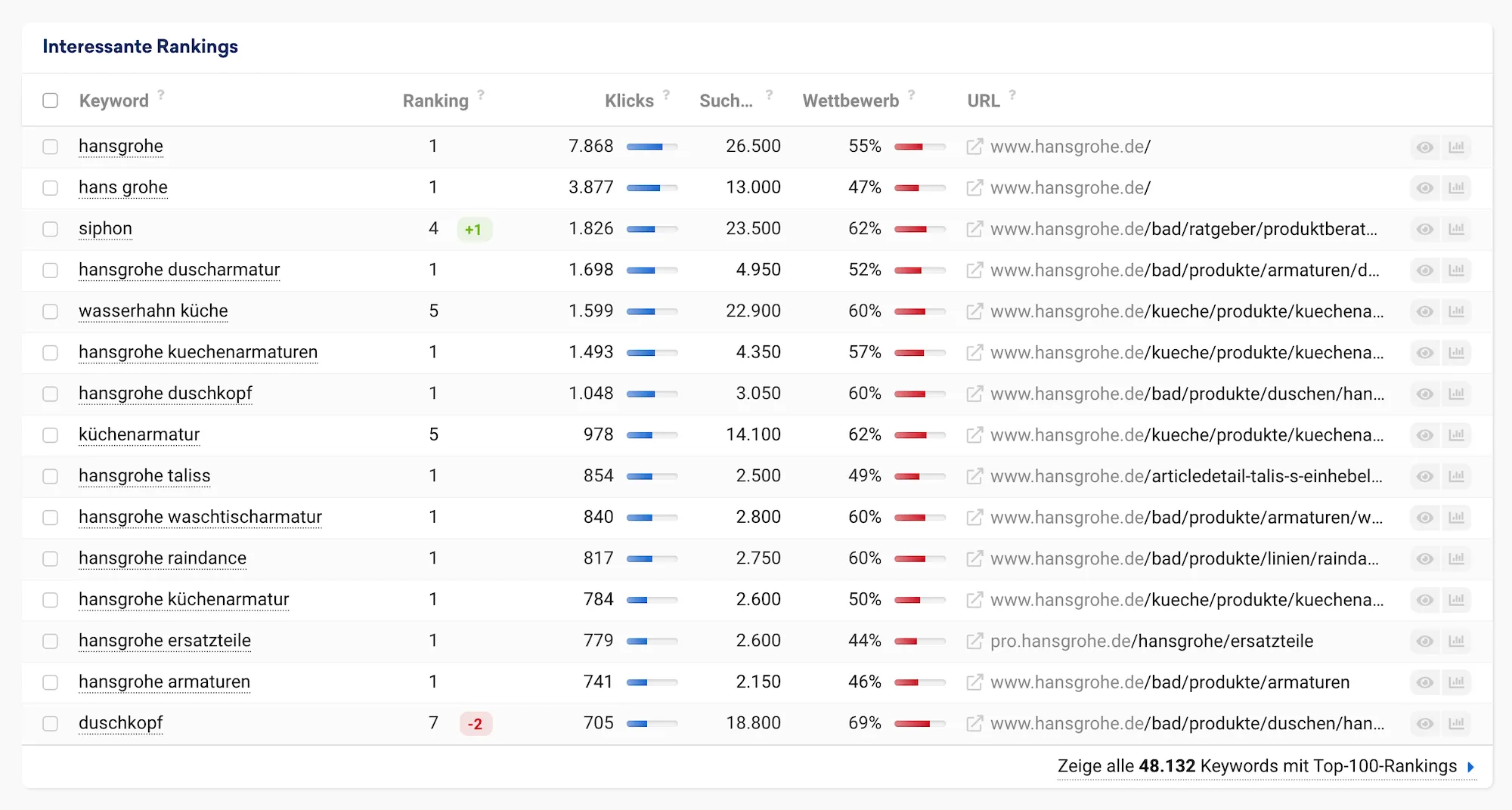
The rankings show very clearly what happens when a brand company invests in SEO. Hansgrohe ranks at the top both for brand terms such as “Hansgrohe Duscharmatur” and for generic terms such as “Siphon” or “Duschkopf”. For the latter terms, users do not yet have a specific manufacturer in mind. Here the company builds visibility and brand awareness. Chart: Sistrix
Deepen your SEO knowledge: every Monday by email
Three topics we discuss with Jörg Niethammer
What do rankings do for a B2B company?
In many countries Hansgrohe does not sell its products directly to end customers. It works with tradespeople. The reason is grown distribution structures. Even so, it targets keywords that also have a B2C background, for example “Siphon”. “You do not just buy our products on a whim. So what matters to us is being visible as a renowned manufacturer, inspiring people, and informing them as part of the customer journey,” Jörg says in the conversation.
Who creates the content?
Hansgrohe has both internal and external content producers. “We work with a small number of external writers, but then often over many years, so that they know our brand DNA very well and can also put it into practice,” Jörg says. Translations are mostly done externally. Product pages, too, are partly created in cooperation with external partners. Not every piece of content is translated into every language. In some countries the local website is available only in a reduced version.
How does he align Google Ads and SEO?
For Google Ads campaigns, Jörg recommends looking closely at the numbers. He gives an example in which a campaign with generic keywords siphoned off existing SEO traffic. The reason: the website already ranked well for these terms in SEO too. “We did not generate a single extra session.” It is better, for example, to advertise keywords where you rank poorly organically, so that SEA and SEO complement each other. For that, though, you have to own and monitor both disciplines centrally.
Further aspects of our conversation
We also talk with Jörg Niethammer about the following topics:
- How does he split his working time between SEO and SEA?
- How does he rate the chances of brands in SEO?
- Which SEO toolset does he use?
- Which low-hanging fruit is there for anyone working on SEO?

Our conversations with SEO practitioners in the field





SEO case study: how Urlaubsguru works. Interview with Sascha Blank