June 7, 2021Benjamin O’Daniel
How Do You Develop Successful Content Formats?
Every company needs content formats. For SEO, for social, and for content marketing. But what actually makes a successful content format? How do you develop content formats that really take off?
We talk about that in the podcast and on this page.
Often, people simply list typical formats such as blog articles, Insta stories, and YouTube videos. The lists are endless and deliver little.
Because that is only the general “packaging”, and it does not yet make a good content format.
What is a content format?
A content format is a form of presentation in which a piece of content is delivered. Some content formats are used regularly in content marketing. These include the following formats:
- High-quality website texts
- A world of images and graphics on the website for a higher time on page
- White papers for leads
- Newsletters for customer retention
- LinkedIn status updates for engagement
- YouTube videos for reach
- Webinars for sales
- Podcasts for understanding customers
But that is, as described above, only the “packaging”. For a content format to become successful, it needs a content concept, a particular way of making it. That is, how the content is created and distributed, and for whom. Only that makes the content format truly unique and recognizable.
The concept also includes connecting certain marketing goals with the respective format.
The content formats together make up a content portfolio. They can and should be built up step by step, and also optimized.
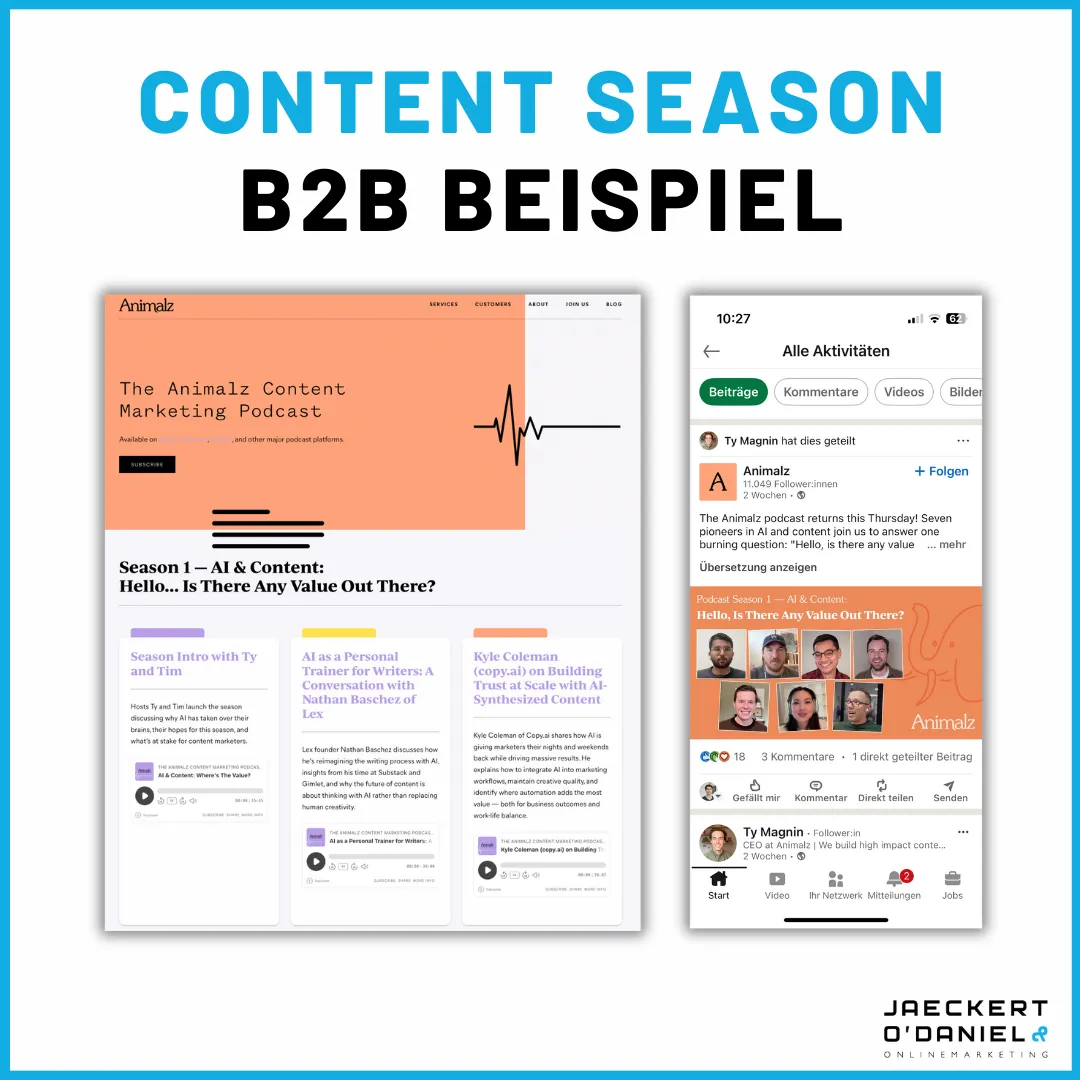
Our podcast is a content format that we have been producing for years according to a particular content approach. We connect it with the goal that people get to know us and understand how we work. On this single topic page here, the podcast is one content format among several formats, or content elements. Embedded in it, we have a short-video strategy, among other things.
Three frequent problems in developing content formats in content marketing
The wrong questions at the start
When marketing leads develop content formats, they often ask the wrong questions at the start. Mostly they are technical detail questions. Example: “Which microphone do we record a podcast with?” Or in SEO: “How do we have to write the H1 headings in guides?” Or on LinkedIn: “When should we post?” Questions like these are of course important. But they are the technical basis. For a successful content format you need a content concept.
Unclear terminology
All sorts of things get packed under content formats. Example: a landing page, a white paper, and a checklist are all called content formats. But if you look more closely, a landing page is a page type on which a white paper can sit, in which a checklist is in turn shown. The formats therefore have a different size and are sometimes nested inside each other. Whether extensive or quickly made: all of them need a content approach.
An endless choice
Which of the endlessly many formats should you bet on now? Because of the lack of clarity, people often chase current hypes. Certain platforms, for example. But every platform has its own content formats, its own culture, and its own competitive situation. Example: a YouTube video is often called a content format. But there are many formats on YouTube. Here too you again need a conceptual approach if you want to run a successful content format on the platform.
A change of perspective: formats in the media industry
When people in the media environment talk about “format development”, it is about the entire way of making and the direction of a show or a magazine.
The creation of the content, the processes, and the style are standardized. Target groups are clearly defined, and so is the benefit for the user (for example entertainment, information, conveying knowledge).
Media formats are treated like products. Their success depends decisively on the concept and on constant quality in delivery. It has to be that way, because the various formats compete for attention.
From our point of view, content formats in content marketing and in SEO should be looked at the same way. They are content products that have to be developed and steered professionally if they are to prevail in the market of the respective platform. Whether that is the Google ranking, a social media platform such as LinkedIn, or a video platform such as YouTube.
Podcast tip: Here a format developer from public broadcasting explains how formats there are extended from TV into social media.
Various people in marketing can take on this task. For example content marketing managers, or online marketing managers, or SEO managers, if they have a good understanding of content.

The picture on the right shows a well-known TV format about startups. We do not have to name the show here. Because every user who is interested in it immediately knows which show it is. One look is enough. Companies should understand the content formats they offer on their website and on platforms the same way. Photo: TVNOW / Bernd-Michael Maurer (source).
When is a content format successful? 7 central questions
Benjamin discussed this question on LinkedIn with our listeners and followers, and received a lot of feedback. You should ask yourself the following guiding questions before you develop a content format:
- Which content formats work well on the platform?
- What do competitors in my field do well, and where are there gaps?
- Which topic areas is my target group interested in?
- On which topics can we really say something?
- Which content format comes easily to us?
- Which goals do we connect with the format?
- Are we prepared to work on it for the long term?
A content format should be treated like a product and looked after professionally. Then it develops into a content asset, that is, a valuable component in a company’s content marketing mix.
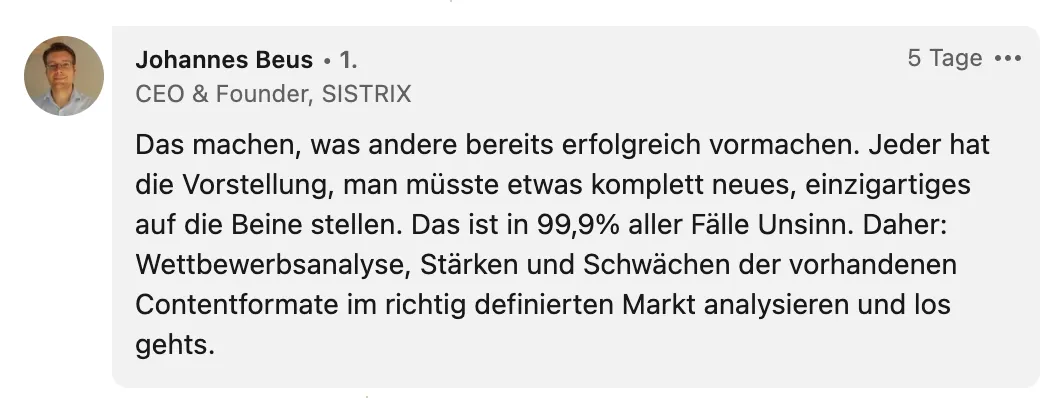
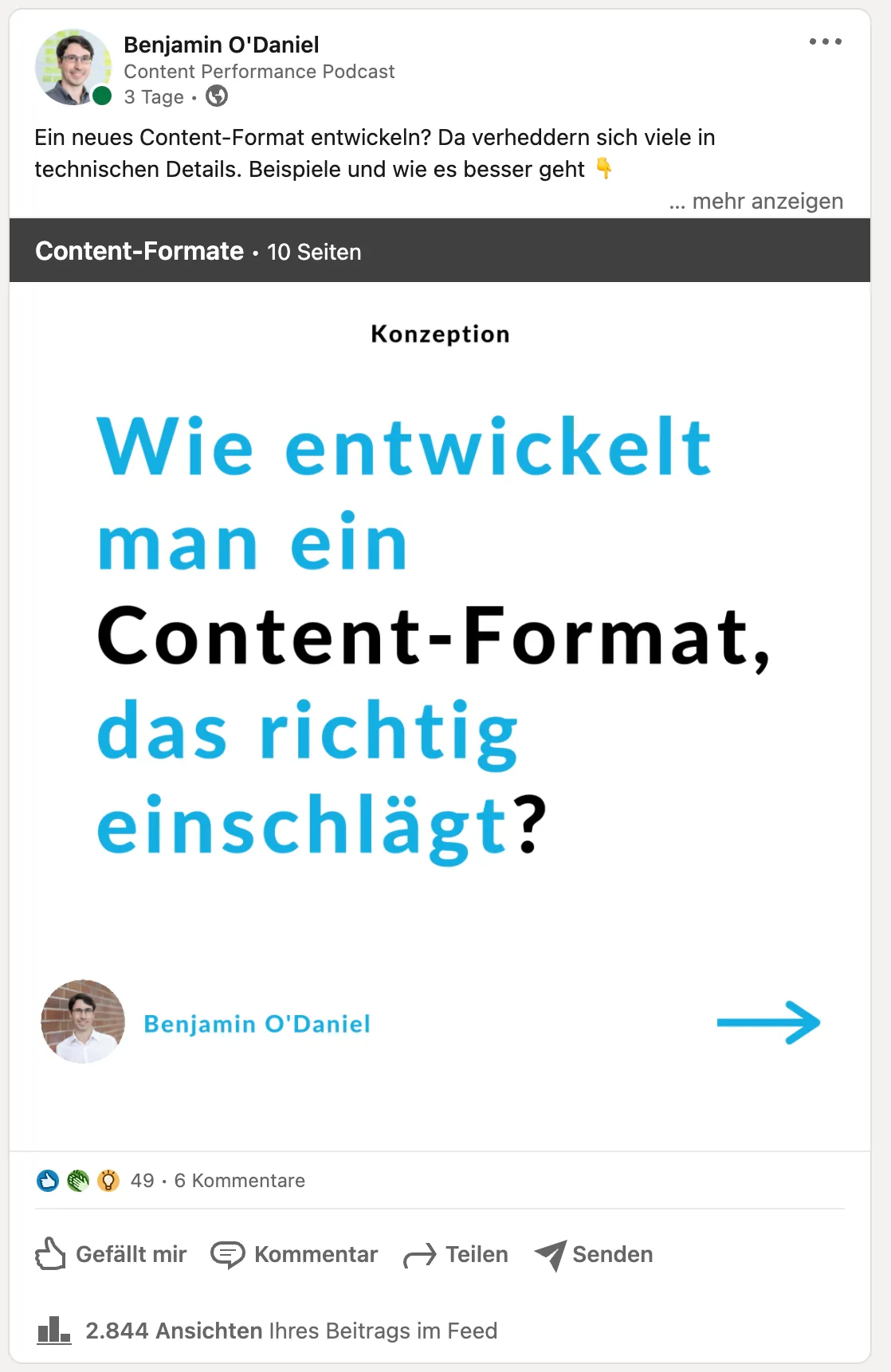
Here is Benjamin’s LinkedIn post.
Which content format, which kind of content, ranks best?
Fabian asked this question on LinkedIn and received over 150 answers. A discussion developed here too. Because the formats named in the poll can also overlap.
A guide article can also be an evergreen article, that is, a timeless piece. Some report that videos work very well for them. That also depends on the topic environment and on the search intent of the users. For some search terms, the YouTube carousel is very prominent in the search results, for example.
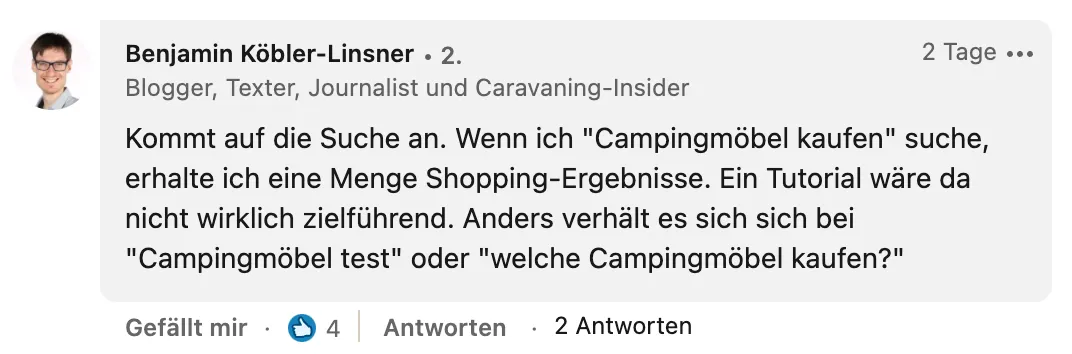
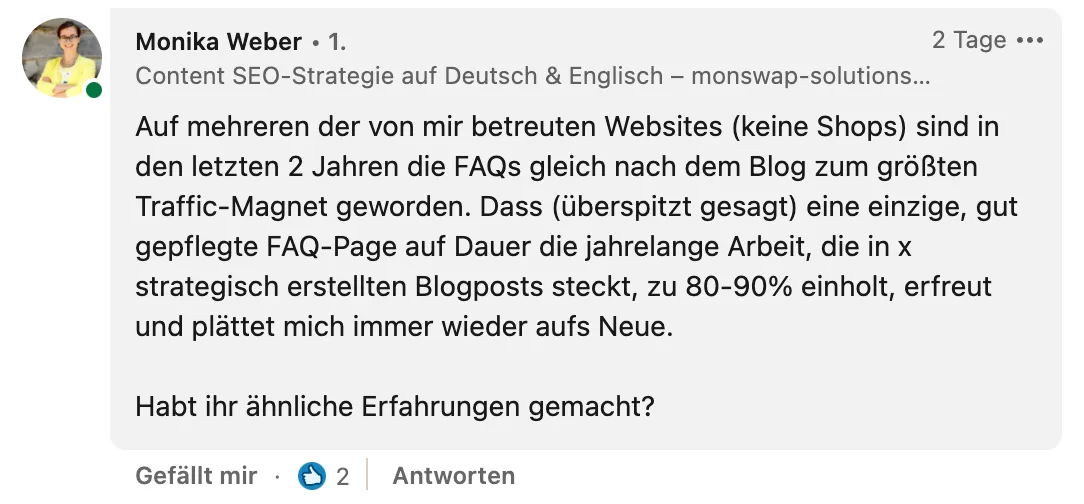
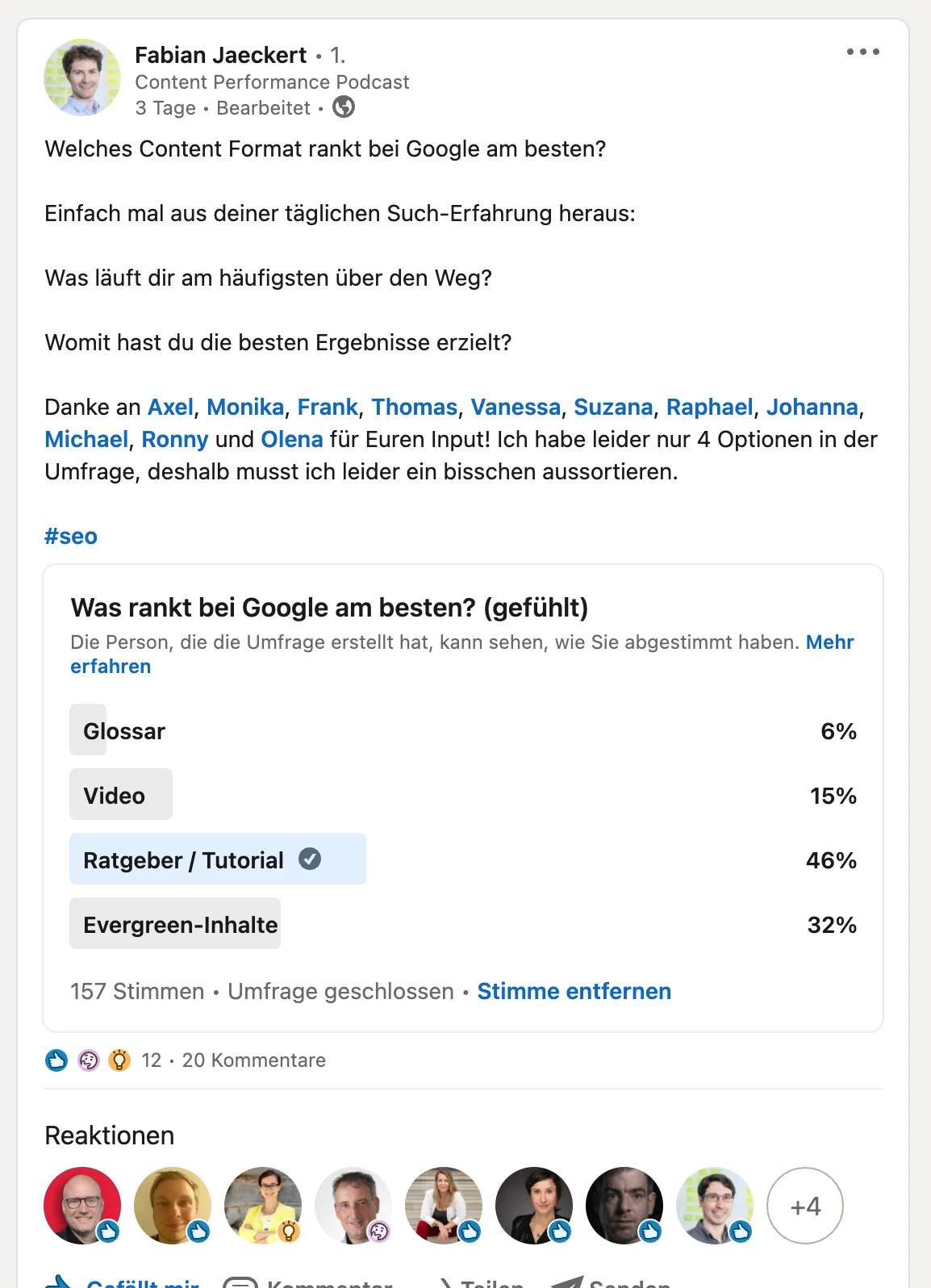
Here is Fabian’s post and the discussion with many valuable comments.
Content and SEO from a single source: our approach in consulting
For more than ten years we have worked as SEO and content consultants. We unite the two worlds that, from our point of view, it takes to achieve top rankings on Google: technical SEO know-how and an understanding of content and content marketing.
We develop content strategies and formats on the basis of keyword sets, and with that of concrete demand. From our point of view you do not need endlessly many content formats. It is better to focus on a few formats with clear goals and processes, and then to optimize them continuously.
We advise and support in-house marketing teams. For example in the form of SEO concepts, SEO sparring, or through our SEO Academy. All of it completely digital.
We can get to know each other in a Zoom call.

Fabian Jaeckert (right) is a technical search engine optimizer with experience in web development. Benjamin O’Daniel is a trained editor and content marketer with a focus on SEO. Here are some references.
Google visitors are an important channel for us. Fabian and Benjamin helped us elevate our SEO to a new level and establish it internally, with a clear SEO strategy and innovative content.
 Tyrone WinbushCMO, Technisat Digital GmbH
Content formats and SEO: an example
When you enter a search term on Google, certain URLs appear at the top. If you click on the search results, you see: certain page types and, at the same time, content formats are at the top.
Page types are, for example, category pages, landing pages, glossaries, and guide articles. They are content formats at the same time, because they should also be developed in terms of content. A hybrid form is SEO landing pages, which both inform and drive conversions.
The algorithm prefers certain page types and content formats for certain search queries, often depending on the search intent. You should take these formats into account accordingly in the concept of the website structure and in content planning.
The next step is then the content concept: how can we produce the content formats so that we create recognition for our users and customers? So that we can hold our own in the competition?
If you decide on a particular format, for example a glossary or topic pages in a content hub, these should be produced according to a fixed pattern. We talk here about content templates.
Embedded in them are smaller content formats or content elements, such as Google snippets, featured snippets (info boxes in position 1), frequent questions, but also videos or images. They should be thought through in the content template in order to work out ranking opportunities, or traffic opportunities, in a targeted way.
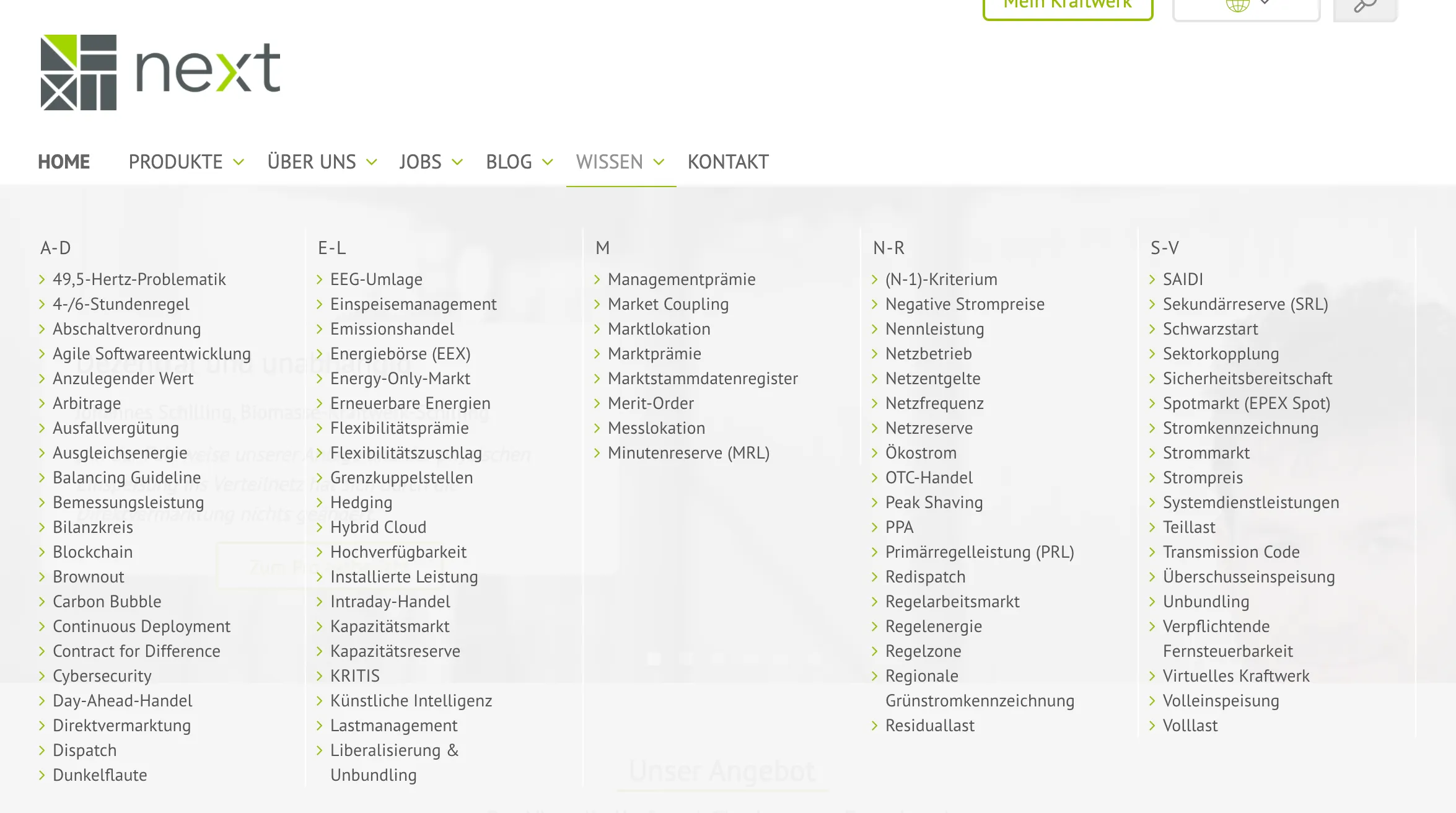
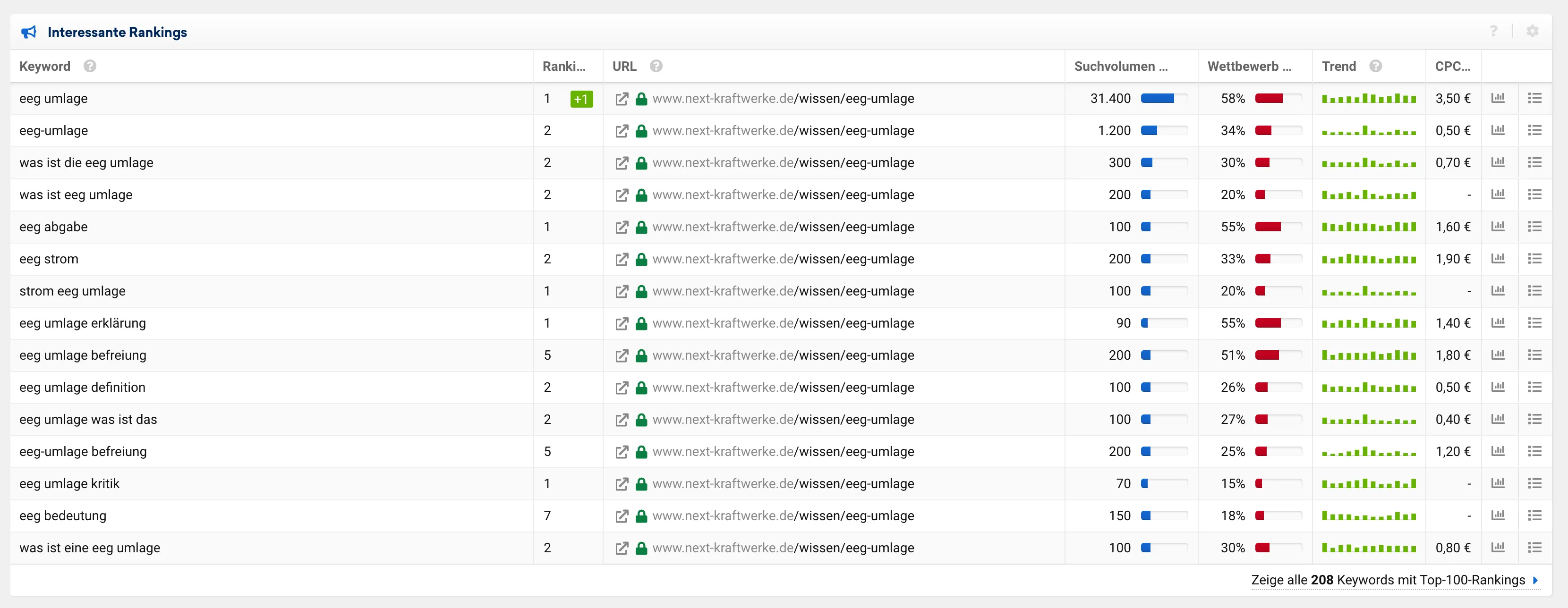
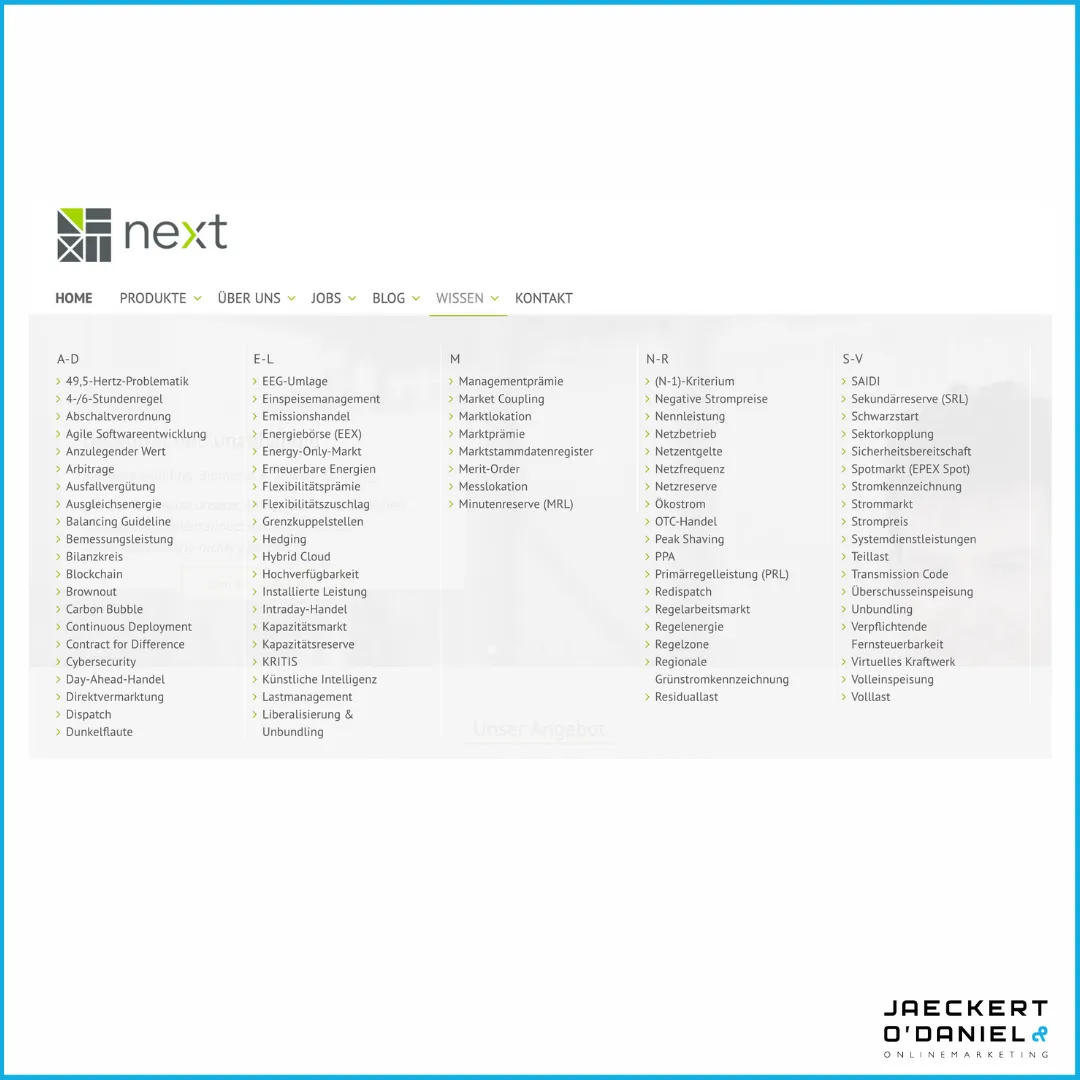
Here a company relies on a glossary. Several days of working time are invested in each glossary entry, as the head of marketing explains to us in this interview. The glossary is a substantial traffic driver, as you can see by way of example in the Google ranking chart of a single article. Chart: Sistrix
What is special about the content concept of the glossary: the people responsible asked themselves: “How can we be better than Wikipedia in our topic field?”
The answer to that: the complex topics are explained more clearly and backed up with concrete examples, calculations, and graphics. The information for that comes from the specialist departments, which work together with the content marketing leads.
What does it deliver? We talk about that in this two-minute video, the summary of our podcast conversation.
How SEO and content marketing work: our podcast interviews

SEO as a Growth Strategy: Interview with Kevin Indig

SEO for a Software Company: Interview with Beat Köck

Clubhouse Content Strategy: Interview with Paula Lotte Thurm

Passage Ranking: Who Benefits, and How. Interview with Alexander Rus

SEO Quality Assurance: How to Protect Your Rankings. Interview with Gianna Brachetti-Truskawa

WordPress SEO: Interview with Kai Spriestersbach

Are You Relevant Enough for Google? Interview with Olaf Kopp on the Entity Model

SEO Case Study: How Urlaubsguru Works. Interview with Sascha Blank
Content formats in practice: webinars and tips via our mailing list