April 25, 2022Benjamin O’Daniel
Keep It Simple: How Direct Bank ING Successfully Connects SEO with UX
ING, formerly ING-DiBa, is the largest direct bank in Germany and is known for its modern communication and organizational culture. That is also reflected in the website, which we analyze here.
ING connects SEO with user experience (UX) in a very smart way: visibility on Google with the concrete experience you have as a user when you go to the direct bank’s website.
The motto that, from our point of view, stands above everything: “Keep it simple”.
That does not mean, however, that the people in charge took the easy way out. On the contrary: minimalism is hard work.
Because especially in larger companies there are many wishes and complex requirements. Users, and therefore customers, sometimes fall by the wayside. But not at ING.
The analysis is part of our SEO duel, which we run every month in cooperation with the SEO software provider Sistrix.
We ourselves had no prior contact with the people in charge, and no business relationships either. It is a pure case study, just like our discussions of Allianz vs. AXA or of Musikhaus Thomann.
SEO and UX: 3 common situations in companies
Slick design, weak UX
Larger companies in particular often rely on individually developed websites. We notice that very “visual” solutions often find a lot of approval. As a result, the website is slick afterwards. But it often has major weak points in practical use for users. Striking examples: a large slider on the homepage, which demonstrably gets few clicks. Navigation in an overlay that then keeps jumping. Type that is too small. And almost always far too little information in the form of classic text with an image.
No SEO on the landing pages
The product areas often do not sit with the digital team, but with the product managers. As a result, the important landing pages in particular are not “SEO-optimized”. That is not bad intent. It is simply too little specialist knowledge of how to connect brand communication and SEO. So that the landing pages continue to convince customers, but also have higher visibility on Google for the important generic, meaning general, terms.
No place for service formats
Especially in B2B, the products and services are not self-explanatory. We see that often in software, industry, and mechanical engineering. So the website needs a place where service topics, such as product attributes and terms, can be communicated in a way that works for users and for SEO. Because behind them there are often important search terms that potential customers search for. Many companies still rely on classic PDFs here, which often still come from the days of product catalogs.
Top 1: simple, clear menu navigation
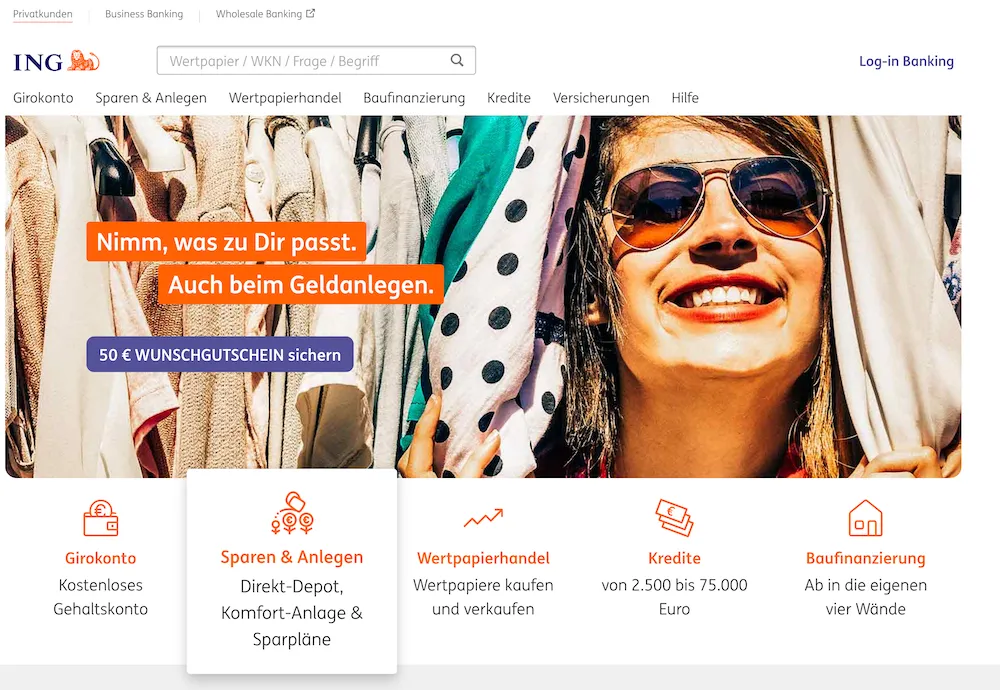
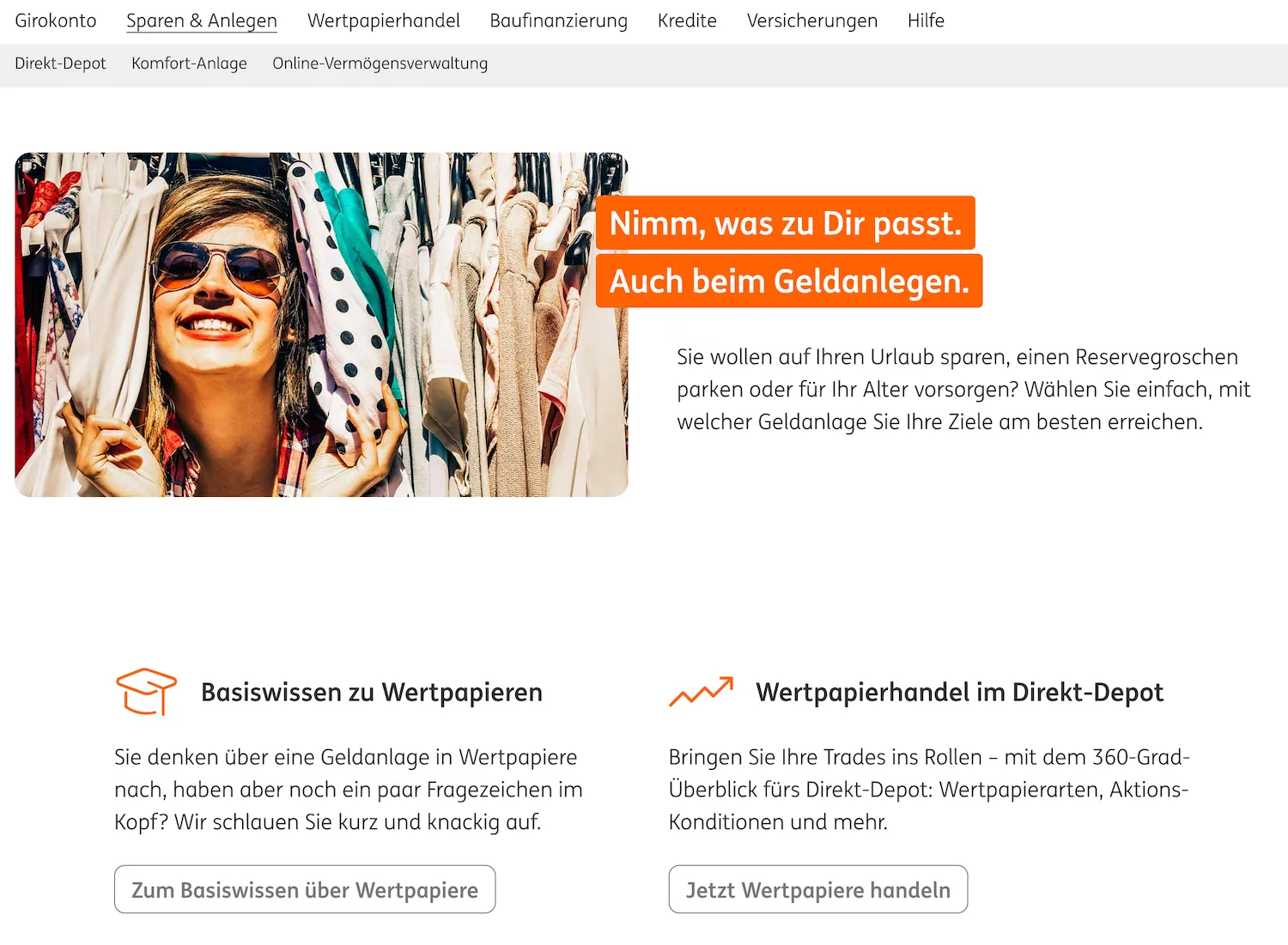
While many companies work with a rotating slider on the homepage, ING relies on a single clear offer. In this case, the investment product is advertised, with a concrete offer (“Wunschgutschein”).
This decision alone, to really communicate a single offer “above the fold” here, certainly required a lot of internal discussion. After all, in every company every department also wants its visibility in the most prominent area of the website.
But all the other product areas do not come up short either. They are presented in tiles directly below the offer. When you hover over the tile with the mouse, it enlarges. A simple but very appealing effect, which is also often used on call-to-action buttons.
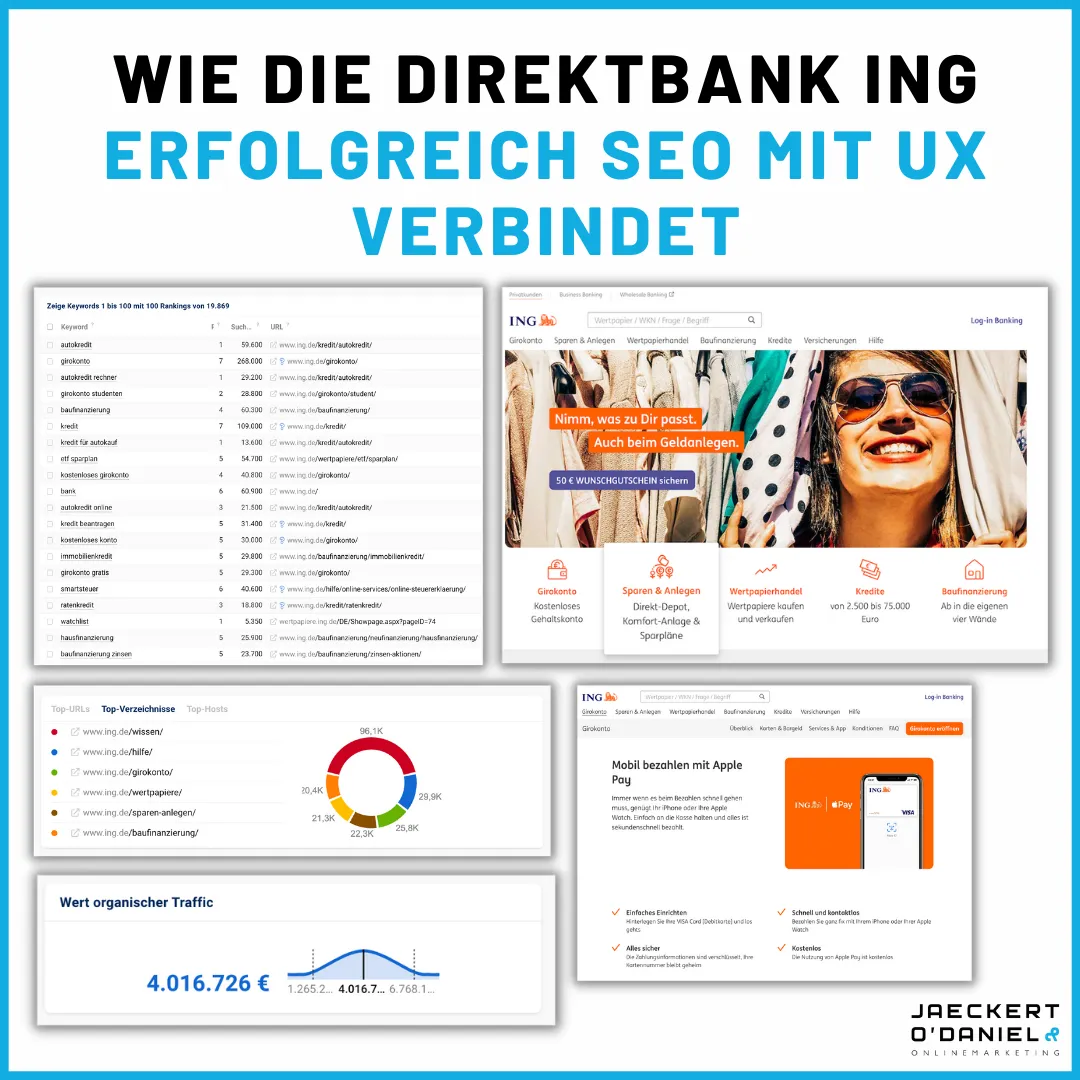
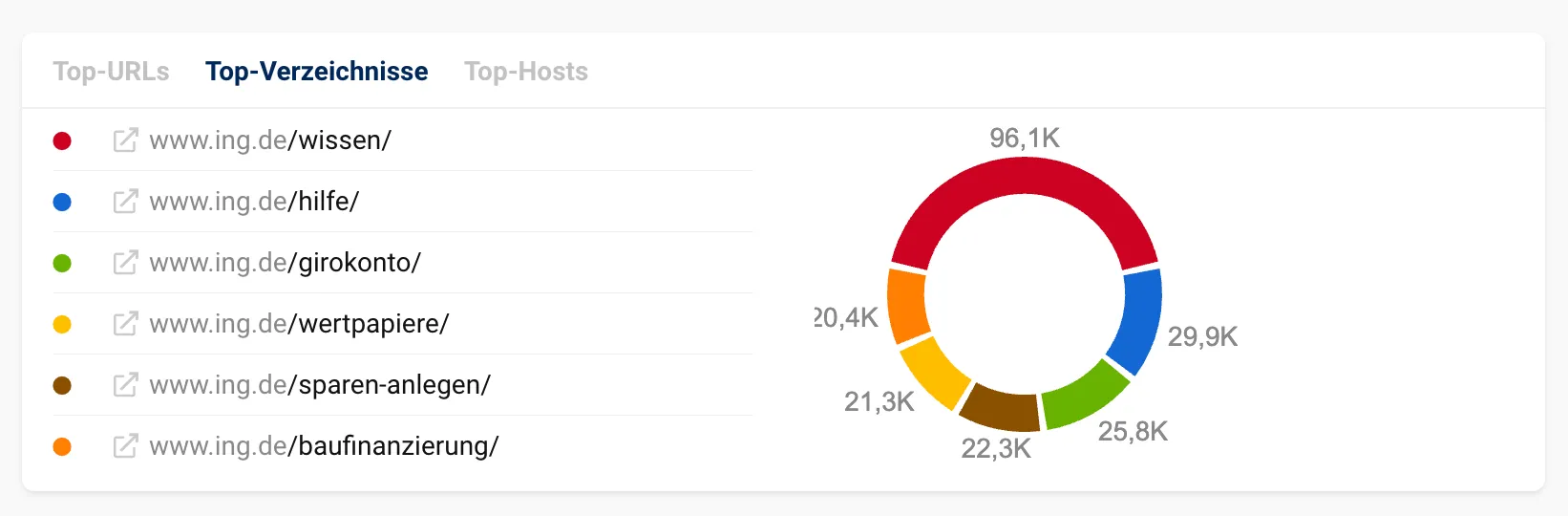
All directories have strong visibility on Google, as can be seen in chart 2. They rank for thousands of relevant keywords, as we will see further on. The chart comes from the SEO tool Sistrix (comparable analyses are of course also possible through other professional SEO software such as SEMrush, ahrefs, and so on. More here on choosing SEO tools).
On the homepage it is also noticeable that ING relies on “generic” terms. The tiles say “Girokonto”, “Kredite”, “Baufinanzierung”, and not specific product brand names. Here you can see very clearly that the bank aligns itself with the terms its customers use.
The reduced, airy look makes for a pleasant user experience, especially on mobile devices. On the individual product areas, the visual language and the copywriting style are continued. Everything of a piece.
SEO strategies, case studies, and webinars: through our newsletter
Top 2: high performance content on the landing pages
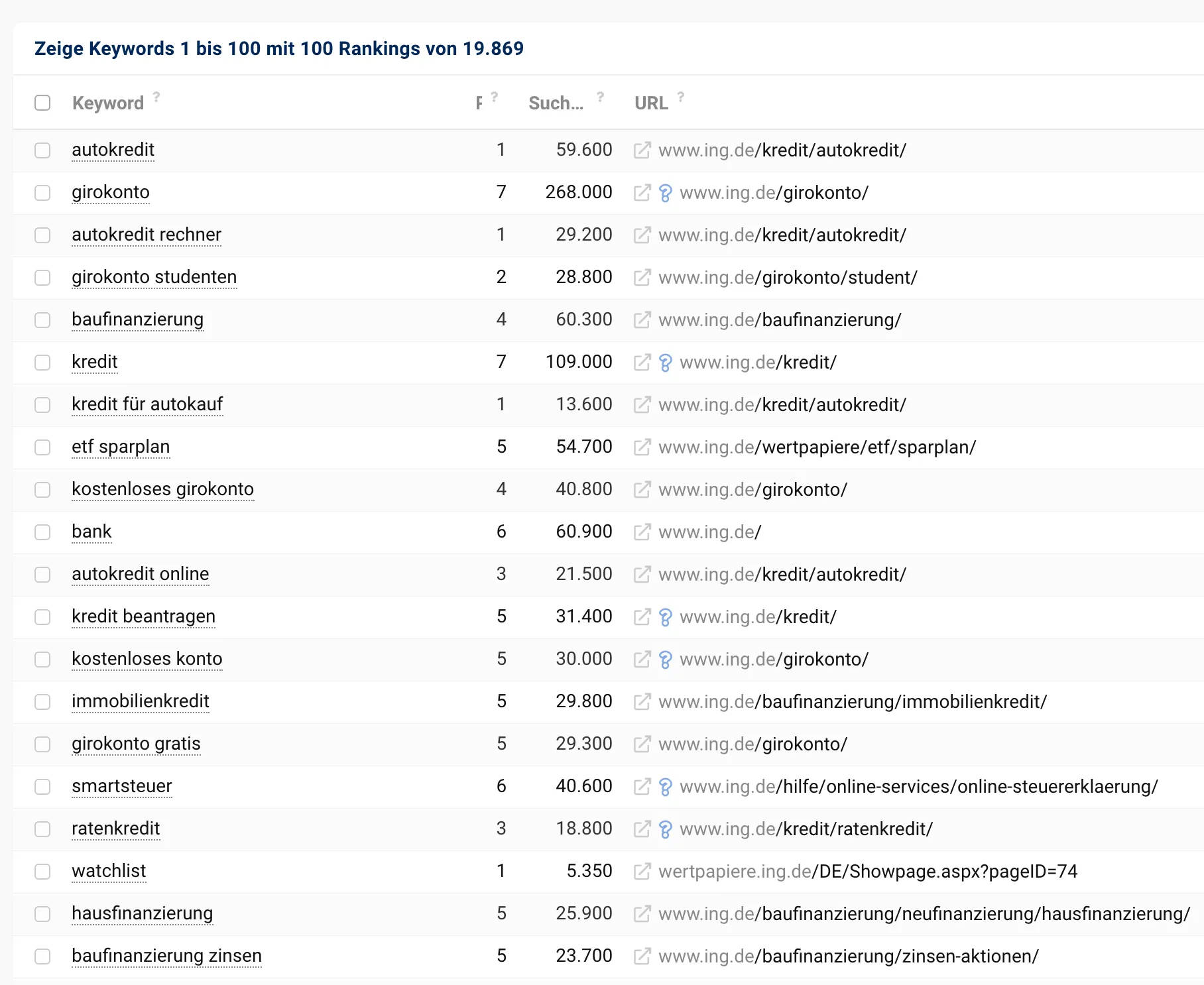
A first deeper look at the keyword data shows: ING ranks consistently very well on Google with its product areas. For extremely competitive keywords such as “ETF Sparplan”, “Girokonto”, or “Autokredit” it is in the top 10, often in the top 5 as well.
The fact that the company ranks at the front for these important terms with its landing pages makes the rankings especially valuable. Because here you can assume that the conversions are correspondingly high as well. Users are addressed toward the end of their customer journey, when they are looking for a concrete offer.
All of these search terms have a five-digit, in some cases six-digit, search volume per month. Anyone who wants to be visible here through Google Ads, for example, pays several euros per click.
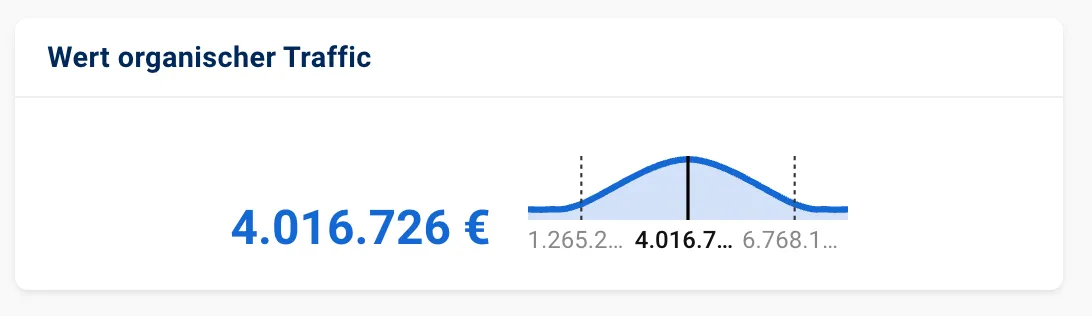
Accordingly, the traffic that comes through search engine optimization has a high equivalent value of more than four million euros per month in total.
Put simply, the equivalent value is calculated from what the company would have to pay to buy the traffic it gets through SEO via Google Ads. The notional value serves to illustrate how efficient SEO can be as a marketing channel in comparison. Also in a competitive analysis as a view from the outside, when you have no access to conversion data.
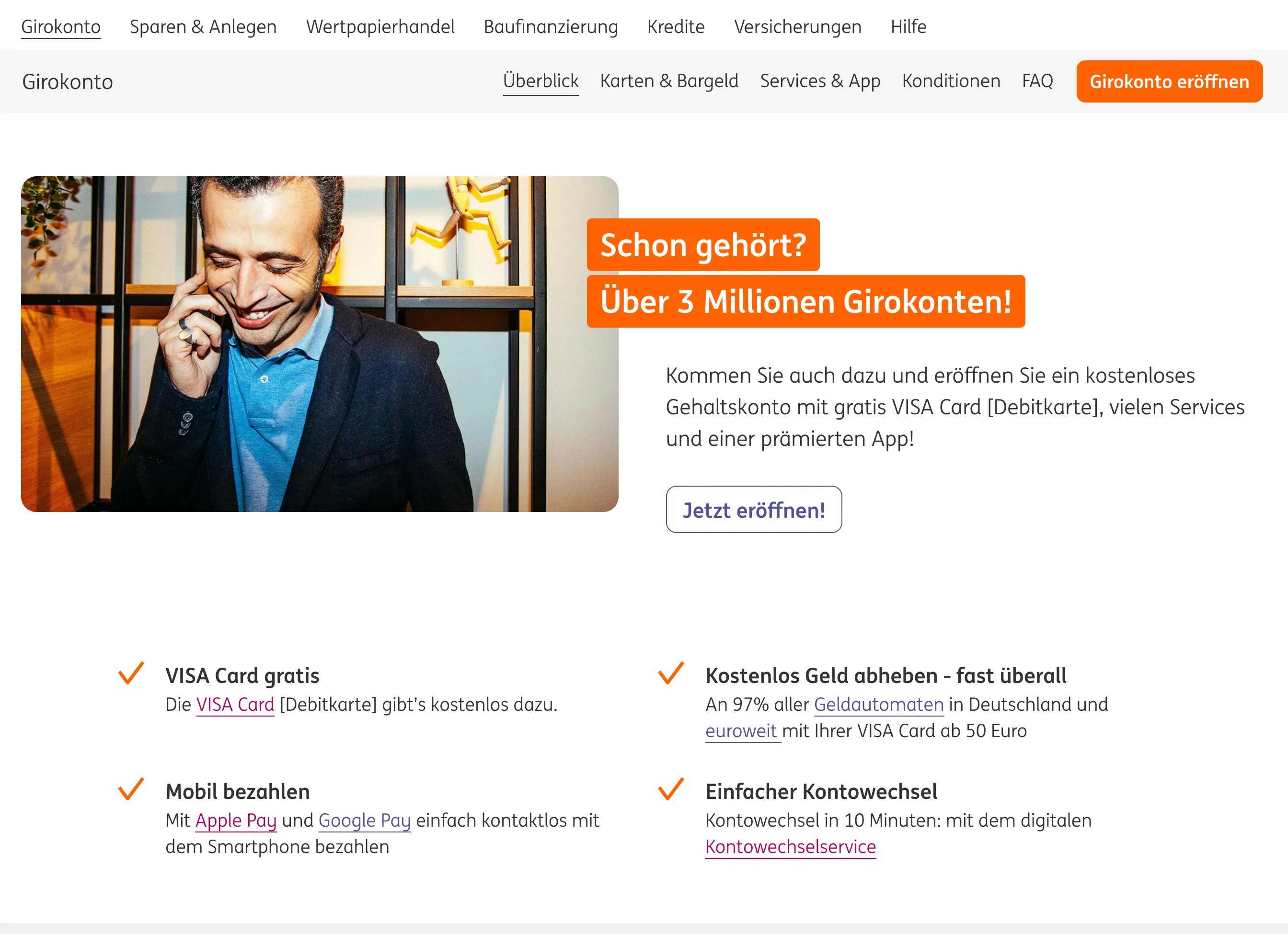
On the landing pages there are many examples of how the bank connects user experience with keywords and copywriting.
We speak of high performance content here, because all levels, or requirements, of a website text have been taken into account (more here on the 5 levels of website texts).
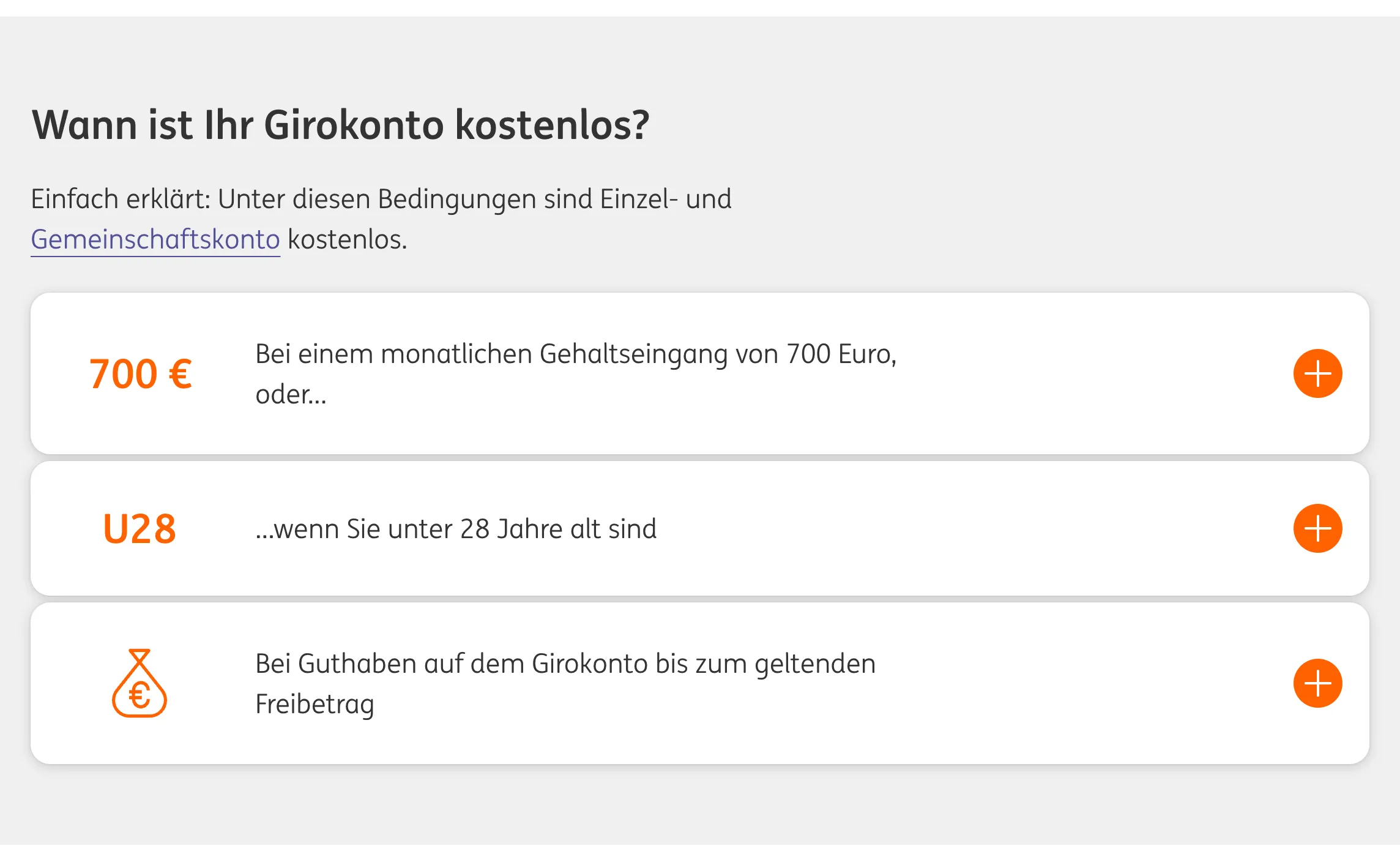
An example: “Kostenloses Girokonto” (free checking account). The bank ranks in position 5 for this. This two-word search alone generates around 30,000 searches.
The aspect was taken into account in its own section. After all, potential customers search for it. It is explained in a compact and simple way when you get such a free account. There is also a layout element for this, which is used for similar content aspects in other product areas as well.
At the same time, we still see great potential here. It is obvious that for a term with four- or five-digit searches per month you could, or even should, create a separate subpage. That is always a question of how many resources SEO is granted internally.
Top 3: service pages with high SEO visibility
Where do all the details go? That is what many marketing leads ask themselves when they work on the website architecture. Technical product aspects, for example, are often packed into PDFs or dealt with in one or two sentences at the very end of a landing page.
That is a solution at first. But you often also take away a lot of SEO potential that way.
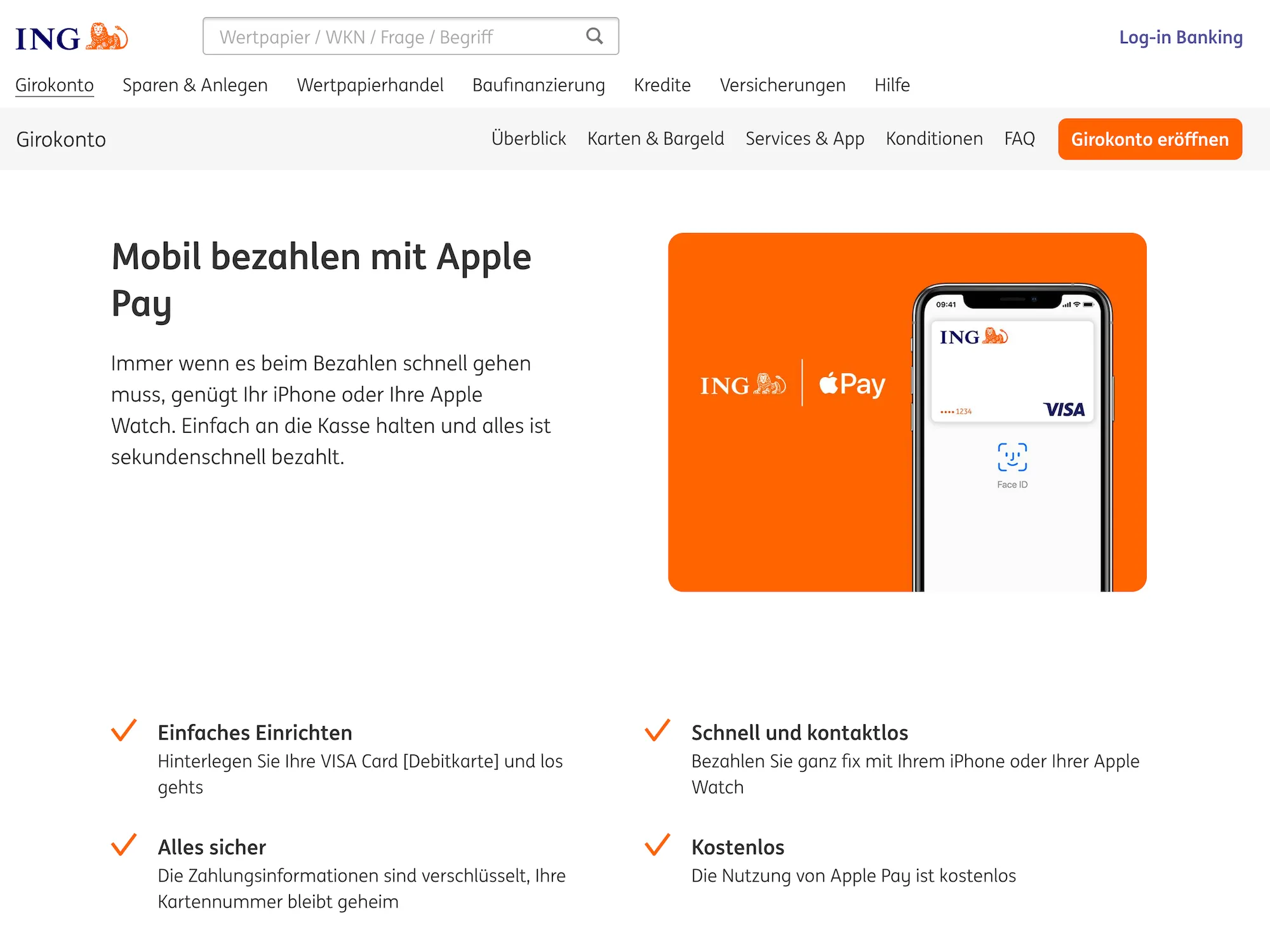
An example of how ING does it differently. It has created its own subpage for “Apple Pay”. Here again you can see that the look, the language, and the structure of the individual page are high quality. It is not a wall of text, but high performance content as well.
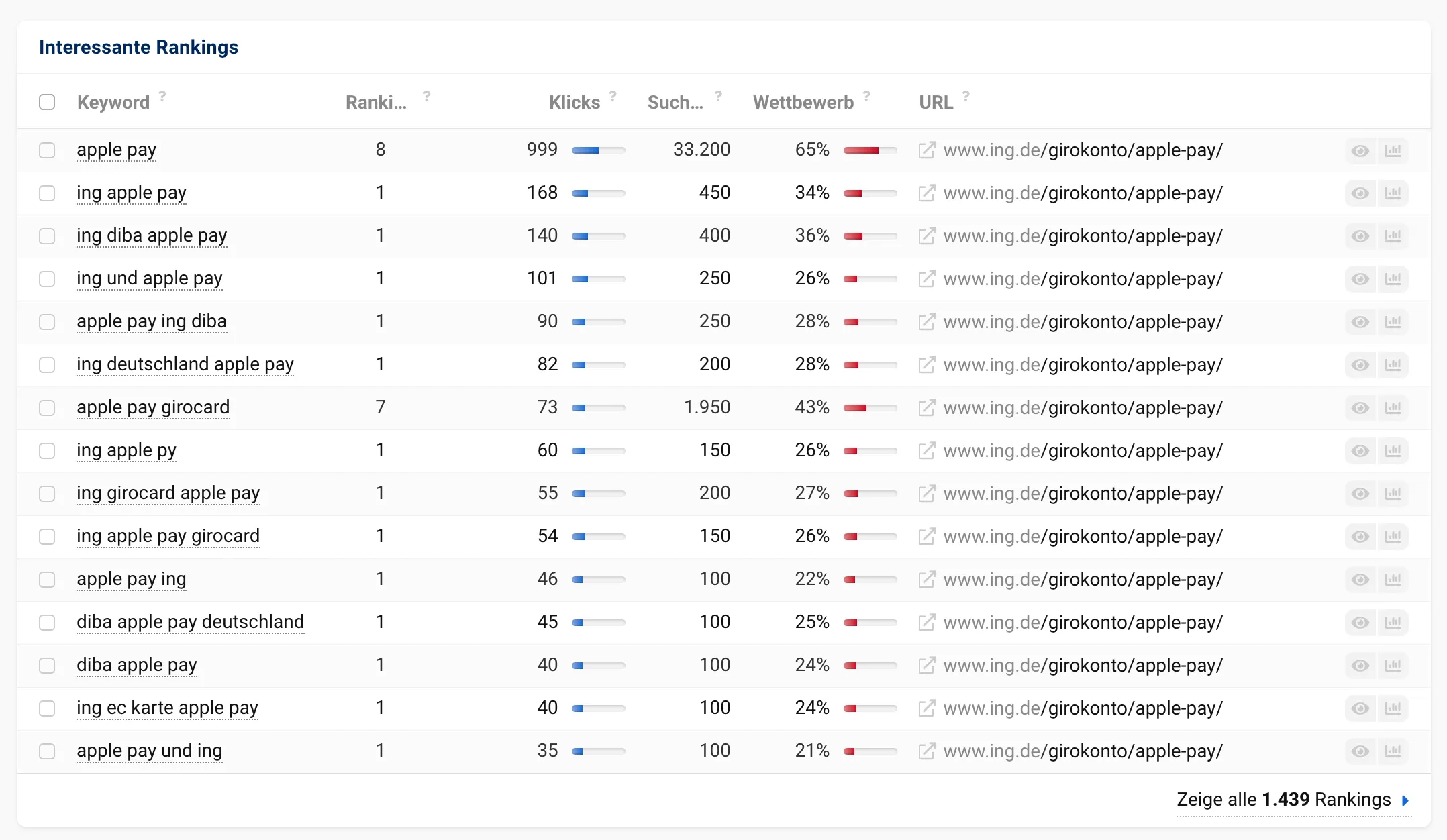
The result: this one subpage on Apple Pay alone ranks for more than 1,000 keywords. As can be seen in the chart, the subpage ranks in position 1 for the search term “ING Apple Pay”. These are so-called navigational searches, in which (probably) existing customers search for it.
But the subpage also ranks for “Apple Pay” alone in position 8. This is searched above all by users who are not yet customers of ING, but want to inform themselves about it in general.
The subpage therefore fulfills a double function: it is a service page and at the same time generates brand awareness and, certainly, new customers as well. That can also be part of an SEO strategy.
We advise marketing leads on SEO
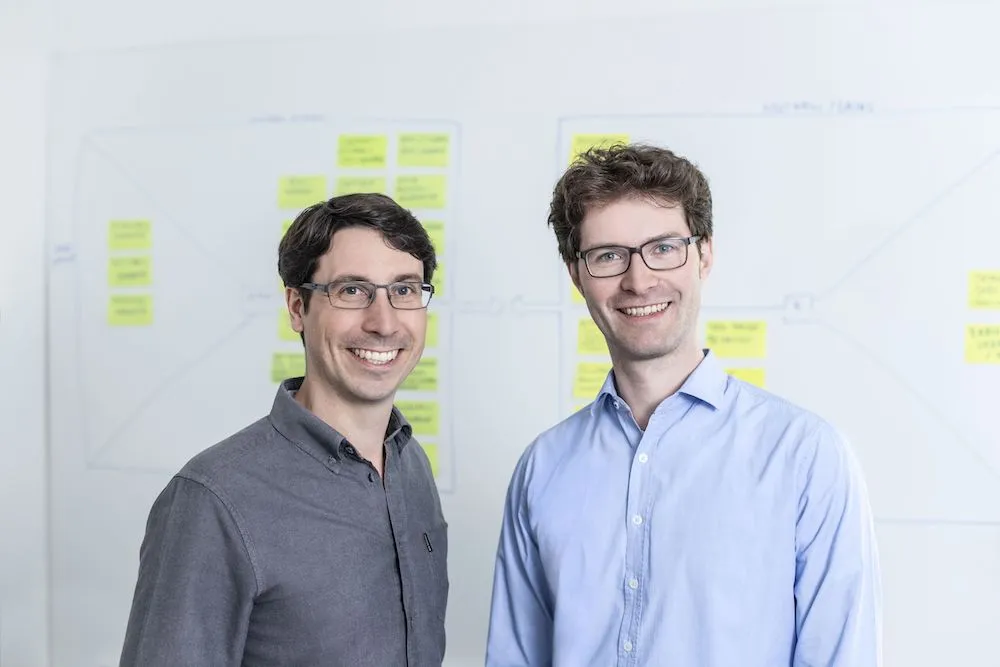
We are Fabian Jaeckert (on the right) and Benjamin O’Daniel. For many years we have carried out SEO checks and SEO audits and developed SEO strategies. In doing so, we connect our technical expertise with our content knowledge. More about us here.
With Jaeckert O’Daniel, it quickly became clear to us that we had made an excellent choice in selecting potential partners for our online marketing project. Their expertise and, above all, their ambition to thoroughly immerse themselves in our specific industry topic to provide us with the best possible support, are precisely what is now propelling us forward.
 Tobias ReitmeierF.EE Group
Marketing teams have many projects on the table. The people in charge know that search engine optimization is relevant. But the concrete implementation, above all developing a well-founded SEO strategy, is hard for them. Specific knowledge is missing, and often simply time as well.
That is exactly what we have specialized in. We develop SEO strategies for companies and present them to the people in charge in a structured and understandable way. Part of the offer is always an SEO roadmap with concrete recommendations for action as well. More on that here.
After that, we accompany the in-house leads during implementation. We stand by them as advisors and pass on all of our know-how. Part of that is also our digital learning area, our SEO Academy, which is open only to our mentoring clients.
Sounds interesting? We can set up a 30-minute SEO introduction by video call.
Our interviews with SEO professionals from the industry

How User Testing Works: Interview with Astrid Kramer on UX and SEO

SEO for a Software Company: Interview with Beat Köck
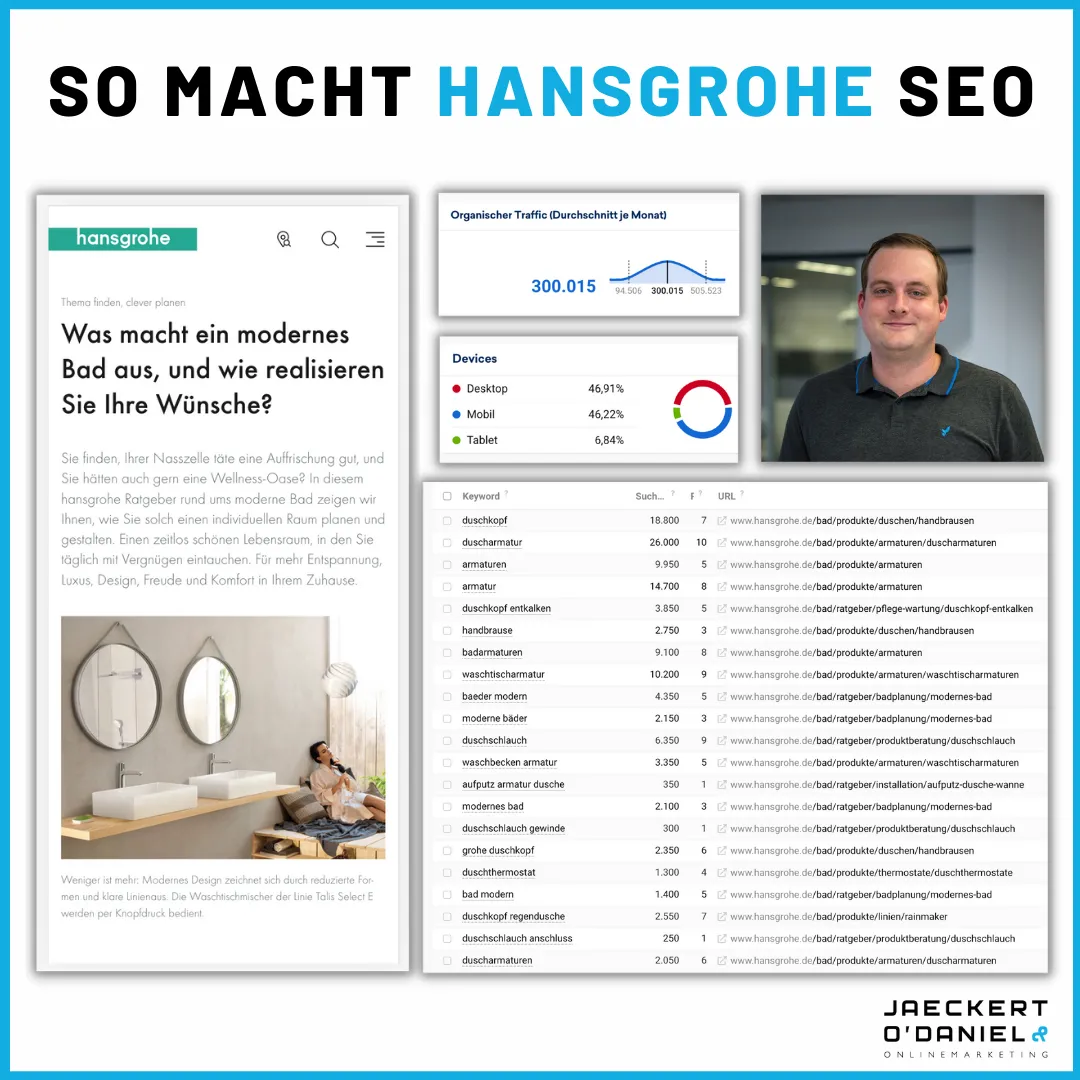
How Hansgrohe Does SEO in 40 Countries: Interview with Jörg Niethammer
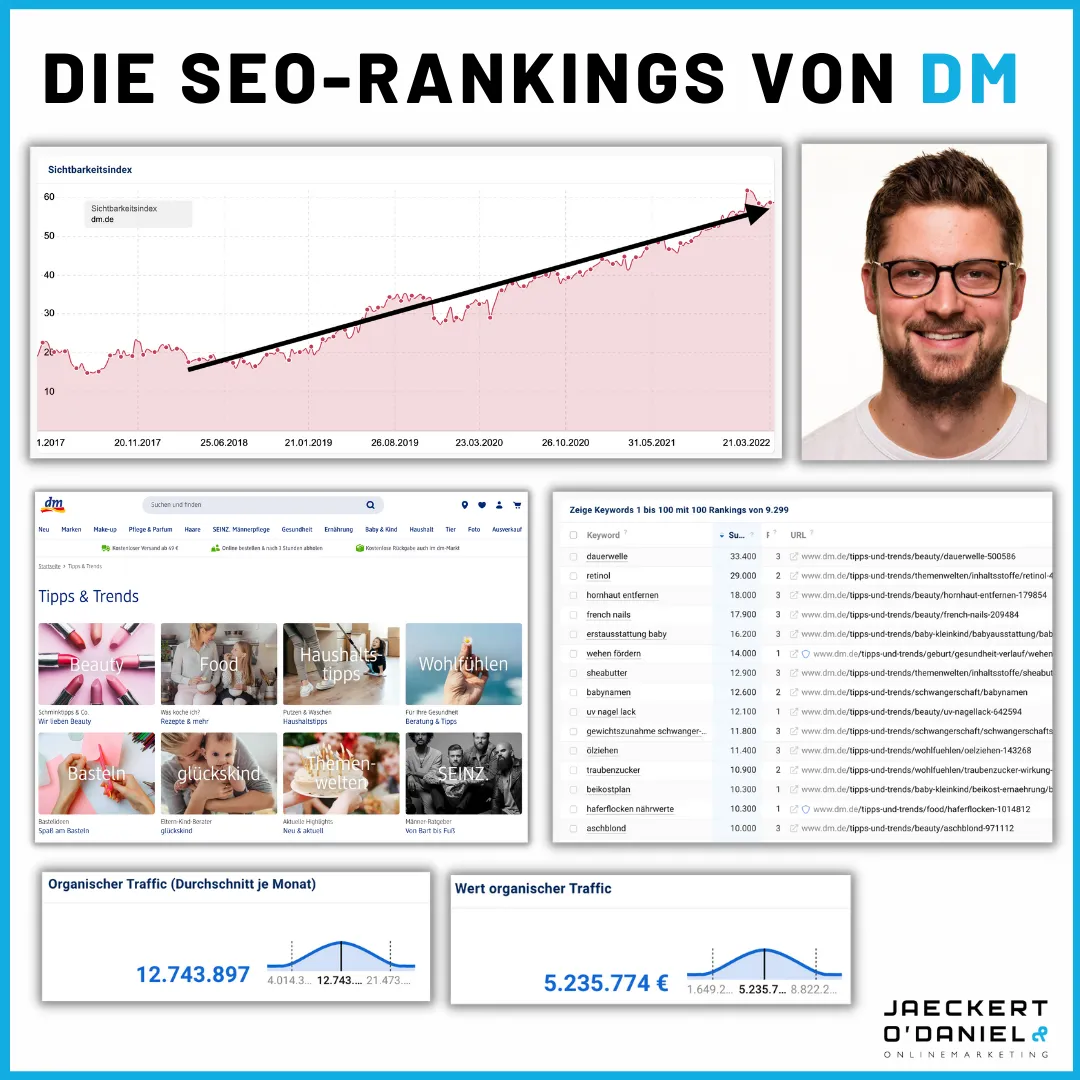
How dm Increases Its SEO Visibility: Interview with Philipp Hassinger
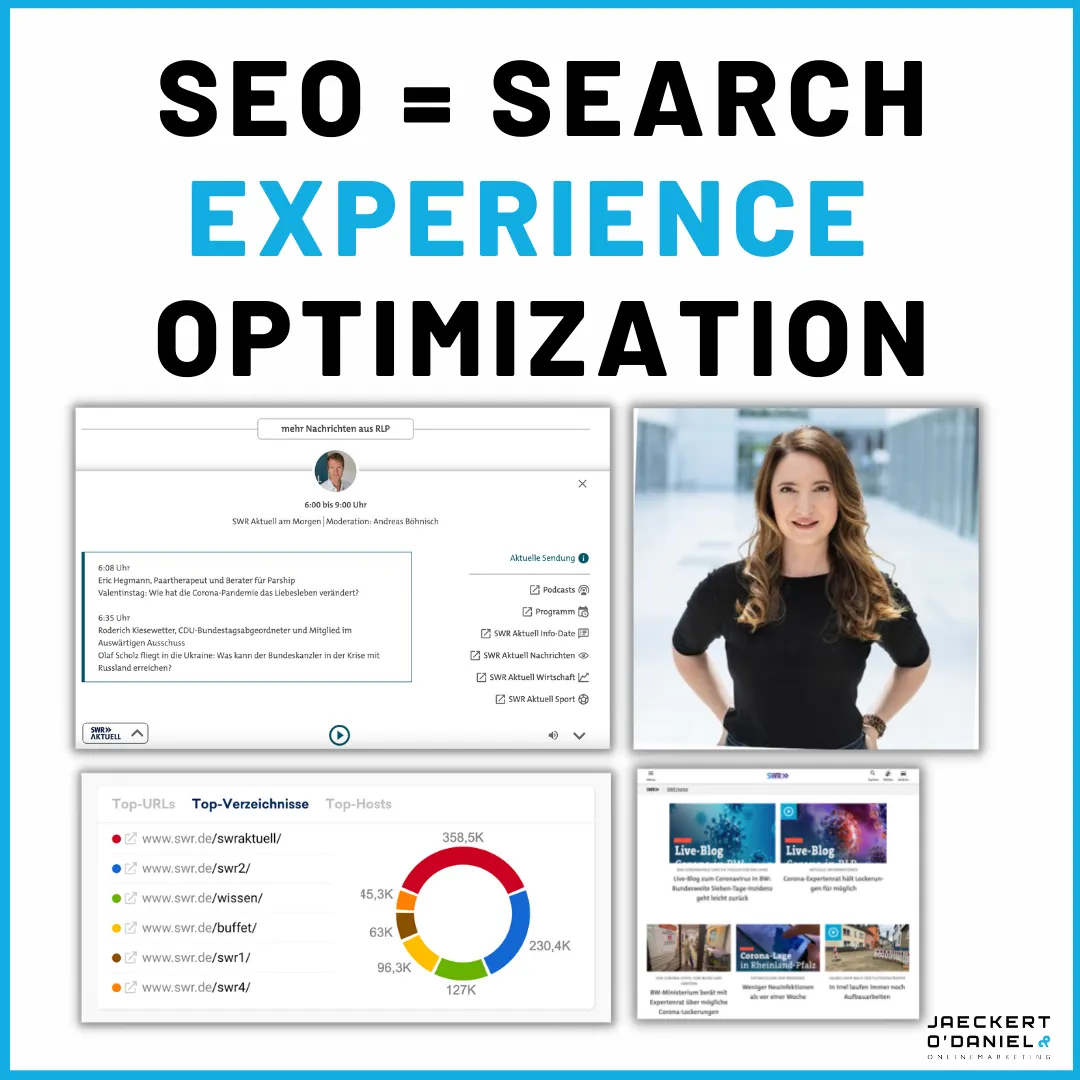
How Südwestrundfunk (SWR) Works on Search Experience: Interview with Sarah Stein
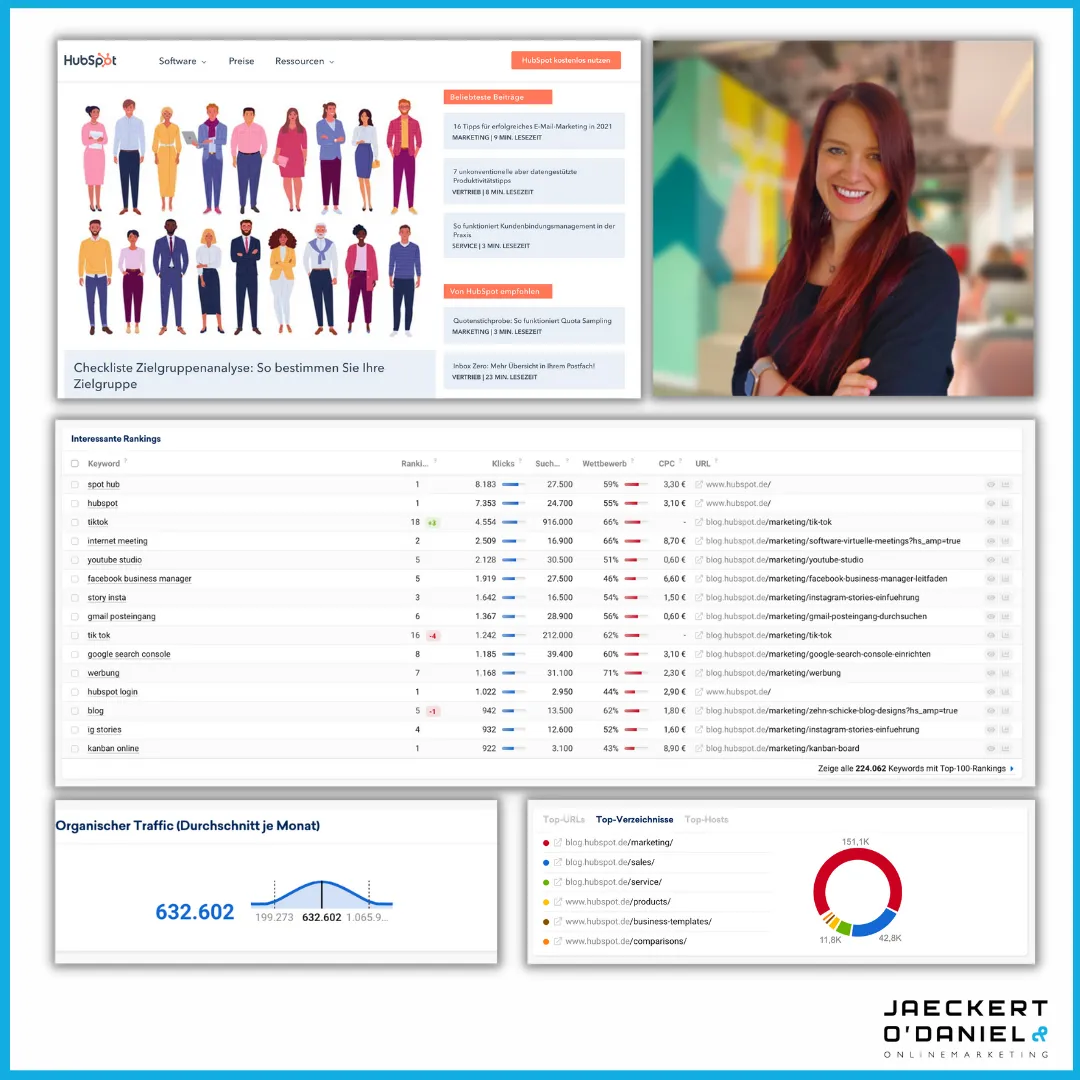
Hubspot's SEO Strategy: Interview with Jenny Lapp
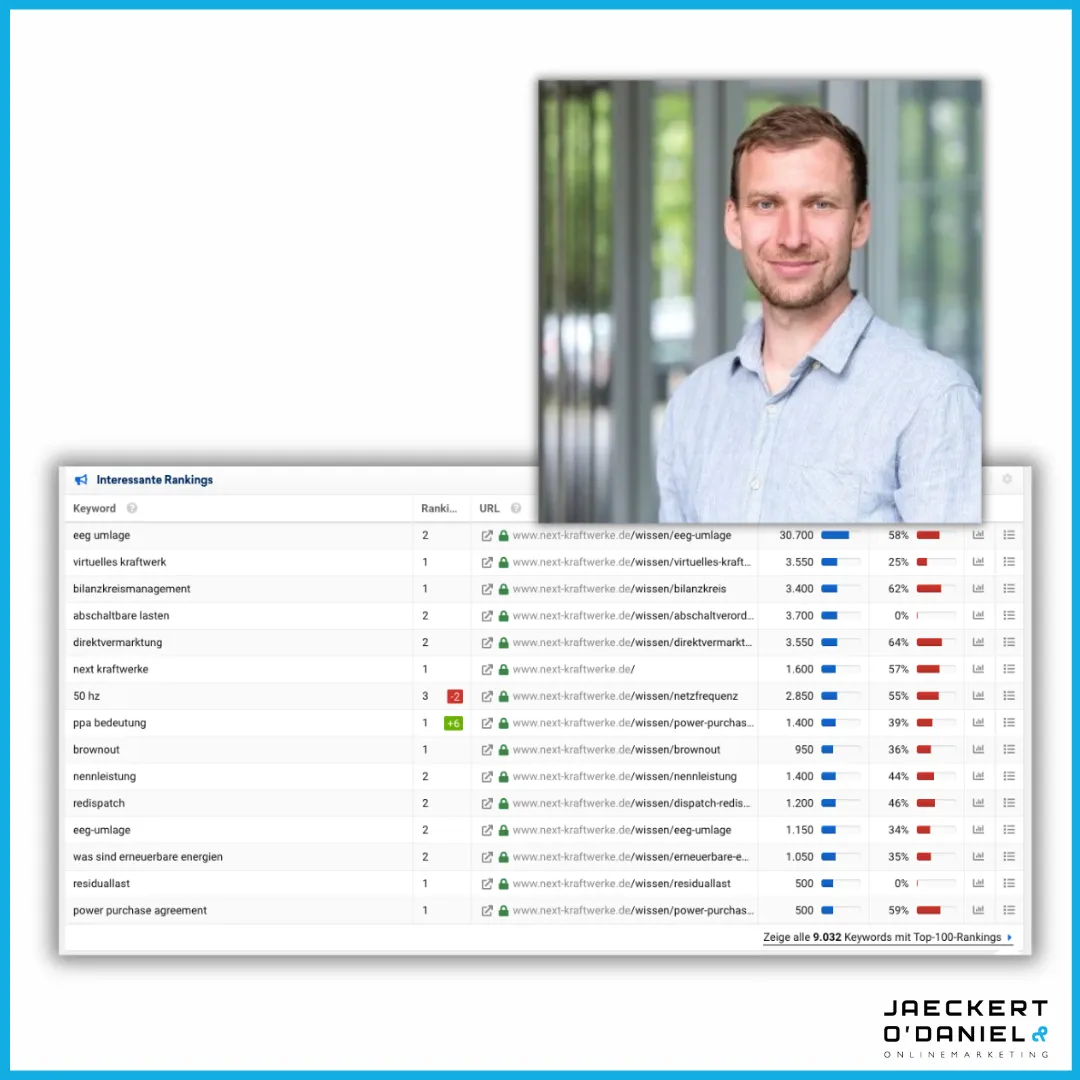
B2B Case Study: What Do Ten Years of Content Marketing Bring? Interview with Jan Aengenvoort

SEO Quality Assurance: How to Protect Your Rankings - Interview with Gianna Brachetti-Truskawa