

If you want to rank high on Google, you need an SEO strategy. An SEO strategy essentially consists of three elements: a keyword strategy, a website architecture, and a content strategy.
Strategic search engine optimization is a key competitive advantage for businesses. Potential customers actively search for a solution. It’s about more website visitors – and more inquiries and sales.
For those responsible in companies, this means: By specifically optimizing their website for search terms, they automatically align themselves with customer needs.
Technical SEO forms the basis upon which an SEO strategy is developed. Subsequently, the focus is on creating helpful content – for your customers and thus also to achieve a good result for Google.


What is an SEO Strategy?
Search engine optimization (SEO) is a discipline within online marketing. An SEO strategy is therefore aligned with the company’s overall strategy and marketing strategy.
Creating an SEO strategy essentially involves the following elements:
- Company goals, offerings, and target groups as a basis
- Analysis of existing Google rankings
- Technical analysis (especially indexing)
- Research and preparation of relevant keywords
- Suggestions for content creation or optimization
- Roadmap for concrete implementation
We have also found that a competitive analysis can be very valuable as part of SEO strategy development. This is because successful rankings are often a key competitive advantage.
A central SEO measure is the targeted creation of content or the revision of existing content. This involves prioritizing and planning structured work packages. Learn more about SEO measures here.

What are the Goals of an SEO Strategy?
With an SEO strategy, you can pursue a range of goals:
- Greater visibility for relevant search terms
- More website visitors (traffic)
- More leads (registrations, contact inquiries)
- More sales
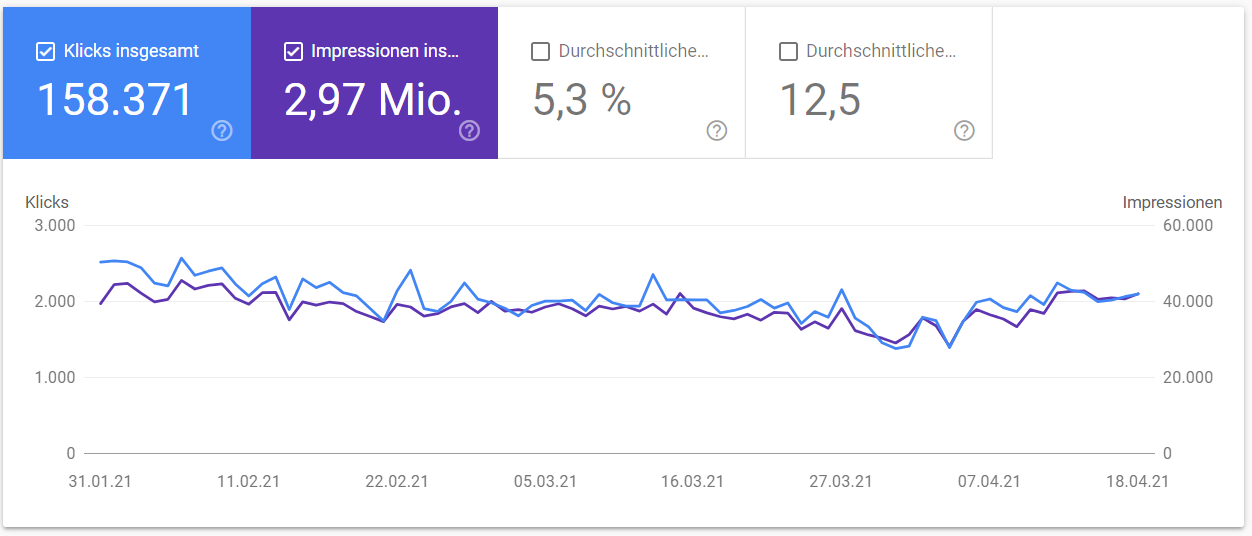
The following two charts illustrate this. One company has a six-figure number of visitors per quarter on its website via SEO. An online shop generates several thousand euros in revenue per day via SEO.
Nevertheless, many companies do not address the topic of SEO. This is because a successful Google ranking often builds up over months and years. In addition to a strategy, you also need the perseverance, understanding, and willingness to work on your rankings.

What Does an SEO Keyword Strategy Look like?
When developing an SEO keyword strategy, the following aspects are particularly important:
- What are the relevant terms that contribute to business goals?
- For which keywords do you have good chances for top rankings?
- How can keywords be clustered into topics?
- Which keywords should one start with?
In general, a company’s website can rank for hundreds of thousands of keywords. At the same time, there is also competition. After all, other companies are currently ranking higher.
Simply put, for every topic area, there are main terms that have a high monthly search volume. And so-called long-tail terms, which consist of multiple search term combinations and have a small search volume.
What is large and small depends on the topic area. Often, main terms have a four-, five-, or even six-figure search volume. At the same time, long-tail terms are very interesting for companies because users express a very specific information need here.
Even if a topic area consists of thousands of keywords, a pattern can often be recognized. In search engine optimization, this is referred to as an SEO taxonomy. Keyword research is carried out with the help of professional SEO tools. Learn more about the right selection of SEO tools here.
Example: Keywords within an SEO Strategy
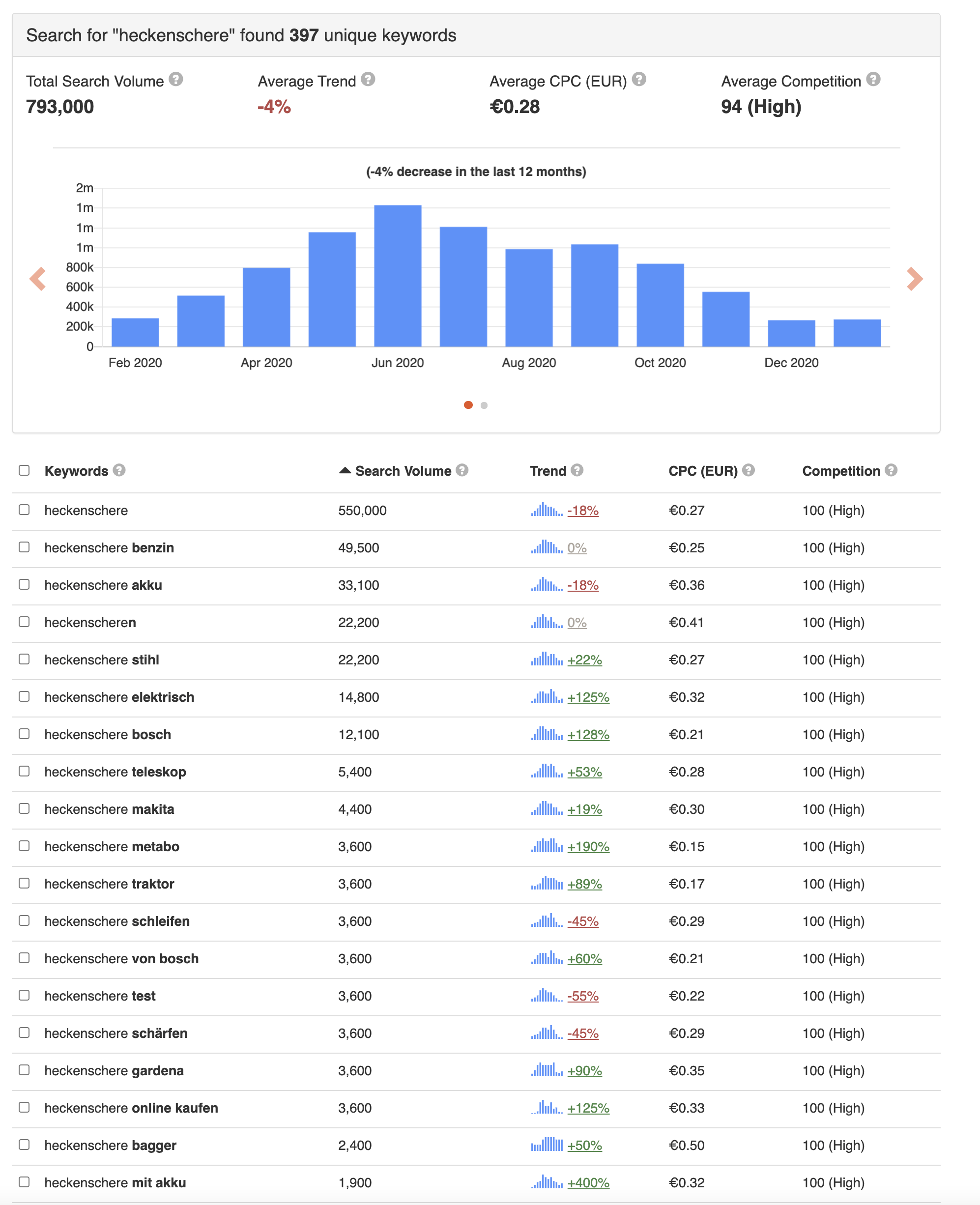
The core task of an SEO strategy is the research and preparation of relevant search terms. As shown in the following chart, there are usually hundreds or even thousands of other terms related to a single term. Each term is searched for to a certain extent monthly.
A simplified example: A company produces gardening equipment. Now, keyword research begins. There are informational search queries with rather general questions about usage, but also search queries in connection with manufacturers or tests. In an SEO strategy, the terms are clustered and evaluated in an Excel table, and then targeted content is developed for them.
Therefore, in search engine optimization, it is always about finding and mapping suitable terms that potential customers are searching for. Further examples follow below.
Example: SEO Strategies in a B2b Environment
In the B2B environment, researching suitable keywords is particularly challenging. Products and services are often very complex. Target groups are very specific. And business is often internationally oriented.
However, B2B companies also have great SEO opportunities – along the entire customer journey, as we discuss in this livestream. We discuss examples from the industry, from the digitalization and software sector.
An SEO strategy involves optimizing for industry standards. A second example focuses on search terms related to the central topic area. The third example shows an SEO strategy where visibility was built up in comparison to competing products.
You are currently viewing a placeholder content from Default. To access the actual content, click the button below. Please note that doing so will share data with third-party providers.
More InformationWe regularly conduct such SEO livestreams. We share dates and topics via our mailing list. Learn more about B2B SEO strategies and B2B search engine optimization here.
We Develop SEO Strategies for Companies
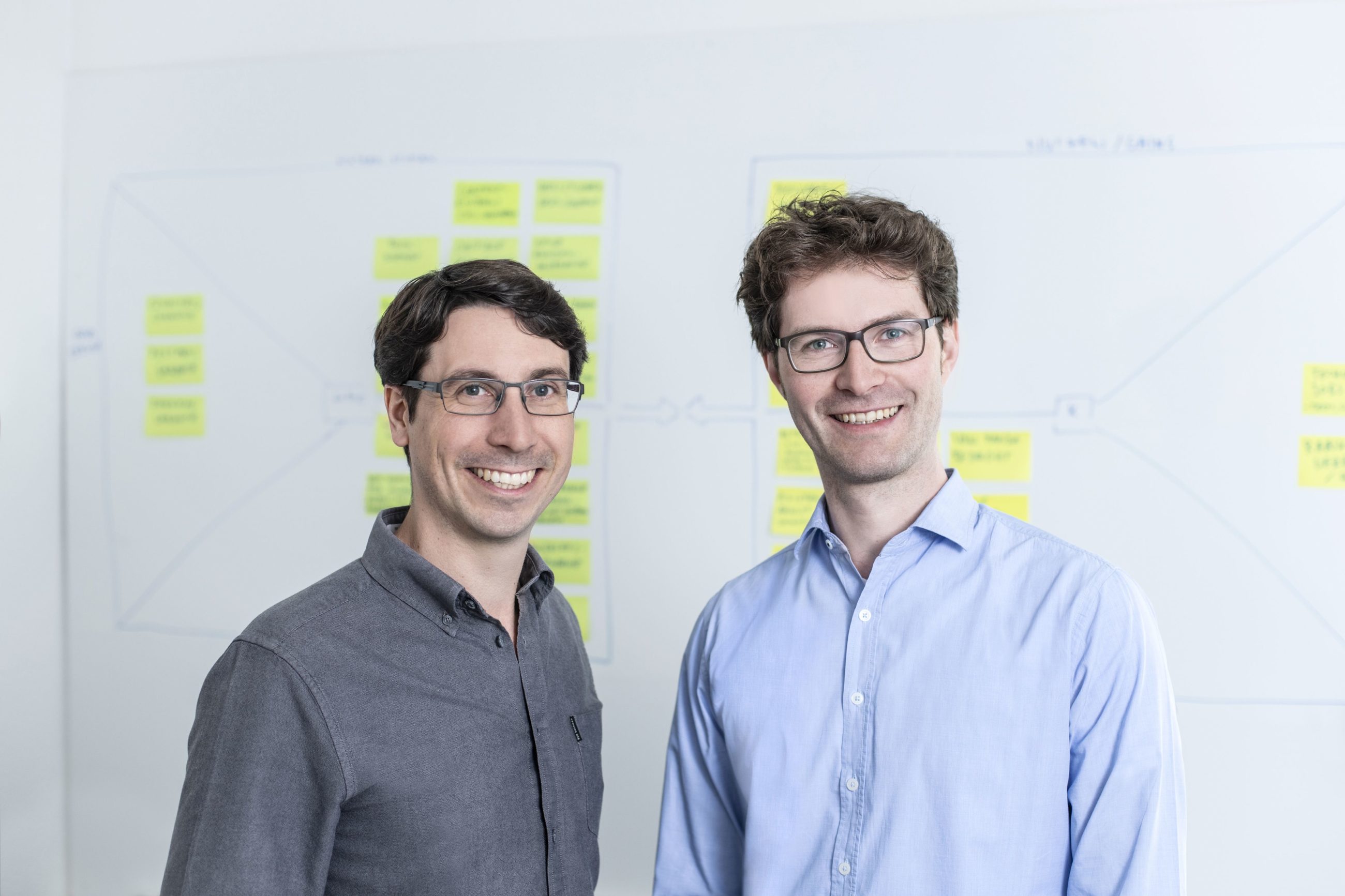
We are Benjamin O’Daniel (left) and Fabian Jaeckert. For many years, we have worked as SEO consultants focusing on SEO strategy development. In doing so, we combine technical search engine optimization with content marketing.
We were looking for a sparring partner who would develop an SEO strategy for us and subsequently support our team during implementation. And where do you find the best SEO specialists? On Google, of course! Because there, Jaeckert O’Daniel are in pole position for the search term ‘SEO strategy,’ and we decided to cross the finish line with them. During the analysis, both the content and our technical setup should be taken into account. Fabian Jaeckert and Benjamin O’Daniel provided excellent assistance with this. They addressed precisely the right points, developed recommendations for action, and formulated clear to-dos. All of this was presented within a very refreshing and understandable presentation for the entire team.

Marketing managers in companies usually have a lot on their plate. They know that search engine optimization is relevant, but they lack the know-how, experience, and time to take on SEO strategy development themselves.
This is where we, as SEO consultants, come in. We develop individual SEO strategies for companies and present them in a workshop. If required, we then support the in-house managers with the implementation.
Or our SEO Academy: There, we share our knowledge. This enables those responsible in companies to continuously improve in SEO. We also discuss numerous specialized topics in depth in our podcast.
Do you want to know if SEO is worthwhile for you? And how much it costs? Then send us a short message with your website, your question, and your phone number if you wish. We will contact you promptly for a brief phone call (5-10 minutes). Afterwards, you will know your options.
SEO Strategies, Tips, Webinars – via our Mailing List

What is an SEO Content Strategy?
An SEO content strategy refers to what specifically needs to be done with the content – i.e., the website’s content. Generally, there are two variants:
- New SEO content is created
- Existing content is revised
An important point from our perspective: SEO content is not about simply stuffing all keywords. Instead, it’s about using keywords as a starting point for topic brainstorming and high-quality preparation of the topic.
For creation and optimization, we develop templates as part of our collaboration to ensure the most efficient implementation possible.
Furthermore, it’s also about where the content should be built. Typically, the following formats or page types are relevant here:
- Landing pages for keywords for transactional terms
- Guides or glossaries for informational terms
Many companies optimize their homepage for keywords. However, our experience is that this often leads to problems because other topics need to be communicated on the homepage.
A news section is also almost never suitable for SEO work. This is because the search terms are generally timeless.
Practical SEO Strategies: our Podcast Interviews
How do I improve my Google ranking? How do I manage SEO and marketing teams? How do I do international SEO? We discuss these and other topics with our interview guests in our podcast. Experienced SEO professionals who share insights from practice.
Creating an SEO Strategy: these are the Important Building Blocks
Market development, customer groups, products, competition: Every industry and every company operates differently. This leads to different priorities, especially in strategy. An online shop with 10,000 subpages requires a different SEO concept than a B2B company or startup that currently only has a homepage. The experience and competencies of the responsible specialists and executives also play an important role. Someone who has been doing SEO for ten years or has an experienced SEO team is in a different position than a PR professional who is new to the topic. Creating an SEO strategy roughly consists of three phases: an SEO audit, the development of a strategy, and an implementation plan. Content creation then usually begins.
IHK Lecture on SEO Strategy Development
In this lecture for BIEG Hessen, an information center for several IHKs, Fabian Jaeckert gave an online presentation. Using an example, he explains how to essentially develop an SEO strategy. The lecture begins around minute 15. Afterwards, he answers questions from the audience. A guest article also emerged from the lecture: How to develop an SEO strategy.
You are currently viewing a placeholder content from Default. To access the actual content, click the button below. Please note that doing so will share data with third-party providers.
More InformationFurther Examples of SEO Strategies
In these Episodes, We also Talk about Strategic Search Engine Optimization
SEO Strategy Development: That’s What We’re Talking about in this Episode
Today, we will show examples of how we developed an SEO strategy. And we are happy to discuss the strategies again on LinkedIn.
B: We describe what a conceptualization phase looks like. So, everything that, from our perspective, is included in such a concept: from the audit to the strategy to the implementation plan. Yes. So, practically the thoughts you have before you start the big work (laughs). #00:01:03-0#
F: Yes, exactly. So that the work doesn’t get too extensive, right? We are all lazy people and don’t want to work on the wrong things. And clearly, our motivation is, of course, to find the point – we talked about it last week – where you have the most impact, where you can work best to get the best results, right? Which, of course, doesn’t mean you don’t have to look at other points as well. But our time is limited. And when you create a strategy, it’s always about picking out the areas where you will have the most success afterwards. #00:01:35-0#
B: Exactly. And because this topic of SEO strategy is really totally abstract anyway, we simply picked two projects from our history, from our past. And using these two project examples, we want to simply explain how we developed a strategy there. #00:01:52-0#
F: Yes, that’s a bit different from the other episodes, right? They were really very #00:01:55-0#
B: Exactly. 01:55-0#
F: dry and – it’s just such a dry topic, right? But it’s important to say beforehand: Okay, a site clinic is super important. It’s important to think about it beforehand. And we insist on doing that beforehand. But now, as a reward, so to speak, because you’ve persevered for so long, we’re really going to talk about very concrete examples from our work, simply to show how we developed individual SEO strategies to, well, achieve maximum success. #00:02:26-0#
B: Yes, and if you know anyone else who is struggling with this topic, with an SEO concept, and how to set it up for themselves: Yes, we would definitely appreciate it if you recommend our little series. So. #00:02:40-0#
F: Exactly. #00:02:40-0#
B: Let’s start now, shall we? #00:02:42-0#
SEO Strategy: Online Shop Example
F: Yes. First example. #00:02:43-0#
B: Yes. First example. It was about an online shop. We won’t go into the industry or the specific keywords now. But we can say this much: It was a larger online shop, and the client also had a decent AdWords campaign. And the topic was: AdWords and SEO, right? That was the client’s request. We are looking for someone to support us in the AdWords and SEO areas. Let’s exclude AdWords for now. Yes. But tell us more. #00:03:14-0#
F: Yes, so he manages the Ads area, have we had him for a while? Or rather, that was also the focus, which is the interesting thing about it. The client’s focus was: We do a lot through Ads, and that’s our channel, and a lot of money naturally flows through it, so someone really needs to take intensive care of it now. Right. And we also want to do SEO, of course. It’s great to get free visitors, of course. Yes, and the first result of our audit – just to reiterate, an audit is important – was that almost ninety percent of the revenue and inquiries, etc., came through the organic channel, i.e., through SEO – already, yes. This means that the AdWords channel, or Google Ads, as it is now called, was important, and measurable inquiries certainly came through it, but the client already had an excellent SEO ranking. And the analyses showed that this was actually their primary channel. #00:04:14-0#
B: That’s an attribution model, right? Or, if you consider: Through which online marketing channels do the conversions come? #00:04:24-0#
F: Exactly. You could see that quite well in the web analysis. So, if you looked at the visitor sources, you saw for the first time that not much came through the paid channel. That was the first thing. And the second was that we had approximately, I believe, sixty percent organic traffic. That is, through search, across all search engines – at that point, it was mainly Google, of course. But if you looked at the attribution model, or what is called the Multi-Channel Funnel in Analytics, which means: You look at all visitors who were on the site more than once, yes. Then you check: Where did that person come from on their touchpoints, you know?
Web Analytics as a Foundation
For example: You see something on a banner on a website for the first time and click on the banner. The second time, you search for something, then click on the search result, organic or paid, and the third time, you have saved a bookmark and just click on the bookmark. That is then called a direct visit. And you can also view this in Google Analytics. What I then did was to look at how often the organic channel was involved in conversions, yes. Meaning it might have been preparatory, or it was in the middle of the visit journey, the customer journey. And it turned out that for an additional thirty percent of all conversions, all contact inquiries in the online shop, organic was involved again, yes. This means it attributed, it helped to make this conversion. This means that ultimately, an additional thirty percent of conversion frequency had to be added to this organic channel, where we could ultimately make the verifiable statement that the organic channel was involved in ninety percent of all conversions. #00:06:23-0#
B: Yes, I find that very exciting, also because you could see very clearly: Yes, someone comes via organic search, for example. And then they come again and again and again, and then something happens, yes. I also had various conversions that we set up there, from saving one’s products first, to, you know, calling there. So, there are many different conversions. But it was also observed that this – it’s always said a bit like: Yes, people come via AdWords or SEO, and then suddenly, it’s sold, right from the sales channel (laughs), yes. But that’s nonsense. The customer journey, or generally, it just takes much longer. People look at it once, then they are on five other pages. Then they come back, read more closely, leave again. In the evening, they might be on their smartphone and look at it again, or on their tablet. So it just takes a bit longer, yes. Everyone actually knows this from their own experience, if you reflect on how you shop yourself, that you don’t just, especially when it comes to higher-priced items, spontaneously say: “I’ll spend a thousand now,” but rather, yes, you inform yourself again and again. #00:07:47-0#
F: Yes. So, you have to consider many things. Of course, you also have these one-hit wonders. Where someone lands on the page and immediately makes a conversion. You also have to delve a bit into the technology. So, most of the analysis data you look at in Analytics, it actually looks like someone only comes once and clicks. But it could also be that they were there before via another device, right? That they looked on a mobile phone beforehand and then completed the conversion on their desktop computer. And this cross-device usage via mobile search is usually not tracked. Unless they really always logged in everywhere, yes. And very few people do that. Even fewer, especially after the new data protection regulation. Yes, that means that of the thirty percent I spoke about, you probably have to add a significant percentage to the sixty percent who were obviously only there once, who had actually been there before. And where SEO was then the last channel, so to speak, before the conversion. That’s one thing. And the other is: I have rarely seen an example where this attribution model was so obviously visible, right? Where you could really deduce from the numbers that very, very many people had already been on the site in preparation. And that’s why this example #00:09:09-0#
B: Second topic #00:09:09-0#
F: is also so exciting. #00:09:10-0#
B: The second topic that emerged from your site clinic or audit was the rankings, wasn’t it? #00:09:17-0#
F: Exactly. So, in the second step, when I saw how strong the SEO channel was, I naturally immediately looked: What are the keywords? Well, I already knew a lot from the Ads campaign. But how does the site rank? Are they already in first place everywhere if they have so much organic traffic? And it turned out that for very, very many terms, the site had what are called opportunity rankings. This means that for very strong keywords with high search volume, you rank, let’s say, between fourth and twentieth place. This means that you don’t have to do much more to get into areas where you can really capture a lot more traffic. Because the traffic, or the click-through rate in the search results, naturally decreases rapidly the further down you are on the first page, right? So, if you also #00:10:09-0#
B: Although I would disagree with you there, that you don’t have to do much anymore, because getting into the top three (laughs) is actually always the real work, isn’t it? #00:10:17-0#
F: (laughs) Yes, okay. That was perhaps just a bit from my youthful #00:10:21-0#
B: (laughs) From place #00:10:21-0#
F: recklessness, so to speak. #00:10:22-0#
B: Getting from twentieth place to eighteenth place is probably easier than getting from fourth place to third place, so (laughs). #00:10:28-0#
F: With that, I rather meant that you probably don’t have to create a new page now #00:10:32-0#
B: It was already there. #00:10:32-0#
F: and #00:10:33-0#
B: Exactly. #00:10:33-0#
F: and produce completely new content, but rather it’s about these optimization matters, the iterative ones that we often work on. You know, that you can already assign the rankings to URLs that might already be linked, that are also internally linked. So that’s a bit of a basic- #00:10:50-0#
B: It is #00:10:50-0#
F: work #00:10:50-0#
B: A lot was already there, right? #00:10:52-0#
F: is already there. That’s what I mean, right? #00:10:53-0#
B: Yes. #00:10:53-0#
F: That it’s #00:10:53-0#
B: Yes, exactly. #00:10:54-0#
F: easy to go from fourth place to first place, you’re right, that’s not easy. Quite the opposite. But you often use that, also towards the client, right? To show them: Look, you’re already this far ahead, yes. And if the click-through rate in this area, which varies depending on the industry, but if you, for example, still have a click-through rate of five percent at fourth place, that means, out of a hundred people who type that into Google, maybe four people still click, still what did I just say? Five percent? #00:11:22-0#
B: Five percent, five people. #00:11:23-0#
F: Then five more people click on the result. If you now reach first place, and then you might have a click-through rate of sixty percent, that means you jump from five to sixty people who then click on the result, even though it doesn’t look that big at first, right? But that is, of course, a huge lever you have. If you only, in quotation marks, go from fourth place to first place, then that is, of course, a major starting point that you absolutely must include as work in an SEO concept or an SEO strategy. And that is, of course, content work, right, that you have to #00:11:56-0#
B: Yes, absolutely. #00:11:57-0#
F: perform. #00:11:57-0#
B: Then our Slack channel lights up (laughs). #00:11:59-0#
F: Yes. Look here. Look. #00:12:01-0#
B: (laughs) Look there: Click, click, click, click. And then you send out the links and say: Take a look at this and think about it. Yes, in that case, I looked at the landing pages. And there was this typical purchased content, which was, I would say, in a Wikipedia style, yes, rather soberly descriptive, often without a proper heading, just like, yes, they were classic SEO texts, interestingly enough, even on the landing pages where the AdWords campaign was also running. #00:12:36-0#
F: A miracle that it #00:12:37-0#
B: And #00:12:37-0#
F: ran so well anyway, until then, right? #00:12:38-0#
B: Yes, exactly. And then I just – you look at it and immediately think: Yes, okay. We can write more emotionally. We can create catchy headlines. We can write snappy introductions that draw people in more, yes. We can address the customer personally. Also, the actual strengths of the online shop, which simply had very good service and a price guarantee, none of that really came across. Yes, and those are the points where I immediately think: Yes, it will be fun to revise the content there and then also, especially since we also had access, or the contract, for AdWords, to then test the argumentation, yes. So, to see how we can address the users there, yes? What works well? #00:13:33-0#
F: You mean via the ad texts? #00:13:34-0#
B: Exactly. Seamlessly through the ad texts to the landing page, yes. All from one mold, so to speak. Yes, and that was it – we relatively quickly said: Okay, we now need a content plan for our High Performance Content, and then we immediately said, okay, for the first half year. We then also discussed which pages we would tackle first, where we saw the greatest potential. And then it’s time for revision, right? For optimization. #00:14:05-0#
F: Yes. And there you can see very clearly again that it’s not just about bringing new visitors to the site, but also about making more out of existing traffic, especially if you’re doing AdWords and spending a lot of money: to do more, and to get more out of it. The potential alone is already huge. Yes. #00:14:22-0#
B: Plus the fact that you also delve deeper into keywords and so on. By the way, we also discussed this whole topic of landing pages in a separate episode, it just occurred to me. Namely, “Landing Pages: Selling or Informing?”. Because that’s also a big topic in the SEO industry: How do you create holistic pages, so to speak? We’ve also done an episode on holistic content. And there we specifically dealt with the topic of landing pages again. #00:14:52-0#
F: Exactly. #00:14:53-0#
B: Yes. What I also found exciting was the guide content. So, that already existed there in broad strokes. And if you looked at it: Yes, so those weren’t really hard sales keywords, but often in connection with tips, advantages, disadvantages, you know? Where people simply informed themselves generally about the topic and weren’t yet focused on a specific product. Right. And they already had a bit of content there, but it was just this typical ‘wall of text’. And rather, the style was more like an instruction manual, like for a washing machine or something. Not meant negatively at all. It’s just that it’s written down like that. And then we had the impression that this guide section was relatively neglected. And, yes, we always find that super exciting, don’t we? #00:15:47-0#
F: Yes. In multiple respects. Firstly, it is, of course, also, yes, information that, I think, or we also discussed, implemented conceptually in such a way, that often needs to be on landing pages, partly because the topic is so complex that there is simply a great need for information directly, right? How does the warranty regulation work, and so on? There are many complex areas that need to be covered directly, which were contained in the guide content, and which actually partly need to be on the landing page. That’s one thing. The other is: We have already talked about attribution. That is, of course, also preparatory content, right? That is, of course, also content that can build trust in advance of the customer journey, if it has been well implemented. If you provide good information and great insights from the outset and educate the customer, regardless of whether they buy something or not, there is naturally a high risk that they will immediately bookmark this content or the portal or the shop, so that later, when they make the purchase decision, they will think of you again or make a direct access. And we see in the numbers that it has already worked directly for this client. #00:16:59-0#
B: Yes. We also have another one, which is actually one of my favorite episodes, namely “Search Intent: What Do Users Want?“, where we invented an example. And that’s the topic – what do I mean by invented – the topic of hedge trimmers. And then we explained it using the hedge trimmer example: “buy hedge trimmer,” right? That’s a real sales keyword. Sales happen there, but then something like “cordless hedge trimmer” or “petrol” or I don’t even remember, right? That’s more of the preparatory content, where people are still considering: What kind of hedge trimmer do I even want? Or: Do I really need to buy one? So, that’s this preparatory content, whereas further down the line, it’s really about a very specific hedge trimmer from a certain brand or manufacturer, where people, let’s say, have already made their decision, right? And we explain this customer journey or these different keywords again in this episode. “Search Intent: What Do Users Want?” So, it’s personally my favorite episode (laughs). #00:18:03-0#
F: I can believe that. #00:18:04-0#
B: (laughs) It might be because of that #00:18:06-0#
F: It’s your topic, after all. #00:18:07-0#
B: (laughs) that it’s because we’re always out in the garden with our hedge trimmers. 18:12-0#
F: Exactly. #00:18:13-0#
B: Alright, okay. Yes. That was a bit about this online shop, right? So, from the site clinic, identify the SEO focus, examine the keywords, then recognize the opportunity rankings or positions, and from that, develop a content concept for the landing pages and for the guide content. #00:18:35-0#
F: Exactly. And of course, that was just our primary focus for this client for now. There are, naturally, many other important aspects that must be considered in an SEO strategy, right? It’s not just about dabbling with opportunity keywords here. It’s also about, as you already mentioned, discovering new keywords, targeting a long tail, and conducting thorough research. #00:19:01-0#
B: Yes. We also talked directly about information architecture on the site, right? Internal linking. But those are things we often first put on a list, and then we address these topics gradually, as resources become available. #00:19:22-0#
F: Yes, and it’s also about that. You also have to win over the client, if it’s something new, or even your superior, first, right? And for that, you first need the points where you can achieve the most uplift; these must, of course, be prioritized, even if there might be other aspects later on that also improve the ranking. #00:19:41-0#
B: Yes. #00:19:42-0#
F: Yes. #00:19:42-0#
B: Yes, great. Let’s move on to our second example. #00:19:45-0#
F: Yes, gladly. #00:19:46-0#
SEO Strategy: Link Building Example
B: We just said: Let’s discuss the topic of link building again, link acquisition. And so, it’s actually a double example, right? One where someone had purchased links. And the other, how to build links in a different way. But tell us how the site clinic, the initial audit with the clients, went #00:20:13-0#
F: Yes, also a very exciting example. There was a client from the – also an online shop – from the jewelry segment. And he, yes, I spoke with him, and he said: “Yes, we’ve been working on SEO for ages, and we’ve already done a lot of work on the site. And at the moment, we’re working on content, on the source code, how we set our headings. We have, I don’t know, two or three identical heading formats on the site. We’re discussing with the tech team how to implement that.” That’s a bit of the backstory. And yes, I went in with the premise that we want to do SEO, generally, right? So. And then, of course, I also said: “Okay, I’ll take a look at it. I’ll also conduct an analysis and a site clinic beforehand.” And it quickly became clear that the shop was heavily impacted by the Penguin Update or the Penguin filter, right? That means all the tinkering with the source code and content was ultimately pointless as long as the shop was caught in this filter, right? That means #00:21:21-0#
B: That’s the link filter, right? #00:21:23-0#
F: The link filter. Delving a bit deeper, it also became clear that it was simply this classic directory submission issue, meaning that the shop had obviously been entered into a massive number of directories by another colleague previously – which used to be common practice – and that links were also placed from abroad, and that links were also purchased, right? You could also see that there were relatively many guest articles and directly purchased links on the site, and that Google penalized that. Exactly. And then it was ultimately about performing a link detox. That was what emerged from the audit and what the strategy was developed around. The SEO strategy was ultimately to perform a link detox to even enable the site to attack good rankings again through content work and link building efforts. And the result of the detox was that with the next Penguin Update, Penguin two or three, I believe it was, the site re-entered the ranking, and one could truly see: “Okay, now it’s functioning normally again. Now it’s ranking normally again for its main search terms, but by no means at the same level as before, right?” But that was, so to speak, the first step that had to be taken: to devise a strategy on how to get rid of the bad links. #00:22:47-0#
B: So, basically, the shop once ranked very well when all the purchased links and these massive links still worked extremely well. Then it crashed completely. Then you performed the detox, meaning you individually, manually removed all these links, right? And then it basically re-entered at a mid-level position, right? #00:23:10-0#
F: Exactly. The removal is ultimately the implementation. We will also dedicate an episode to that. But precisely. To stick with the example: That was indeed, it was truly about listing all the links and reviewing them one by one, considering: How do I get rid of them? #00:23:23-0#
B: Yes. #00:23:24-0#
F: Yes. #00:23:25-0#
B: I find this topic #00:23:25-0#
F: At least the bad ones. #00:23:26-0#
B: Yes. I find this topic of buying links or renting links, which also exists, that it’s still so prevalent, right? We also conducted a double interview with Sascha Ebach over two episodes. We both found it truly astonishing in retrospect that it’s still so clearly present. #00:23:46-0#
F: Yes, Sascha explained back then how he conducts link building, what strategies exist to acquire good links. But on the other hand, he also mentioned that it’s common practice that links are still bought very intensively, and that – We also argued a bit about that, right? We had differing opinions. Because we say we don’t need that for link building. And yes, he said: “Well, that’s just how it is. That, you know, it’s simply accepted that it’s still done to quickly build good rankings.” But in this specific case, I really must say, that’s also an existential threat, right? There are employees who also work for a shop. It’s not just one, but often several people. And if you then lose rankings so massively, revenue collapses, and then even jobs might be endangered by such nonsense, I’d say, that you make it so easy for yourself and simply buy links. #00:24:42-0#
B: Yes, I know you also (laughs) said to him: “No, my sleep is too important for that,” or something like that. “I want to have peaceful nights.” Precisely because we’ve already had one or two clients who then completely crashed, right? It’s simply a hot potato. But I think it’s also always a bit about that, so when you bring it up, it was the same with Sascha during the interview, it’s always about: “Yes, but we’re doing it smarter now. We’re doing it in a way that Google doesn’t notice, right?” So, always this eternal dispute or this eternal tension that you’ve basically always had in this SEO industry: Are you smarter than Google or not, right? #00:25:24-0#
F: But we also distance ourselves from that discussion, right? #00:25:27-0#
B: Are we working #00:25:28-0#
F: No, that’s ultimately #00:25:28-0#
B: Yes, yes, absolutely. But are we working against Google or are we working with Google, right? #00:25:32-0#
F: Yes. #00:25:32-0#
B: To put it a bit more directly. While we always say: We always want to work with Google. That’s our mindset as SEO consultants. We always look forward to the next quality update, while others always, well, take a different approach and say: “Yes, if we cleverly arrange it, Google won’t notice.” Even if it hasn’t always proven true in the past. Well. On the other hand, there are also many for whom it worked well for years. #00:25:58-0#
F: Yes, of course. #00:25:59-0#
B: That’s where opinions really diverge, right? #00:26:01-0#
F: Yes. So I mean, we’re not subservient to Google either, right? We don’t go along with every silly thing, because we simply have a completely different focus. It’s about satisfying the visitor, yes, and making the website great. In that sense, we don’t do search engine optimization, but website optimization, because it’s about making the individual website better. And the traffic then comes via the search engines because they also like it. That is at least my understanding of successful search engine optimization. #00:26:22-0#
B: Yes, you’re right. #00:26:24-0#
F: But this, yes, so I think one makes it too easy for oneself. And on the other hand, you can also do really great things to build links, I think, which then also have very positive effects on the website in many other areas. And that’s why we’ve also brought an example to show you how you can do it really well. #00:26:51-0#
B: Yes. So, what has also been done quite a lot in recent years is this typical e-book link building, right? So, we’ve produced an e-book here. Can you link to it? Just recently – I think on Friday, or what’s it called, recently – this email came in again: “Yes, we are a credit portal here, and we have created an e-book about loans. Could you please link from your credit page to our credit page (laughs)?” So. #00:27:22-0#
F: Exactly. #00:27:22-0#
B: Mhm (…) no (laughs). #00:27:23-0#
F: Yes. #00:27:24-0#
B: So, that’s this e-book wave #00:27:27-0#
F: And a footer with my address isn’t in the email either (laughs). #00:27:29-0#
B: (laughs) Exactly. And on my credit page, there’s the legal notice, which is a pasted image. And that’s okay now, yes, I mean, it all exists. And (…) you can do it that way. But this e-book wave has really been sweeping through the world for a few years now, I’d say. #00:27:53-0#
F: Sascha wasn’t entirely innocent in that, was he? (laughs) #00:27:54-0#
B: (laughs) Yes, definitely. But it was the same with infographics. It’s really difficult to find something that’s truly concise and effective, right? So. #00:28:05-0#
F: Yes, and what is concise and effective? Tell me. #00:28:07-0#
B: Yes, well, exactly. I’ll give an example now, something I finalized a while ago, that was in the travel sector. And there I also – That was six years ago, it was also about an e-book. Back then, it wasn’t yet like you got an e-book request every day (laughs). And yes, then I went to Startnext, which is a crowdfunding platform, where I always look around anyway and always support someone here with ten euros or someone there with twenty euros, simply because they are such great projects, often by great people. Yes, and then there were four travel journalists. They toured through Europe and wrote reports from on the road. Yes, and then we simply supported them with 300 euros. They were incredibly happy about it. They had – On Startnext, it’s often like: “Support our project with five euros or ten euros or I don’t know how much.” And then we went in as a small sponsor. Of course, I also contacted them directly and asked them: “Hey, tell me, after you’ve completed your trip, you’re writing endless reports and articles, don’t you want to create a small e-book out of it, exclusively for us? Perhaps with a few nice episodes that you haven’t described anywhere else yet?” And then we have a nice e-book. And you’ve repurposed it differently. They were totally happy about that. And we also had an e-book, but one that isn’t Wikipedia-style, yes, but truly from people we can introduce, who really traveled through the countries. Yes, and so we had a really nice e-book. They also described scenes on site really well and so on, yes. They are, I remember, they drove through Romania and so on. They then went to famous spots #00:30:04-0#
F: Past Dracula. #00:30:05-0#
B: Yes. And why? Exactly. And I think back then I also contacted cultural centers. They then linked there too, because they naturally knew them, as they had also spoken with the young journalists on site. Yes, and so there’s simply a bit more substance in such an idea, yes, such a And that has #00:30:24-0#
F: A bit much more, I must say. That was an incredibly brilliant idea. #00:30:27-0#
B: (laughs) Yes. And that really provided clean links. Not in such masses and not on demand, yes. So there was also a time: “Yes, now we’ve had one or two weeks where nothing happened.” But then links came again. And these are truly non-replicable, super clean links. So. And #00:30:49-0#
F: Yes, or through other media. I remember another linkbait we once did with another e-book. That first went viral on Facebook, right? We also collected endless social signals there. Whether they bring anything or not is, as I said, irrelevant for now. But that’s also simply, then suddenly through other channels, if you do something great, you also get the successes. #00:31:11-0#
B: Yes. And the e-book back then with the travel journalists, that wasn’t a commissioned work in the sense of: “Yes, I’ll just get some author and he writes about some topic, and the author isn’t even interested in it,” but they truly lived it. They wanted to travel through Europe and get to know Europe. And that’s how this e-book came about afterwards. And they were funded by a foundation, right? And if you’re involved early, then you find that they are totally happy that they also have someone from the private sector supporting them. #00:31:48-0#
F: Yes, but something like that should still work today, shouldn’t it? #00:31:50-0#
B: Absolutely, completely. Clearly, that’s just, let’s put it this way: I don’t think the word existed back then, today one would probably already see that as an influencer campaign (laughs), you know. Except that we then had more of an SEO focus, right, so. #00:32:04-0#
F: With an SEO angle (laughs). #00:32:05-0#
B: Exactly, we had SEO goals associated with it. So. And yes, that’s just another example of a link building project. Yes, and I always have to say, though, that anything can always go wrong. It’s a lot of work, isn’t it? That’s completely different from somehow buying a link for a hundred or a thousand, I don’t know, it depends on how much it’s worth. It’s really like this: link buying is truly: I order something here, then I get something, and that’s it. And like this: That’s PR work, which is also incredibly labor-intensive. But also very important to improve your EAT score. That’s why it’s not our main focus in the agency sector, one really has to say. And you just don’t know what the outcome will be. #00:32:51-0#
F: But going wrong here means that it just doesn’t work. That you might not build as many links. #00:32:56-0#
B: Exactly. #00:32:56-0#
F: Yes, going wrong in the area of purchased links means: The site gets penalized and my revenue is ruined. #00:33:01
B: Yes. And the company is ruined. #00:33:02-0#
F: Yes, that’s a completely different kind of failure, I think
B: Yes, that’s right. #00:33:04-0#
F: than perhaps, in inverted commas, working for nothing here, or that it just doesn’t work so well. But what you build there in terms of relationships and so on, I think that always has value. #00:33:13
B: Absolutely. #00:33:15
F: In contrast to the link that the other person can simply switch off overnight. #00:33:19-0#
B: Yes, you just hit the nail on the head, yes: relationship building. In my opinion, but this is really a minority opinion (laughs), so I assume, in the SEO industry, good PR professionals, yes, good public relations officers, should actually do the link building. Because they are interested in relationships. And it can also happen that this only leads to a result months or even years later, yes. A good friend, whom we both know, is a press spokesperson for a large association. He also sometimes meets with a journalist for half a day just for a background discussion. There’s no article, yes. There’s nothing at all. There’s only background information, yes. And he does that with ten, twenty, thirty important journalists. And eventually the situation arises, and then comes the pitch, and then a good article also comes, yes. And that’s the thing, this topic of relationship building, that’s still completely missing, yes, in link building, I think. So, and that’s why this topic of link buying and link renting and whatever is still so prevalent. #00:34:34-0#
F: Yes. #00:34:35-0#
B: Yes, so
F: Well, but the strategy there, right, just to bring it back to the topic a bit, was completely different, wasn’t it? So that was also SEO. It was also about getting a better ranking through link building, or, to put it in terms of the online shop that had the penalty, that would also have been an option for it to build links again afterwards, after the penalty. That would be, so to speak, the second part. The second iteration of the SEO strategy would then have been, for example, to build links through a really cool e-book or something else, perhaps through influencers at that point. To buy something, as I said. #00:35:14-0#
B: (laughs)
F: To build links, of course. Organically. #00:35:18-0#
B: Yes. Exactly, right? #00:35:20-0#
F: Voluntarily. #00:35:21-0#
B: Yes. We want to discuss the topic of influencer marketing, without completely digressing now. You can also see the total overkill, yes. Then some influencer is sitting in the bathtub with Bifis around them, yes, where you say: Uh, (unintelligible)
F: Where did you see that? 35:32-0#
B: Bathtub? Bifis? There are such gems of influencer marketing. There’s a great Facebook group that (laughs) shares the biggest influencer nonsense from around the world. That’s my fun, my dose of entertainment at lunchtime. Yes. But we also presented a completely different practical example there. The episode is also called “Practical Example: Link Building“, relatively early in our podcasting career. There we also discussed the whole topic again based on a tool we developed and then did a PR campaign based on it. So whoever is interested in these topics again can go back and check it out. #00:36:08-0#
F: What’s important is that there’s always some creative idea behind it, right? So
B: Yes. #00:36:12-0#
F: I think. #00:36:13-0#
B: Absolutely. And you really have to have a clear strategy, right? So, as I said, if you then say: Yes, but we still have all our purchased links here and we want to continue with that, then it just becomes difficult. Regarding e-book inquiries, which I also find totally interesting, that has also changed; for example, they say: Yes, we have an e-book and an infographic, and also an interview. So additional content is provided anyway. Or they just say: Yes, and by the way, if the link doesn’t come: We would also pay for it, so. #00:36:40-0#
F: Exactly. (laughs)
B: (Yes, so. One could send it via P.S.?) (unintelligible)
F: How much does a guest article cost with you? (laughs)
B: (laughs) Exactly. So, you know, to that level, right? And, yes. I’m curious to see how that will continue to develop in the coming years. #00:36:51-0#
F: Yes, maybe some people listen to our SEO podcast. Maybe at some point there will be a bit more creative approaches again. #00:36:56-0#
B: Yes. I don’t know. Or the link buyers still say that everything works very well. Yes, that’s how it is. Okay, those were our two examples that we discussed a bit. What was actually important to me, or important to us, was to show how one can identify something, process something, during a Site Clinic and an audit, and then, building on that, yes, figure out how to do it better. In the first example, it was the landing pages and the guide content, which we then successively revised. Regarding link building, that was the detox: meaning dismantling the old links and then developing a creative idea for a different link building approach. #00:37:44-0#
F: Yes. And if you approach it so individually, then you will also have success later. Usually, right? You can never guarantee that. But in SEO, people always ask: What does that bring, and so on? And what do I get out of it? But then you also have measurable results, because you can clearly derive them from the SEO measures that you previously planned individually and custom-tailored. #00:38:08-0#
B: Yes. Yes, and those are precisely the tailored solutions that you should have if you want such an SEO concept, right? And that is, yes, our perspective. Good. In the next episode, we will discuss the implementation plan, where we will essentially say again: Yes, what does such a plan look like from our perspective to approach the whole thing? Yes, that would then be the last part of our small series. We hope you tune in again next week. Take care and see you then. Ciao. #00:38:41-0#
F: Bye. #00:38:42-0#