April 11, 2022Fabian Jaeckert
Paid Media vs. Organic: Why 80 Percent of Your Marketing Budget Is Misallocated
The marketing mix offers many options, at least in theory. In practice we keep finding that almost every company is badly out of balance. A large share of the budget flows into paid advertising, for example into Google Ads.
Organic channels, by contrast, are clearly underfunded. From our point of view that creates major strategic problems: paid channels keep getting more expensive, less efficient, and they almost never deliver a competitive advantage.
That is what we talk about in this podcast episode and on this page. Our thesis: if you handed a managing director 1 million euros in free ad budget, they would probably sink 800,000 euros into paid media instead of building long-term content assets.
Paid vs. organic channels: the terms
Paid media
In this episode, paid media means every online channel and format where you book ad placements and pay for them to be served. That covers social media ads and Google Ads above all, but also native advertising and display campaigns. The advantage of all these formats is that they resemble familiar offline advertising, so they do not force anyone to rethink. Further advantages: they can be set up comparatively quickly, and they can be scaled.
Organic channels
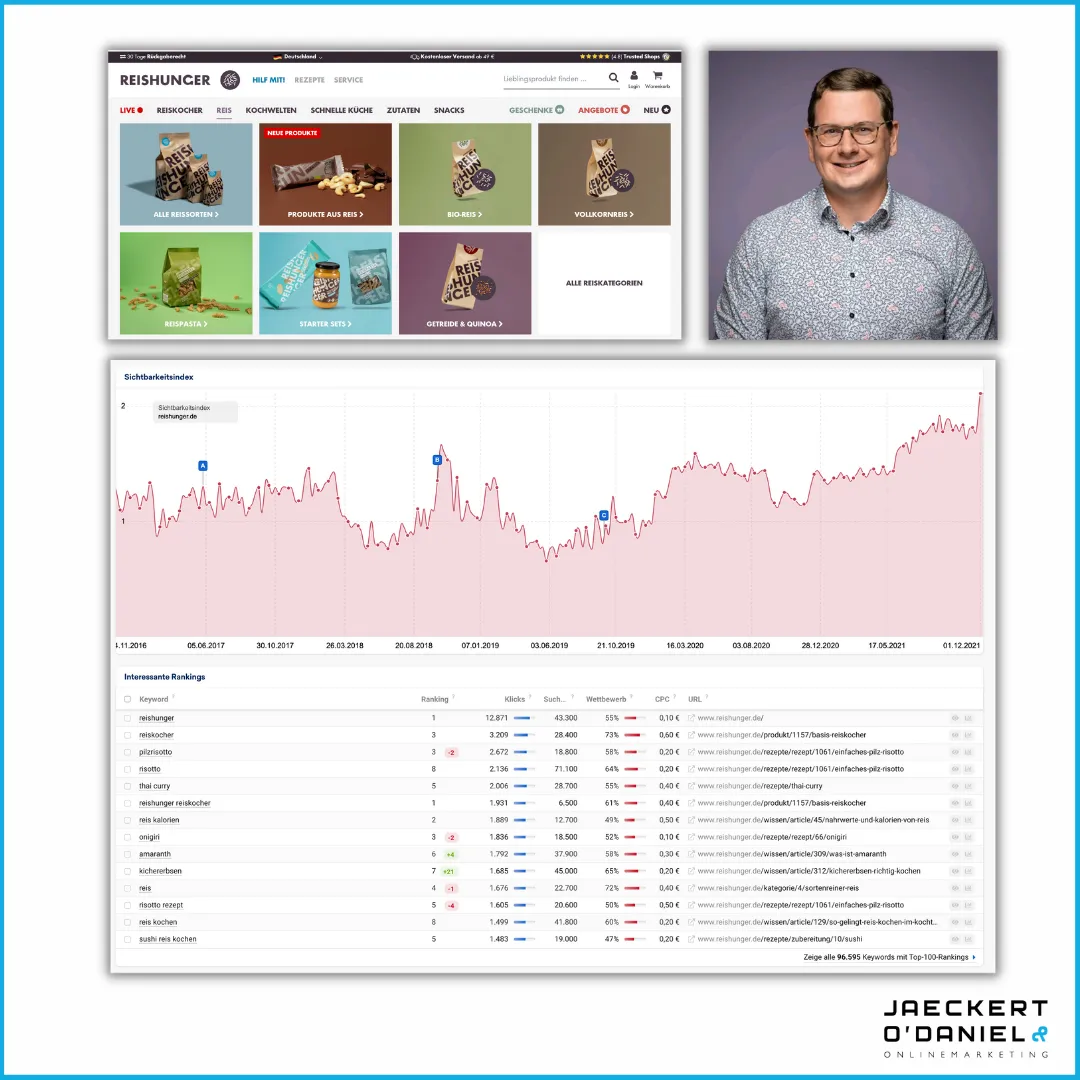
Organic channels are every channel and format where you do not pay directly for distribution, and therefore not directly for reach. That includes everything around search engine optimization, and also organic reach on social media accounts. For example an SEO and content hub on the website, an active newsletter, a tutorial channel on YouTube, or personal LinkedIn profiles that build relevance and reach through content posts.
3 strategic drawbacks of paid media
No competitive advantage
The early-adopter phase is long over on every paid channel. Practically anyone can set up a simple campaign, provided there is enough money. A paid campaign is not a competitive advantage. Over the past years, every ad system has moved toward serving ever more automated campaigns. That keeps pushing click prices higher.
Weak advertising impact
One central thing is barely discussed anymore, and that is advertising impact. Whether Google Ads, LinkedIn Ads, or much else: a large share of people ignore the ads. A natural reflex to the overload. Google Ads blockers keep spreading. A personal anecdote: on LinkedIn, for example, we have never seen an ad that triggered engagement, meaning lots of likes or a positive discussion in the comments.
Little substance
Many Google Ads campaigns work like a pass-through heater. Rising click prices keep squeezing the margin. At the same time, you cannot do otherwise. Fear keeps you inside the ad system. Anyone who generates traffic only through campaigns like these, without working on branding, content, and their own channels, is extremely dependent. You build hardly any lasting marketing value that way.
Deepen your SEO knowledge: every Monday by email
3 advantages of organic channels
Digital assets
Organic channels rarely grow out of nothing. At the start there is always a strategic concept. The effort to develop and launch them is often high, but organic then performs very cost-efficiently over the long term. The measures almost always work in the medium to long term. Growing brand awareness and sales goals often go hand in hand. What companies build this way are digital assets.
Much stronger impact
Every organic channel has a fundamentally different effect on the target groups. They create a pull, unlike classic push advertising, which interrupts the user in the middle of an activity like a market hawker. Many users actively follow a brand. The connection is much deeper. Or they search specifically for a topic and come across a company that way. Google is a relevance machine. It shows users who matters on a topic.
Competitive advantage
Because none of these measures are easy to come by, you build an elementary competitive advantage. A moat. Organic channels that have grown over years have enormous reach and provide a foundation for the whole company. A chain of expertise also develops. The digital team orchestrates the measures and pushes the channels alongside one another.
An example of a foundation built with SEO and content
Over several years, Allianz has built a very strong and deep content hub around its offers.
Under individual landing pages for core products there are between 20 and 90 further landing pages, specific to target groups and along the customer journey.
We discuss the example in the livestream and here in depth (including charts).
We advise marketing leads on SEO

We are Fabian Jaeckert (on the right) and Benjamin O’Daniel. For many years we have advised mid-sized companies on how to get more visitors through Google and turn that traffic into inquiries and sales, so that the website becomes a measure that supports sales. Through high-quality content.
With Jaeckert O’Daniel, it quickly became clear to us that we had made an excellent choice in selecting potential partners for our online marketing project. Their expertise and, above all, their ambition to thoroughly immerse themselves in our specific industry topic to provide us with the best possible support, are precisely what is now propelling us forward.
 Tobias ReitmeierF.EE Group
Marketing leads have many projects on the table. They know that search engine optimization matters. But the concrete implementation, above all developing a solid SEO strategy, is hard for them.
That is exactly what we specialize in. We develop SEO strategies and support the in-house teams during implementation. In doing so we combine our technical expertise with our experience in high-quality content production. Here are some testimonials.
Sound interesting? We can set up an SEO intro call by video (30 min.).
Our podcast interviews with practitioners in the field


SEO for a software company: interview with Beat Köck

Community management in companies: interview with Vivian Pein
How do I become a personal brand without crude self-promotion? Interview with Kerstin Hoffmann