
Many companies want their products to be recommended in AI systems like ChatGPT, Copilot, and Gemini. Specifically, when their target audience searches for them. But how does one measure the work on such AI optimization, which is called GEO (Generative Engine Optimization) or LLMO (Large Language Model Optimization)? What are the specific goals?
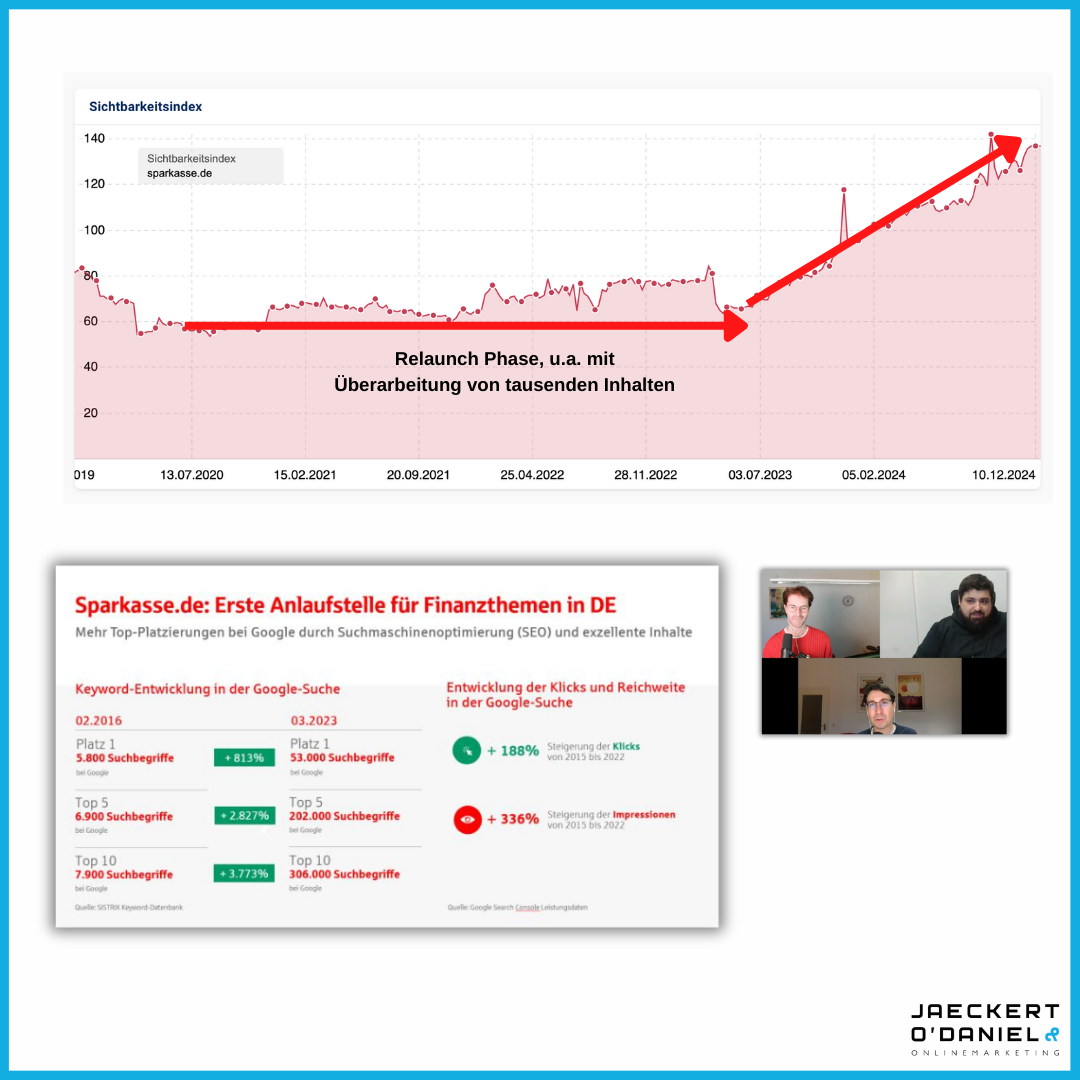
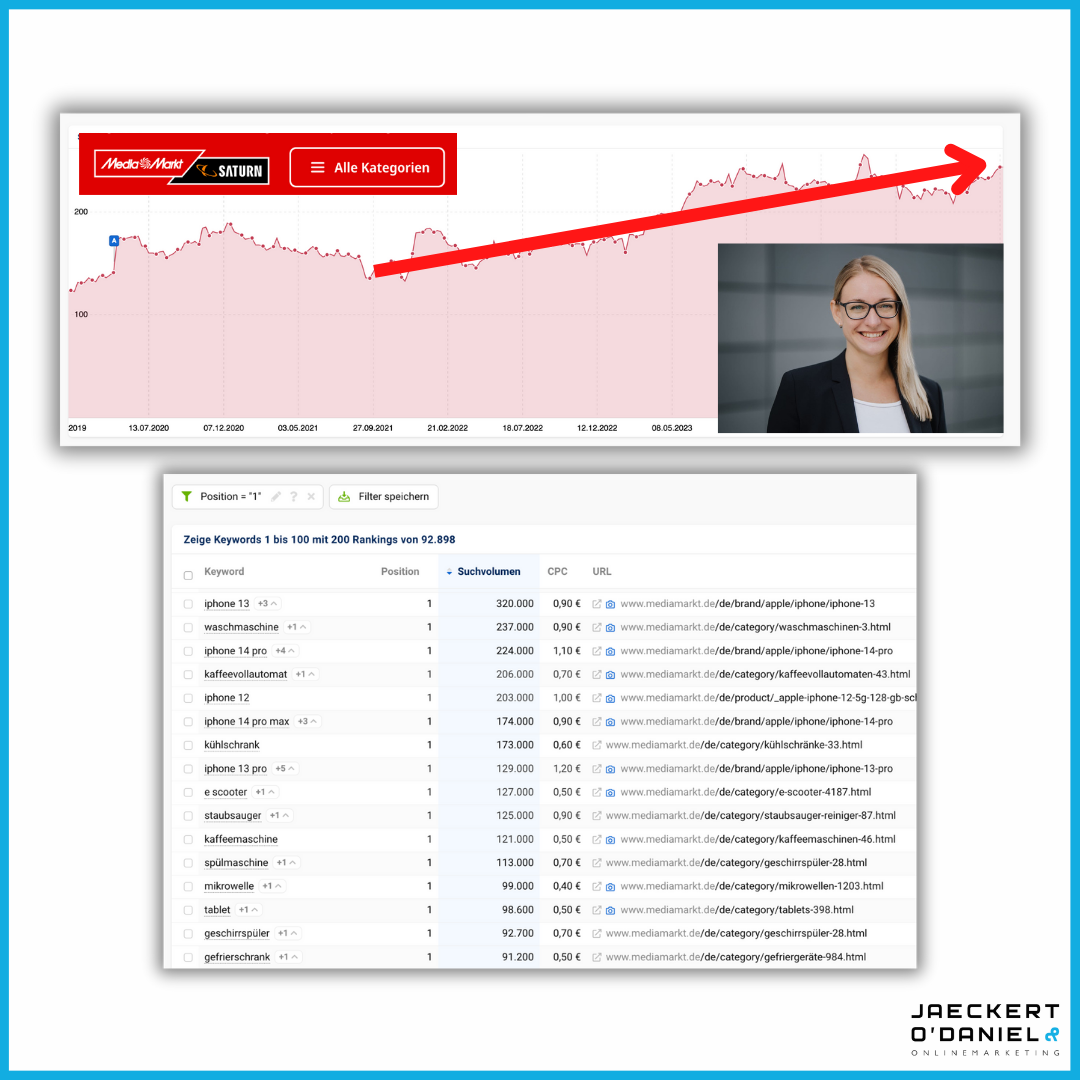
We discuss this in this episode of our Content Performance Podcast. As always, we stand between two worlds: From our perspective, old SEO KPIs are becoming increasingly ineffective. At the same time, new fields of work are emerging – and the question arises as to which new GEO and LLMO KPIs one can apply to their work.


Core SEO Metrics No Longer Make Sense
GEO / LLMO KPI: Brand Mention
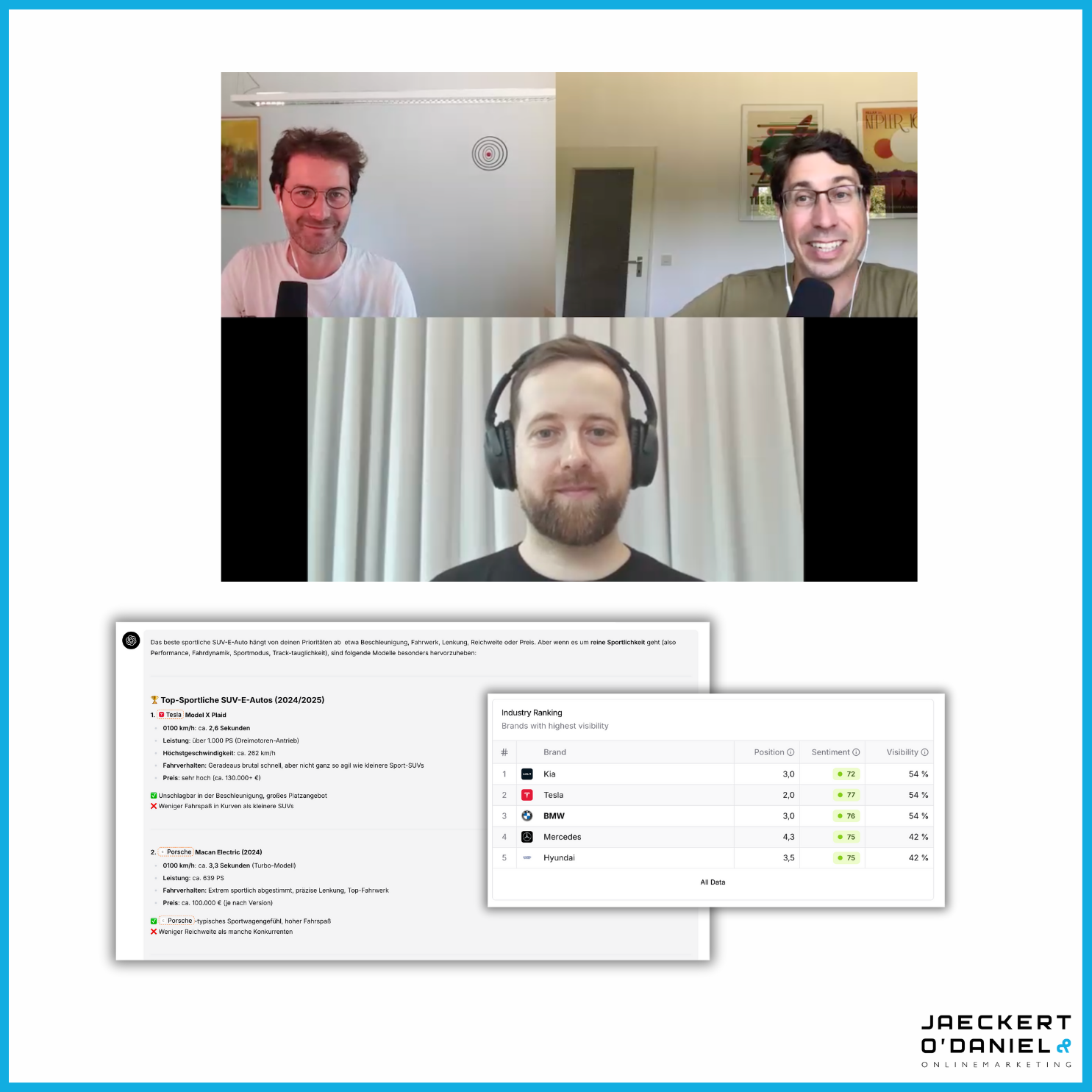
When and how are brands or specific products actively recommended in ChatGPT? From our perspective, this is the decisive metric. Such an AI recommendation is extremely valuable: The AI system typically actively presents a maximum of 5 products – and also evaluates these products. It is therefore an individual buying guide. Completely ad-free and without other distracting elements.
To monitor brand mentions, the right prompt methodology is crucial. Here, we work partly with our own tools that we develop and with new GEO Monitoring Tools that are coming onto the market.
To be clear: There is no valid data basis for prompts. Even three years after the launch of ChatGPT, it is completely unknown how users utilize these systems (see Fabian Jaeckert’s LinkedIn Post on Prompts and GEO Analyses). However, even without prompt data, we are not flying blind. From our perspective, it’s about recognizing fundamental patterns in an AI customer journey – and continuing to work on them.
You are currently viewing a placeholder content from Default. To access the actual content, click the button below. Please note that doing so will share data with third-party providers.
More InformationVideo: Prompt Methodology for Brand Mention Analysis
GEO / LLMO KPI: Industry Ranking
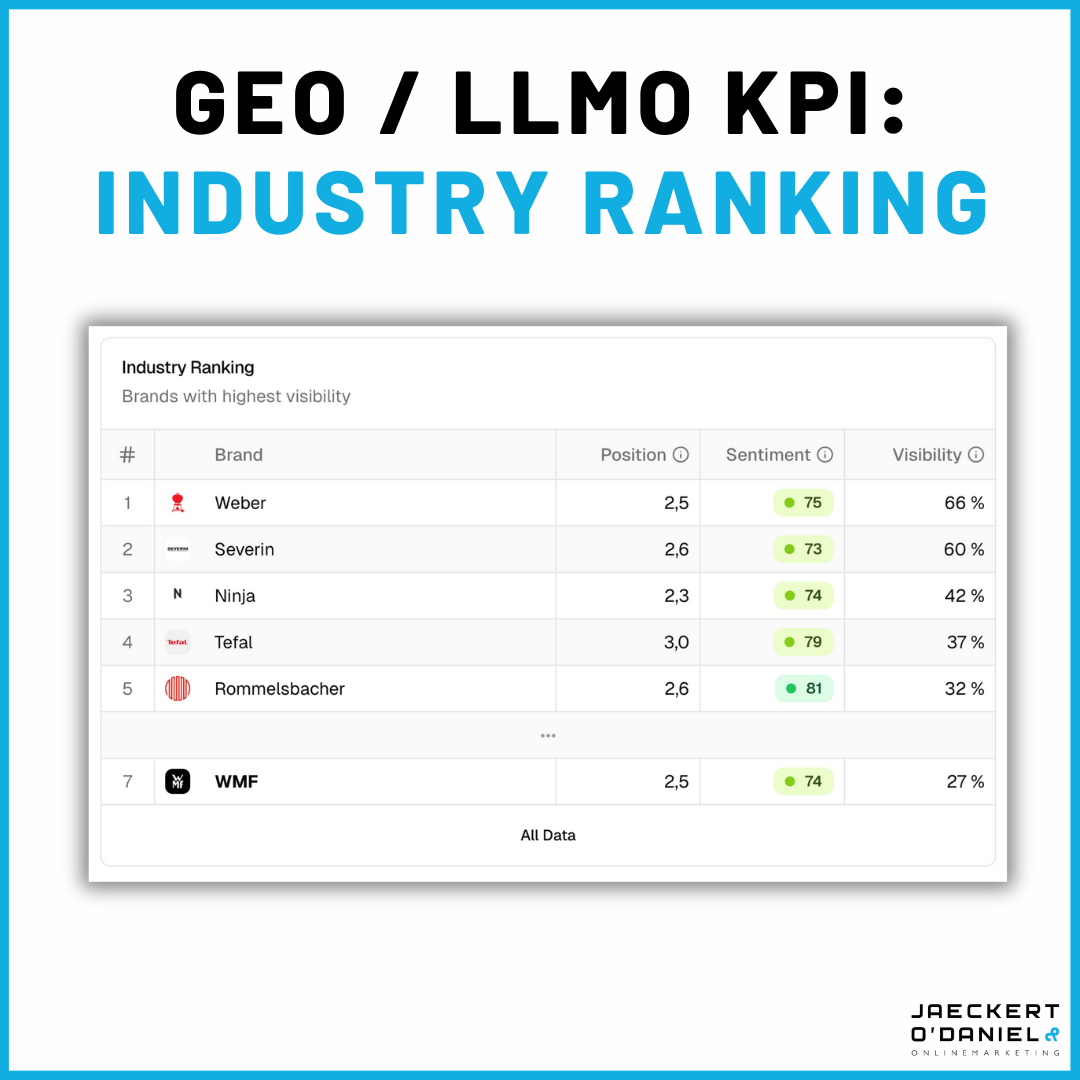
From such GEO Brand Monitoring, a robust “Industry Ranking” emerges. A clear competitive comparison. Here, the brands that are displayed and recommended based on the monitored prompts are shown. From this, we can define goals from our perspective. If, for example, a brand is not recommended even once in the prompt set or is in the lower ranks, we can draw conclusions and develop measures to improve the Industry Ranking.
The GEO Monitoring Tools are still in the midst of development here. This can be seen, for example, in the “Sentiment”. AI systems evaluate products daily in their responses. In the software world, this looks like: “intuitive, comprehensive, practical” or “cumbersome, elaborate, complex”.
The brand mention, or mere mention, alone is not enough. It must also be positive. Otherwise, one might fail to impress the user – before they even visit the website for the first time. The new tools only show the sentiment on average.
Here, one can soon delve deeper in the future: Which positive and negative aspects appear how often? Are they general evaluations or is it criticism of specific functions? What are the bases for evaluation that AI systems rely on?
GEO / LLMO KPI: Clicks from AI Systems
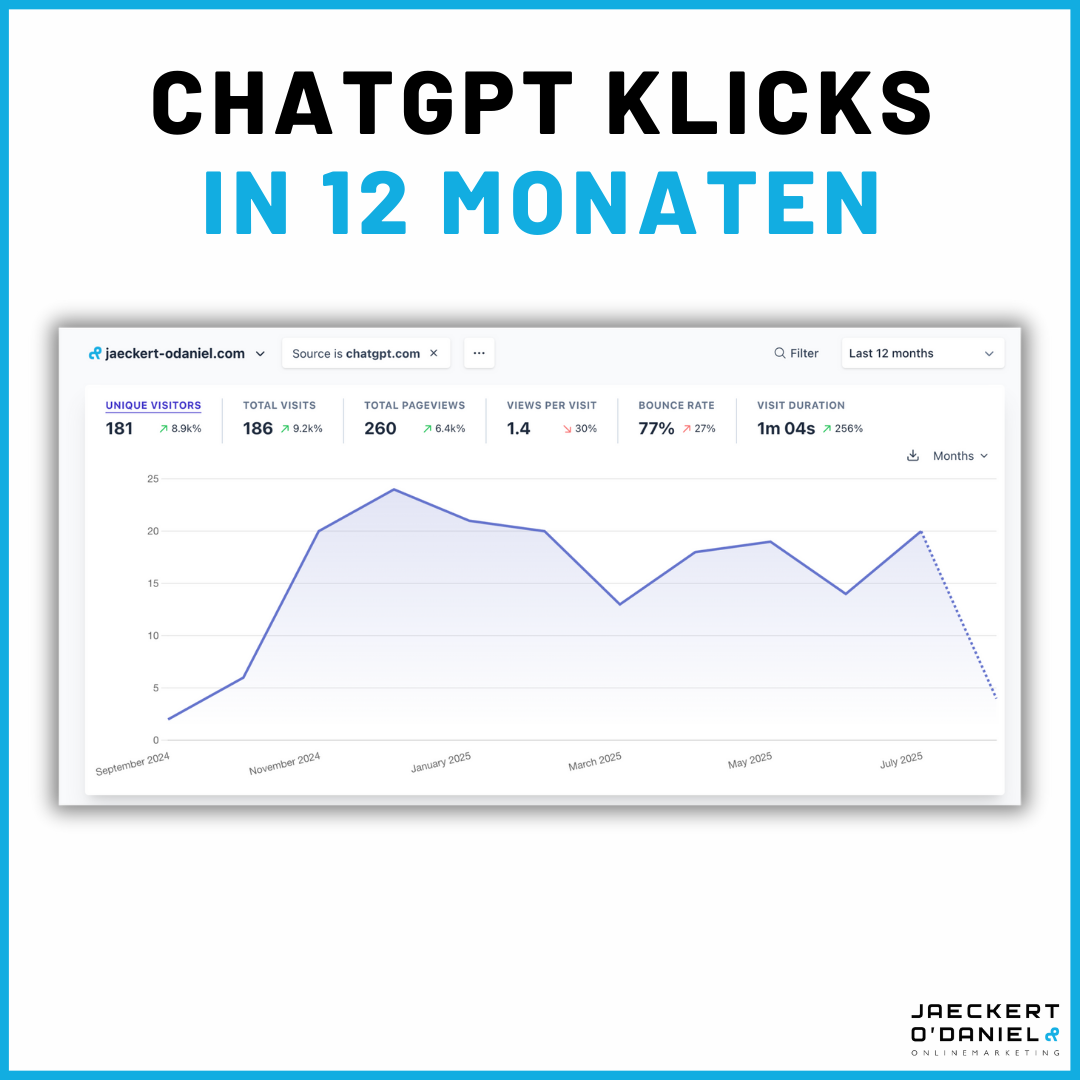
Clicks from AI systems should also be monitored and evaluated. However, it should be clear here: Significantly fewer clicks are generated than with Google. The example here comes from our own web analysis. ChatGPT is ranked 12th as a source for us.
However, ChatGPT only has around 40 million active users in the EU (Source, number in the penultimate paragraph), which is a market penetration of around 10 percent. But even with 100 percent market penetration, we would only reach around 1,800 clicks – far from what Google brings us (here is an overview of our traffic sources, LinkedIn post by Benjamin O’Daniel).
On the other hand, these clicks are very valuable. One can assume that users have a large part of their customer journey within ChatGPT and other systems – and then visit a website as part of their purchasing decision.
Ultimately, however, this is just another “status quo”. In the future, it is also possible that purchases will occur via AI agents, and users will no longer need to visit a website themselves for this purpose. Then the KPI would be “AI Agentic Clicks”.
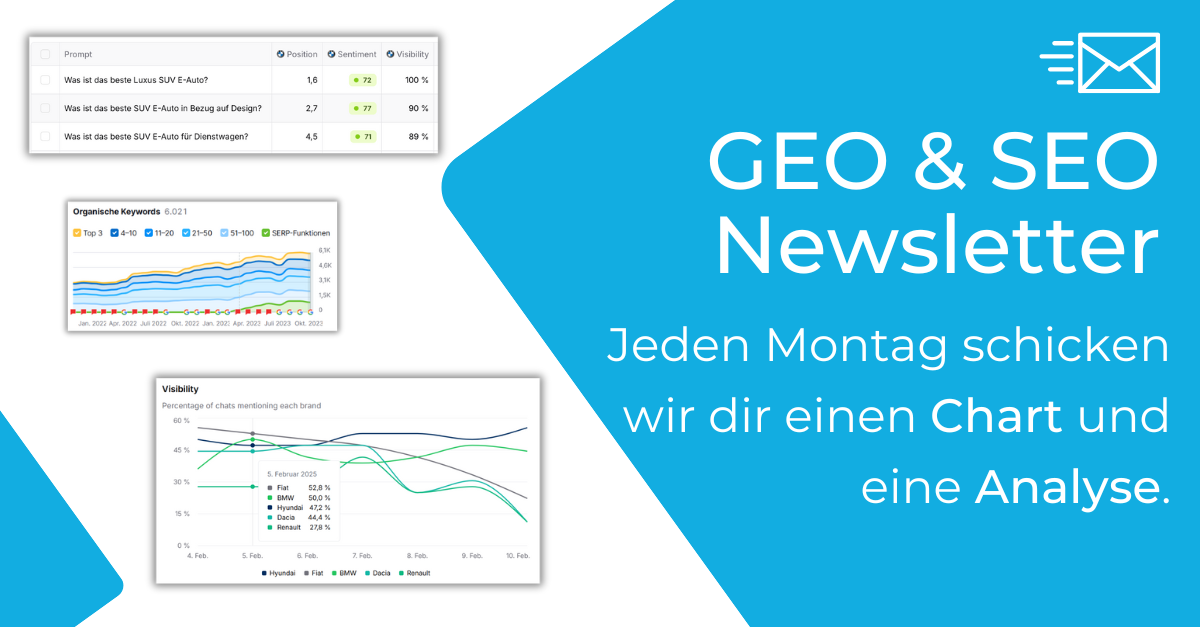
Deepen your GEO Knowledge: Every Monday via Email
We Advise Marketing Professionals in SEO and GEO
For anyone seeking an SEO sparring partner or comprehensive SEO consulting, Fabian and Benjamin are the perfect choice. As an in-house SEO expert, I sought competent SEO support and found it with them. During a very pleasant introductory meeting, we jointly developed an approach to establish SEO among the individual stakeholders and thereby gain more internal visibility for the subject. Based on this initial discussion and a joint kick-off with the stakeholders, they developed a sound SEO and content strategy for a product area. Since then, they have both supported me as sparring partners during implementation.
The collaboration with Fabian and Benjamin is a great pleasure for me and all project participants, as they are masters of their craft and bring immense passion for SEO. This combination is infectious and motivates everyone to achieve peak performance.

I look back with great satisfaction on the SEO project that we carried out with Benjamin and Fabian. Firstly, the collaboration was on a very pleasant, goal-oriented level. Secondly, the consultation was structured in such a way that we could immediately start with the implementation. We received very concrete optimization suggestions that were tailored to our internal capacities and therefore realistically implementable. Even though only a few months have passed, we can already see the first results of our work in the Google rankings. Traffic for our relevant keywords is steadily increasing, and we still have enough concrete work packages from Benjamin in the pipeline to boost our site. Furthermore, through the consultation, we have acquired so much internal SEO know-how that we can now optimize our site independently. And most importantly: Visitor numbers have doubled – with correspondingly positive effects on sales.