May 25, 2026Benjamin O’Daniel
Google's New Guide to AI Search: Our Analysis
Google has published a guide for the first time on how companies can optimize their AI visibility. But what should you make of the tips? We discuss that in this podcast episode.
We go through the new documentation piece by piece. As always, the messages sit between the lines, and often also in what is not written.
Spoiler: the things that really matter for Generative Engine Optimization (GEO) are almost completely left out. We talk about that in the episode as well.
Google is stuck in its tradition
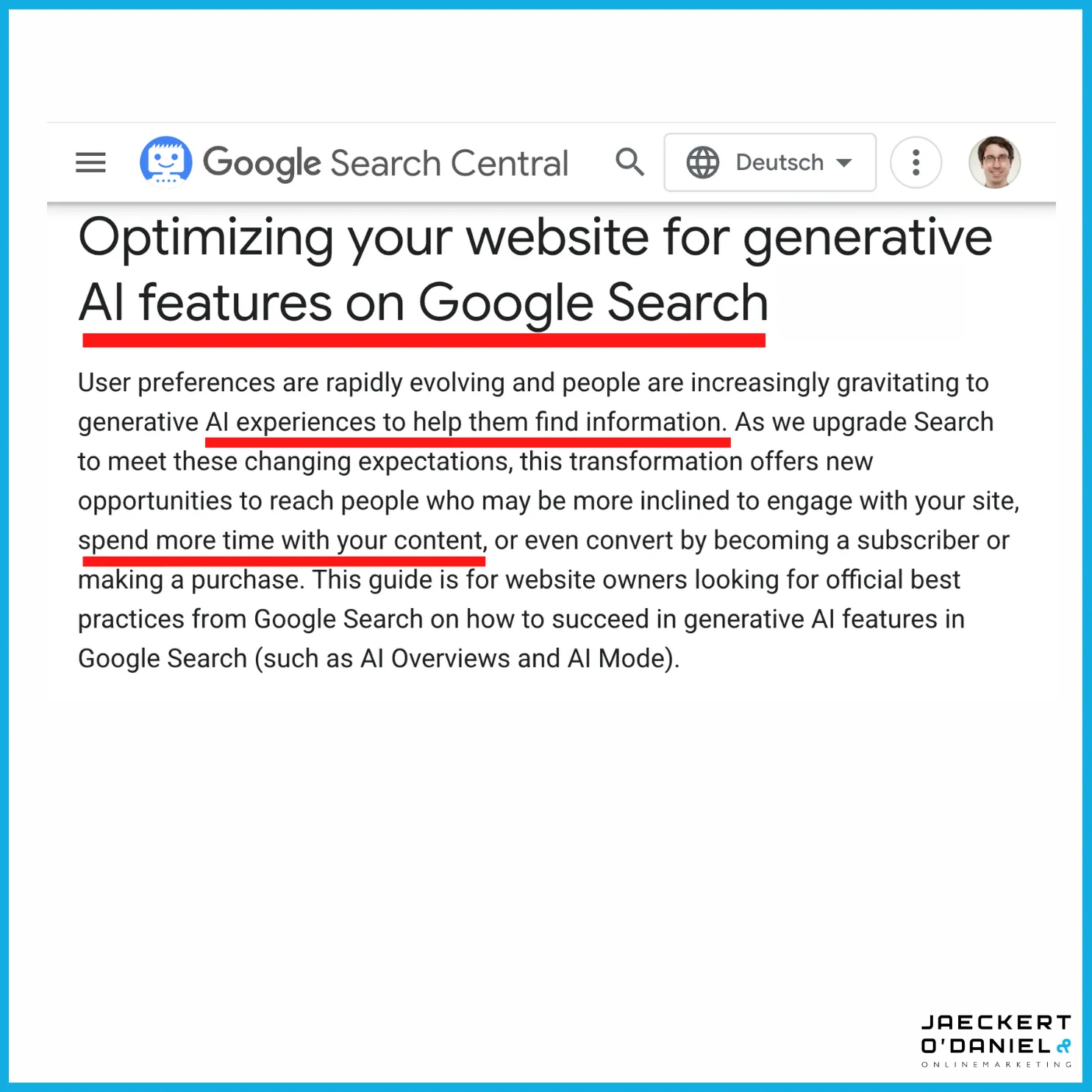
Even the headline and the first lines prove how firmly Google is stuck in its old world.
- A twisted title: “Optimizing your website for generative AI features on Google Search.” AI is therefore treated as a feature embedded in the old search results. Even AI Mode is only called a “feature”. The text also talks about AI Search, even though an AI system can do much more than merely simplify a search.
- An outdated USP: The new AI features are supposed to help users “find information” they are looking for more effectively. That is the core benefit Google has delivered for more than 25 years. Not a word about chats, not a word about interaction that is much more than just “search”. Yet every schoolchild knows how to discuss their topics with an AI.
- An outdated promise: If webmasters follow the new optimizations, they get “new opportunities”, according to Google. Users supposedly interact more strongly with the content and spend longer on it. There is no evidence for this. The numbers show the opposite: almost all websites receive less Google traffic than before; at best, traffic stays stable. It used to be: if you make an effort and rank at the top, you get website visitors. AI undermines exactly that. This unwritten rule no longer applies.
An example Google gives that reveals everything
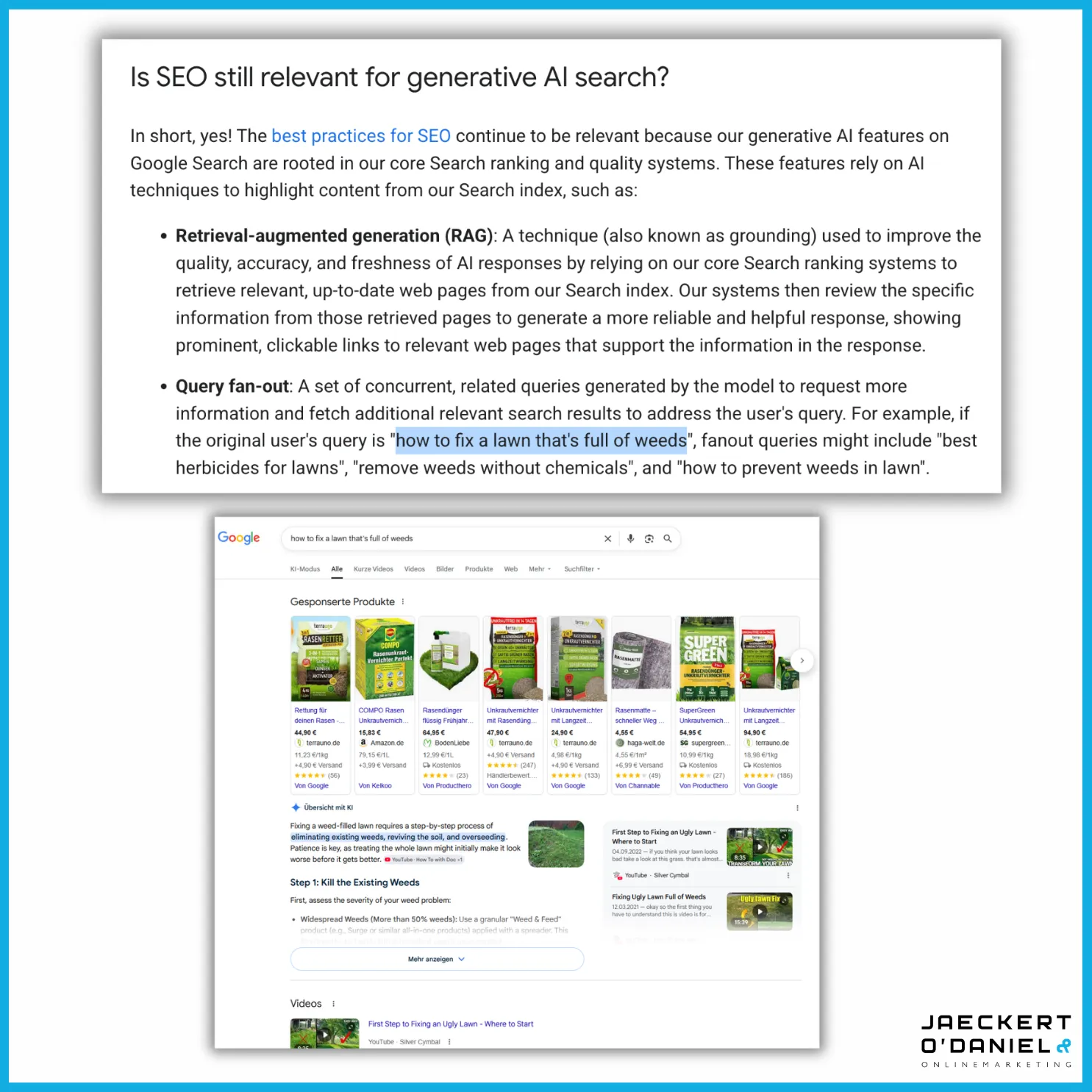
In the next paragraph, Google wants to explain why SEO is still relevant for AI Search. At its core, this is about “grounding”. A user enters a prompt, and the AI system translates it into several search queries and feeds them into the search algorithm. Websites that rank well are then read out accordingly and referenced as a source.
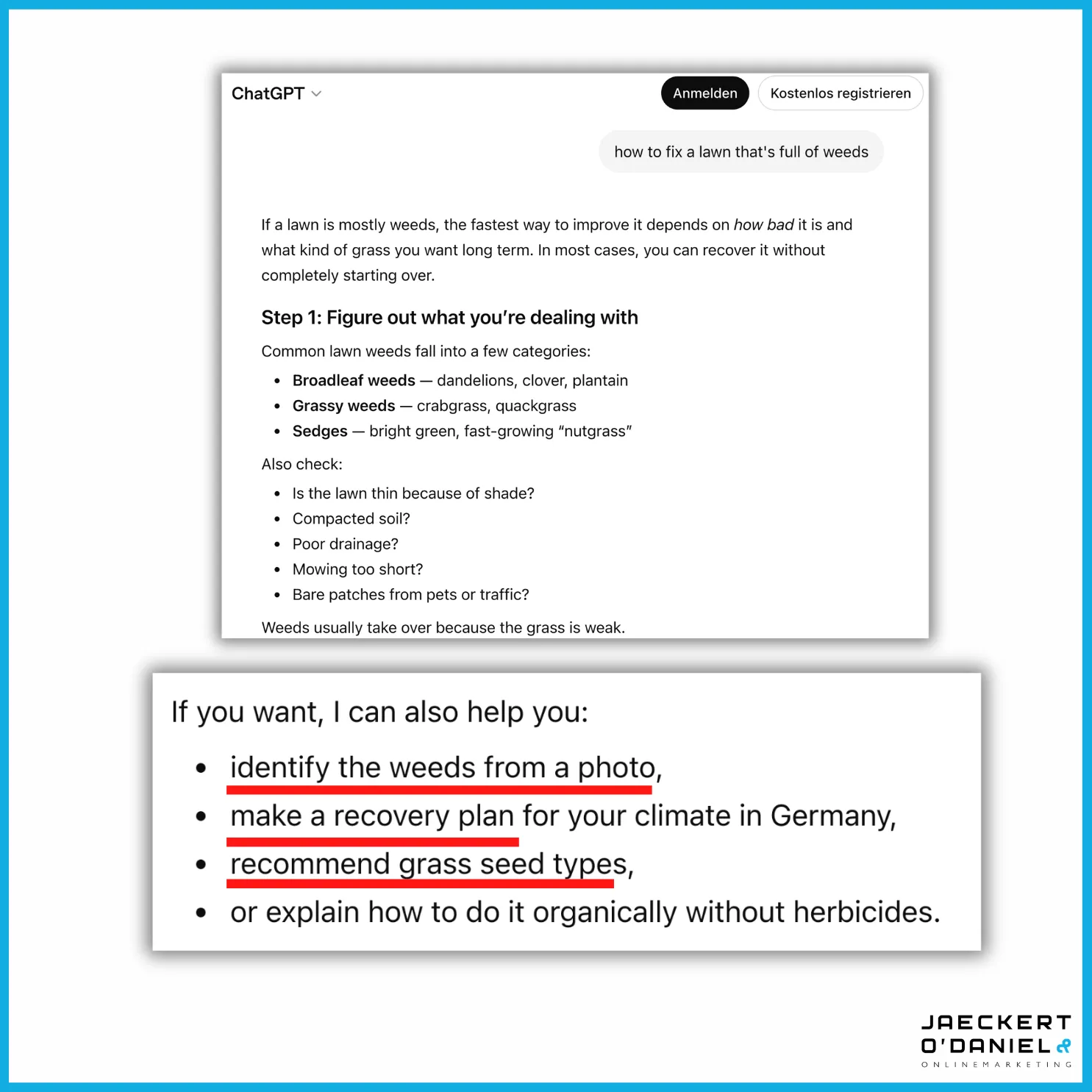
As an example of this process, Google cites the search query “how to fix a lawn that’s full of weeds”. A classic “W question” (how something works, and so on). If you enter this search query in Google, you first get ads for weed killers. Below that, the AI answer, with sources on the right.
If you enter the same search query in ChatGPT, you also get an answer. But with no sources at all. An AI system like ChatGPT no longer has to retrieve dozens of websites for such a general question. It can retrieve the answer from its general store of knowledge. Google still runs search queries here, even though that is obviously no longer necessary.
ChatGPT also asks a follow-up question and requests a photo. Because the AI system does not want to inform in general terms, but to advise you personally. If you then upload a photo, you get an individual recommendation on how the lawn can be put back in order, and which products can help.
For companies, it is therefore irrelevant to be pulled in by an AI system for a question like this. You no longer have to create content for it, because you are simply being mined.
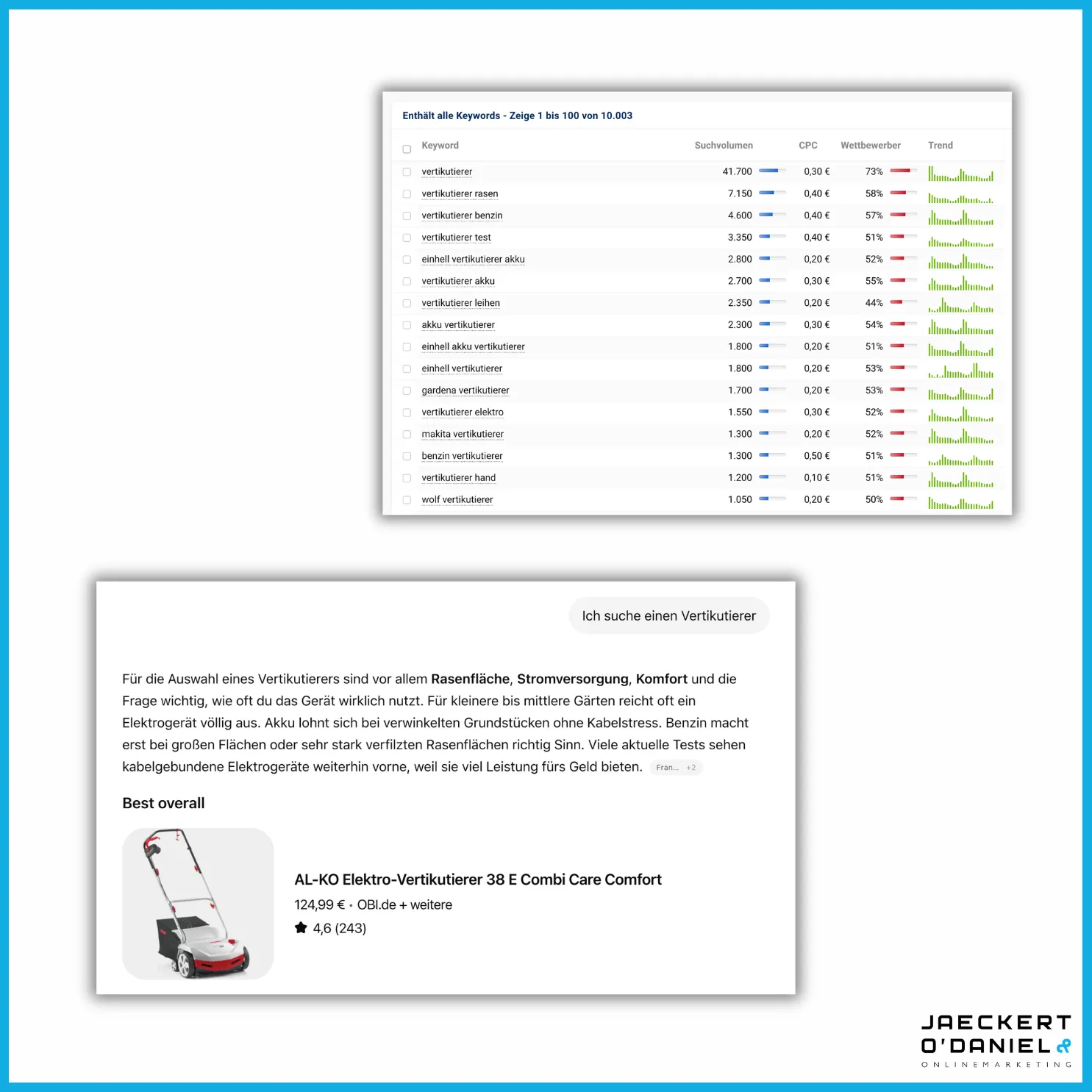
What is much more interesting is when an AI system recommends specific brands and products. In the context of the example, scarifiers or special fertilizers, for instance. Here it matters that you are mentioned and recommended. But Google does not address exactly this aspect in this documentation.
Recommendations from the pre-AI era
Further on, Google lists its requirements. Webmasters are expected to make sure the content is absolutely high quality and unique. High-quality texts, videos, photos: all of that helps, according to Google. Technically, too, the website should be set up perfectly, from crawling to little JavaScript to avoiding duplicate content.
Why you should go to all this effort remains unclear, though. The recommendations read as if they were copied over from the Helpful Content Updates and the Google Search Quality Rater Guidelines, topics from the time before AI. Because now you no longer get traffic for this. Instead, the AI reads you more effectively.
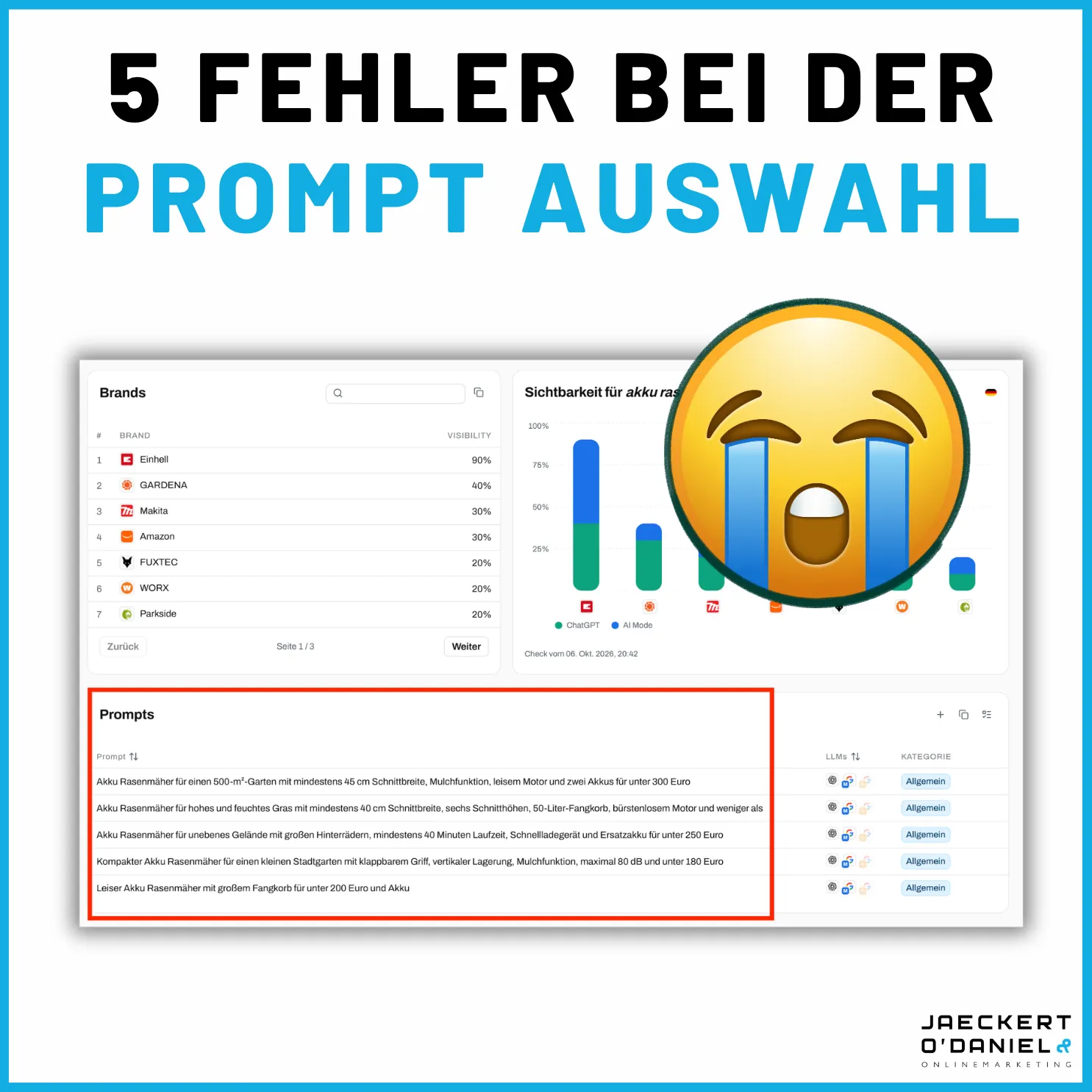
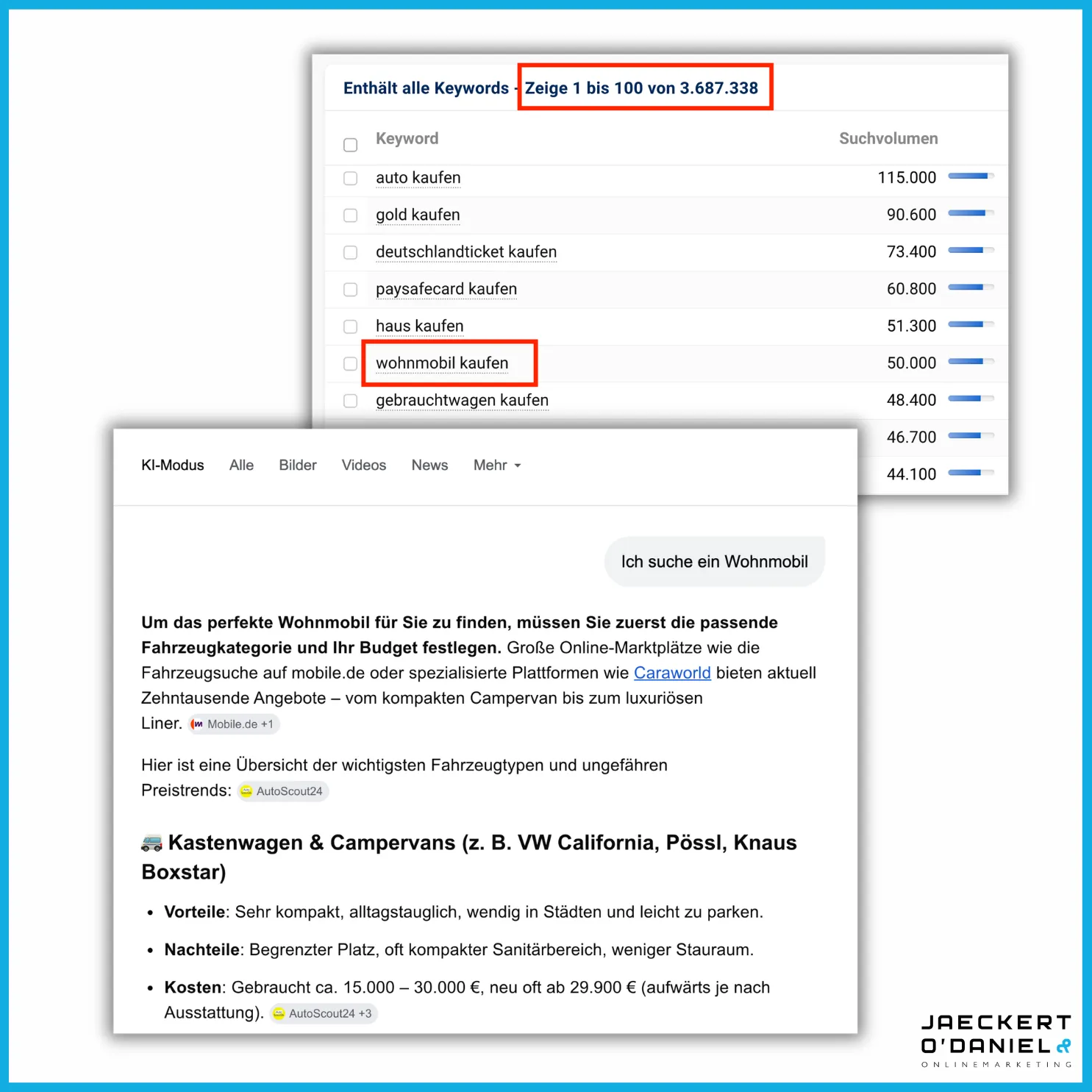
From our point of view, the effort only pays off close to the product. That is, when users are looking up specific information about brands and products, in the example about scarifiers, for instance. Here you are then read out, but in return you can also influence the AI’s answer and be visible there. In this area there is, on the one hand, search volume, and with it proof that people search for it (in the old search or in new AI systems). On the other hand, all AI systems, including ChatGPT, show sources, products, and links to shops here. So what matters is concentrating on the relevant prompts, see the screenshot. And not optimizing for AI Search in general. The only thing that is really helpful about the document: how Google clears up GEO myths (Fabian Jaeckert’s LinkedIn post on this).
A bright spot: Google clears up GEO myths
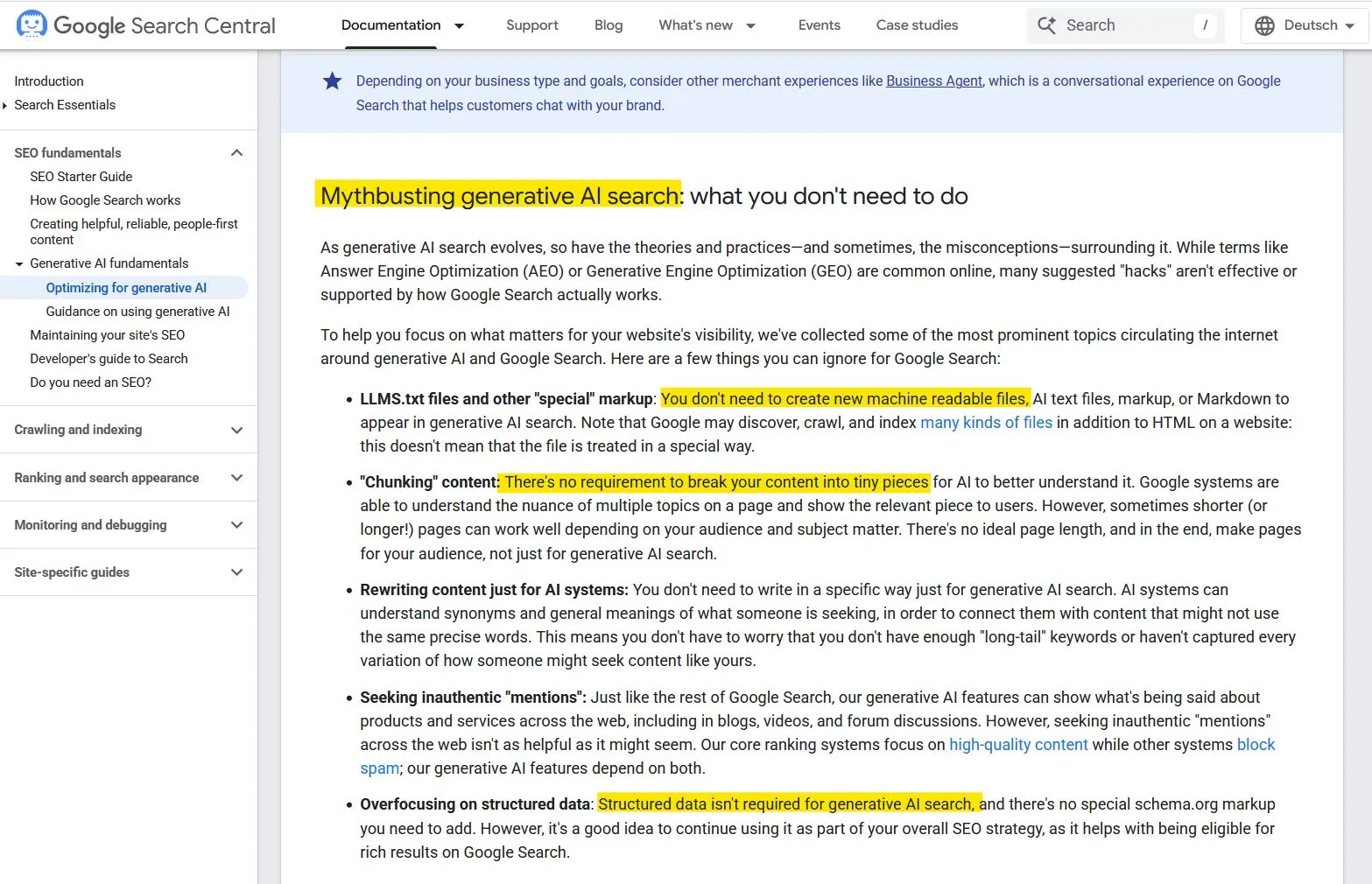
The only bright spot in the new documentation: Google clears up several GEO myths, above all on the technical level. Google writes:
- “You don’t need to create new machine readable files” (llms.txt)
- “There’s no requirement to break your content into tiny pieces” (chunking)
- “Structured data isn’t required for generative AI search”
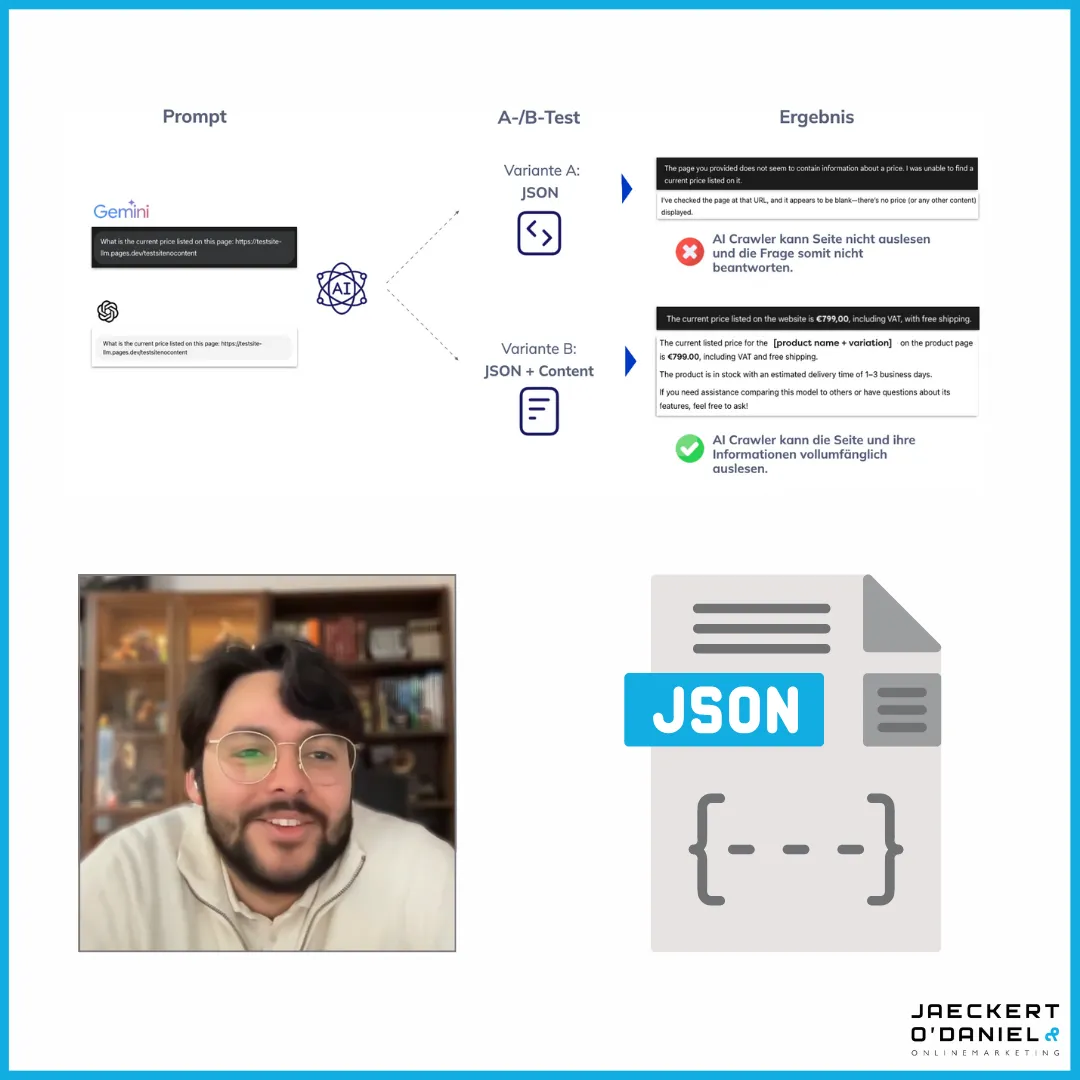
All three points are discussed in the industry as GEO measures. Among other places, in an expert interview, including a study on structured data.
Conclusion: companies need a GEO strategy
Research real prompts
Marketing teams face the task of researching relevant prompts. On the one hand, this means developing the prompts as realistically as possible. Because there is no search volume for prompts. On the other hand, you need a clear system. Millions of prompt combinations are possible.
Analyze AI visibility
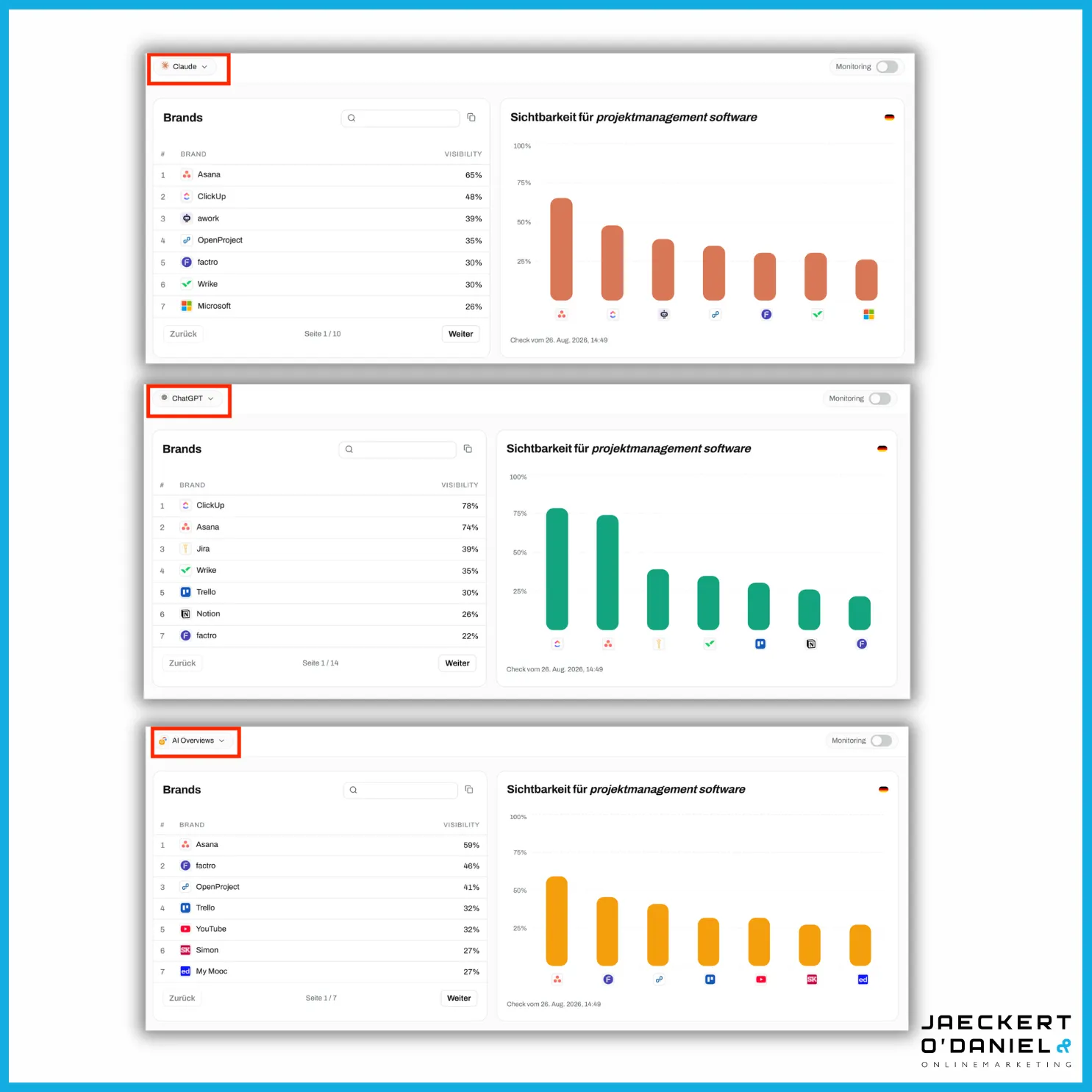
In the next step, you enter the prompts into an AI Visibility Tool. There are numerous providers on the market. The tools read out the AI answers and determine which brands and products are mentioned and recommended there. The sources that AI systems draw on can also be evaluated.
Optimize on-page and off-page
The third step is about the measures. There are often gaps in the content (on-page), or specific technical optimizations. On the other hand, it is about being named on external sources. Whether portals, magazines, blogs, or platforms such as YouTube, Reddit, and many more. Here it is important to work on the biggest levers, and to monitor the results in the tools.
Our conversations with SEO and GEO professionals
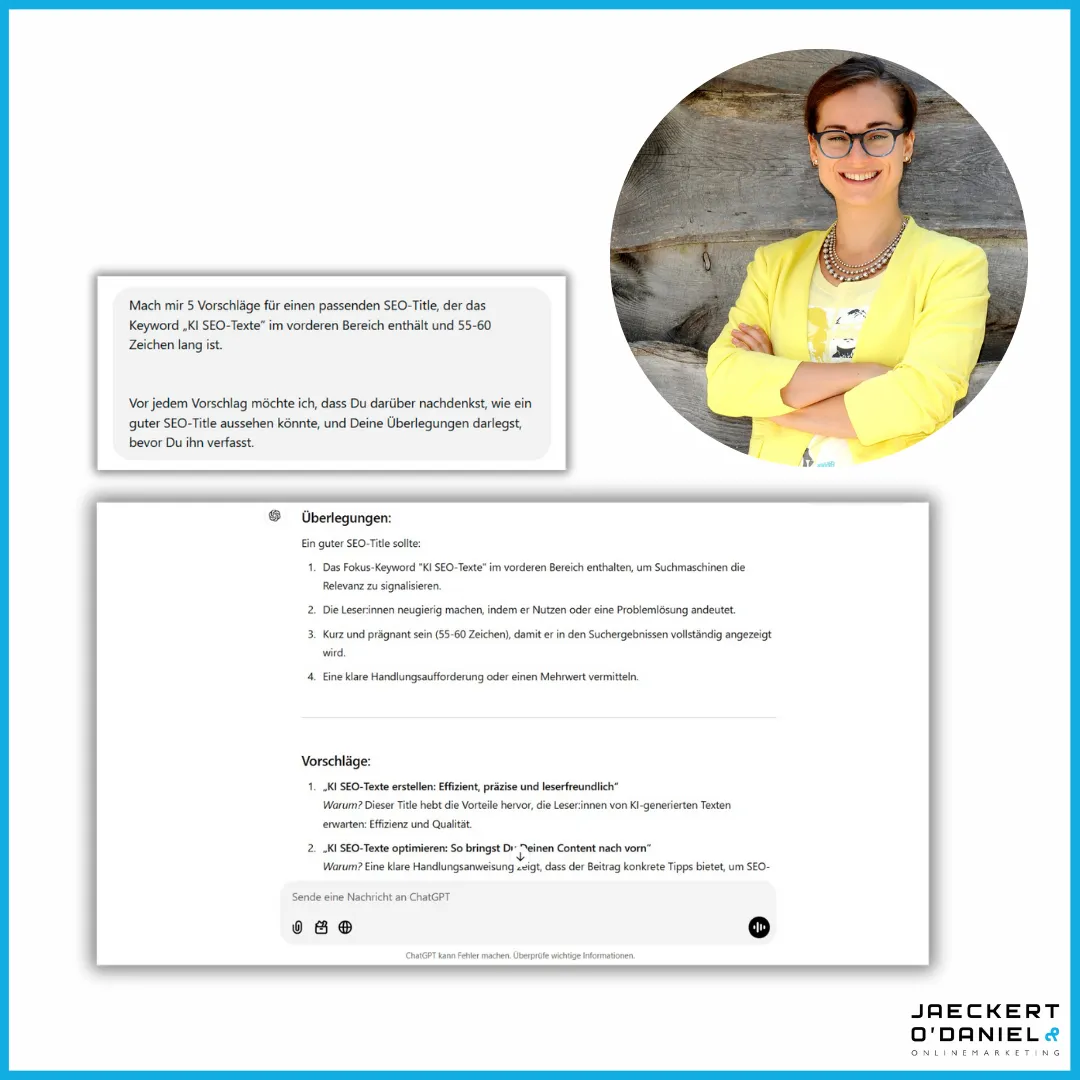
How SEO writers work with ChatGPT: interview with Monika Weber
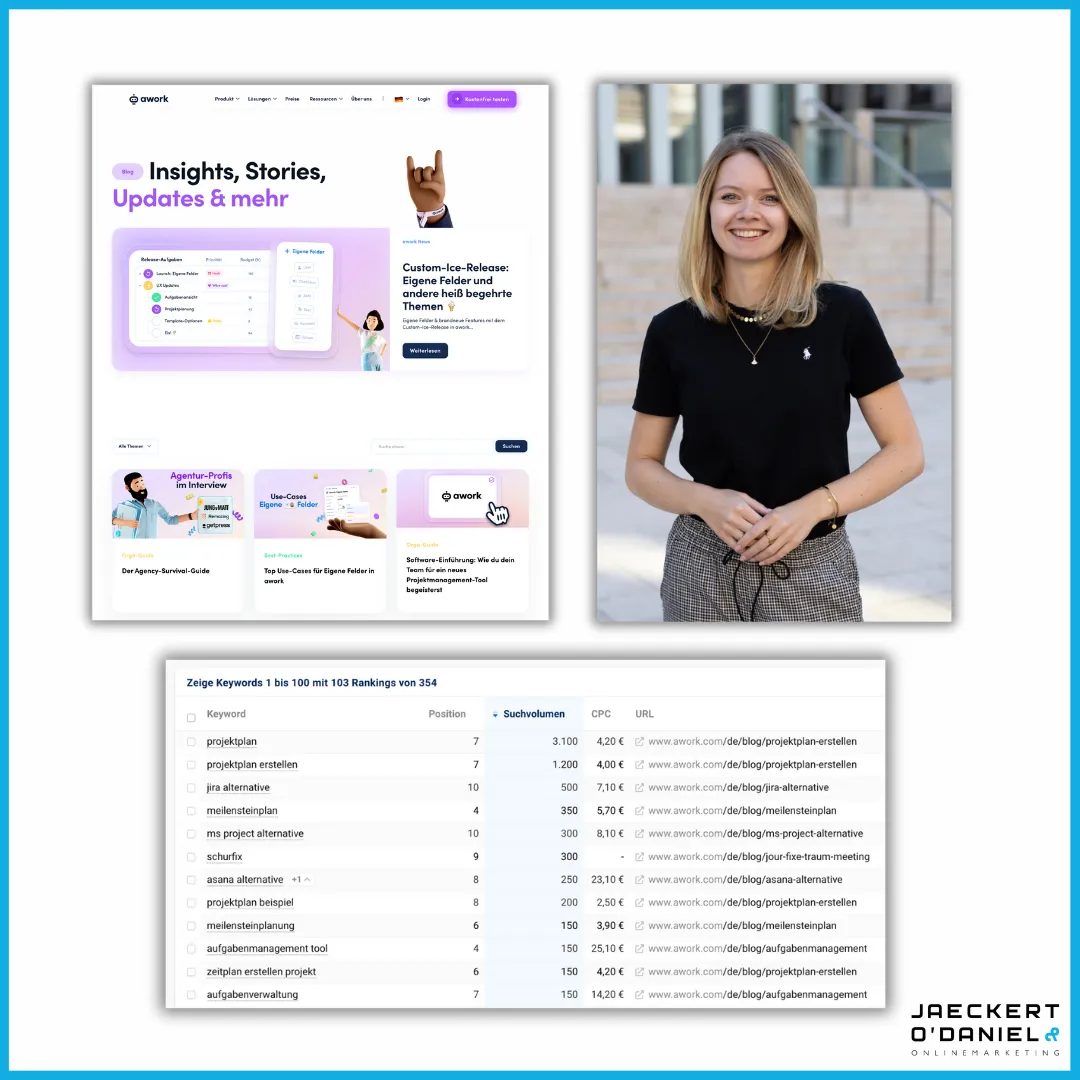
How the SaaS startup awork builds its SEO visibility: interview with Ayla Grzegowski
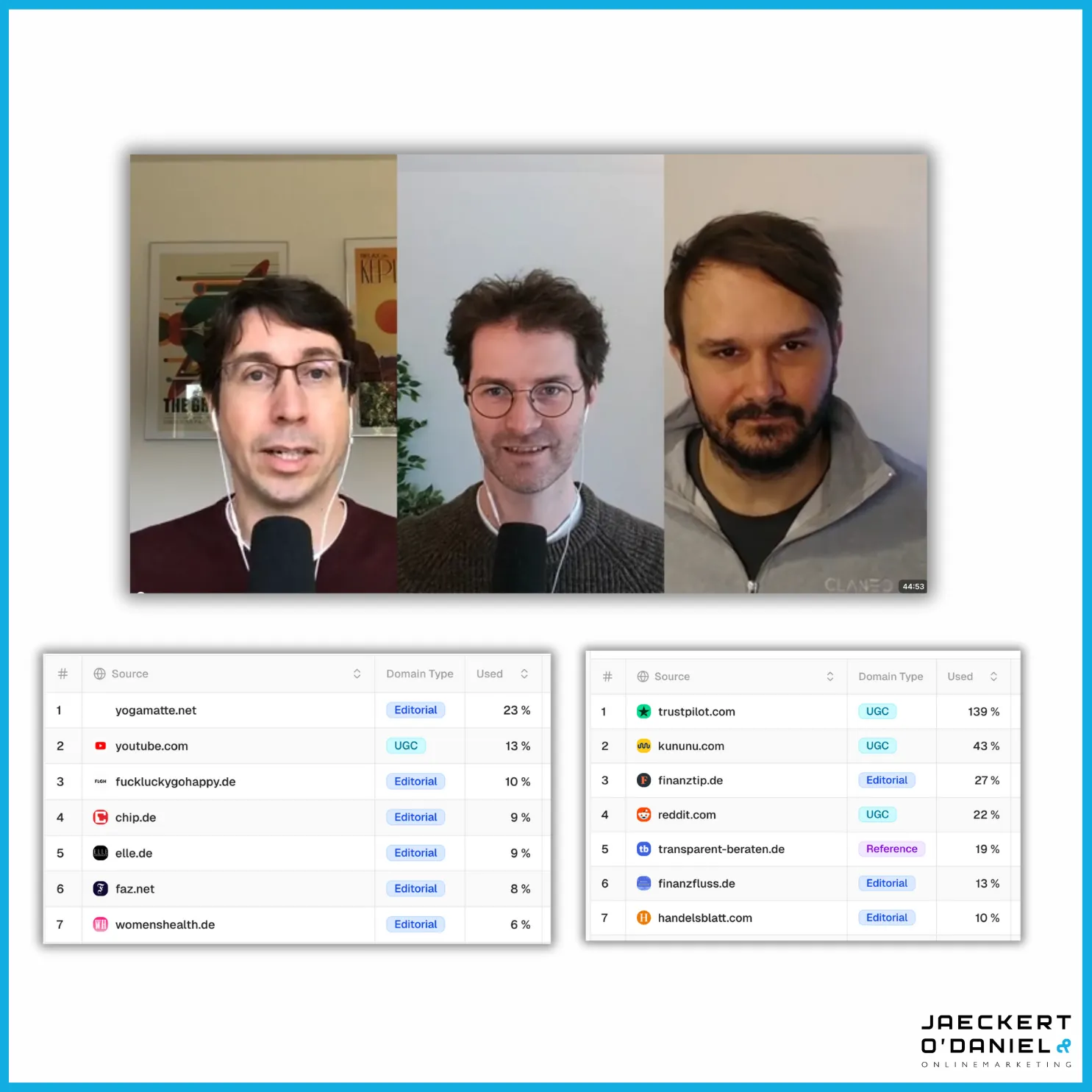
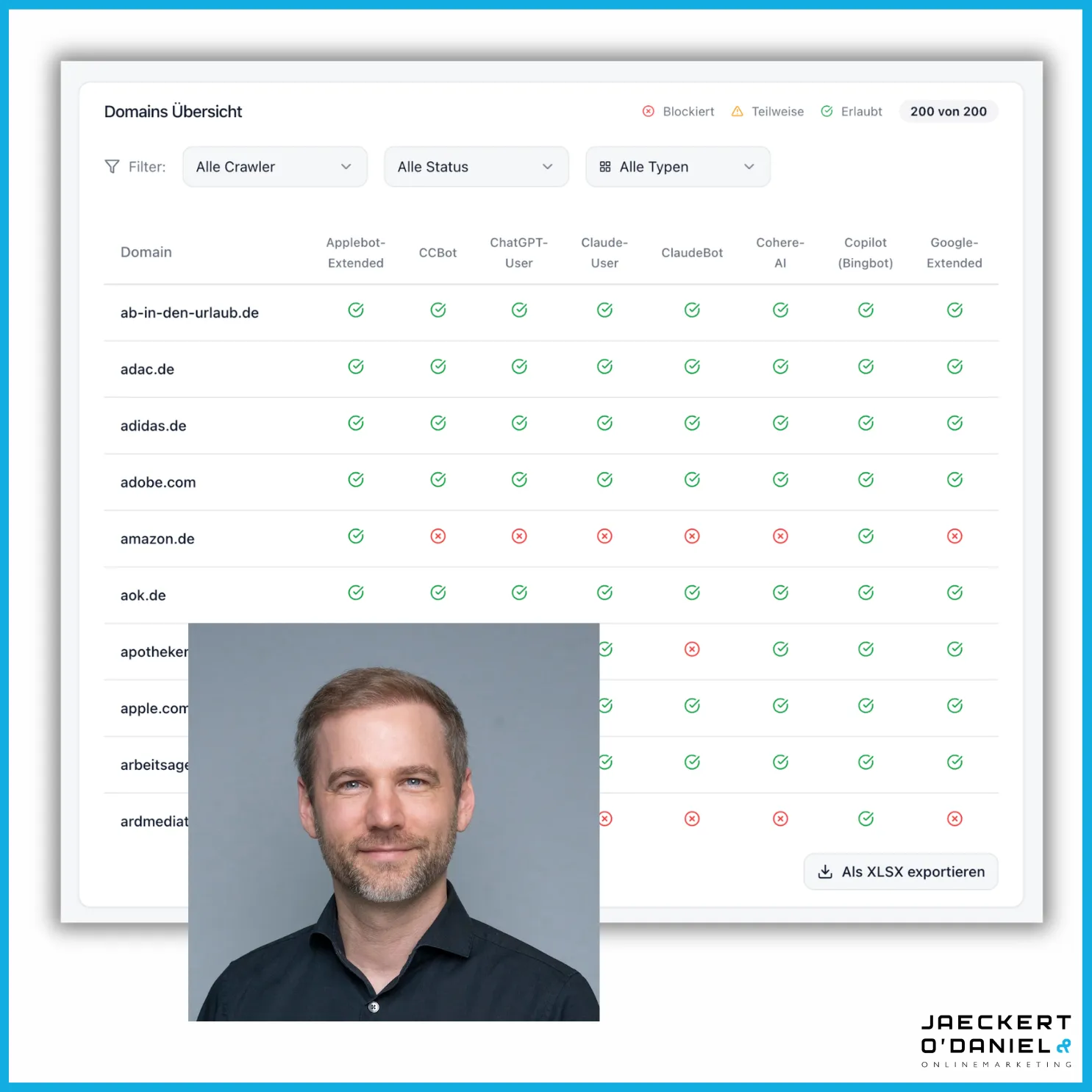
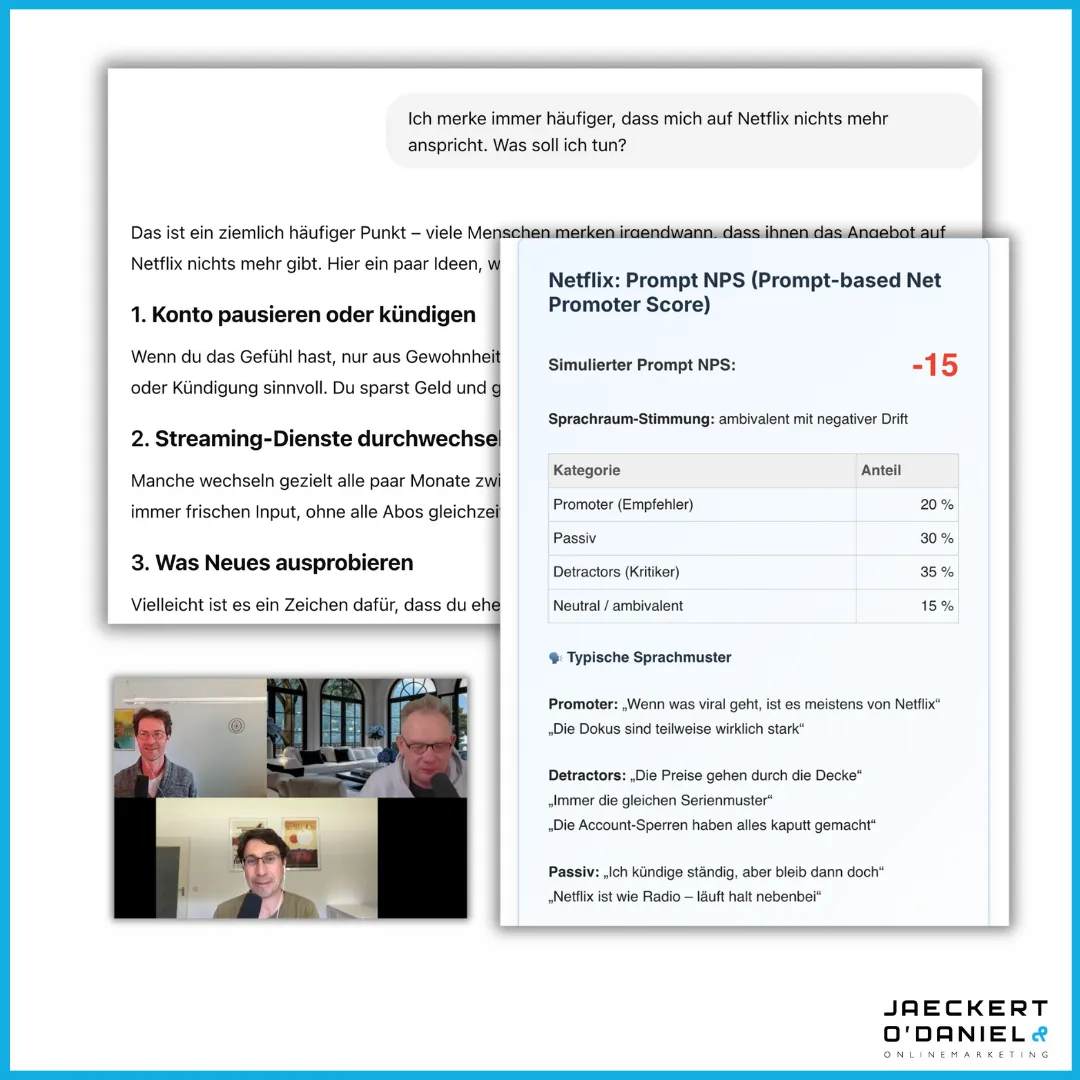
How does an AI system talk about your company? Interview with Hanns Kronenberg

We advise marketing managers on SEO and GEO
For anyone seeking an SEO sparring partner or comprehensive SEO consulting, Fabian and Benjamin are the perfect choice. As an in-house SEO expert, I sought competent SEO support and found it with them. During a very pleasant introductory meeting, we jointly developed an approach to establish SEO among the individual stakeholders and thereby gain more internal visibility for the subject. Based on this initial discussion and a joint kick-off with the stakeholders, they developed a sound SEO and content strategy for a product area. Since then, they have both supported me as sparring partners during implementation.
The collaboration with Fabian and Benjamin is a great pleasure for me and all project participants, as they are masters of their craft and bring immense passion for SEO. This combination is infectious and motivates everyone to achieve peak performance.
 Regina BiskopDeutsche Kreditbank AG
I look back with great satisfaction on the SEO project that we carried out with Benjamin and Fabian. Firstly, the collaboration was on a very pleasant, goal-oriented level. Secondly, the consultation was structured in such a way that we could immediately start with the implementation. We received very concrete optimization suggestions that were tailored to our internal capacities and therefore realistically implementable. Even though only a few months have passed, we can already see the first results of our work in the Google rankings. Traffic for our relevant keywords is steadily increasing, and we still have enough concrete work packages from Benjamin in the pipeline to boost our site. Furthermore, through the consultation, we have acquired so much internal SEO know-how that we can now optimize our site independently. And most importantly: Visitor numbers have doubled – with correspondingly positive effects on sales.
 Mark MaudererDigital Marketing Manager, Bierbaum Proenen
Deepen your GEO knowledge: every Monday by email