March 10, 2025Benjamin O’Daniel
Hyper Longtail Keywords: The Secret Traffic Drivers
There are keywords that nobody has on their radar. The search volume is really very low. They often fall through the cracks in keyword research.
But in Google Search Console you see: these hyper longtail keywords bring a lot of SEO traffic. Above all in comparison with the search volume, which looks so tiny.
How can you track down keywords like these? We talk about that in this podcast episode. In our SEO Academy we recently ran a workshop on it and recorded it. There we discussed a B2B example and showed an analysis of our own.

Hyper longtail keywords are often overlooked
Anyone who works on SEO knows: there are always larger focus keywords and smaller longtail search terms. Large and small refers to the monthly search volume. In keyword research it is usual to assign the smaller search terms to the larger ones.
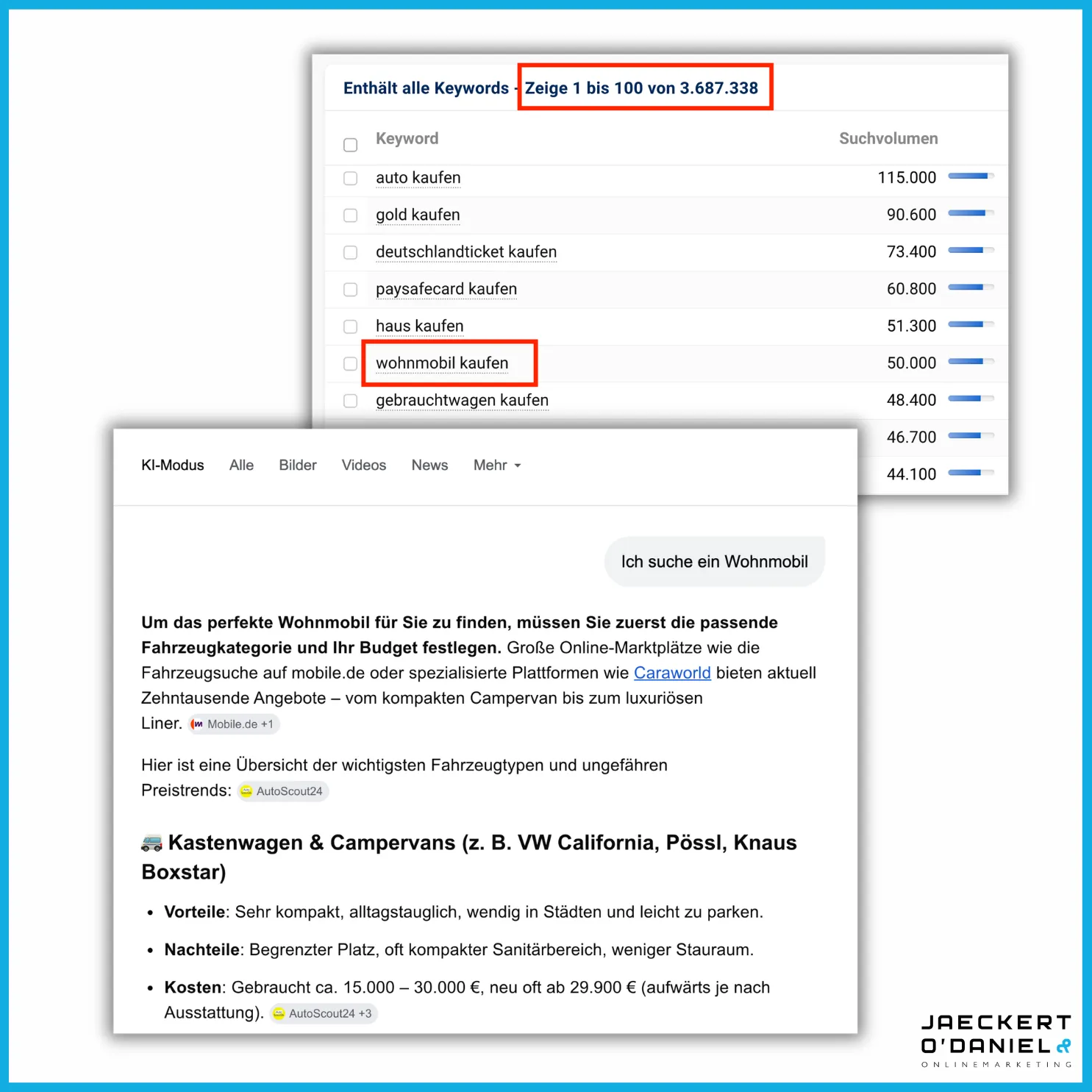
The usual next step is to write a comprehensive article on that, keyword SEO skyscraper. For some time now, though, this approach has been meeting with less and less success. Here we discuss an alternative approach, Ranch Style SEO. The skyscraper approach has another central disadvantage: smaller keywords get a paragraph in the longer article, if they get anything at all. Often they are deleted from the keyword lists entirely. The typical argument is that a separate article would not be worth it here. In our example chart (tool: Sistrix): the keyword with “27 inch” has only 50 searches. It would be one aspect in a larger article at most. If you look at the search results for it, separate articles on it hardly appear either.
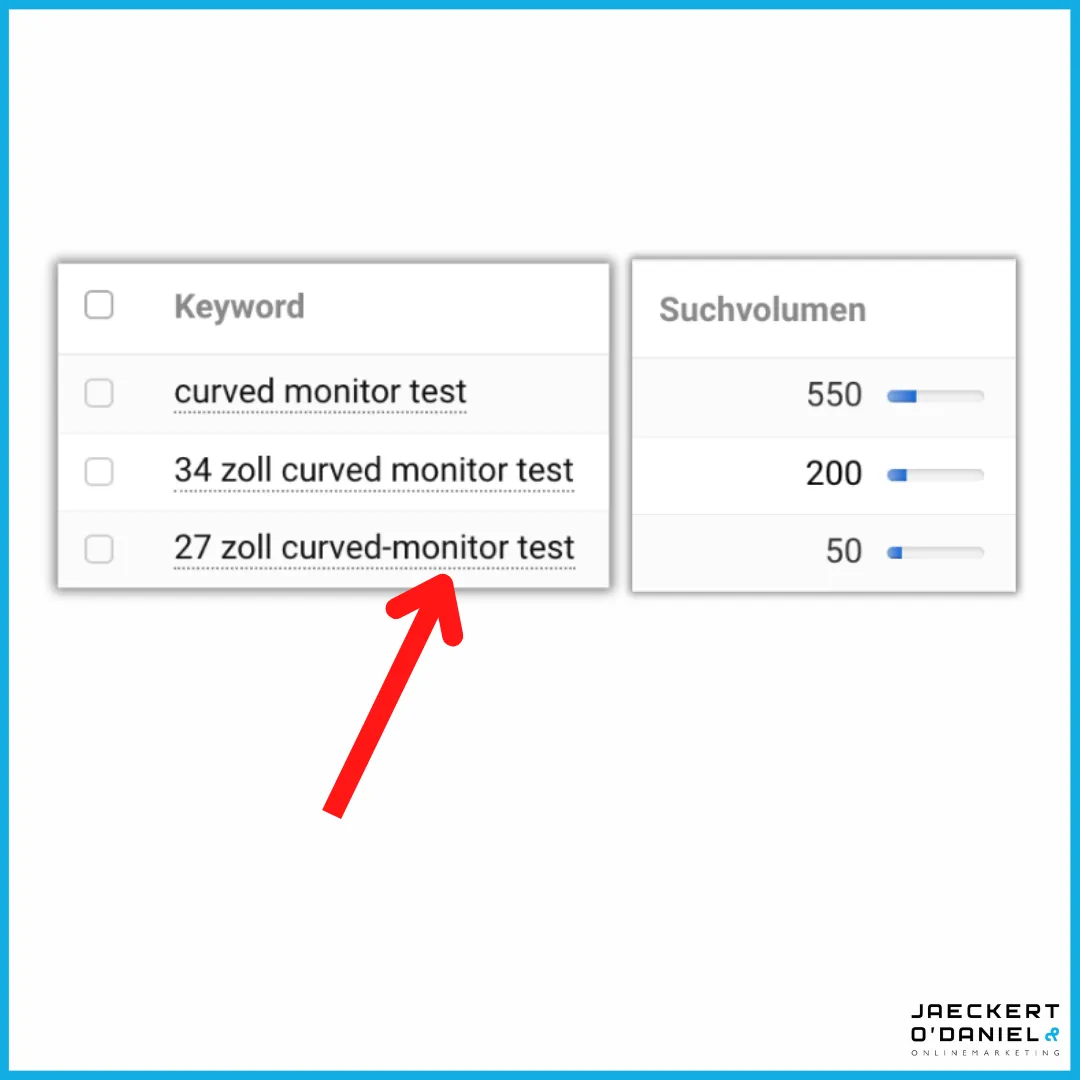
Example: how long the hyper longtail is
Anyone who goes deeper into the keywords sees: the search volume on this “27 inch” keyword is not 50. There are numerous variants of it, some of which have even smaller search volumes. In total, that adds up to more than 200 searches per month.
Many people responsible for SEO do not take this step. They research the keywords only on the “surface”, because they want to cover far too many topic fields. The potential of this target keyword is therefore underestimated from the start.
The reasons for that are varied: SEO managers are often heavily tied up in internal stakeholder debates and have to hold fundamental discussions. They simply lack the time for deep, systematic keyword research.
Marketing managers, for example in mid-sized companies, have diverse topics on the table, from flyers to the trade fair to the website. Alongside time, they often also lack the experience or the tools. Digital marketing managers frequently also have to look after social media and ads in parallel.
Whatever the reasons, the keywords are not researched granularly enough. The potential is therefore not recognized in the first place.
Another point: a professional SEO tool also displays the keywords with a search volume of “0”. In this case, 2/3 of the variants shown are keywords with zero searches per month. In total there are 50 keywords of this kind in this topic.
Whether and how you get traffic through such “zero keywords” has been discussed in the SEO industry for quite a while. From our point of view, it has to be exactly situations like the one in this example.
Conclusion: even if the keyword is “small”, the topic is large. You can see from the hyper longtail that people search for it in many ways. So there is topic depth.
That plays a central role when it comes to the next point: the “dark keywords”.
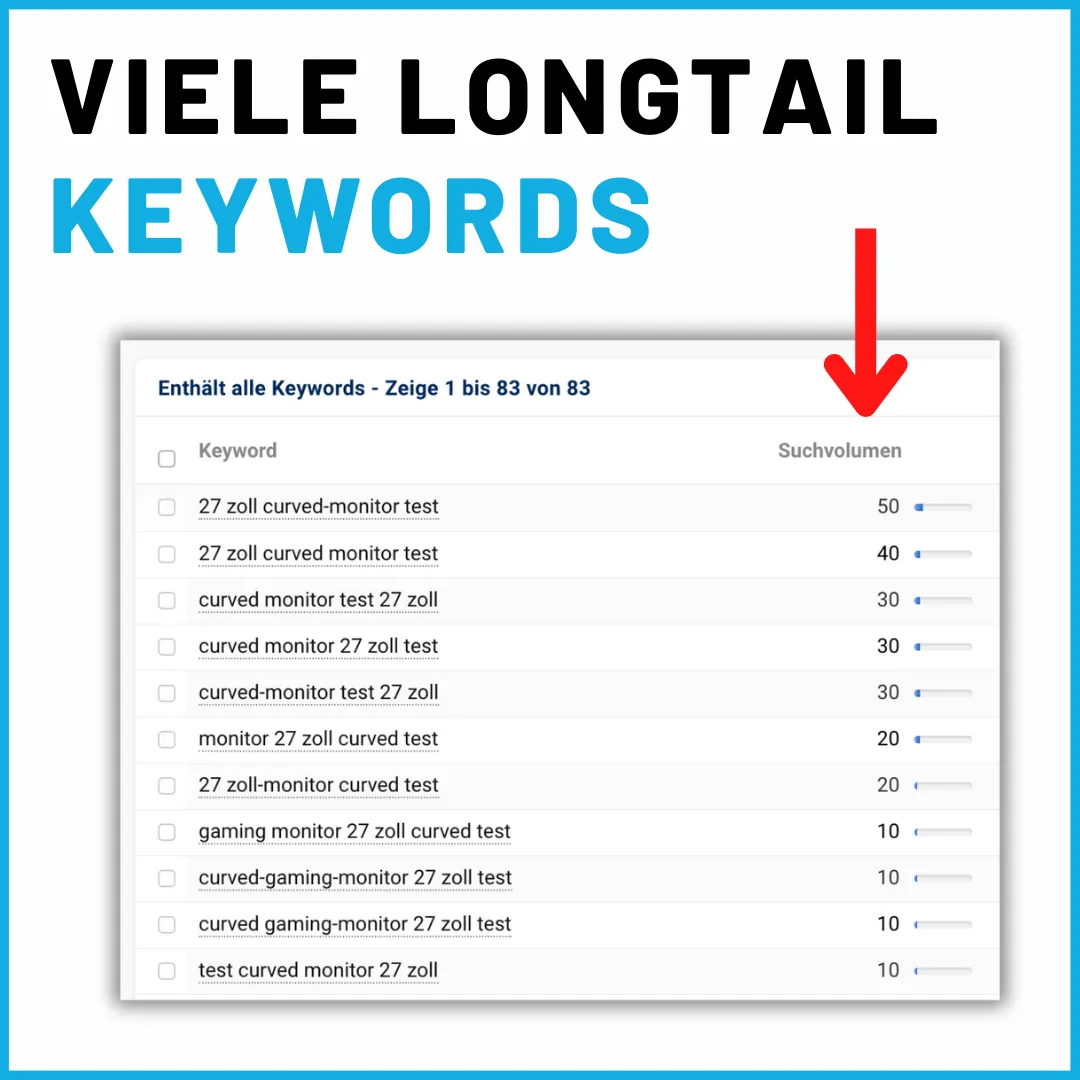
Dark keywords prove: this longtail brings a lot of SEO traffic
In an earlier investigation we already talked about dark keywords and dark traffic.
Core statement: for articles that target longtail keywords, a large share of the search terms is unknown. More precisely: a large share of the keywords that bring SEO traffic.
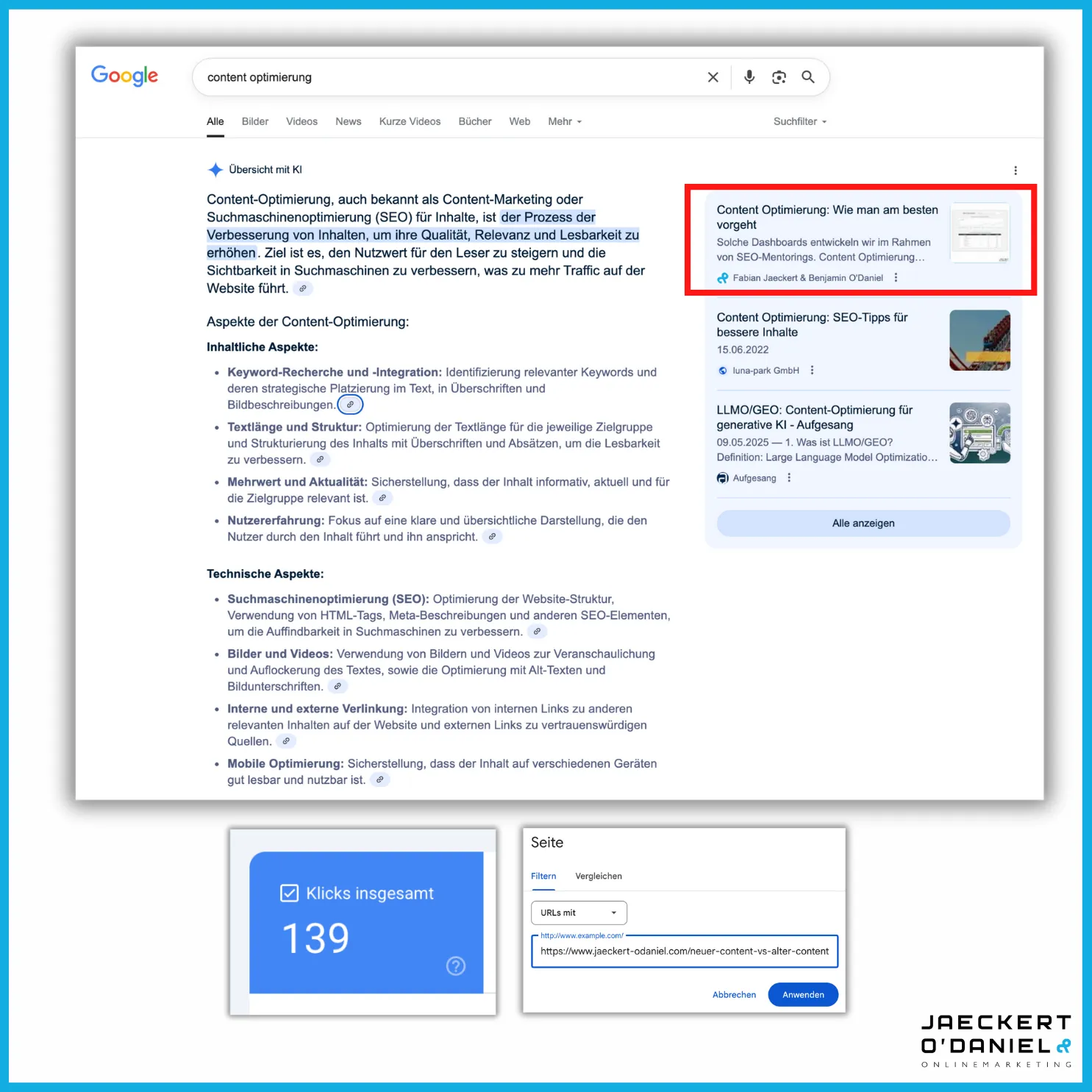
Google Search Console shows that an article has generated 1,000 clicks, for example. But of those, only keywords are shown that brought about 250 clicks. 75 percent of the traffic drivers are unknown.
From our point of view, these are exactly hyper longtail keywords. We know that these keywords bring a lot of traffic. But we do not know in detail which keywords they are.
The task for people responsible for SEO is to identify these potential topics and to clarify what content you create for them.
The SEO potential is very large for another reason too: in this area there is often very little competition. Many other people responsible for SEO do not cover these terms, or these potential topics, at all. That leads to fast results and many very good SEO rankings.

Two findings on hyper longtail keywords
Deep keyword research
We clearly argue for deep, systematic keyword research. Keywords are the basis of SEO, and at the same time a weak point in practically all of our consulting projects. Our approach here is to take a relevant area of the business and then go into depth there. That is exactly when you create this depth. You take more time for a smaller topic area. We also discuss examples in our SEO online training. Keyword research also produces a content plan and an SEO forecast of what the SEO activities will bring.
A multiplier on search volume
All professional SEO tools are based on keywords being displayed with monthly search volume. As we have described here, though, search volume says little in relation to the hyper longtail. We therefore argue for applying a multiplier to potential topics like these. In our example, 200 search volume came out in the longtail. In a fully researched list, a topic like that would then have to receive 800 search volume, because of the hyper longtail. That would also lead to a new prioritization in implementation.
Deepen your SEO knowledge: every Monday by email

What our clients say about our work
For anyone seeking an SEO sparring partner or comprehensive SEO consulting, Fabian and Benjamin are the perfect choice. As an in-house SEO expert, I sought competent SEO support and found it with them. During a very pleasant introductory meeting, we jointly developed an approach to establish SEO among the individual stakeholders and thereby gain more internal visibility for the subject. Based on this initial discussion and a joint kick-off with the stakeholders, they developed a sound SEO and content strategy for a product area. Since then, they have both supported me as sparring partners during implementation.
The collaboration with Fabian and Benjamin is a great pleasure for me and all project participants, as they are masters of their craft and bring immense passion for SEO. This combination is infectious and motivates everyone to achieve peak performance.
 Regina BiskopDeutsche Kreditbank AG
I look back with great satisfaction on the SEO project that we carried out with Benjamin and Fabian. Firstly, the collaboration was on a very pleasant, goal-oriented level. Secondly, the consultation was structured in such a way that we could immediately start with the implementation. We received very concrete optimization suggestions that were tailored to our internal capacities and therefore realistically implementable. Even though only a few months have passed, we can already see the first results of our work in the Google rankings. Traffic for our relevant keywords is steadily increasing, and we still have enough concrete work packages from Benjamin in the pipeline to boost our site. Furthermore, through the consultation, we have acquired so much internal SEO know-how that we can now optimize our site independently. And most importantly: Visitor numbers have doubled – with correspondingly positive effects on sales.
 Mark MaudererDigital Marketing Manager, Bierbaum Proenen
Our conversations with SEO professionals in the industry

How SEO writers work with ChatGPT: interview with Monika Weber
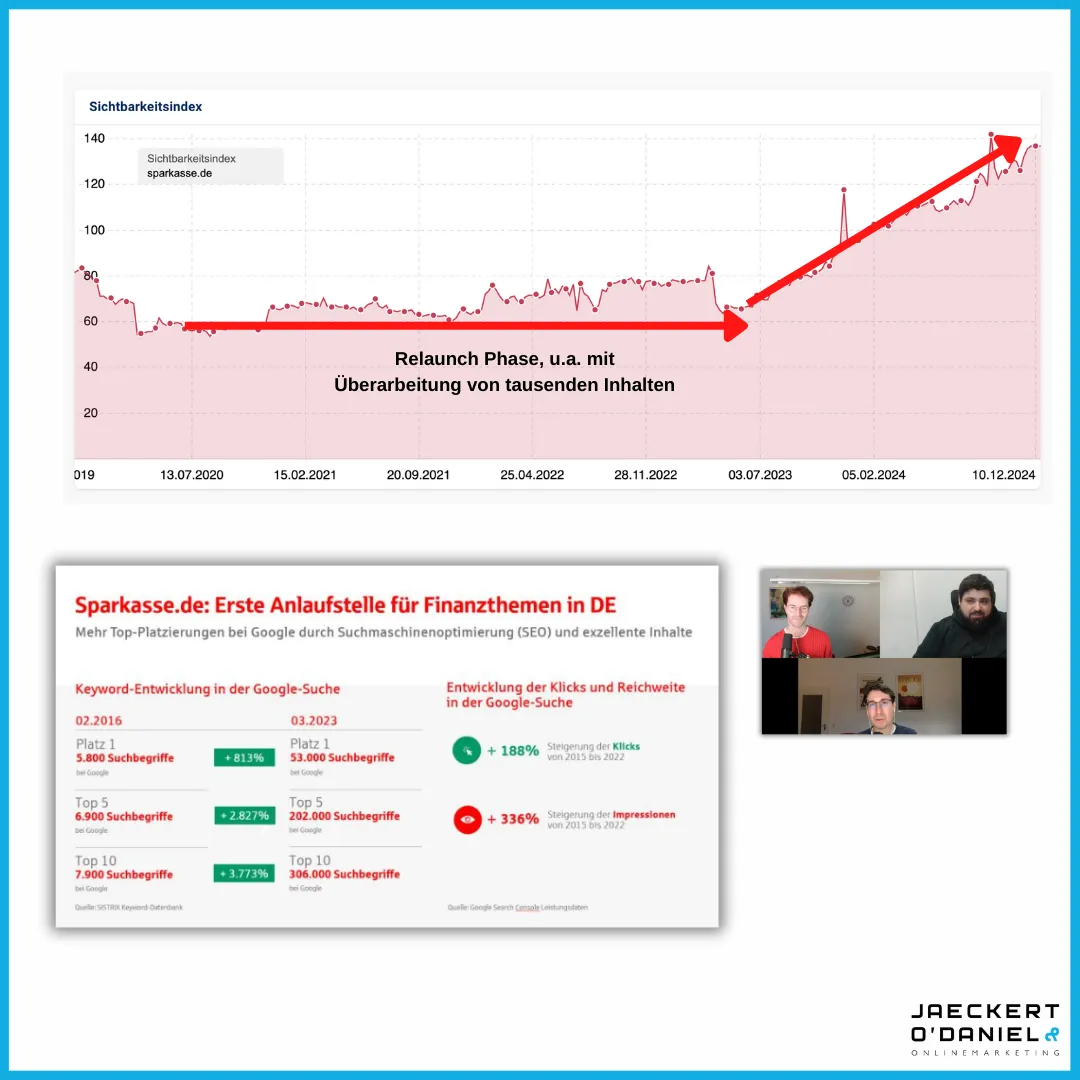
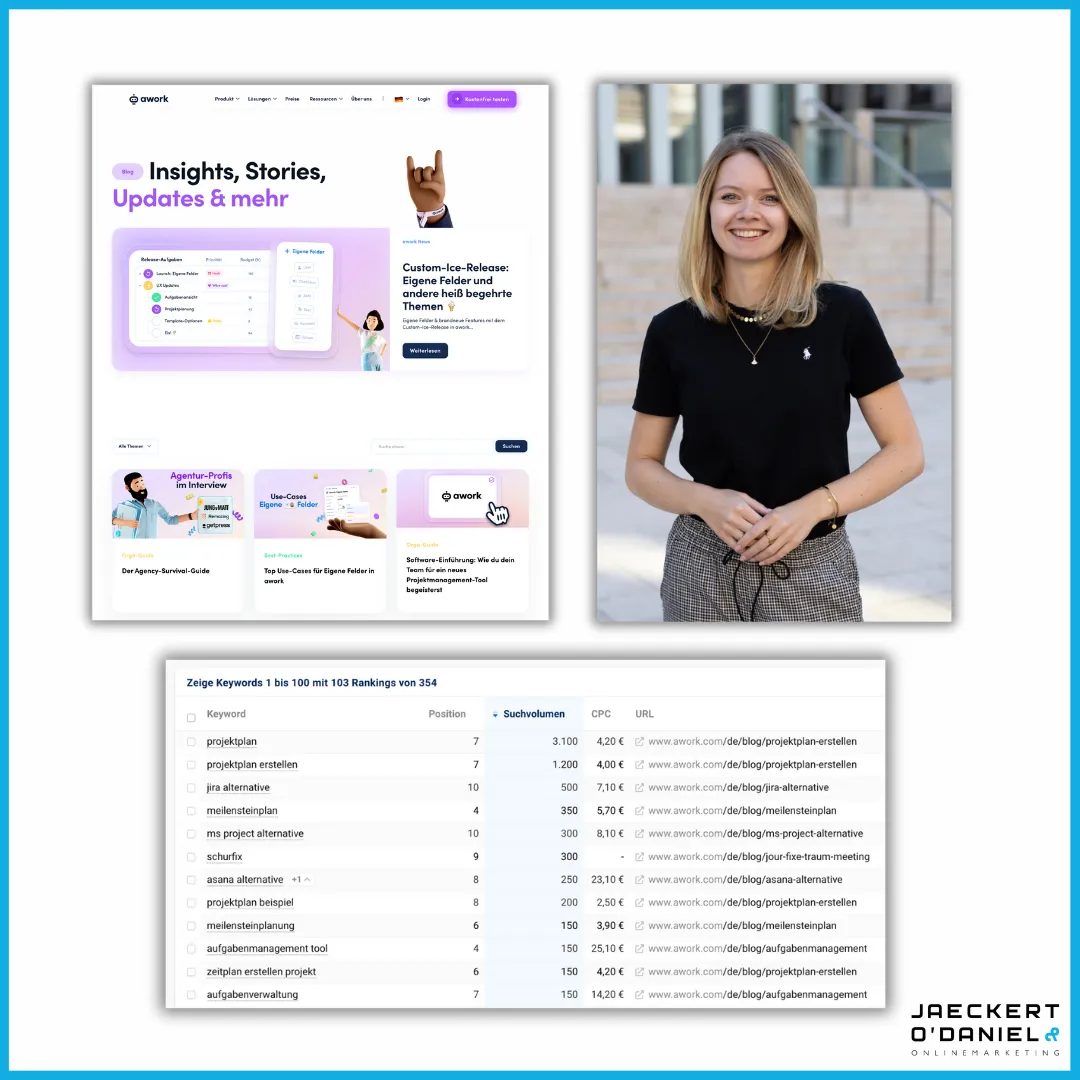
How the SaaS startup awork builds its SEO visibility: interview with Ayla Grzegowski


What does an online shop need in order to rank successfully? Interview with Stefan Vorwerk
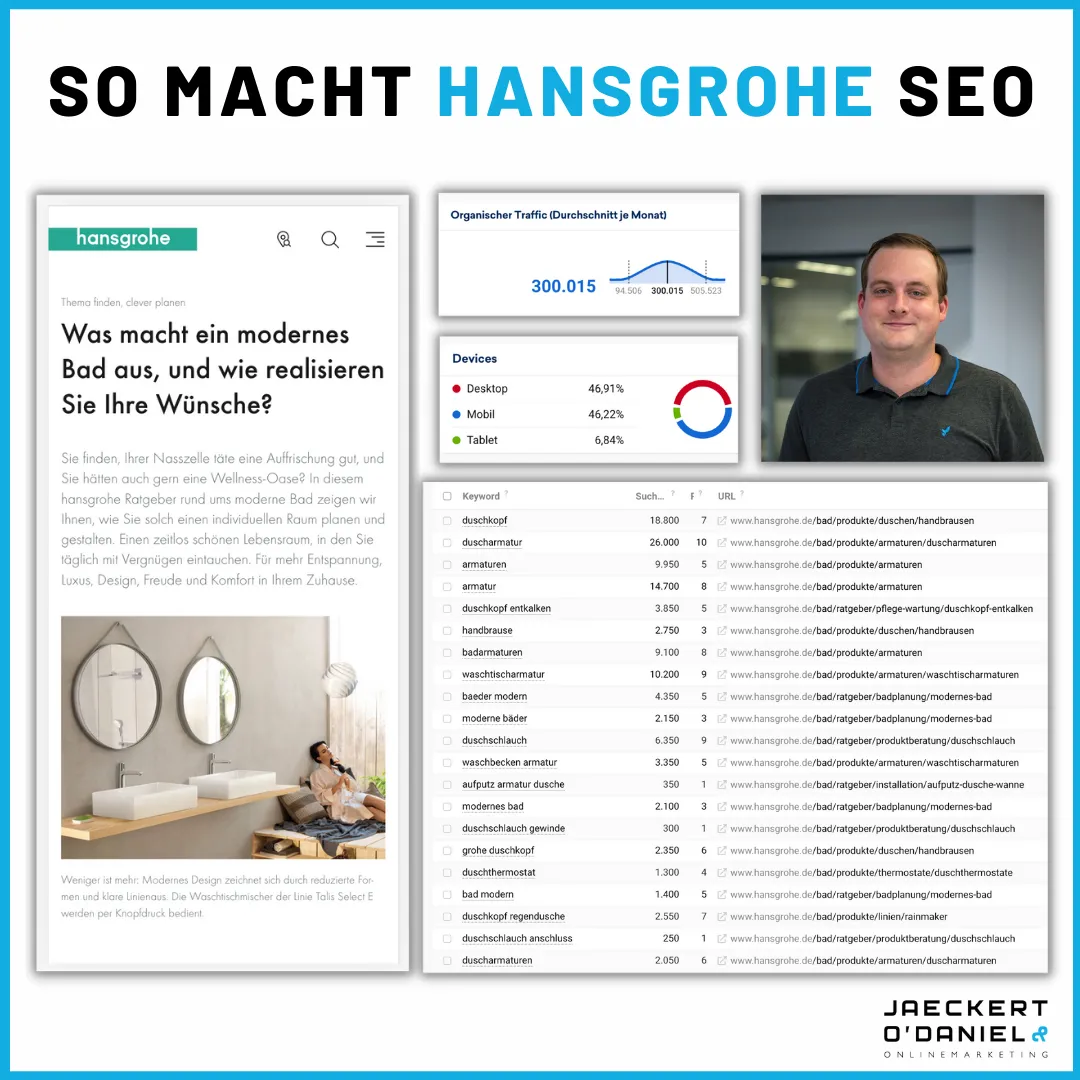
How Hansgrohe does SEO in 40 countries: interview with Jörg Niethammer


SEO for software companies: interview with Lisa Karasch