December 2, 2024Fabian Jaeckert
Low Quality Content: Why Many SEOs Use the Wrong Metrics
Every website has a structure that has grown over time. From automatically generated structures to product pages to editorial articles, a lot has come into being over the years. Accordingly, there is often unwanted or outdated content that you are no longer happy with.
How do you deal with this low-quality content? That is a big discussion in the SEO world as well. Many SEO managers take the view that you should delete your low-quality content, in order to send more positive signals to Google overall.
But what exactly is low-quality content? What are the methods behind it? And are you really going about it the right way? We discuss that in the podcast episode and in this article.
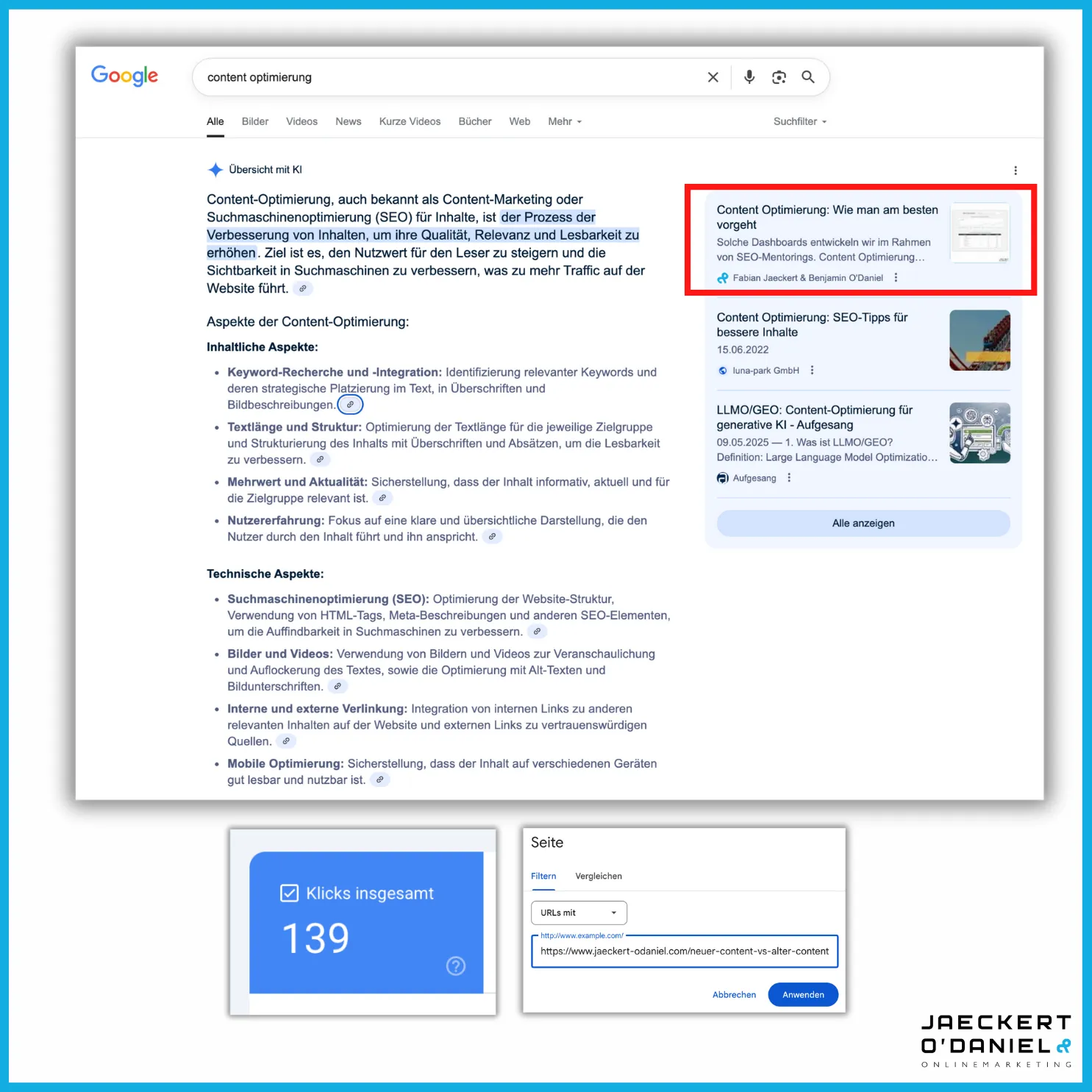
What SEOs mean by “Low Quality Content”
The big deletion
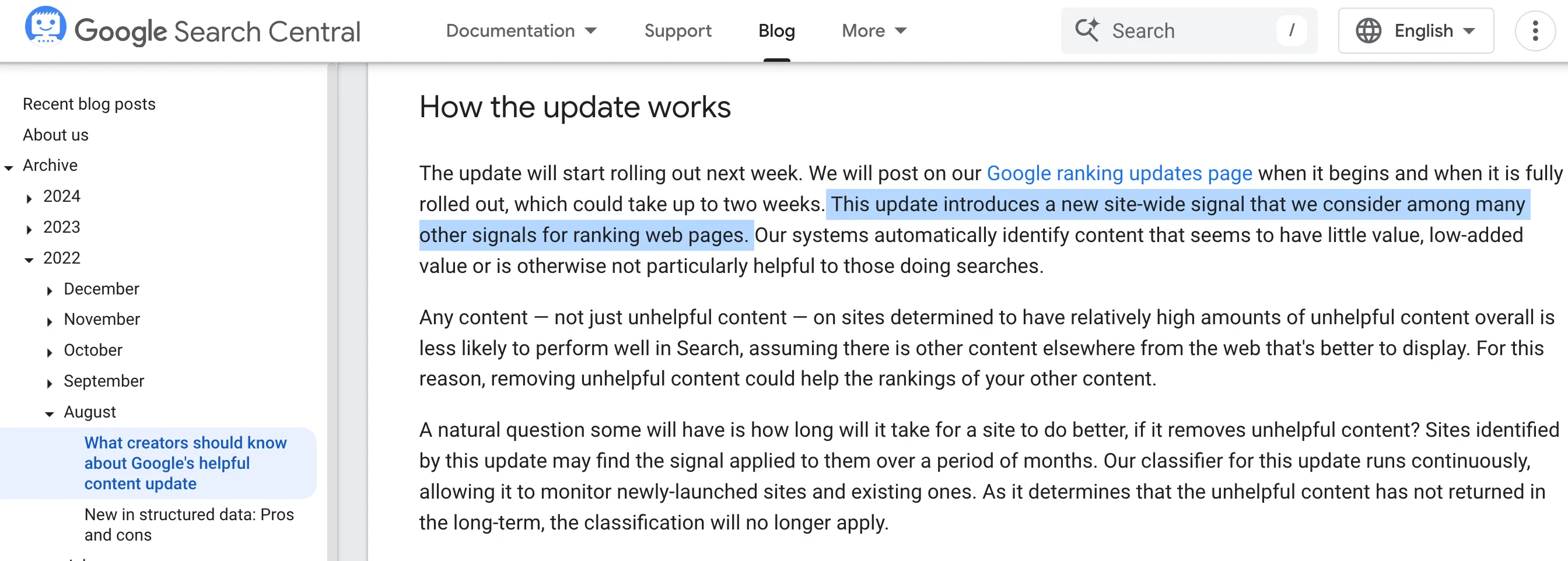
One approach of many SEO leads is to identify low-quality content and then delete it. The goal behind it: to change the ratio of “good” and “bad” content for the better. You have more good content. Google itself speaks of a “site-wide” effect here. The result: the website is rated more positively by Google overall and gets better Google rankings overall. A typical selection method for this is to delete content that has no rankings and no SEO traffic. Because such content has no greater value, or very little to offer, at least that is the logic behind it. In marketing, the approach sometimes meets with understanding: people like to “tidy up”. But it also often meets with criticism: what, for example, is bad about short, concise answers that maybe do not rank, but can be useful for the customers?
A risky move
We warn against such hasty deletion campaigns: the supposedly bad content could, for example, have generated backlinks (often the case with outdated news), show opportunity rankings and thus land on an optimization list, or be valuable for marketing overall (such as case studies, which rarely rank on Google). Also, for Google usually nothing changes if it is only a matter of a few hundred URLs. With tens of thousands of URLs, indexing management makes sense, but that is a different topic. In general there is also nothing against “tidying up”, for example after a keyword mapping, but that is a different topic too (because the content can be good). The question is whether Google looks at “low-quality content” quite differently than SEOs do.
…what Google means by low-quality content
From our point of view, URLs that have no rankings and get no traffic are no problem at all for Google. How should Google find out whether the quality is good or bad if the pages do not appear at all? From our point of view, quite different pages are a problem for Google: namely pages that get SEO traffic but trigger poor user signals.
Because exactly these pages make the search results bad. They create a poor product experience. Someone googles something and lands on a result that does not help them. It is now known that Google uses such user signals as a central ranking factor.
So the problem is not the pages that get no traffic. It is the pages that do get traffic. You have to look in a completely different corner to identify your “low-quality content”, and then optimize it.
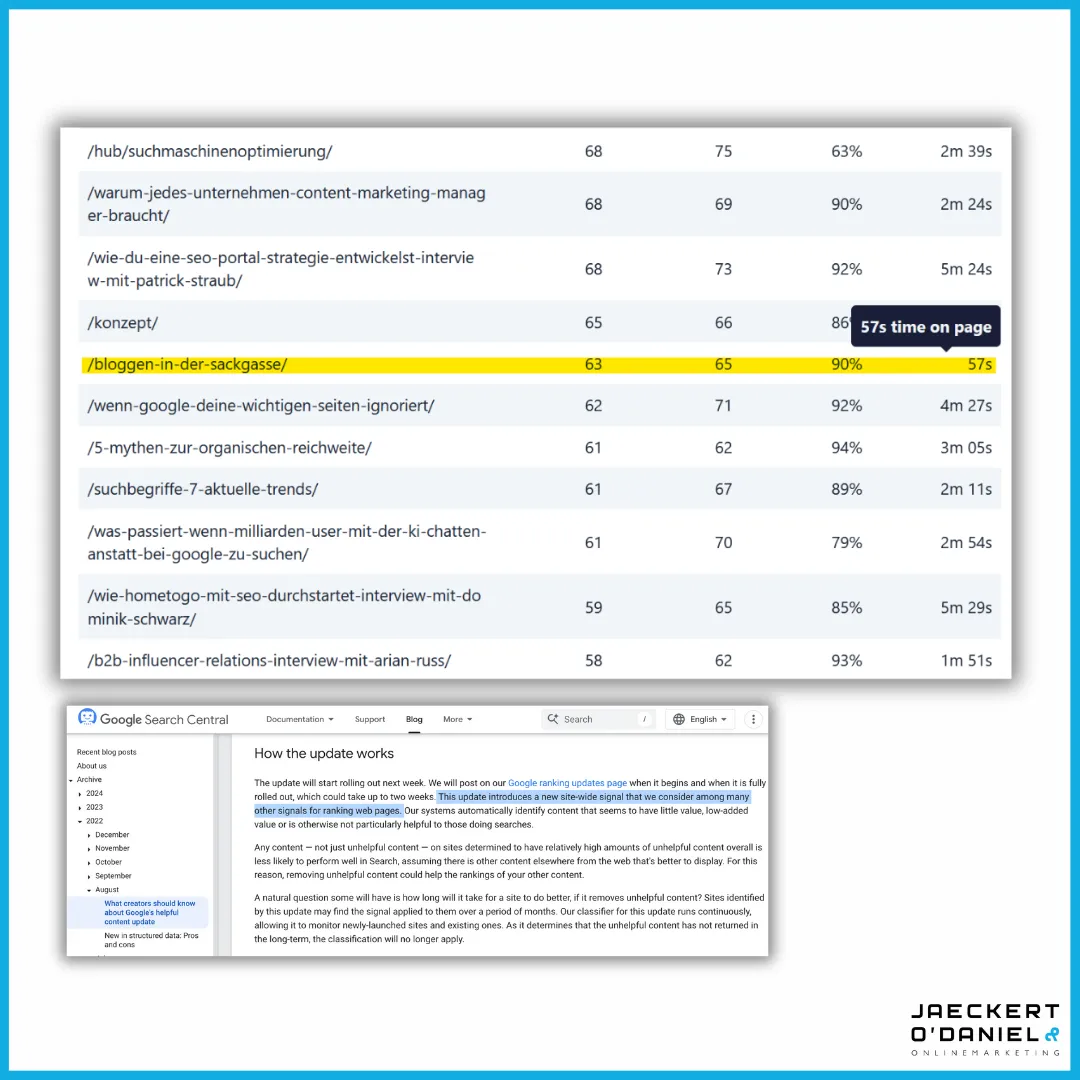
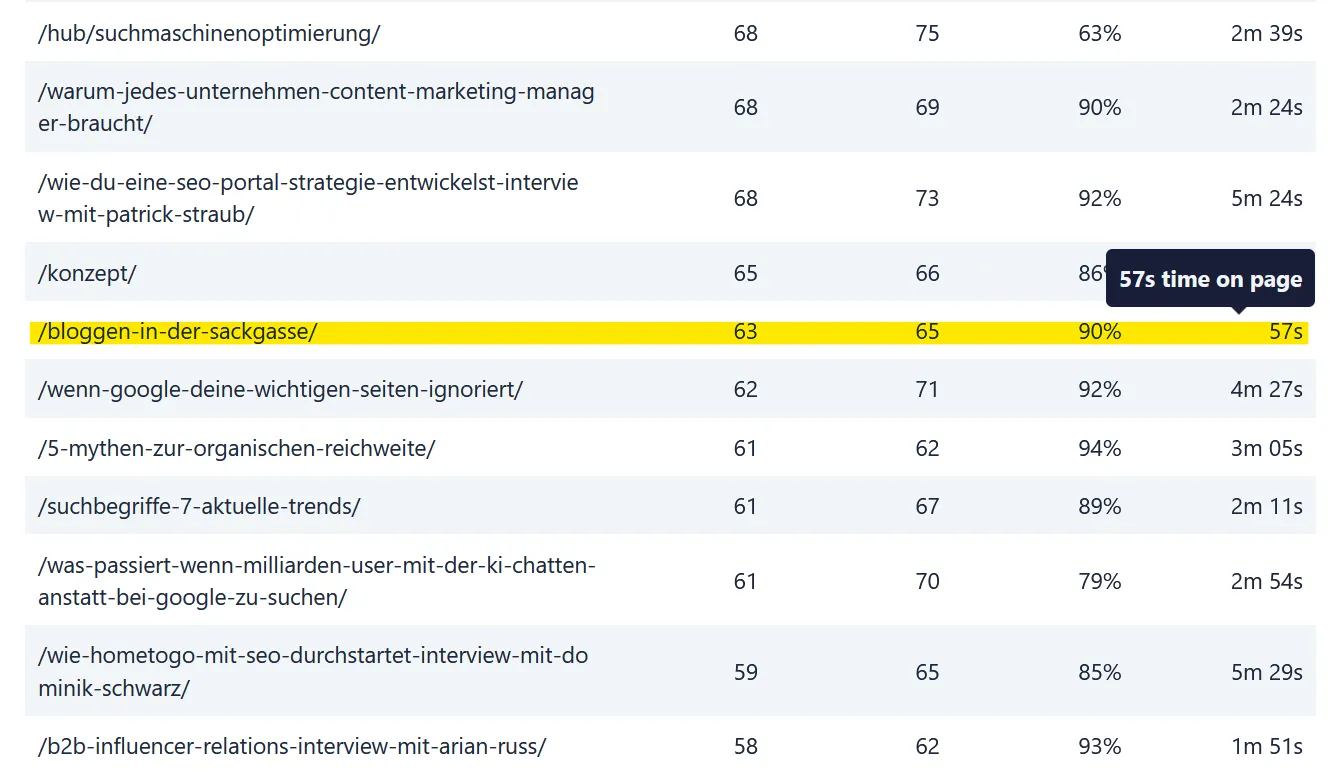
One metric for this is “time on page”. Here is a chart from our web analytics that shows: there are pages that have traffic and a very poor time on page (under one minute). Compared with other pages that show a time on page of five to 15 minutes. Pages like that, SEO traffic plus poor user signals, are “low-quality content”. If you have too much of it, you are at risk of being downgraded, and across the entire website. Keyword “site-wide effects”, as Google emphasized in the Helpful Content Update.
By the way: whether the content was created with AI or not no longer plays a role then either. It is obvious that Google cannot tell the difference. And it is not important for Google either. What decides is whether the content goes down well with users. User signals therefore also solve Google’s problem with the flood of AI content.
Content leads caught between the chairs
Content marketing leads often have, from their background, a completely different perspective than SEO leads. They do not look at a website via a crawler and Excel. They ask themselves how they can best address and convince their target group. So they think about the “user signals” as such. Only in a qualitative way. With the SEO leads there are numerous points of friction. Examples from day-to-day work: “Do we really have to write the keyword ‘definition’, when we have a B2B target group that already knows all of that.” “Do we have to write the opening so drily, or can we not go about it in a more skilled way with language.” “Do we really have to name the keyword in the heading and the subheadings.” “Do we really have to set so many internal links. That reads terribly.”
The worry behind it: you produce “low-quality content” that puts users off, because it is optimized for SEO in too crude a way. SEO leads often brush such points of criticism aside, though. SEO requirements are supposed to be met, after all. But the user signals are not measured and evaluated. A central ranking factor therefore stays out of this discussion. A dilemma you only get out of if you talk with each other more intensively and find compromises. Because yes: keywords, internal linking, headings, all of that has to be taken into account. And at the same time, good user signals have to be collected. In the end it is also simply about working time: a good piece of content simply costs more effort.
3 new approaches to fighting low-quality content
User signals analysis
SEO leads face the task of analyzing user signals systematically and carrying this data into the company. Many SEO professionals are already working on this. “Time on page” is a central metric for it. Heatmap analyses can be very helpful too. Out of the analysis come concrete content roadmaps, which are discussed with the content leads. SEO briefings have to change as well. It is not enough to only list keywords or WDF*IDF analyses and, on that basis, produce interchangeable content.
First-hand experience
The editorial content on a great many websites is interchangeable. Because the texts are kept completely general. Marketing faces the task of planning and developing content in a fundamentally different way. Here we see first-hand experience content as a central approach. Show real expertise, real experience, and combine that with an SEO keyword strategy. That way you stand apart in the search results and automatically create better user signals.
Concrete projects
A central sticking point: companies need a manageable roadmap for how, and on exactly what, work should be done for SEO. That is exactly what we have specialized in: we develop Ranch Style keyword strategies and connect them with new content approaches. With a focus on one business area or one valuable topic area. From our point of view, marketing departments need concrete projects that they can plan, implement, and evaluate. Only that way do you build your own findings and the know-how you need internally.
Deepen your SEO knowledge: every Monday by email

We advise marketing leads on SEO

We are Fabian Jaeckert (on the right) and Benjamin O’Daniel. For many years we have worked as consultants for marketing teams. In doing so we combine two worlds: Fabian is the technical expert, Benjamin takes on every topic around content development.
“How can we improve our SEO visibility?”
This basic question sits behind every project we are brought into.
It is often about reviewing existing SEO and content strategies from the outside and developing new levers.
That is exactly what we have specialized in.
We develop SEO strategies for companies and present them to the people responsible in focus workshops, in a structured and understandable way. Afterwards we accompany the in-house leads in the implementation.
Sound interesting?
We can gladly set up an SEO introduction by video call (30 min.).
Our conversations with SEO professionals in the industry

How Südwestrundfunk (SWR) Works on Search Experience: Interview with Sarah Stein

SEO as a Growth Strategy: Interview with Kevin Indig

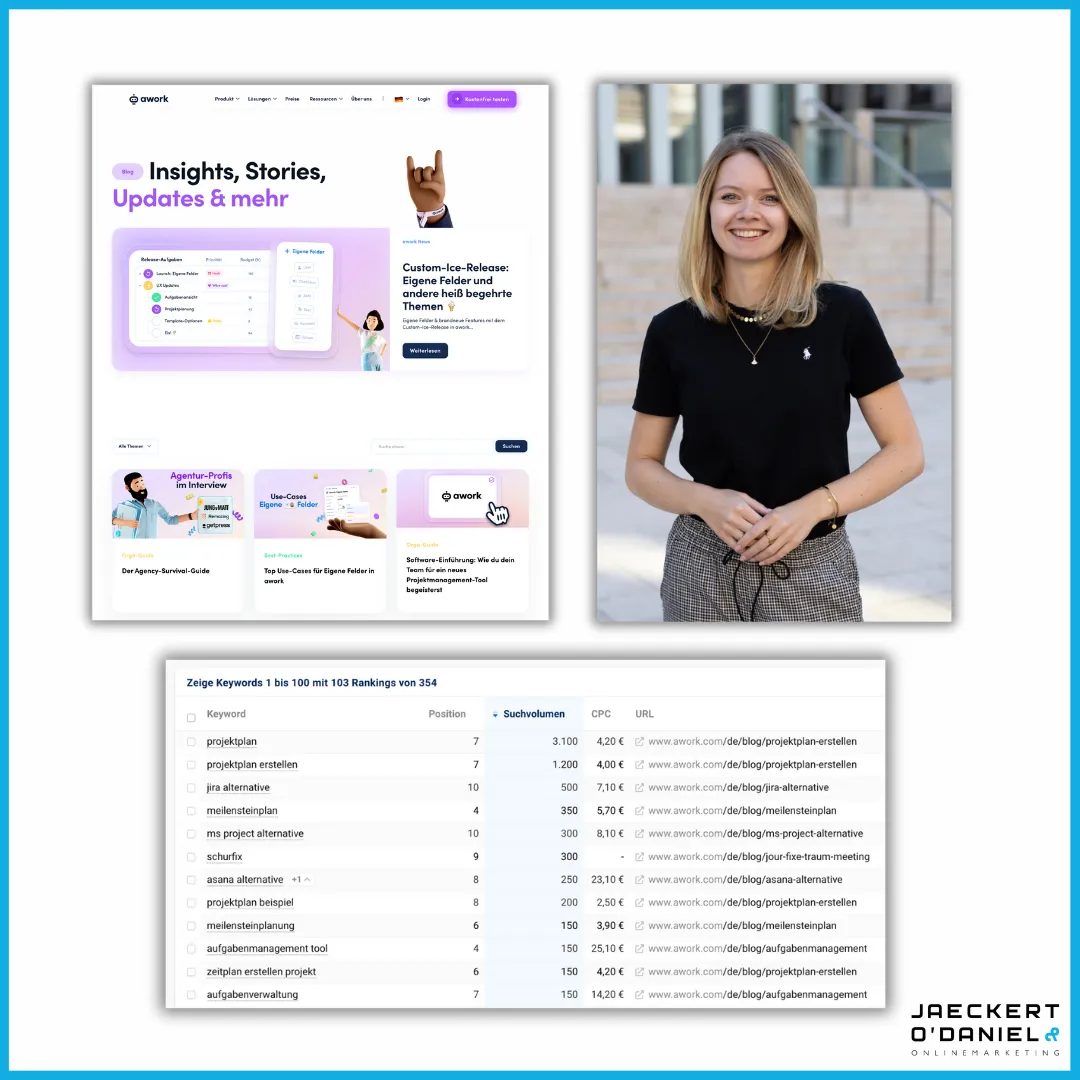

What Does an Online Shop Need to Rank Successfully? Interview with Stefan Vorwerk
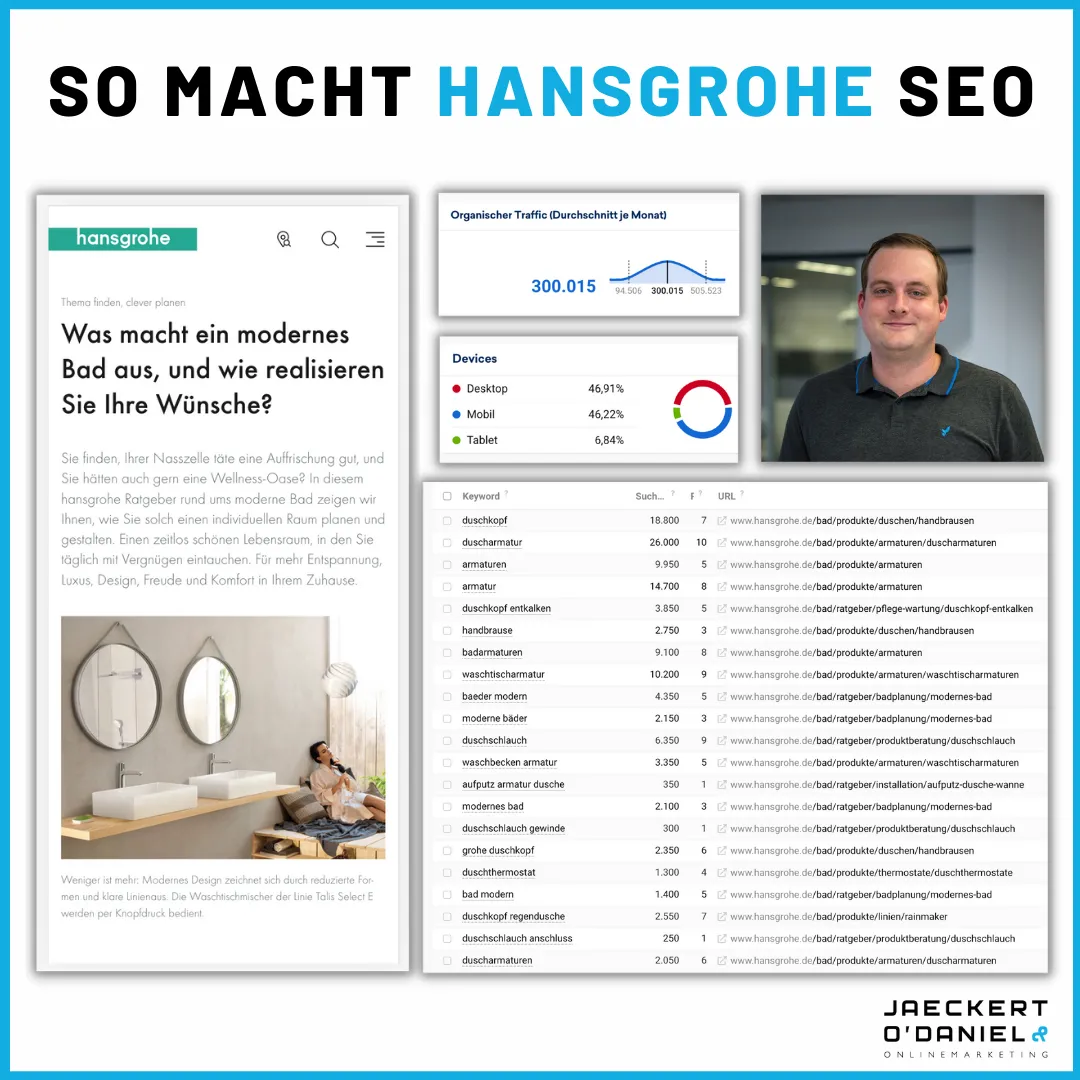
How Hansgrohe Does SEO in 40 Countries: Interview with Jörg Niethammer

How User Testing Works: Interview with Astrid Kramer on UX and SEO