May 29, 2017Fabian Jaeckert
Writing Google Snippets: How to Optimize Your Snippets
A Google snippet is the preview of a web page in the search results of Google or another search engine. It consists of a page title (title), two short lines (description), and the link (URL).
Writing a good snippet means putting the most important information into the title and the description, and sparking interest at the same time.
Because the snippet is the entry point and the first impression for users, and therefore for potential customers.
You create a snippet while writing website texts, and you store it in the content management system. For the title and the description you should watch the character count that is visible in the Google snippet.
How do you create a strong Google snippet that gets clicked as often as possible? Which tools can you use to write the snippet? We answer these questions on this page and in the matching podcast episode, using real snippet examples from practice.
We have worked in search engine optimization for many years and advise marketing leads in companies on the strategic planning and implementation of SEO.
The Google snippet, or SERP snippet, is the shop window of every page. Snippets are often neglected, or not filled in at all. Here we describe how to do it better.
Writing snippets and snippet optimization are a core task in search engine optimization. If you work on it, you can get significantly more clicks, and therefore more traffic on your own website.
What is a Google snippet?
A Google snippet is the preview of a website that Google shows in the search results, the so-called SERPs (search engine results page). That is why they are also called SERP snippets.
Google snippets, or SERP snippets, consist of a URL, a title, and a meta description, as you can see in this example. The title should be no longer than 58 characters, and the meta description no longer than about 140 characters. Otherwise the snippet can be cut off and therefore incomplete.
You can add or change this Google snippet in your content management system (Typo3, WordPress, and so on). The more attractively the Google snippet is phrased, the more likely a user is to click the result and land on the website.
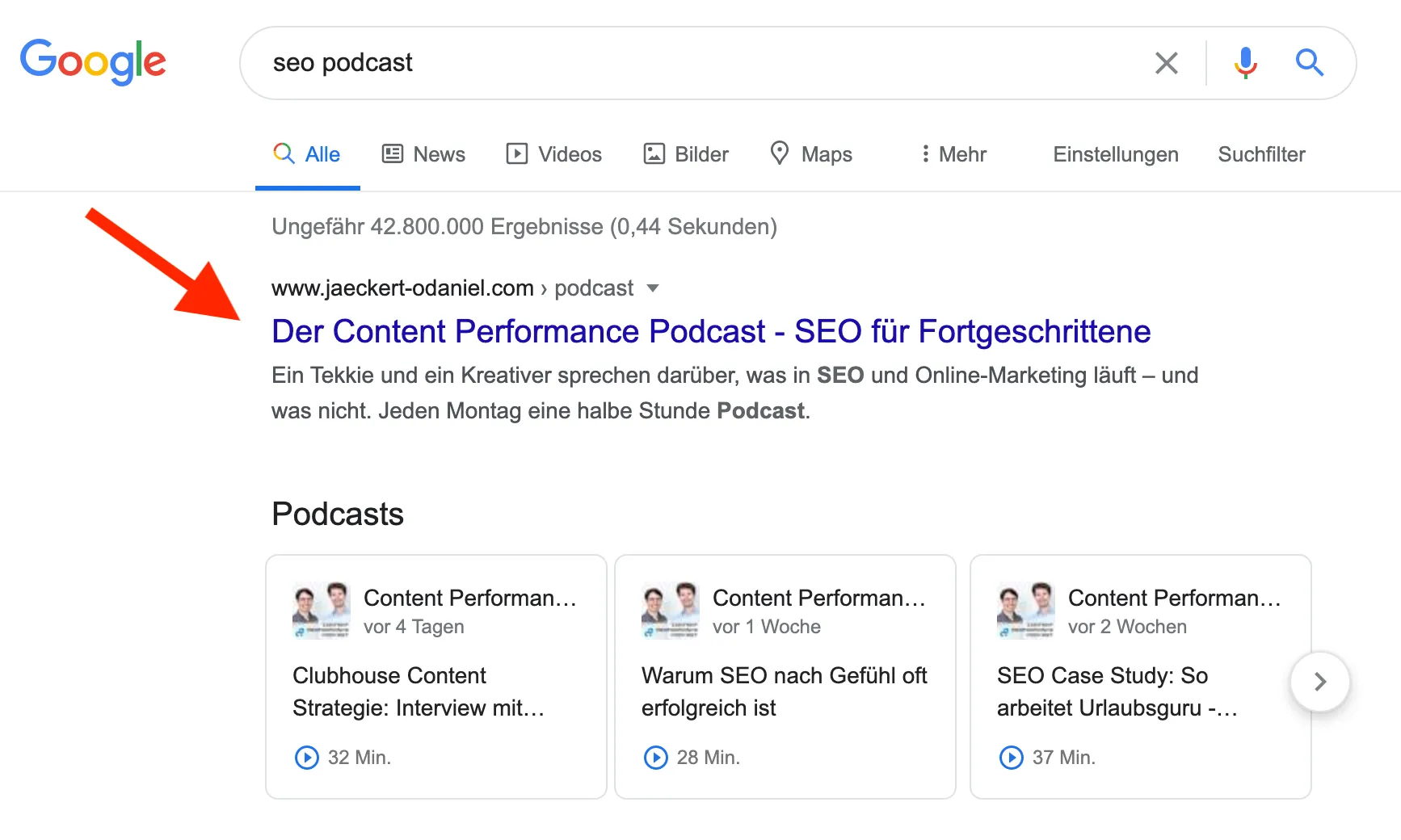
Example of a Google snippet for our SEO podcast. It is written to fit, and ideally it also sparks users’ interest.
SEO from practice: white papers and regular updates through our newsletter

Why does creating Google snippets matter for SEO?
Snippet optimization is a sub-discipline of search engine optimization. The goal of SEO is always to bring more organic visitors to the website through Google. There are numerous SEO measures and techniques for that.
Snippet optimization is one measure among many. The goal is to improve the click-through rate, the so-called CTR (click-through rate). Users scan the search results and then spontaneously click the most attractive results.
That can also affect the Google ranking. The more often users click, the more the search engine’s algorithm is shown that the result is interesting. A website can, for example, move from positions 7 to 10 into the top 5, or even into the top 3. You can see this in Google Search Console, among other places.
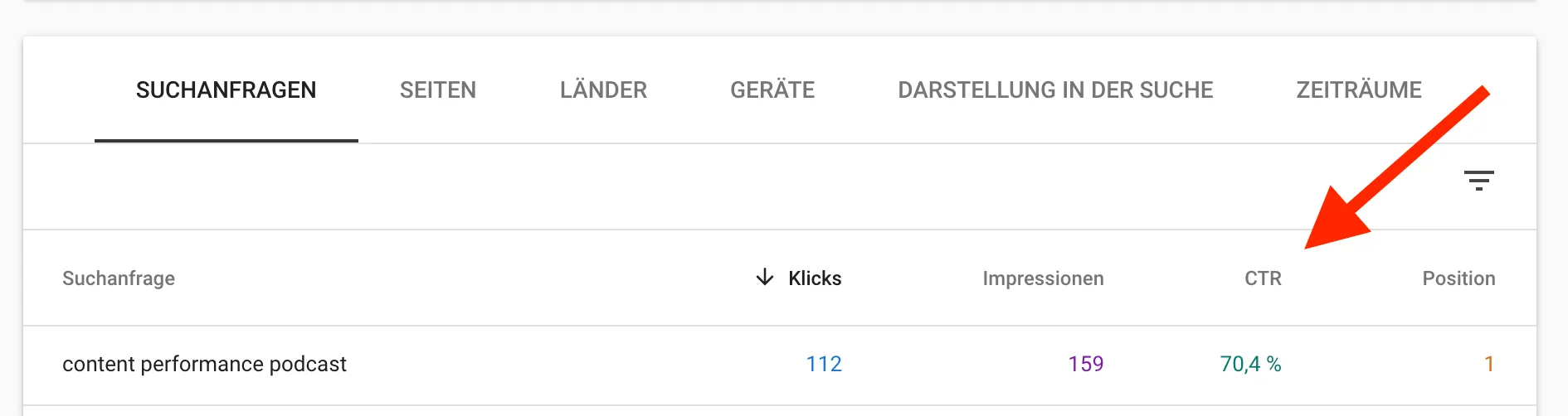
The CTR, the click-through rate from the search results, is shown in Google Search Console. In this example the CTR is very high, because people are searching for the name of our podcast, it ranks in position one, and over 70 percent of users then click this result.
How do I create a fitting Google snippet?
To create a snippet, you have to understand how users tick. A search result is attractive and fitting for the user when it matches their search intent. That is the intention of what they want to achieve with their search.
Broadly speaking, there are three search intents:
- a transactional search intent (buying something),
- an informational search intent (getting information),
- a navigational search intent (getting straight to a specific part of a website).
You should understand what users want, and phrase the Google snippet for that. It works best if you google the keyword, the search term, yourself and analyze the results. Related to this is our interview with Johannes Beus, founder and managing director of the SEO tool Sistrix.
At the same time you should keep an eye on the competition: how do the other websites on the first page of the search results argue? How can you set yourself apart? This is the basis for the snippet you then write.
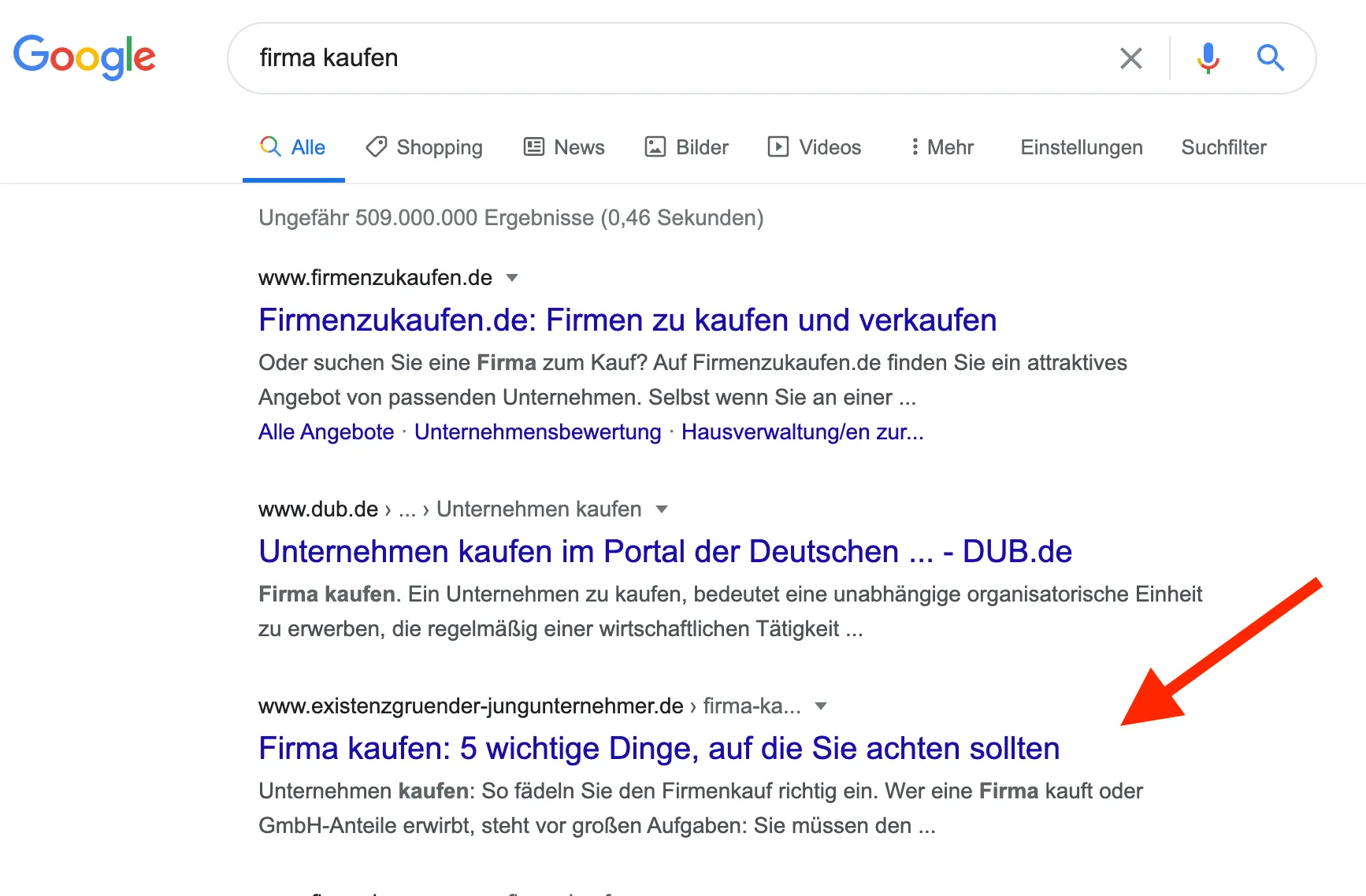
An example of a SERP snippet and search intent: the third result is us, with our own advice portal. We deliberately argue in an informational way, with added value, and not merely in a transactional way. The user learns that they will come away smarter from our result. We also discuss this example in our SEO Academy. For other keywords, by contrast, it makes sense to argue in a clearly transactional way. It always depends on the individual case.
5 examples of well-written Google snippets
A good Google snippet has to be written ideally for search engines, and address the user at the same time. Here are five snippet examples we think are very successful.

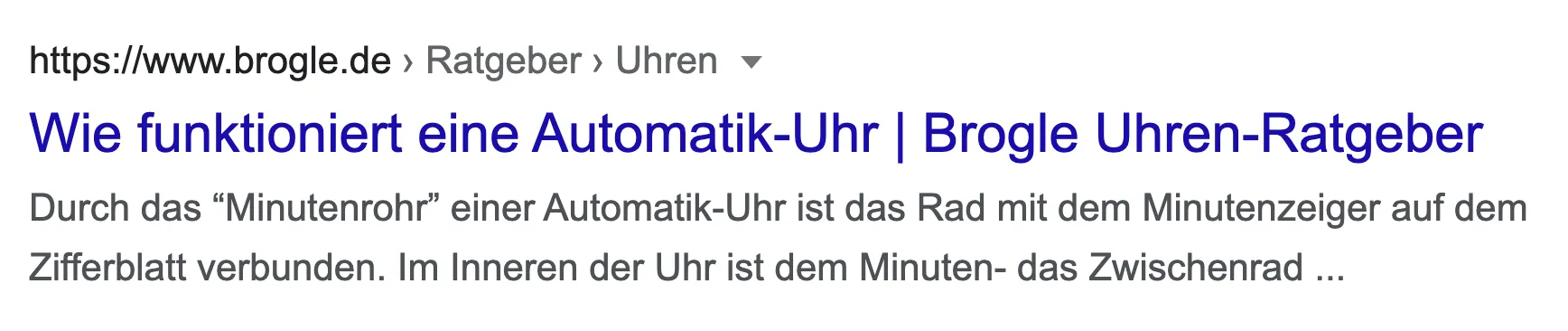

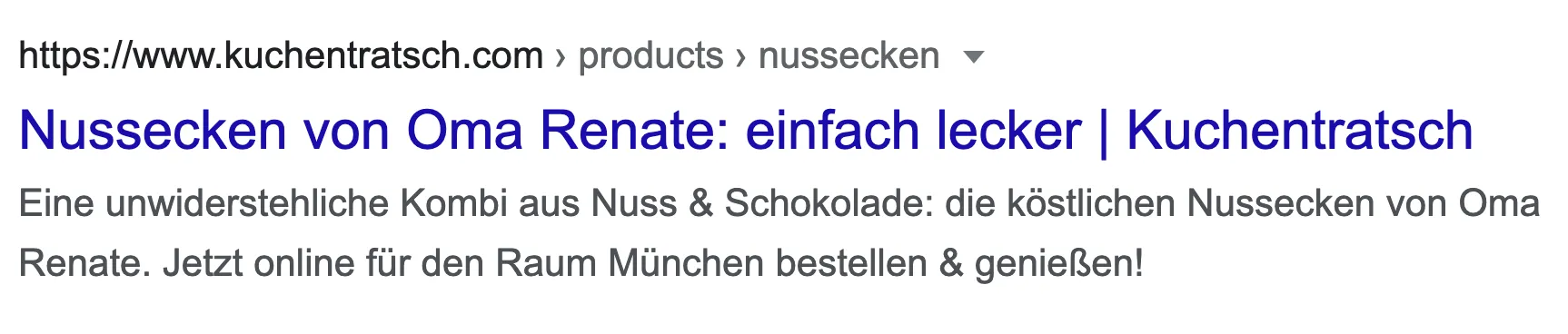

The first snippet relies on a smart, compact list (“background, development, criticism”). The second snippet has a clear informational guide focus (“how it works”). The third snippet example is a classic listicle. The fourth snippet example relies on a creative twist (“Oma Renate”). And the last snippet is simply a nicely rounded sentence with words that are not worn out yet.
SEO snippet optimization: an example from practice
On LinkedIn, many active SEOs are connected with each other and exchange ideas. Some of them share real examples from their practical work. Very valuable input.
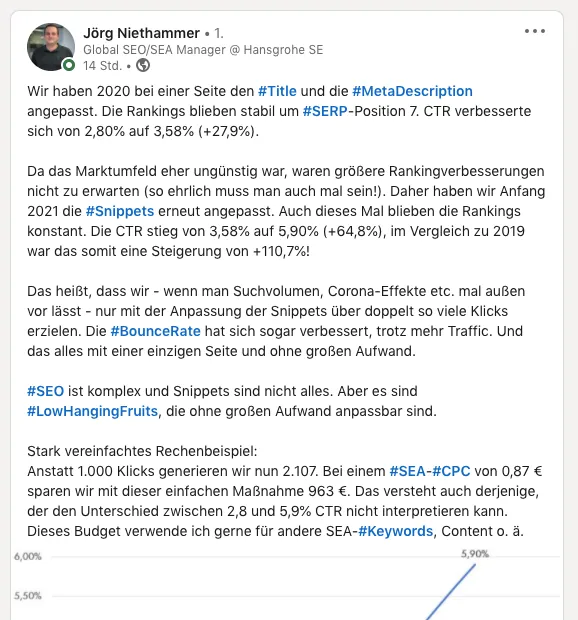
In this case, an SEO lead adjusted the title and the description. The result: the click-through rate doubled. By the way: we have since also done an interview with Jörg Niethammer.
We asked. His tips for optimization: “Less is more, no fully formed sentences, USPs or benefits for the user, unobtrusive emojis in the description (used with care), and of course the core statements or the topic of the page at the beginning. To save space, leave the brand out of the title if needed (depending on the industry, the brand, and so on).”
Which Google snippet tools are there?
There are a number of SEO tools you can use to analyze and optimize your Google snippets. In general: every SEO manager should put together their own tool set.
That definitely includes the Google products Google Analytics and Google Search Console. The SEO analysis software Sistrix offers a free SERP snippet generator for writing or phrasing a snippet and checking whether the length fits.
One approach in SEO consulting is, for example, to analyze the URLs that are already on the first page of the search results, and then develop a strategy for the SERP snippets. As part of an overall SEO strategy and a content optimization.
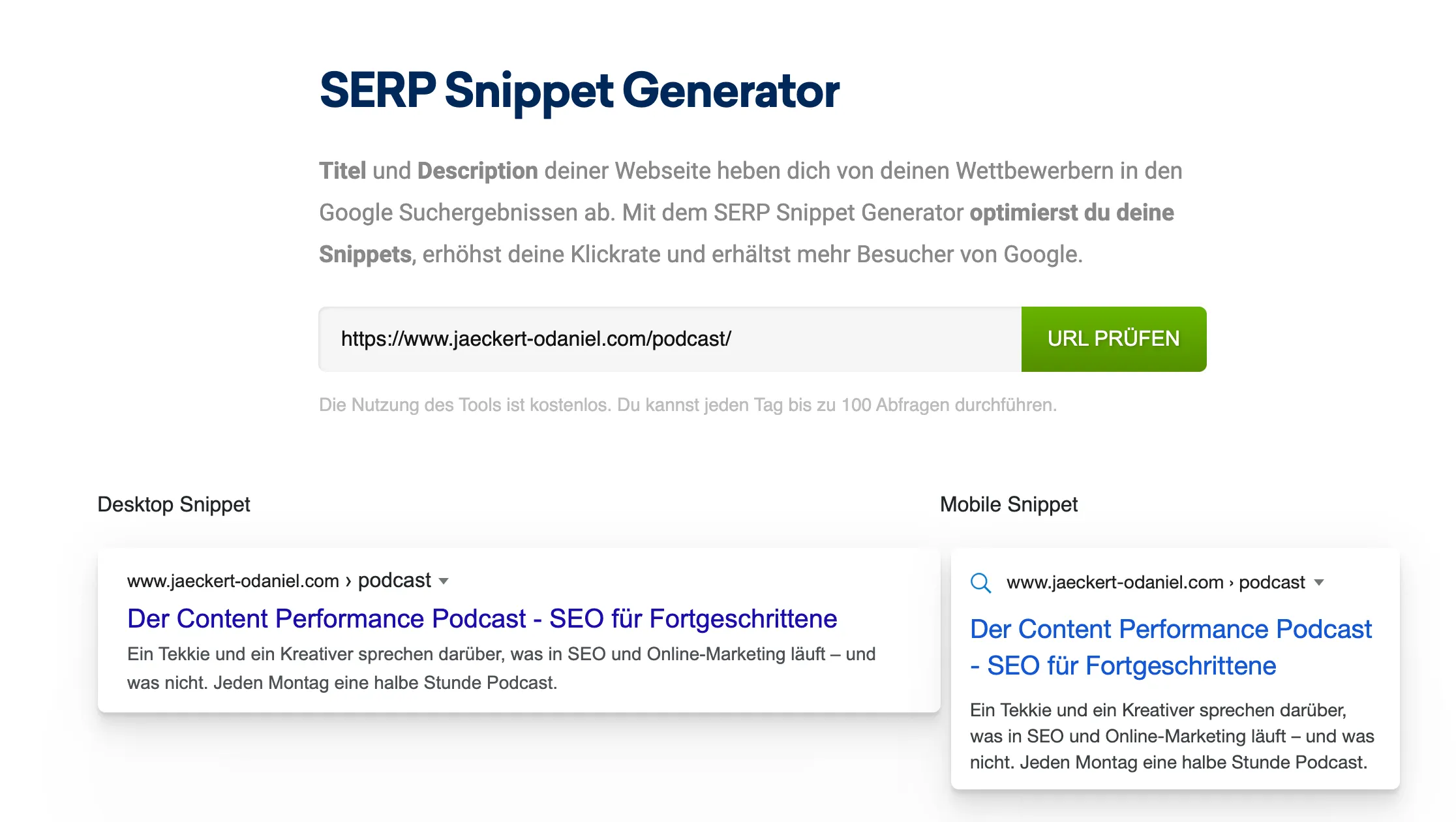
Here is an example of the SERP snippet generator from Sistrix. You drop in a URL and get the current preview. Then you can paste in the text, check it, and after that transfer it into your own CMS. In WordPress, for example, the Yoast plugin gives you a way to do that.
SEO consulting: for more organic traffic through Google
We have worked as SEO consultants for mid-sized companies for many years. We connect two disciplines: Fabian Jaeckert is a technical search engine optimizer. He has all the SEO tools in hand and a deep understanding of content management systems. Benjamin O’Daniel is a trained editor and copywriter. He is responsible for the content and develops content marketing approaches for creating the best search result for the user.
Our approach: we want every person and every company to be able to steer their own SEO activities. In our SEO consulting we develop the strategies, in our SEO mentoring we accompany our clients, and in our SEO Academy we pass on our knowledge, so the people in charge learn SEO from practice.
We can get to know each other in a Zoom call:

We are Benjamin O’Daniel (left) and Fabian Jaeckert (right). We have worked in online marketing for more than ten years, with a focus on SEO and content. Here are some references.
With Jaeckert O’Daniel, it quickly became clear to us that we had made an excellent choice in selecting potential partners for our online marketing project. Their expertise and, above all, their ambition to thoroughly immerse themselves in our specific industry topic to provide us with the best possible support, are precisely what is now propelling us forward.
 Tobias ReitmeierF.EE Group
What kinds of snippet optimization are there?
Betting on effects
Some SEOs recommend building as many eye-catchers as possible into Google snippets, for example with emoticons. The idea behind it: the user gets “stuck” on a result and then clicks it. We often find this method unsuitable. It can devalue the company, especially if it sits in a B2B environment. There are also early signs that Google itself interprets this as spam.
Communicate added value
In snippet optimization we focus on communicating added value wherever possible, as in the example just mentioned. Search intent is often mixed too: users have both a transactional and an informational approach. Everyone knows this from their own way of buying products. You want to get informed, and then decide. A typical example of a customer journey.
Snippet optimization: our 3 tips
Clarify responsibilities
There should be fixed responsibilities for the Google snippet. Ideally the copywriter, in coordination with the SEO, develops a snippet proposal that is then also measured, tested, and optimized.
Meet customer needs
The snippet is the first contact with the customer. Here you have to convince the potential website visitor precisely and move them to click in a targeted way.
Set yourself apart from the competition
How do competitors argue and present themselves for the search term in question? It can make sense to set yourself apart deliberately through different content priorities.

Writing SERP snippets: our topics in brief
What are snippets?
- Display of a document in the search results
- A snippet consists of title and meta description
- Optimization to generate results with a high click-through rate
Why does this matter from an SEO point of view?
- Organic CTR (click-through rate) is a ranking factor
- High click-through rates have a positive effect on the SEO ranking
- Optimization therefore belongs in the planning
Why does this matter from a marketing point of view?
- First contact with the customer
- The shop window of the company
- A professional presentation is mandatory
- Part of online marketing
- Here is an example of a customer journey
How do SEOs handle it?
- Often treated as an afterthought
- They invest only a little time in snippets
- No creative skills
- Focus on the keyword in the title
- Google rich snippets
How do copywriters handle it?
- Also often treated as an afterthought
- They also invest only a little time in snippets
- Writing snippets is often not part of the brief
- Hardly any coordination or communication about the snippet
Comparison with newsrooms
- Producers specialize in headlines and sublines
- BuzzFeed tests snippets automatically
- Working on headlines together
- Talk more about headlines and sublines
- More on headings in SEO
- More on writing website texts
Comparison with advertising copywriters
- A slogan has four to eight words, like a title
- Countless lines are developed
- An investment of several days and weeks
- Development costs four to five figures
Snippet optimization
- Analyze pages and rankings with SEO tools
- CTR in Webmaster Tools
- Put snippets on the schedule
- Priority list: pages that rank in positions 7 to 15
- Also part of an SEO concept
Google snippets: three technical terms
Snippet
A snippet is the short display of a page in the search results of search engines. It is a short heading, the URL, and two further, smaller lines in which a closer description is given.
Title and meta description
The meta title and the meta description are the two essential elements of a web page that you can work on concretely. There is a character limit for the display in the search results, and you should keep to it. Even so, the text length offers many ways to vary and to argue.
Organic CTR
The click-through rate (CTR) is the rate of clicks from the organic search results to the website. For Google results, the CTR is visible in Search Console (formerly Webmaster Tools). You can and should pull the results there through special tools or by hand, and save them. A good CTR has a positive effect on the ranking.