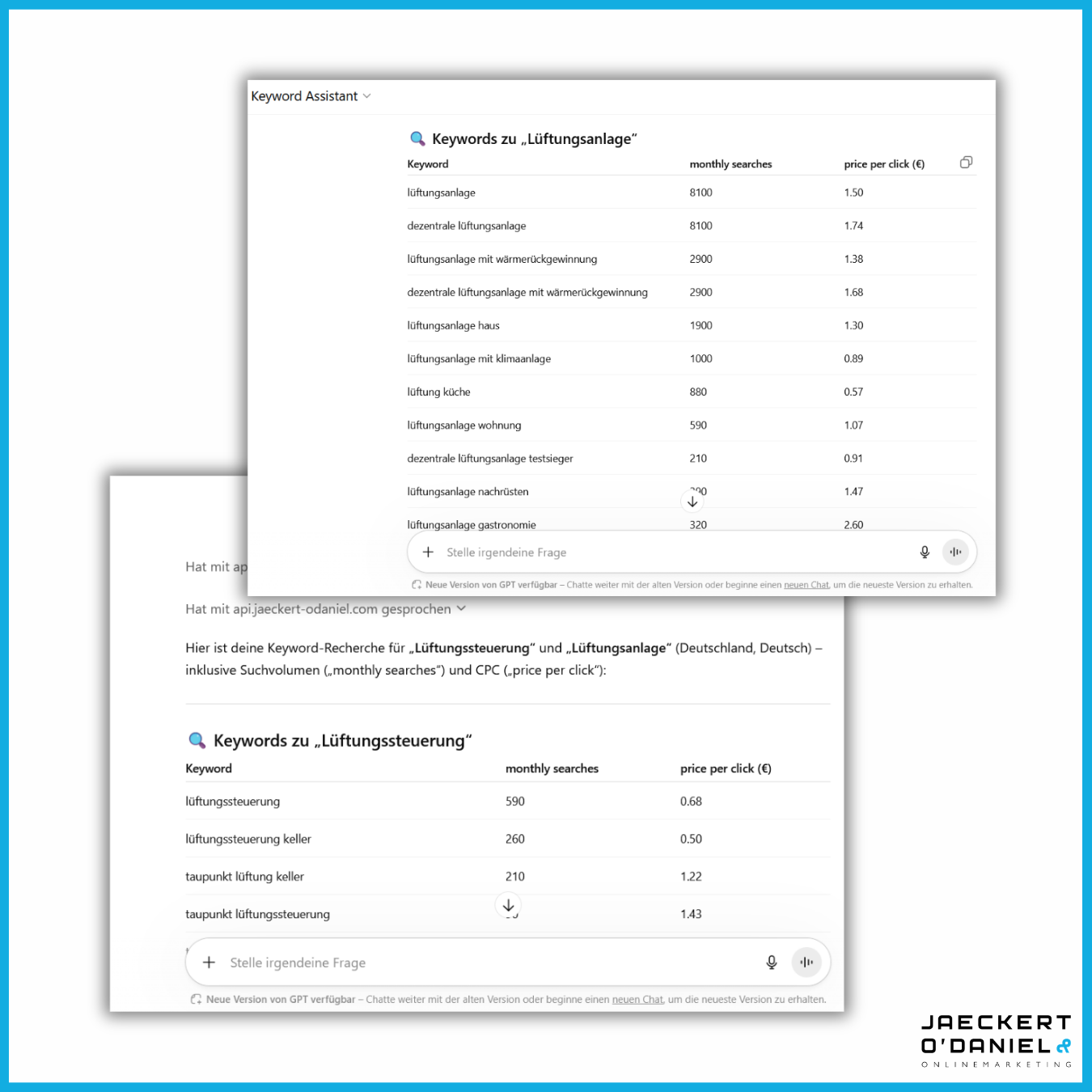
3 tips on how to combine SEO with GEO
SEO and GEO have many differences—but also similarities. When it comes to AI optimization, you can adopt a lot from SEO in terms of approach. What exactly—that is what we…

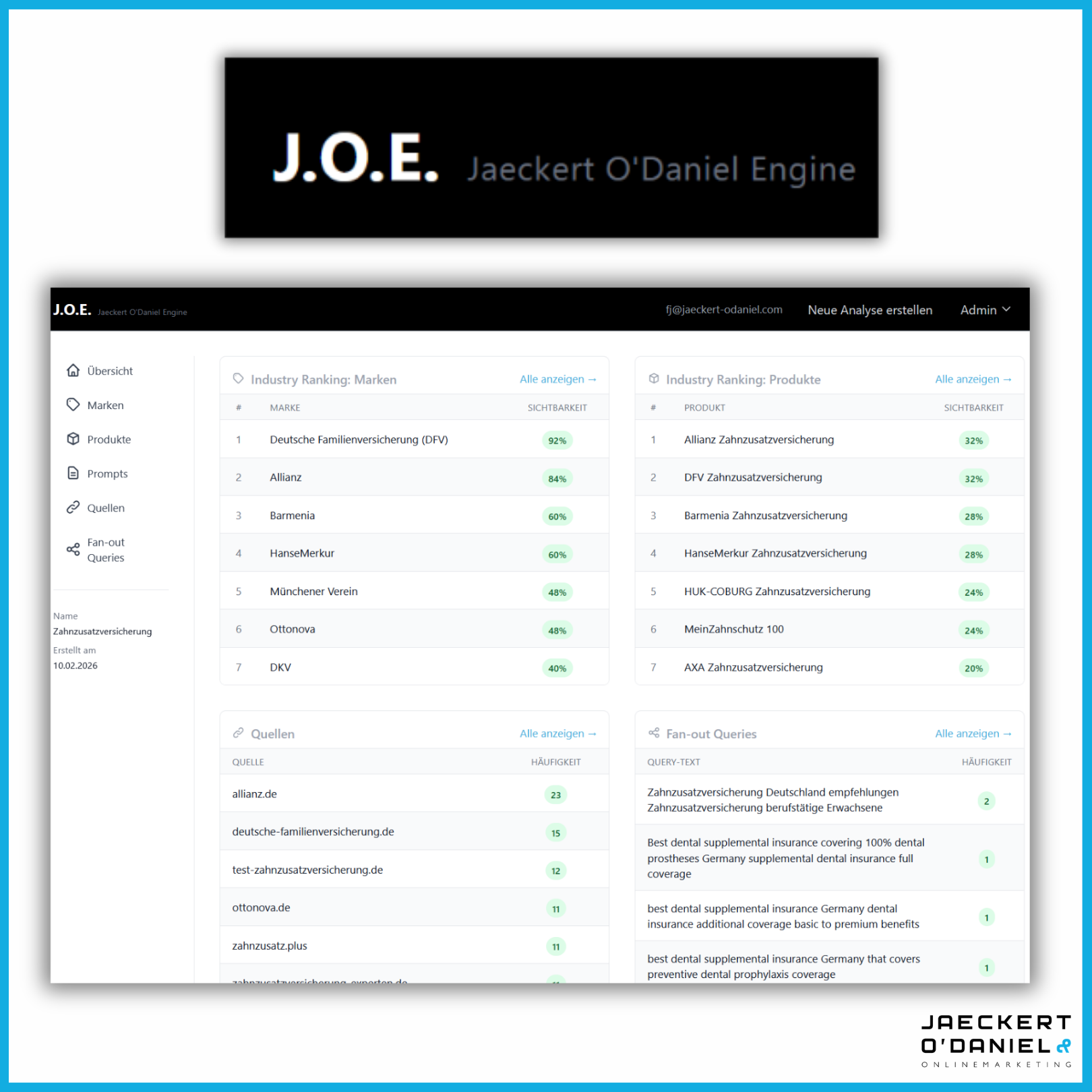
J.O.E. is an AI Visibility Tool that is particularly well suited to competitor analysis. The reason: J.O.E. directly shows all competitors and all products that appear in a prompt set. This gives you an immediate market overview. You can compare competitors with one click—for example, which competitor is visible on which prompts and which sources are used.
This makes J.O.E. a powerful AI Visibility Tool in the context of competitor analysis. At the same time, it also allows you to identify success examples—an approach that is also known from SEO and now works well in GEO (Generative Engine Optimization) too. The tool is backed by Fabian Jaeckert and Benjamin O’Daniel. The two GEO consultants support marketing decision-makers in developing a GEO strategy and implementing measures. This means you get both a tool and consulting from a single source.
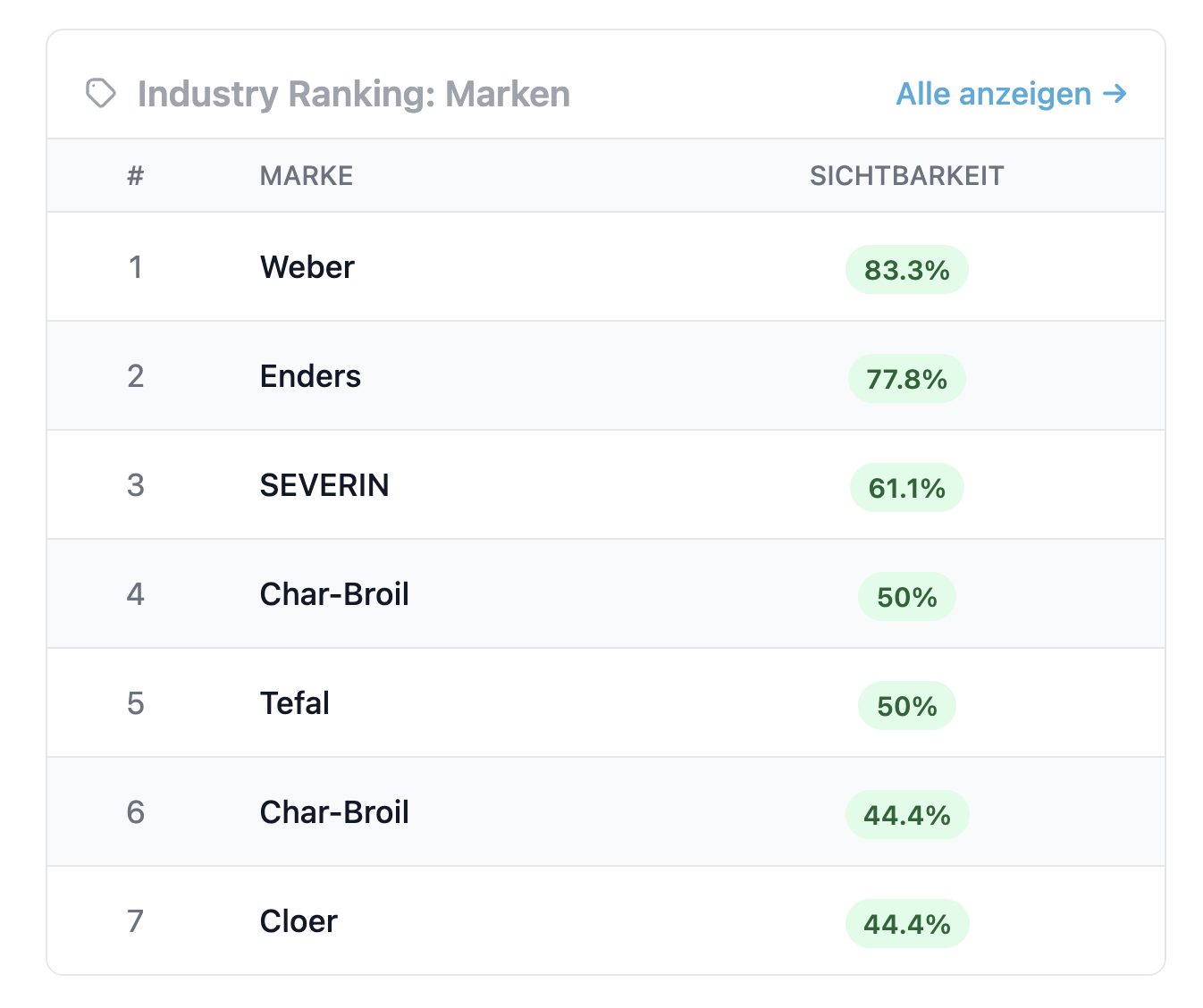
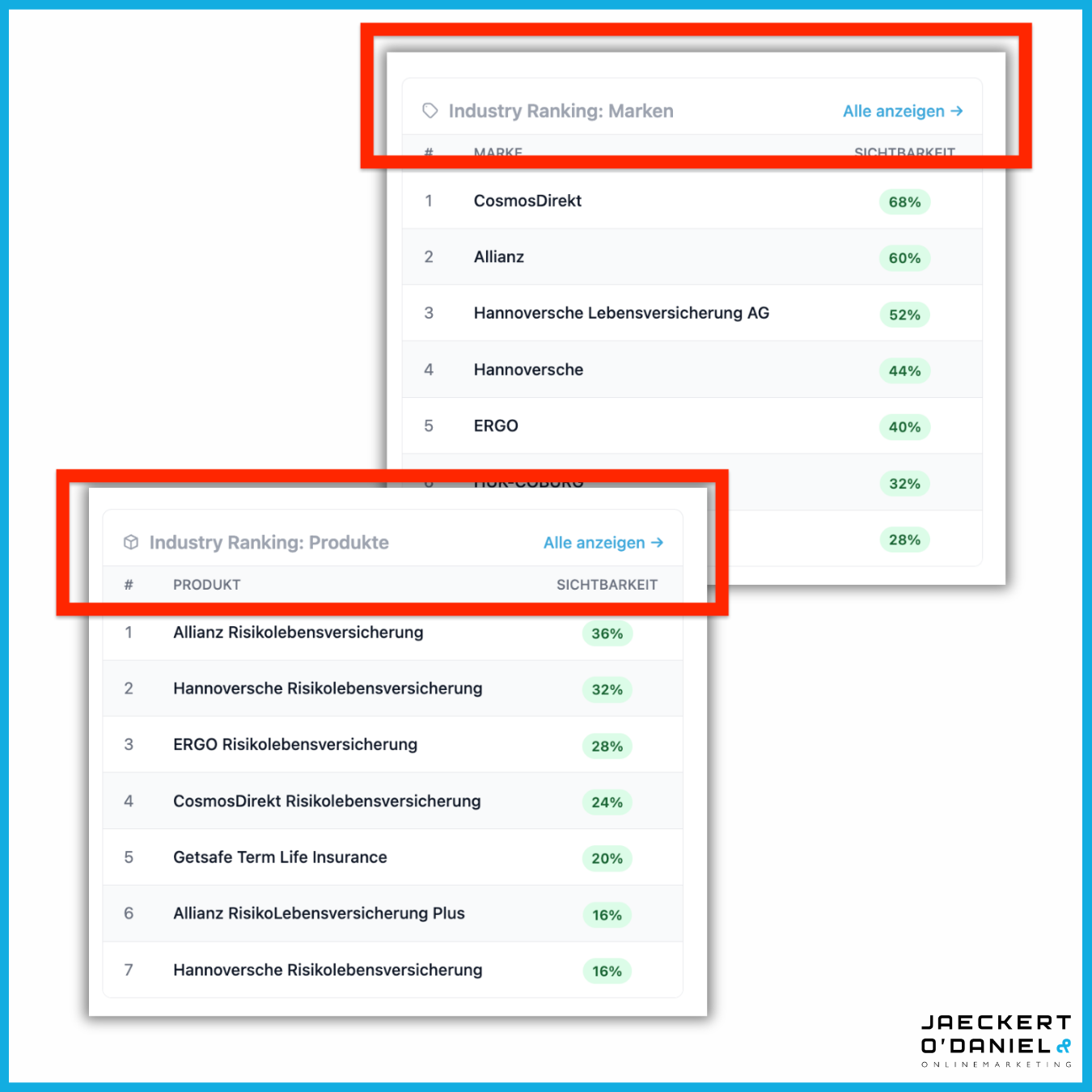
With a prompt set of 25 prompts, more than 100 companies—and many more products—are often mentioned. It is important to analyze this variety and understand the true relevance and AI visibility of your company in this context. That is exactly what you can use J.O.E. for. The AI Visibility Tool analyzes brand mentions, products, sources, and competitors in depth. You can see which brands are mentioned, which products are recommended, and what data the results are based on. This gives you a fast, clear market overview—and enables you to plan your GEO measures accordingly.
An AI Visibility Tool shows how visible a company, a brand, or a product is in AI systems such as ChatGPT. Instead of measuring only rankings or clicks, it analyzes which brand mentions, products, sources, and competitors appear in responses. This is relevant because more and more people enter their questions directly into ChatGPT and similar systems and seek advice there.
The challenge: many AI visibility software and AI visibility program solutions rely on tracking that is too narrow, manually created competitors, or continuous prompt monitoring. This quickly leads to gaps. In addition, some tools do not provide a clean data basis for ChatGPT because they work with outdated model responses. Anyone deriving measures from this may be relying on data that only partially reflects real-world usage. That is why we developed J.O.E.
We are Fabian Jaeckert and Benjamin O’Daniel. Our company is called Jaeckert & O’Daniel Online Marketing. We have worked as SEO consultants for many years and use numerous professional tools for this. Today, we specialize in AI visibility. We talk about it in our Content Performance Podcast. We have also published a book, Generative Engine Optimization, with Springer Gabler.
In our GEO Academy, we show marketing decision-makers how to implement GEO (Generative Engine Optimization) for their company. We offer workshops for this—and the necessary GEO tools. This also includes our AI Visibility Tool J.O.E. (Jaeckert O’Daniel Engine). This way, we provide workshops and tools from a single source.
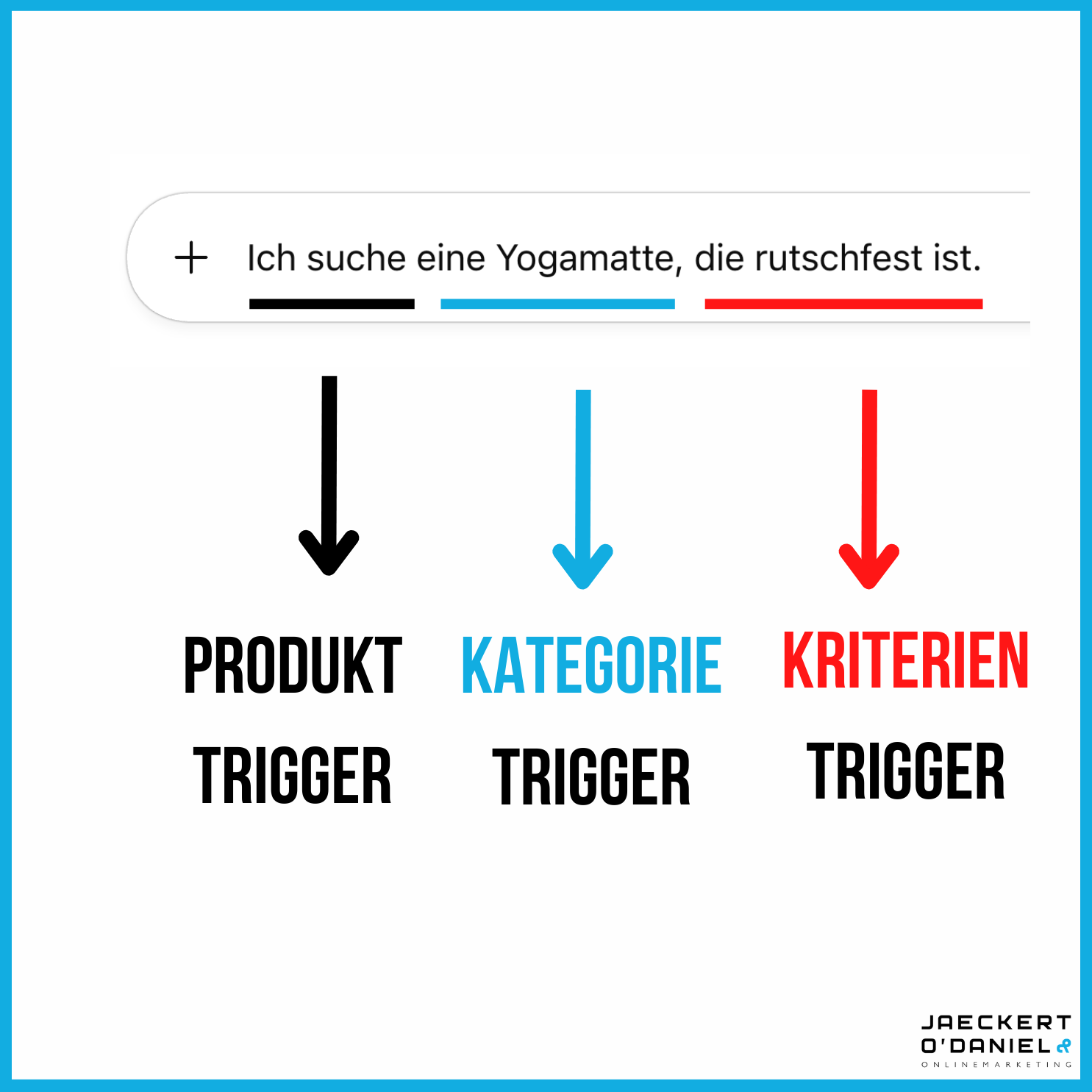
AI visibility software does not measure only rankings or individual keywords, but visibility in AI responses. This is important because users search differently in ChatGPT, AI Mode, or other AI systems than they do in Google. Instead of informational prompts, the focus is primarily on transactional prompts such as “I’m looking for” or “What is the best.” That is exactly where brands, products, and sources appear in the responses. J.O.E. uses in-depth GEO analysis instead of continuous daily tracking.
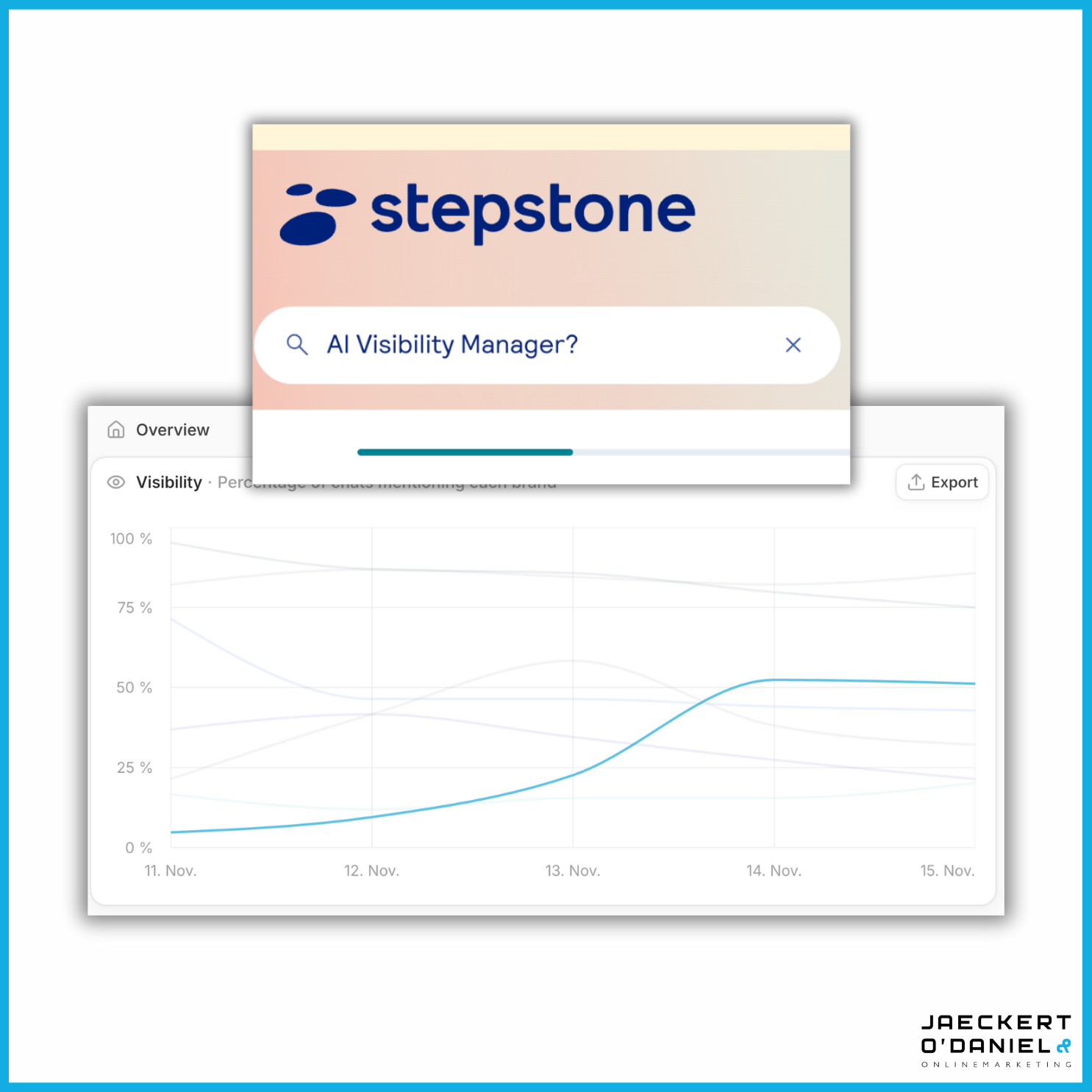
An AI visibility program is worthwhile for marketing decision-makers who want to understand how their company is perceived in AI systems and what measures follow from that. It is particularly helpful if you want to analyze multiple products, brands, or business areas. With J.O.E., AI visibility, the prompt set, and changes after an optimization can be compared in a targeted way.