April 20, 2020Benjamin O’Daniel
Keyword Research: Why We Always Find Potential
In keyword research, search terms are searched for and sorted. It is the entry point into search engine optimization. Because through it, companies understand which terms their customers demonstrably search for.
Here we talk about how we carry out keyword research and which experiences we have had with which keyword tools.
This much in advance: keyword research is and remains laborious, and practically everyone lacks the time for it. At the same time, a keyword analysis like this is extremely valuable. Because you specifically produce content that is also searched for. You cover an existing need.
What is a keyword?
A keyword is a search term that is entered on Google. There are keywords that are entered into the search engine thousands of times per month. Other search terms are entered only very rarely. Here you speak of a search volume per keyword.
In search engine optimization, keywords are roughly divided into classes, depending on the assumed intent with which the keyword is searched. There are, for example, informational keywords (Berlin population). Alongside that there are active, purchase-related, or transactional search terms (buy inflatable boat). The last category is navigational or brand-related search terms (Miele washing machine manual).
Marketing leads face the task of researching the important, relevant keywords and mapping them on the website.
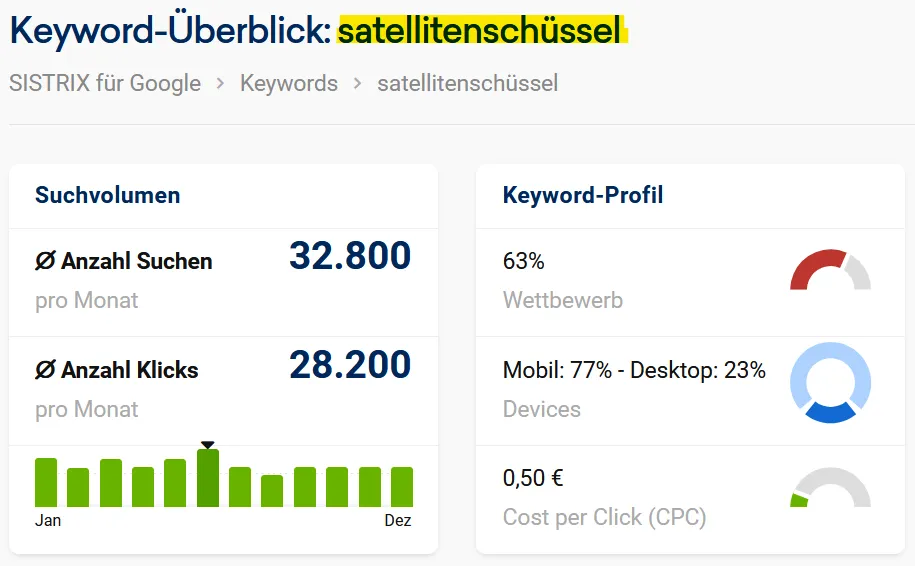
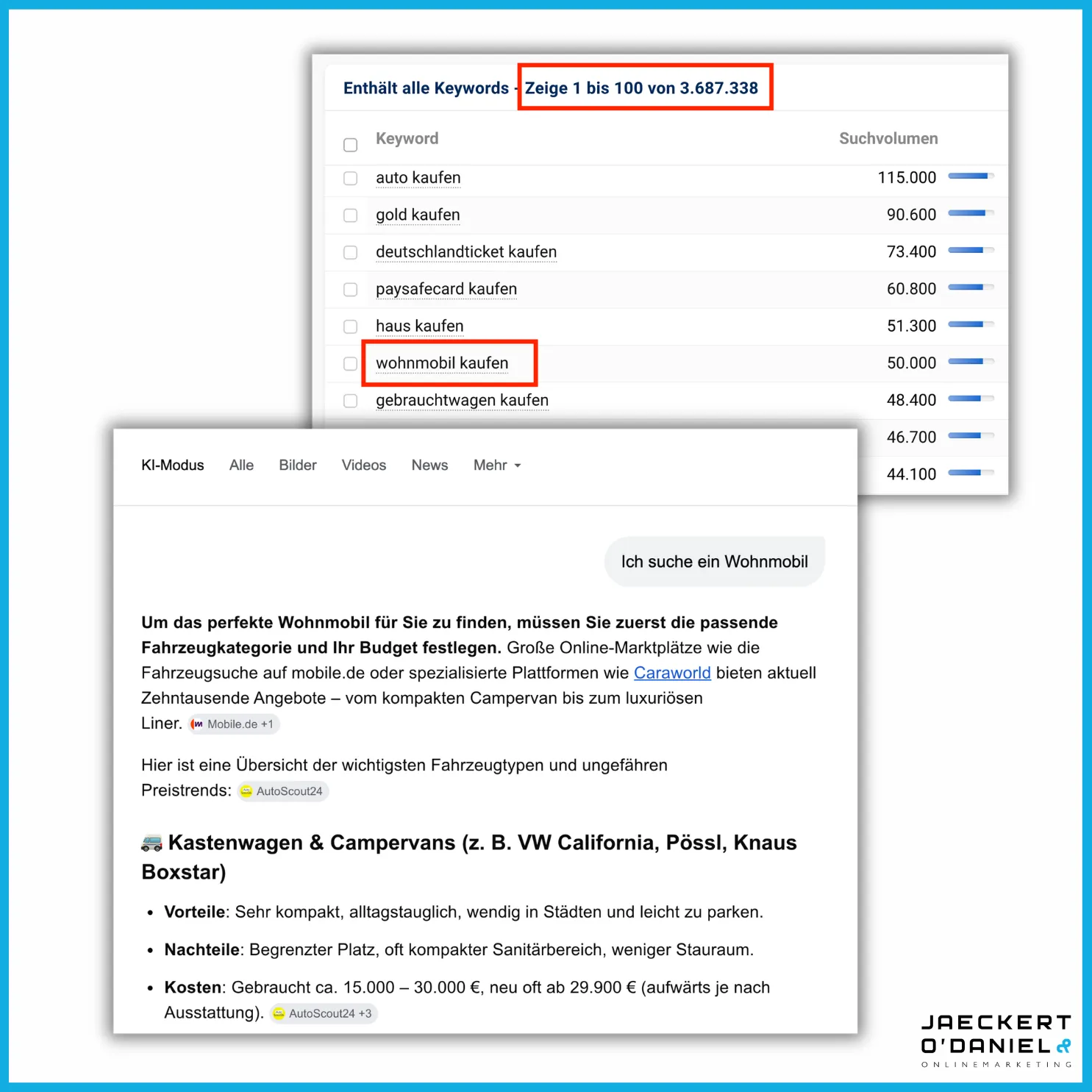
Here is an example of a keyword that is searched for in the five-figure range per month overall. The data comes from a professional SEO tool (Sistrix), which shows further performance data for search terms. Search terms with small search volumes are especially valuable too. Here are examples of niche keywords.
What is keyword research? An example
A systematic keyword research is the entry point into search engine optimization. Research like this is about collecting the relevant search terms and their search volume in professional tools and preparing them.
The terms sort themselves around one or more relevant topic areas of a company.
Around a central main term there are many further secondary terms that are searched for less often. At the same time these secondary terms are often very valuable, because here the users have a clear intent. A clear question they want to solve.
Keyword research is done with the help of a professional SEO tool. The terms can also be transferred into an Excel table and worked on further there.
Tip: in our SEO Academy you learn how to carry out a professional keyword research yourself.
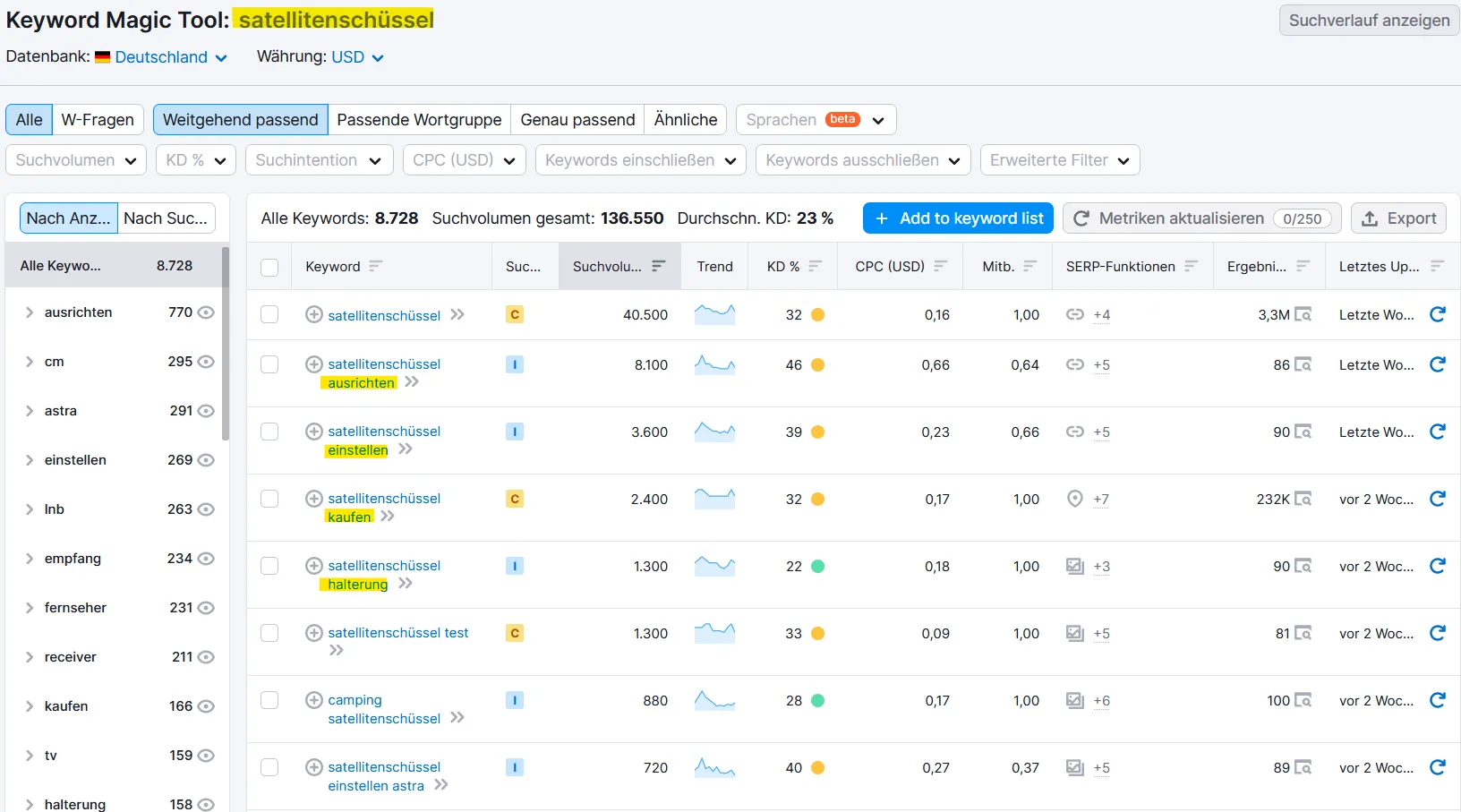
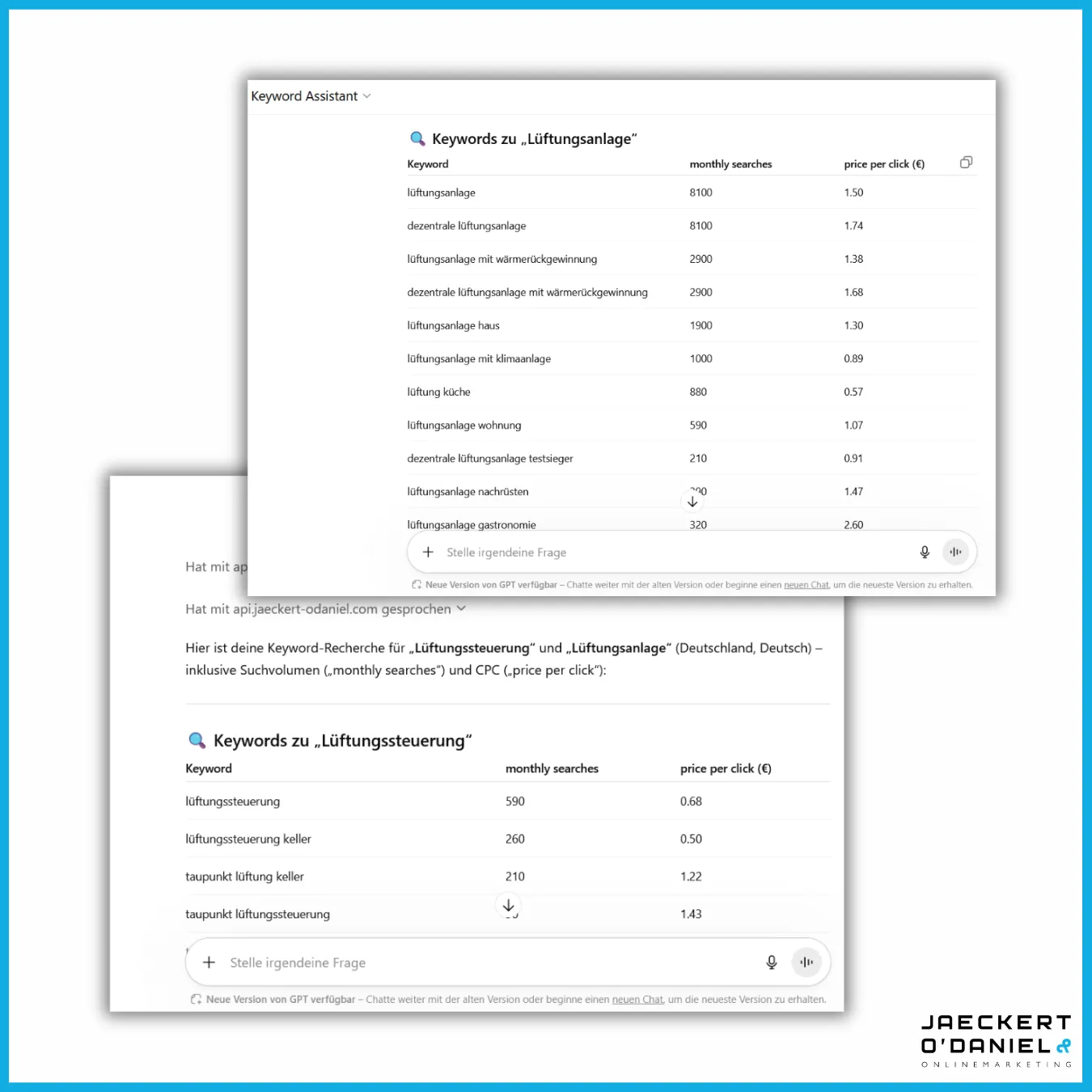
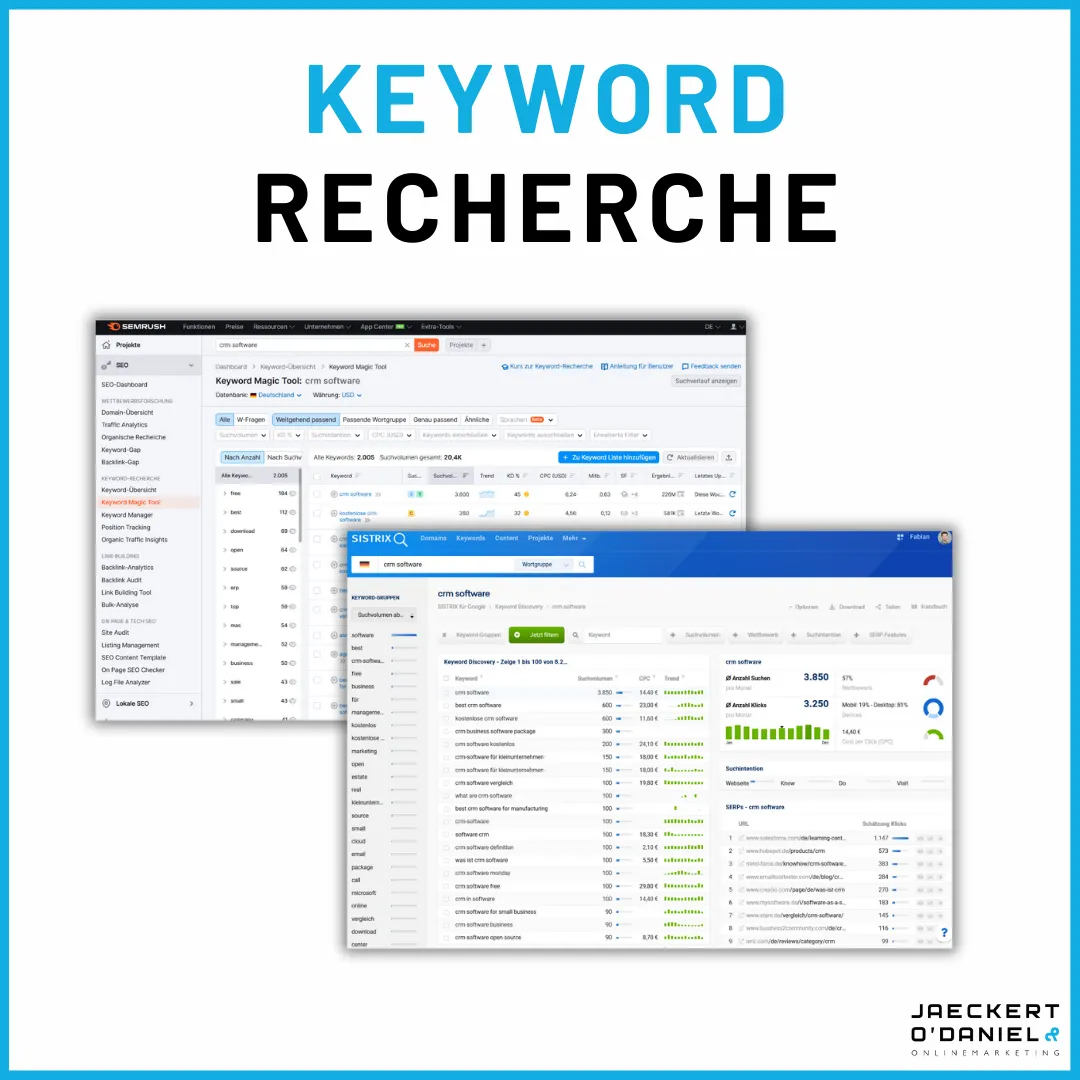
An example of keyword research for a main term and further secondary terms (SEO tool: SEMRush). Through search engine optimization, a website can rank on Google for thousands of terms and receive visitors through that.
Keyword research: the benefits in brief
Keyword research brings many benefits with it. The most important benefits, in brief:
- Keywords are a data basis as a foundation for decisions
- The search queries produce a brief for writing copy
- Weighting and prioritization based on search volume and click prices
- Much better ranking chances on Google
- Full use of the visitor potential
- Creation of a content asset
- Lasting increase in the value of the website
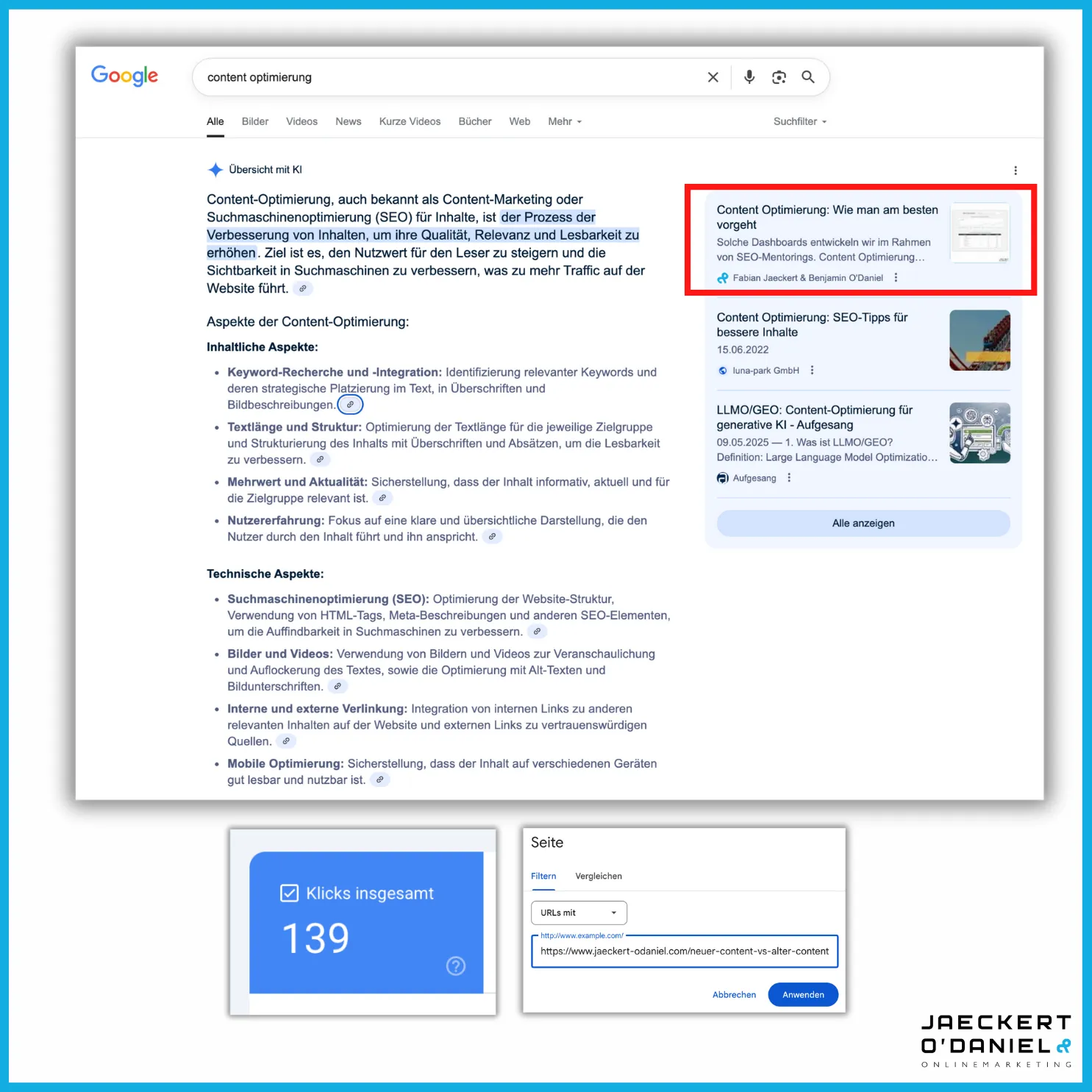
You see the result of keyword research in the screenshot: thousands of visitors come to the website via Google. The research is part of a comprehensive SEO analysis, which is always the start of search engine optimization.
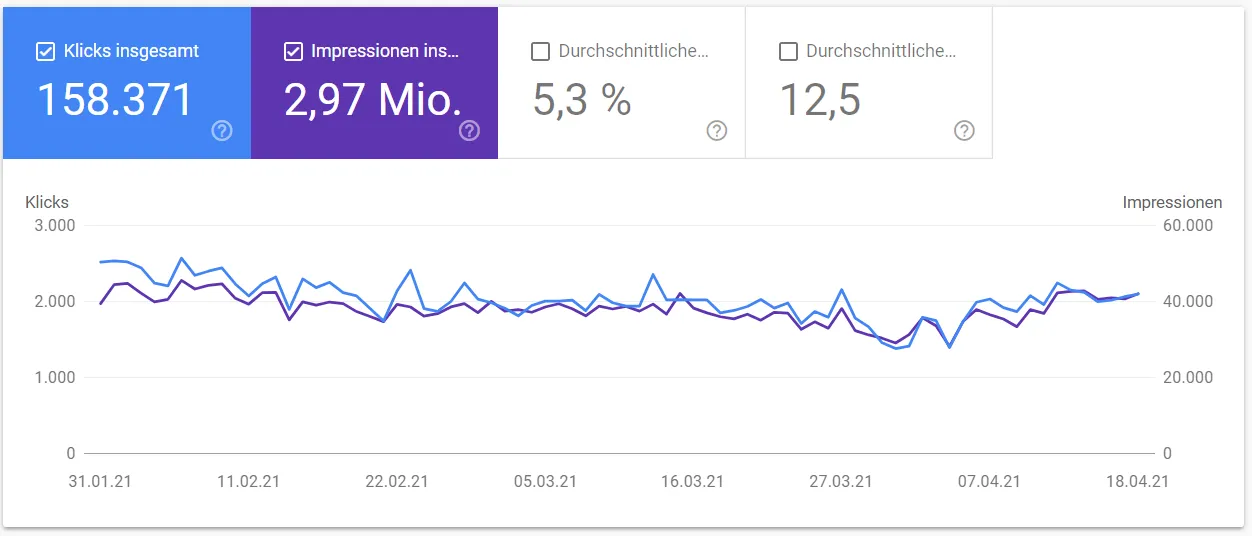
In Google Search Console you can look up how many visitors specifically come to your website via Google search. In this example it is several thousand a day. This is the result of targeted keyword research and optimization.
Which keyword research tools are there?
To be able to do a good keyword research, you need professional SEO software. The requirement is that your SEO tool has its own keyword database and that you can analyze the rankings of other domains. Tools that offer these functions include, for example:
An extensive and good keyword research is important. For that you need an outstanding data basis. We recommend that you plan a budget for professional SEO software. Here we talk in more detail about SEO tools.
There are also several tools from Google itself that offer keyword data. These include the Google Keyword Planner in Google Ads and Google Search Console. The Keyword Planner only offers limited data, though. The goal of this tool is to sell as many ads as possible, and not to do good SEO work. Google Search Console only shows keywords for which you already rank. It is therefore not suitable for an initial research in order to develop an SEO strategy.
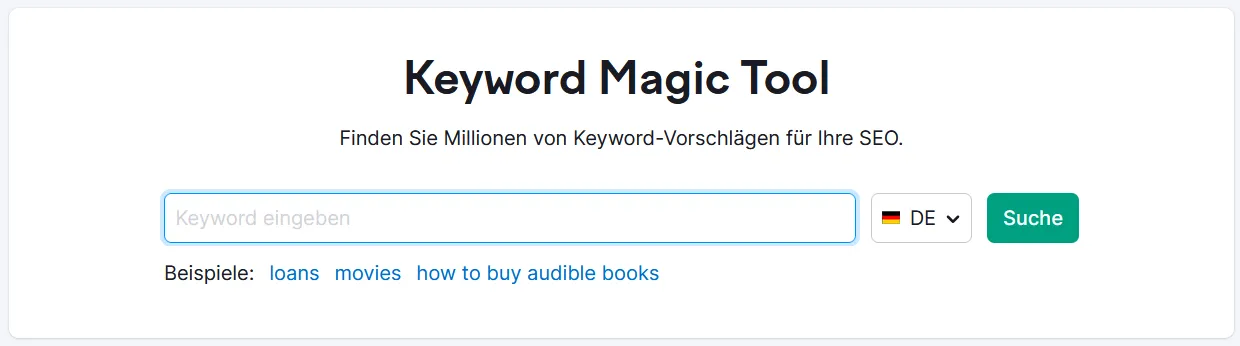
The Keyword Magic tool from SEMRush
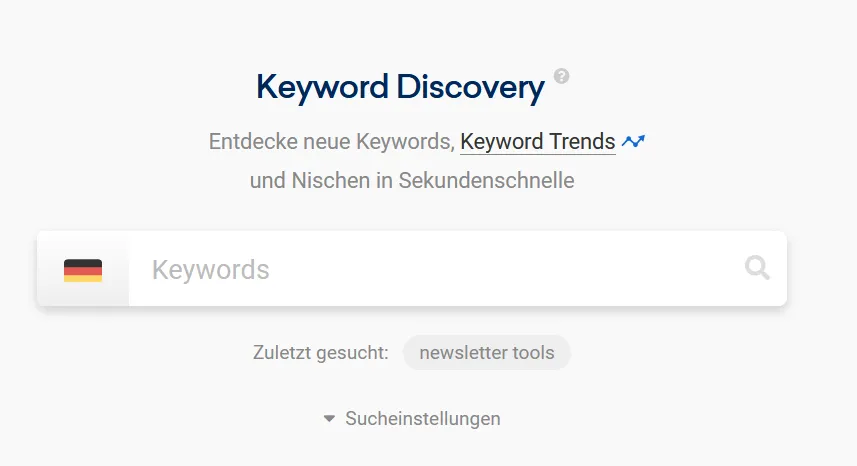
Keyword Discovery at Sistrix
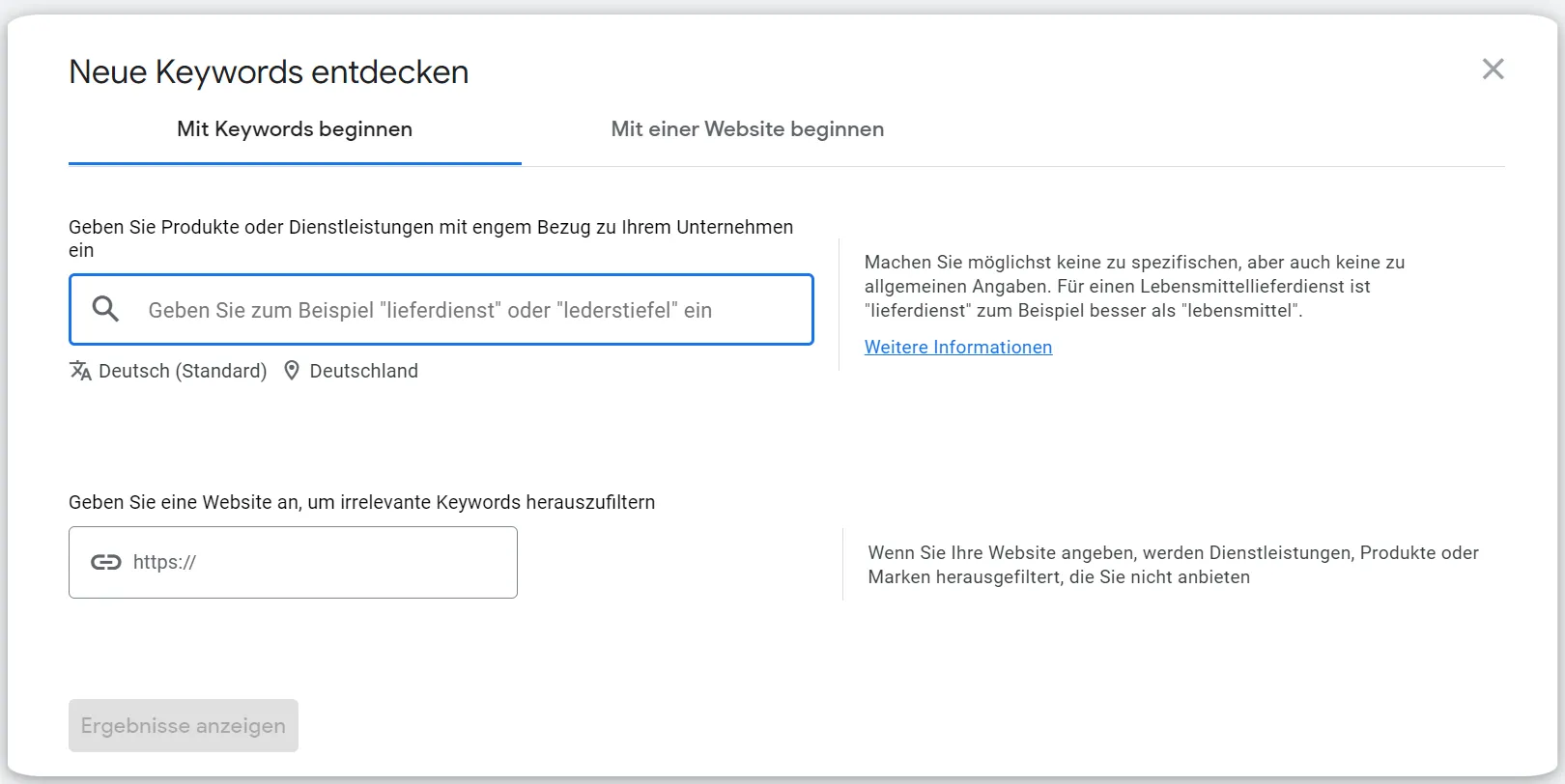
The keyword planner in Google Ads
Three common problems in keyword research
No know-how
Marketing leads work in many companies. They have many topics on their plate. And they often lack the knowledge of how to analyze keywords systematically. And, in the next step, how to map these keywords on the website and which content they need for that. This much is clear: dropping in a few keywords at random does nothing. Our recommendation: learn SEO!
No professional tools
The first reflex is often to look for a free tool. Because you do not know what it delivers and how to work with it. But the problem with the free keyword research tools: as a rule they do not deliver a good data basis, for example they deliver too few keywords or no search volume. Our experience: the real costs come afterward. Through wrong decisions and wasted staff time.
No SEO strategy
It is not only about the search terms. It is also about the analysis of which terms you even have a chance of moving forward on. And how you map the many thousands of terms on your website. Search engine optimization also includes a series of technical SEO topics such as search-engine readiness, but also how you handle backlinks and building content.
Analyzing keywords: our daily work
As SEO consultants and sparring partners, we analyze search terms for our clients and develop SEO strategies from them. We then support the marketing leads during implementation.
Our approach: we want SEO to be understood and carried out inside the companies themselves. That is why we share all of our specialist knowledge for that.
Sounds interesting? Then we can get to know each other (30 min. Zoom video conference).

We work fully remote. We get to know each other over Zoom and work together digitally.
After a website relaunch, we as a brand wanted to tackle SEO. For this, we specifically sought support. Benjamin and Fabian developed technical optimizations and an SEO strategy with a content roadmap. Many thanks for your valuable input.
 Anja HornBarilla Deutschland GmbH
Which keyword types are there?
In search engine optimization, a distinction is made between different types of search queries. They come from the search intent of the users. Google makes distinctions too. The rough types are:
- Informational keywords
- Transactional keywords
- Navigational keywords
Google calls these three different keyword types “Know”, “Do”, and “Go”, depending on which kind of information the user expects from the search engine. There are further keyword types that sit below these categories. These include brand keywords, long-tail keywords, and regional keywords.
The search results pages (SERPs) and the content formats and websites ranked there also differ depending on the keyword type. In the transactional area, product or category pages of online shops often rank. The more informational a keyword is, the more often guides and glossaries rank. Often the search intent is mixed (mixed intent), and different formats rank.
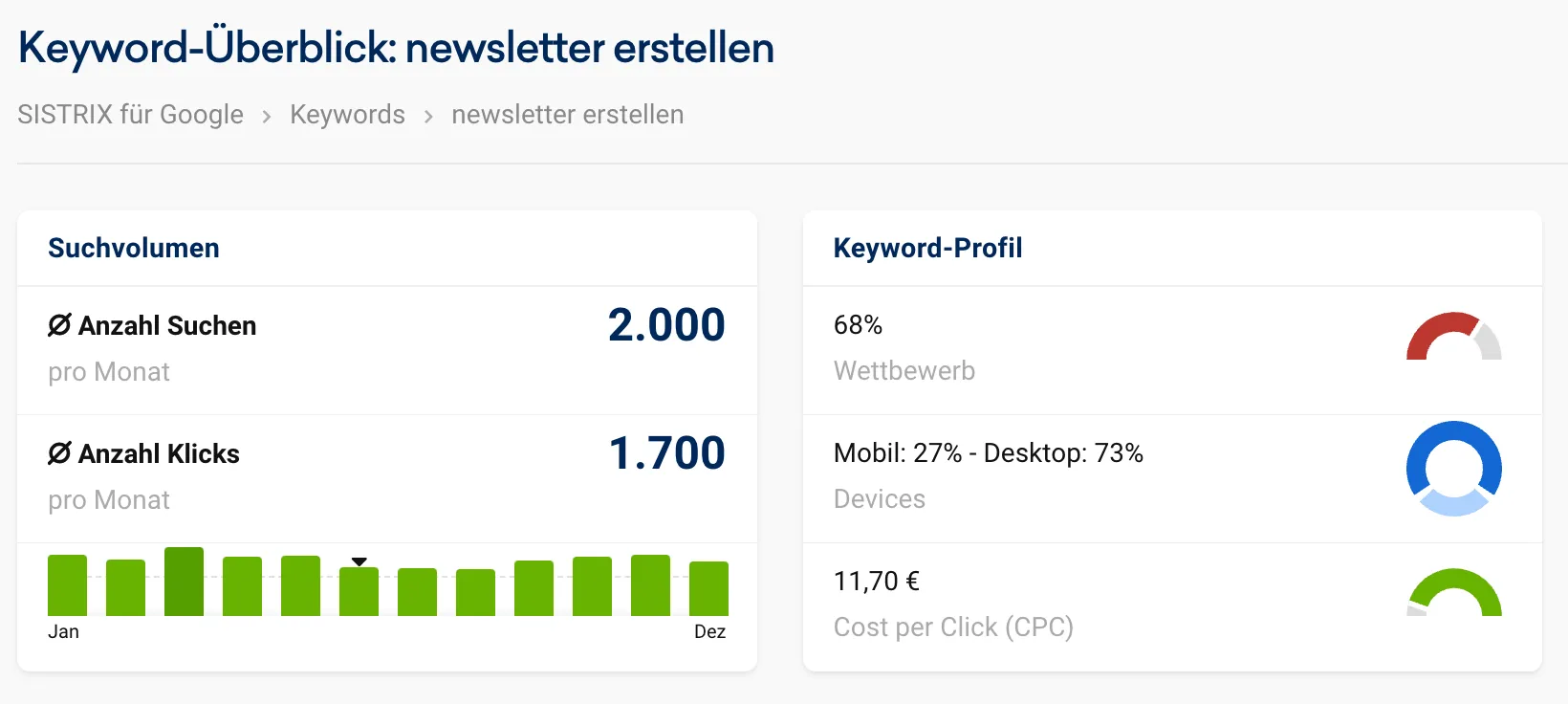
An example of a keyword in the gray area between information and transaction. Does the user want to know HOW or WITH WHAT they can create a newsletter?
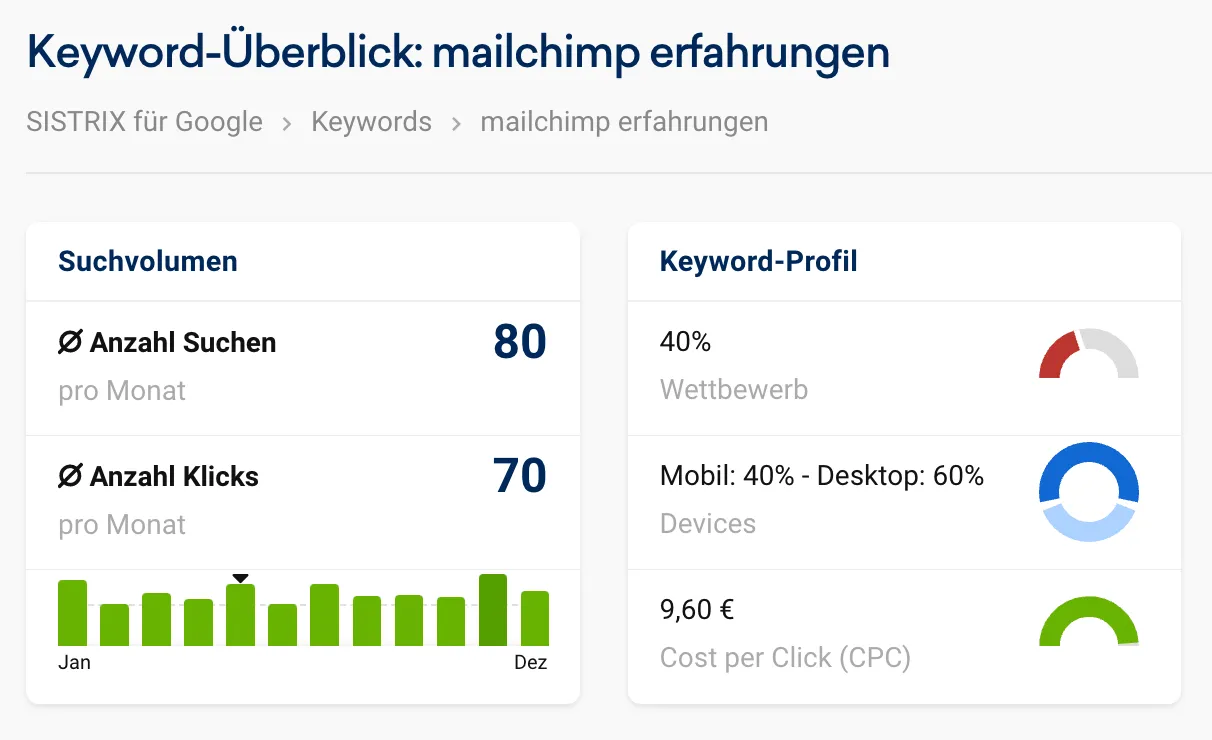
In this example a user is searching for a specific provider. This type of search is called “navigational”, here with the specification “brand”.
Video: how you work with Excel as a search engine optimizer
In this example we show how you work with your central keyword list as a search engine optimizer. The keywords were researched beforehand via an SEO tool and imported into Excel. Now it is about how you work with the right Excel filters in day-to-day work. The example comes from our SEO Academy, by the way.
Common questions about keyword research and keyword analysis in SEO
What does keyword research achieve?
Keyword research is the entry point into search engine optimization. Here it is about knowing and understanding the relevant terms. A website structure and the content creation are then derived from that. The goal is to move forward in the ranking for search terms with search volume.
What is a keyword list?
A keyword list is an Excel table in which all relevant keywords are listed. The data is enriched with the monthly search volume and CPC data. The keyword list shows which content you have to produce. In order to then stand at the front on Google for the respective keywords. A central keyword list always stands at the start of an SEO strategy.
How long does keyword research take?
An initial keyword research can take several days. Professional SEO managers update and expand their keyword lists regularly. As a rule it is about thousands of long-tail keywords that are sorted and prioritized when you approach SEO professionally. Here is an example of how long SEO takes.
How many keywords per page are optimal?
How many keywords per page should I use? It makes no sense to name a number here. What matters: the website needs a keyword focus. So that the topic is clearly recognizable and distinguishable. All keywords that fall under this are user questions and therefore inspiration for suitable content. A single page can rank automatically for hundreds of search terms, because Google recognizes the connection.
How can I monitor my keywords?
There are professional SEO tools for monitoring keywords and their rankings. For example Sistrix, SEMrush, or ahrefs. A manual check of the keywords by typing them into Google only gives a very small picture. More here on Google rankings.
Should you name the keywords in the title?
Every single URL has a title and a description that is visible in the search results on Google. The so-called Google snippet should reflect the core of the page. That also includes naming the most important keyword, or several keywords. More here on snippet optimization.
SEO keyword research, tips, examples, strategies, via our mailing list