
Many marketing managers who set up blogs or online magazines for their companies adopt a purely editorial approach.
This is also a valid motivation. After all, in content marketing, one aims to convince their target audience with informative content. However, after 50 articles at the latest, those responsible wonder how to attract more traffic and visitors to their articles. How they should deal with their “content graveyard” – the many old articles that no longer receive visitors.
They are therefore looking for a sustainable blog strategy. And this is precisely where search engine optimization (SEO) comes into play.
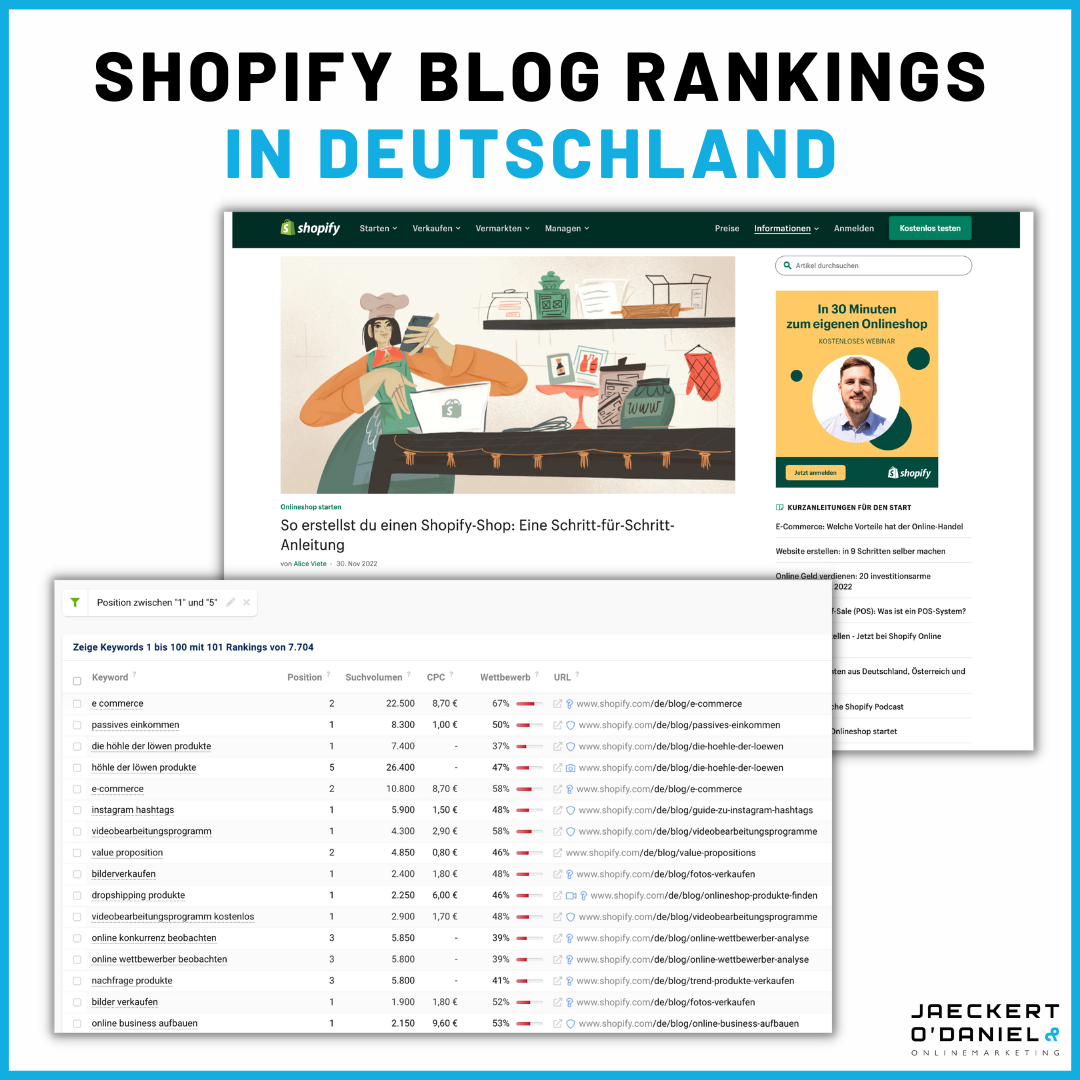
Shopify’s Blog Ranks Successfully on Google
Blog Marketing: Associated Goals
Do Blogs Still Have a Chance in SEO?

We also see bloggers who succeed in SEO. Here we discuss what makes the difference.
What Does a Perfect Blog Article Look like?
The poor performance of many blog articles is often due to content being published without expert knowledge or strategic development. Boring topics, weak headlines, and generic “copy-cat content” – often created by AI tools – appeal neither to readers nor to search engines.
Furthermore, SEO is often misunderstood because keywords are merely inserted into plugins instead of purposefully combining niche keywords with relevant topics. An example of how to do it better:
A company in the healthcare sector wants to expand its visibility on the topic of “breathing techniques.” With the help of our Keyword Assistant, relevant search terms such as “shortness of breath” and “stress” are identified, which serve as the basis for an article series or a content hub. After a brainstorming session with ChatGPT and fine-tuning, an optimized headline such as “5 Surprisingly Simple Exercises for Shortness of Breath” is created. Of course, one must critically review AI ideas and offer real added value, for example, through interviews with female doctors and well-founded content – an approach we teach in our Academy Workshops.
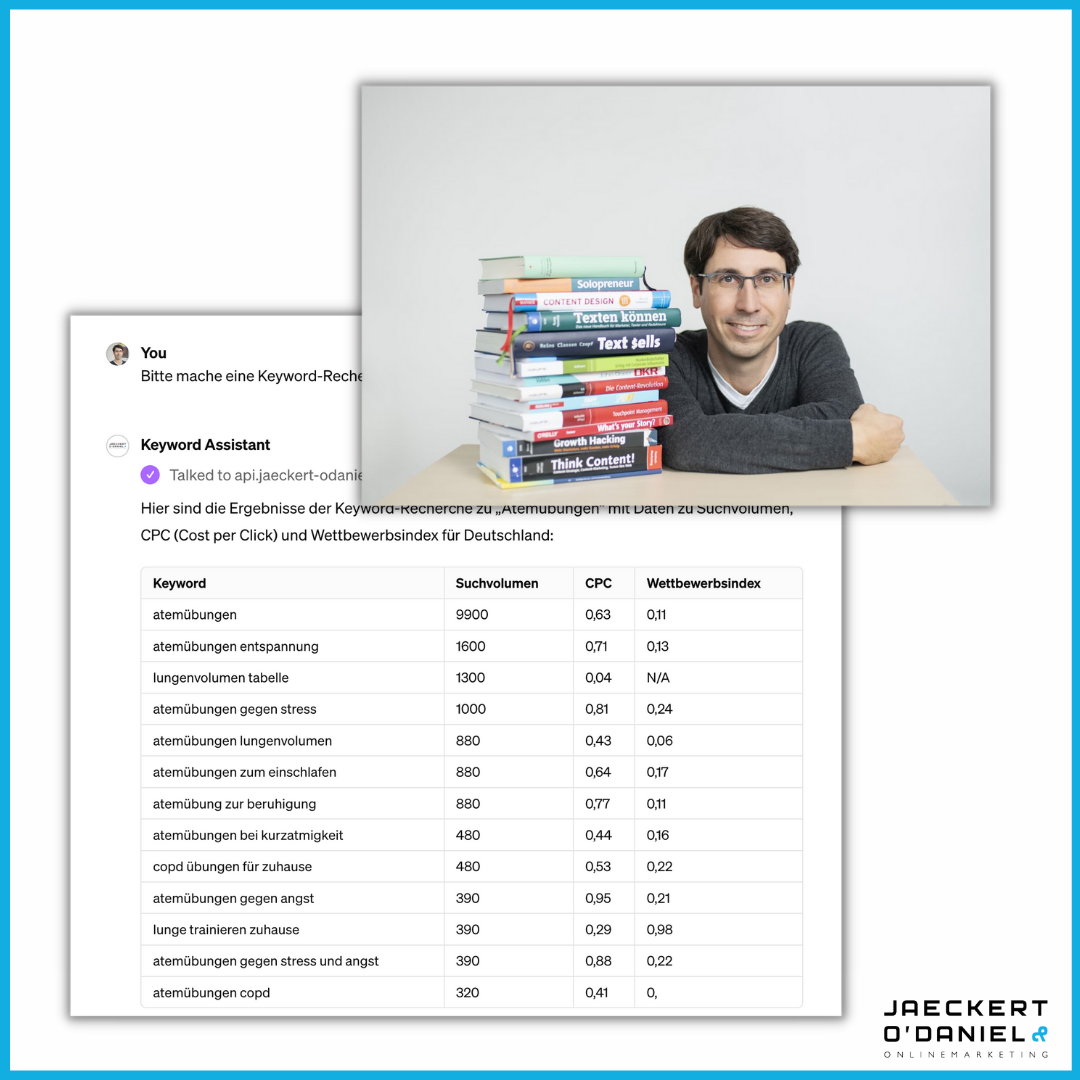
What Does the Perfect Blog Article Look Like? We discuss that here.
Effort and Costs of Blog Marketing: an Example
The Company
A managing director of a B2B company has understood: He must bring his employees’ expertise to the website. His goal: He wants to rank high in Google Ranking for his relevant terms with the content – and thereby increase his visibility and generate new customer inquiries. It benefits him that Google generally ranks useful, detailed, and high-quality content well. Content is a central lever in search engine optimization.
The Effort
For the production of blog articles, he estimates a budget of 16 hours. This budget includes research and internal coordination, writing, the correction phase, and publishing online. Each post comprises at least one A4 page. Also included in the budget is community management. Because it has been shown that readers comment on the blog articles. The employee responds personally to each comment.
The Costs
During the time dedicated to editorial tasks, employees are unable to perform their primary professional duties. They are effectively engaged in marketing activities. With four contributions per month, this amounts to an expenditure of 64 hours, calculated at an internal hourly rate of €50. Furthermore, topic planning and success measurement also consume time. Consequently, costs exceeding €3,000 are incurred per month.
0
Articles per Month
0
Effort in Hours
0
Monthly Costs at €50/H